How to Evaluate a Commutator Manufacturer’s Quality Standards
A weak commutator supplier rarely fails on the first sample.
It fails later. Lot six. Lot twelve. After tooling warms up, after a resin batch shifts, after one operator trims a burr a little differently. The sample still looks fine. The line does not.
So when you evaluate a commutator manufacturer, do not start with the catalog. Start with the controls behind the part.
Not theory. Not certificates alone. Controls.
Table of Contents
A real audit starts with the part family
First question: what kind of commutator are you buying?
That sounds obvious. It often is not.
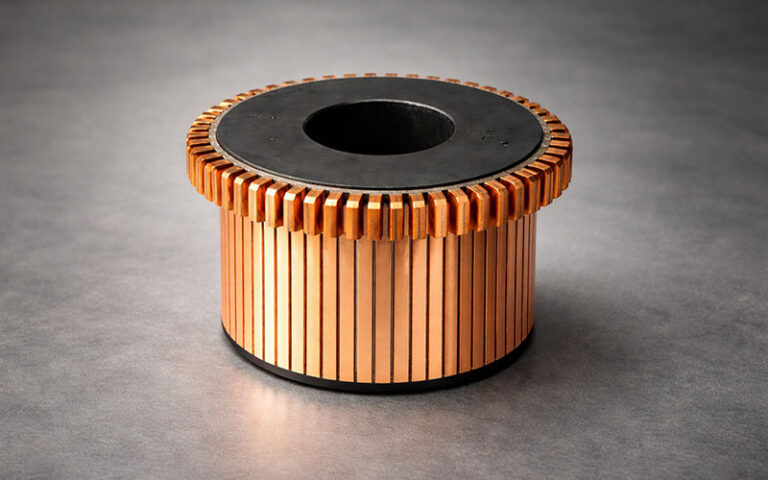
A hook type commutator, a slot type commutator, a shell type design, a molded commutator for starter motors, a compact high-speed DC motor part. These do not fail the same way. They do not stress the same features. They should not be audited with the same lazy checklist.
If a supplier uses one generic quality presentation for every commutator family, you already learned something.
The better manufacturers separate the process route by product family. Different copper geometry. Different molding behavior. Different machining risk. Different retention risk at speed. That is normal.
Material control should go deeper than “we inspect incoming”
Ask what they control for three material groups:
- Copper segment material Not just “copper.” Ask the grade, hardness window, and whether silver-bearing copper is used where higher thermal or mechanical demand makes sense.
- Insulation system For some designs that means mica. For many molded designs it means a thermoset molding compound, often phenolic-based. Ask how lots are identified, stored, released, and blocked if something drifts.
- Embedded or bonded interfaces The problem is rarely the material name. The problem is lot variation. Moisture pickup. Poor cure response. Segment retention loss after heat.
A serious commutator manufacturer can trace a finished part back to the copper batch, molding compound batch, and main process records without drama. No searching through email. No asking one old supervisor where the file went.

Molding and curing control is where weak suppliers start to show
This is the section that tends to separate “machine shop with a sales deck” from actual process ownership.
For molded commutators, ask about:
- molding pressure
- mold temperature
- cure window
- post-cure or bake condition, if used
- lot release criteria after molding
- crack detection and retention verification
You are not just checking whether the part is fully formed. You are checking whether the supplier understands what heat and pressure do to insulation stability, segment retention, and dimensional behavior later on.
A commutator can pass visual inspection and still carry process debt. Tiny cracks. Internal stress. Movement after machining. Weak retention at temperature. Then the supplier says the motor problem started downstream. Maybe. Maybe not.
If they cannot show molding and curing records by lot, that is a hard warning sign.
Dimensional control is not about diameter alone
A lot of suppliers love to report OD because it is easy to measure and looks technical enough on paper.
That is not the point.
For commutator quality, the dimensions that usually matter more are the ones that affect brush contact, current transfer, and mechanical stability:
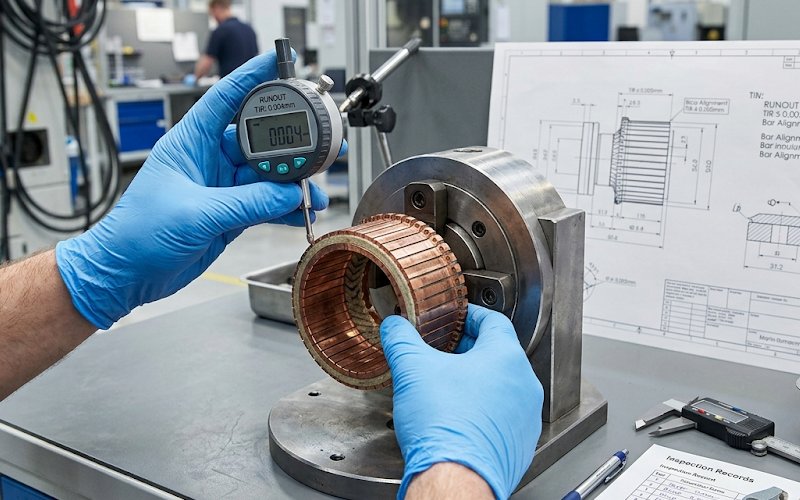
- runout
- roundness
- bar-to-bar height variation
- track finish after turning
- burr condition at bar edges
- chamfer quality
- riser geometry
- mica position and undercut depth where undercutting applies
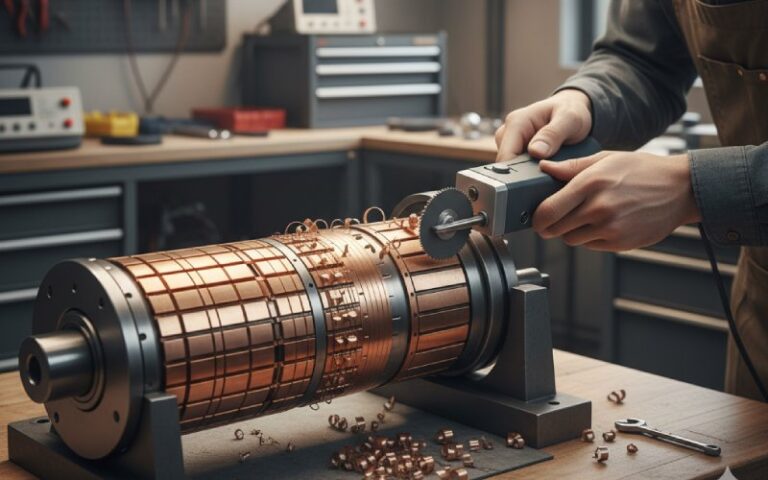
If the supplier does not control undercut condition, brush contact gets unstable. If burrs are present, you get edge damage. If runout drifts, the brush sees a changing contact condition every revolution. None of this is subtle once the motor is running. But by then the supplier will call it “application related.”
Ask how these characteristics are measured. On which machine. At what frequency. Using which gauge. And what happens when the trend starts moving, before the line hits scrap.
That last part matters. A control limit is not a reaction plan.
The right electrical checks are not just pass/fail checks
A commutator manufacturer should not hide behind the phrase “100% electrical test.”
Ask what they actually measure.
For most serious evaluations, you want to see some combination of:
- bar-to-bar resistance consistency
- insulation or high-potential verification where relevant
- continuity checks
- resistance-to-ground checks at the armature level, if the supplier handles that stage
- trend data, not only disposition labels
The useful question is not “did it pass?” The useful question is “what did the distribution look like?”
A supplier with real control can show whether one bar pattern drifts, whether one cavity behaves differently, whether a joining condition started moving last Tuesday night. A supplier with weak control gives you a green stamp and hopes you stop there.
Mechanical integrity deserves its own line item
This gets skipped too often.
If the commutator will run at high speed, see repeated starts, or live in a severe duty cycle, ask how the supplier verifies mechanical integrity. That may include spin testing, overspeed validation, retention-focused checks, or equivalent design-specific verification.
No, there is no single universal overspeed number that fits every design. That is the point. The supplier should define the method against the product’s speed class, geometry, and safety margin, not wave a generic statement around.
If the answer is vague here, the rest of the audit should become stricter.
Quality systems matter. But the useful words are smaller words
A framed certificate on the wall is fine. Keep walking.
What you really want to hear in the meeting is this kind of language:
- SPC on key dimensions
- MSA or gage R&R on the main inspection methods
- Cpk/Ppk for stable key characteristics
- 8D for customer escapes
- CAPA tied to containment, root cause, and recurrence prevention
- traceability drills that prove the records can actually be retrieved
This is not about jargon for its own sake. It is about whether the supplier runs a controlled factory or just speaks controlled-factory English.
One warning though. Do not let a supplier throw a Cpk number at you before proving the process is stable and the measurement system is believable. Capability without measurement discipline is decoration. Nice chart. Weak factory.
What a good commutator supplier should be able to show you
| Audit point | What to ask for | Strong answer | Weak answer |
|---|---|---|---|
| Product-family control | Process flow by commutator type | Separate controls for hook, slot, shell, or molded families | One generic flowchart for everything |
| Material traceability | Copper, insulation, and molding-compound lot linkage | Finished lot can be traced backward in minutes | Partial records, manual chasing |
| Molding and curing | Pressure, temperature, cure window, post-cure records | Lot-based process history and release criteria | “Machine settings are fixed” |
| Machining quality | Runout, roundness, bar height, burr, chamfer, undercut records | Trend charts on key features | Only final OD report |
| Electrical validation | Bar-to-bar consistency and insulation-related test data | Stored readings or trend files by lot | Pass/fail stamp only |
| Measurement system | Calibration plus MSA / gage R&R | Clear evidence that gauges are fit for use | Depends on operator skill |
| Process capability | SPC and capability on key characteristics | Stable process first, then capability evidence | Random Cpk number on a slide |
| Failure response | Recent 8D or CAPA example | Containment, root cause, validation, recurrence control | “We reminded the operator” |
| Mechanical integrity | Spin, overspeed, or retention validation method | Test condition linked to design duty | No defined method |
Need a Faster Supplier Review?
If you are comparing multiple commutator manufacturers, a drawing-based review usually saves time early. It helps align key dimensions, test methods, and traceability expectations before sample approval starts.
The fastest way to compare two commutator manufacturers
Do not compare quotations first.
Compare these five things first:
process discipline, measurement discipline, electrical consistency, mechanical integrity, and traceability.
That order matters.
The cheap supplier with a smooth sample is often just borrowing time from your launch window. The better supplier usually sounds a little less polished and a little more specific. More records. More caveats. More “this characteristic is controlled here, not there.” Good. That is usually the one with less hidden noise.
What to request before sample approval
Before you approve a new commutator supplier, ask for a technical package. Not a marketing deck. A package.
At minimum:
- control plan or inspection plan for the exact part family
- drawing balloon with key characteristics marked
- recent dimensional data, not just one inspection report
- electrical test list with acceptance method
- MSA evidence for the main gauges
- SPC or capability evidence for key features
- one recent 8D or CAPA example
- traceability example from finished lot back to raw material
You will lose some suppliers right there. That is fine. It saves time.
A Simple Next Step
Before approving a new supplier, it is often useful to review one real part number instead of discussing capability in general terms. A short technical review can expose gaps in runout control, undercut condition, electrical checks, or lot traceability much earlier.

Red flags that are easy to miss
Some warning signs are obvious. Missing records. No traceability. No reaction plan.
The more dangerous ones are quieter:
- the supplier knows the terminology but cannot pull live records
- every result looks perfect, every lot, every time
- they show capability numbers but no control charts
- they report diameter but avoid runout and bar-height spread
- they talk about testing but not data retention
- they call all product families “basically the same”
That last one is bad. Very bad.
FAQ
Is ISO 9001 enough for a commutator manufacturer?
No. It helps, but it does not prove process control at the part-feature level. For automotive or similarly demanding programs, buyers often expect a stronger manufacturing discipline around traceability, SPC, MSA, corrective action, and customer-specific controls.
Should I require IATF 16949 from every commutator supplier?
Not every program needs it. Many do not. But if the commutator is going into automotive platforms, or the sourcing model already follows automotive supplier logic, IATF-style discipline is a strong signal. More important than the certificate alone, though, is whether the factory actually works that way.
Which dimensions matter most in a commutator audit?
Start with runout, roundness, bar-to-bar height variation, track finish, burr condition, chamfer condition, and undercut depth where the design uses undercut mica. Overall diameter matters. It is just not enough by itself.
What electrical data should I ask to see?
Ask for bar-to-bar resistance consistency, continuity-related checks, insulation-related checks where relevant, and retained lot data. A single “pass” label tells you very little about process behavior.
Does every commutator need overspeed or spin testing?
No. It depends on speed class, duty cycle, geometry, retention risk, and customer requirements. But the supplier should have a clear answer on how mechanical integrity is verified for the design you are buying.
What is the quickest sign that a supplier is not ready for mass production?
They can explain everything verbally but cannot retrieve records quickly. That usually means the control is in people’s heads, not in the process.
Final word
A strong commutator manufacturer does not try to win the audit with a polished sample.
It wins with boring things. Stable molding records. Clean machining data. Credible gauges. Bar-to-bar consistency. Fast traceability. A real 8D when something goes wrong. Not speeches.
That is the standard worth buying against.