Inspection & Electrical Verification for Custom Commutators
Every commutator we ship is checked against defined electrical and geometric limits—so issues are found before they reach your assembly line.
What you get
Electrical checks: insulation resistance, hipot, surge, bar-to-bar & weld resistance
Micro-geometry checks: bar rise, TIR/runout, bar gap, roundness, diameter
Test limits set to your drawing/spec + optional batch summary report for incoming QC
Quick Capability Snapshot
High-voltage capability: up to 3000–5000 V (hipot) and up to ~3000 V (surge)
Low-resistance resolution: down to 0.5 mΩ (bar-to-bar), weld checks down to µΩ–mΩ range
Geometry monitoring: typical control targets such as <5 µm bar rise, <10 µm TIR (as required)
Data logging: recipe-based limits + traceability by lot/batch
All thresholds can be tightened or relaxed according to your application requirements.
What We Verify
High-Voltage Insulation & Dielectric Strength
Designed to identify insulation weaknesses before they become field failures.
Typical coverage includes
Programmable HV sequences
Voltage ranges commonly used: 0–1500 V test benches (with leakage monitoring around 1 mA)
Insulation resistance measurement: ~0.1–500 MΩ at 500–1000 V DC
Bar-to-Bar Resistance & Weld Quality
Checks uniform current paths and detects unstable joints.
Typical measurement ranges
Bar-to-bar resistance: ~0.5 mΩ to 500 Ω
Weld resistance detection: ~1 µΩ–10 mΩ range
Automatic bar indexing for repeatable measurement sequences
Hipot & Surge Screening
Used to detect issues that may not appear in static resistance checks.
Typical capability
Hipot: ~3000–5000 V (per project)
Surge: up to ~3000 V (per project)
Suitable for identifying abnormal turn-to-turn behavior / short-risk indicators in relevant assemblies
Hipot & Surge Screening
Used to detect issues that may not appear in static resistance checks.
Typical capability
Hipot: ~3000–5000 V (per project)
Surge: up to ~3000 V (per project)
Suitable for identifying abnormal turn-to-turn behavior / short-risk indicators in relevant assemblies
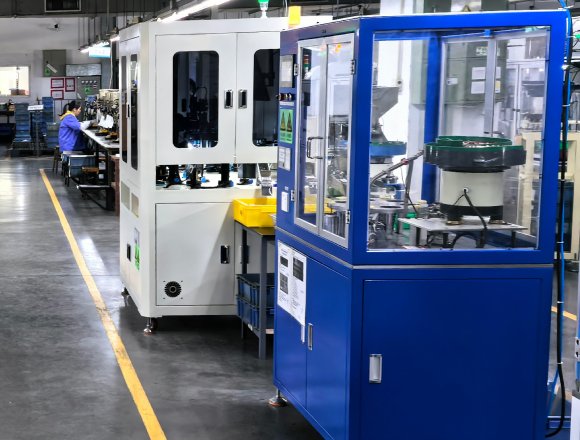
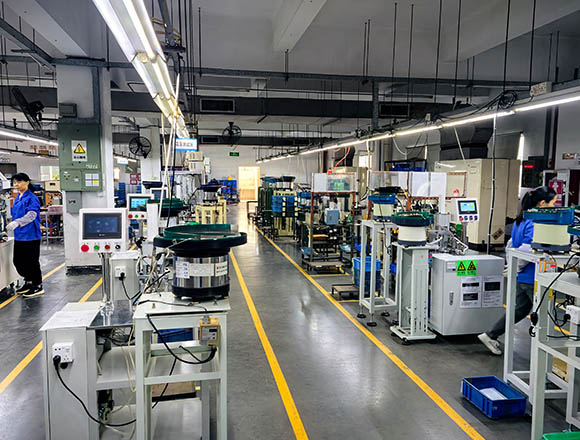
Dual-Station Automatic Electrical Test Platforms
Built for consistent, documented sequences at production throughput.
Two independent stations for load/unload while testing runs
Functions can include: bar-to-bar, weld resistance, insulation resistance, hipot, surge
Recipe-based limit setting for each project
Digital data logging for traceability and incoming QC alignment
Single-Station HV & Dielectric Benches
Compact systems for quick changeover and development work.
Sequential two-step HV programs with timers
Typical voltage ranges: 0–550 V or 0–1500 V
Integrated rotation drives for complete coverage during testing
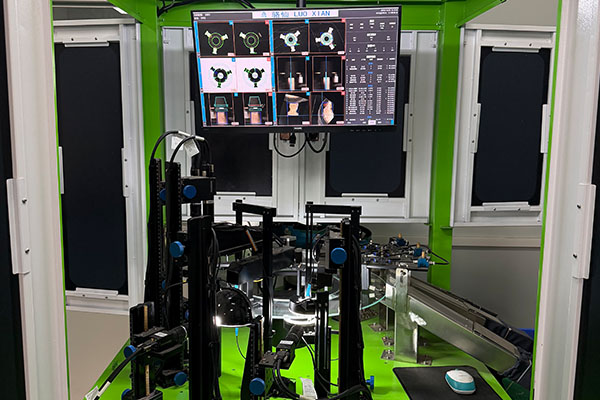
Laser Triangulation Measurement Station
Used when small geometry shifts must be quantified and correlated with performance.
Laser heads: ~50 mm standoff, ~20 mm measuring range
Rotation: ~180 rpm during acquisition
Sampling: ~2000 samples/sec, filtering near 500 Hz
Example measurement context: bar gaps near 0.63 mm, runout around 0.05 mm peak-to-peak
Process Control, Traceability & Measurement Confidence
Beyond equipment, XDC’s strength lies in how we organize and control the commutator testing process.
Multi-step verification workflow
A layered approach can include visual inspection, megohmmeter, low-resistance checks, growler methods (where applicable), surge, hipot, plus mechanical verification—so failures are caught from multiple angles.
Test “recipes” + data logging
For each part number, we define test limits and automatically record key results (electrical + geometric) by lot/batch for traceability and basic statistical review.
Calibration & preventive maintenance
We maintain repeatability by periodic calibration of electrical channels and mechanical standards, plus preventive maintenance of fixtures and sensors.
Get a test plan tailored to your drawing
Send your print/spec and we’ll return a recommended verification plan and factory-direct quote.
WhatApps
+86 17820674273
Address
Taixing Science and Technology Park, No. 3 Taixing Road, Dongguan City, Guangdong Province
FAQ
Because commutators combine tight geometry and demanding electrical insulation. Small deviations in resistance, bar rise, insulation resistance, or runout can create brush instability, heat, noise, or early failure. A defined verification plan confirms critical parameters before shipment.
Typical coverage includes bar-to-bar resistance (~0.5 mΩ–500 Ω), weld resistance (~1 µΩ–10 mΩ), insulation resistance (~0.1–500 MΩ at 500–1000 V DC), hipot (~3000–5000 V), and surge (up to ~3000 V). Limits are set to your drawing/spec.
We routinely monitor bar gap, bar rise, TIR, diameter, and roundness. Typical targets can be ~3 µm (bar gap), ~5 µm (bar rise), ~10 µm (TIR), ~200 µm (diameter), and ~5 µm (roundness), adjustable to your requirements.
Yes. Dual-station automatic testers and recipe-based limits support repeatable sequences at throughput, with digital logging for traceability.
On request, we can provide summarized data aligned with your incoming inspection plan, including pass/fail statistics, resistance ranges, and selected geometry metrics.
Related Resource
At XDC, we share our deep insights into commutators, manufacturing processes, and industry experience on our blog. We invite you to explore these articles to learn more about our expertise.
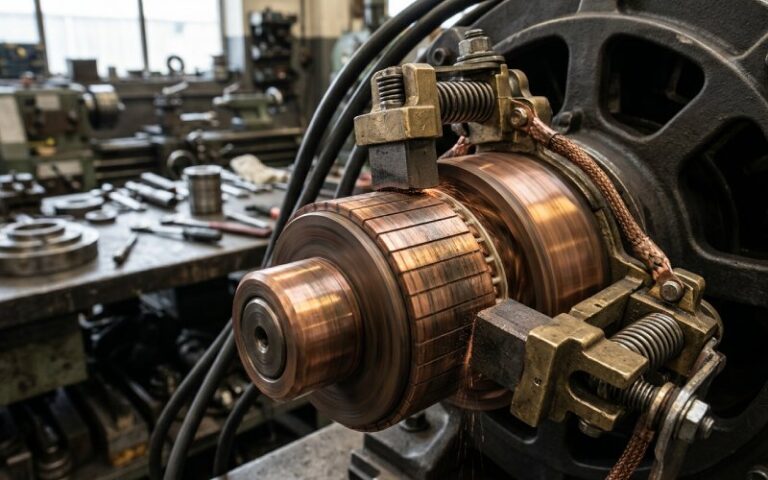
Commutator Sparking and Wear: Why Brushes Must Align With the Motor Neutral Plane
The motor neutral plane is the running position where the coil under the brush can reverse current with the…
DC Motor Squealing Noise: Is It the Carbon Brush or the Commutator?
When a DC motor starts squealing, most people replace the brushes first. Sometimes that works. Sometimes the noise goes…
How to Check a Commutator for Roundness or Runout
Most bad readings start before the indicator touches copper. That is usually the whole job, really. Not the gauge.…