Brushed vs Brushless Power Tools: Why Commutator Motors Still Make Sense
People usually ask the question in the wrong order.
They ask which motor is better.
In actual tool development, that is not the first question. The first question is what the tool has to survive, what it has to cost, what power source it uses, how it will be serviced, and how much control hardware the platform can carry before the margin starts to disappear.
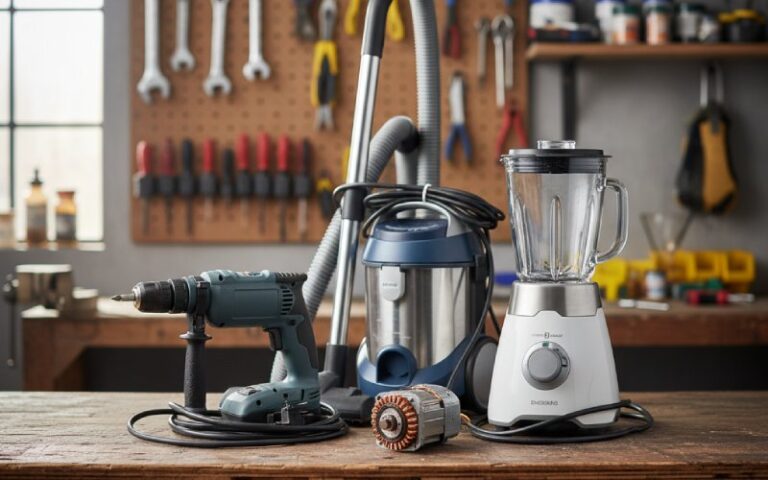
Once you look at it that way, the answer gets less fashionable and more useful. Many power tools still use brushed motors, meaning commutator-based motors, because the whole system still works better for the job. Not every job. Still, many.
Table of Contents
The motor is not chosen alone
A motor never enters a tool by itself.
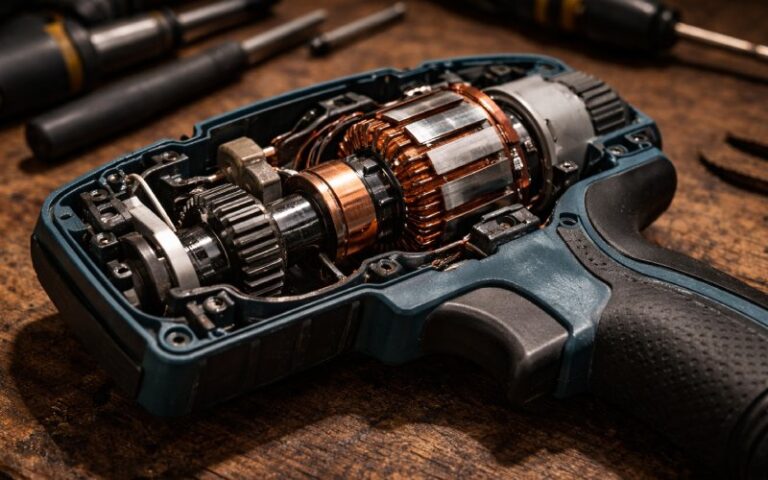
It comes with a trigger architecture, a speed-control method, a cooling path, a gearbox, a housing volume, an overload pattern, and a warranty target. In corded programs especially, the motor choice also carries a power-supply assumption. If the product is expected to deliver hard starts, high speed, and short aggressive duty cycles from single-phase mains, a brushed commutator setup is still a very practical answer.
That is why the brushed vs brushless discussion often goes sideways. It gets reduced to motor efficiency, then everything else gets treated as a footnote. In tool engineering, the footnotes usually decide the project.
Why many OEM programs still stay with commutator motors
1. Lower system cost still wins real business
Brushless is not just a motor change. It is a system change.
Once a tool moves to brushless, the product usually needs electronic commutation, a more involved control stage, protection handling, fault behavior validation, and tighter coordination between motor and controller. That can be the right move. It can also push a cost-led project out of range very quickly.
A brushed commutator motor carries the switching function mechanically. That sounds old. It also removes electronics, firmware burden, and part of the validation load. In our quoting work, when a corded tool can stay simple, the motor-drive section often lands meaningfully lower at BOM level with a commutator architecture. That difference is not cosmetic. It decides which SKU survives price review.
2. Corded power tools still reward this architecture
In battery platforms, brushless has a strong natural case because runtime, thermal efficiency, and electronic control all carry real value. In corded platforms, the tradeoff changes. A commutator motor can operate in the kind of high-speed, high-starting-torque environment that many corded tools still need, while fitting a simpler electrical architecture. For intermittent-duty portable tools, that remains a very workable design path.
So no, the continued use of commutator motors in power tools is not just inertia. In many corded tools, it is still the shortest path to a commercially viable product.
3. Starting behavior matters more than spec-sheet elegance
Power tools do not live gentle lives.
They start under load. They get jammed. They are feathered on the trigger. They run in dust. They see uneven maintenance. They are expected to recover from user behavior that would make a laboratory test setup look polite.
A commutator motor handles harsh starts well. High starting torque, wide speed range, compact package. The efficiency is not the headline feature, obviously. That is not the point. The point is that for short-burst output and aggressive acceleration, the package still earns its place.
4. Simpler control reduces development risk
This is the part procurement teams feel, even when they do not name it directly.
A brushed motor is easier to drive. A brushless motor needs electronic commutation, and that means more control logic, more fault cases, more driver-stage design, and more things that must behave correctly during startup, stall, overload, voltage variation, and thermal events. Brushless delivers real benefits. It also increases control complexity. Even vendor application notes state this very plainly.
For premium platforms, that extra control complexity is worth paying for. For price-sensitive programs with narrow performance targets, sometimes it is not.
That is the split. Not old versus new. More like simple versus more managed.
5. Serviceability still matters in many markets
Brush wear is real. Commutator wear is real. Nobody serious denies that.
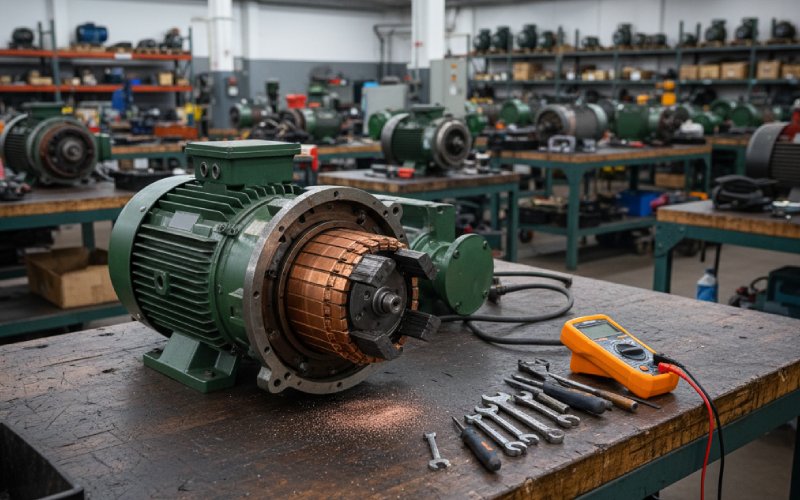
But field service is not measured only by wear rate. It is measured by failure mode. A worn brush is visible. A damaged controller board is usually not. A buyer serving repair-driven markets may still prefer a system with known mechanical service points over one that shifts more value into electronics.
Brushless usually gives lower maintenance and longer life. That advantage is well established. The part many teams miss is that lower maintenance does not always mean easier field recovery when something does fail. Some channels still care more about predictable repair paths than about ideal lifetime on paper.
Where brushed commutator motors still make the most sense
Here is the more practical comparison we use during project reviews.
| Decision point | Brushed (commutator) motor | Brushless motor |
|---|---|---|
| Entry cost | Lower motor-drive system cost when the platform can stay electrically simple | Higher upfront system cost |
| Control architecture | Simple drive approach, lighter electronics burden | Electronic commutation required, more control design work |
| Power source fit | Very practical in many corded tools | Strong fit for battery-led platforms |
| Starting behavior | Strong launch feel and high starting torque | Strong performance, but more dependent on controller strategy |
| Intermittent-duty tools | Still very competitive | Competitive, but often overbuilt for low-price corded SKUs |
| Efficiency and runtime | Weaker | Stronger |
| Maintenance profile | Brush and commutator wear must be managed | Lower routine maintenance |
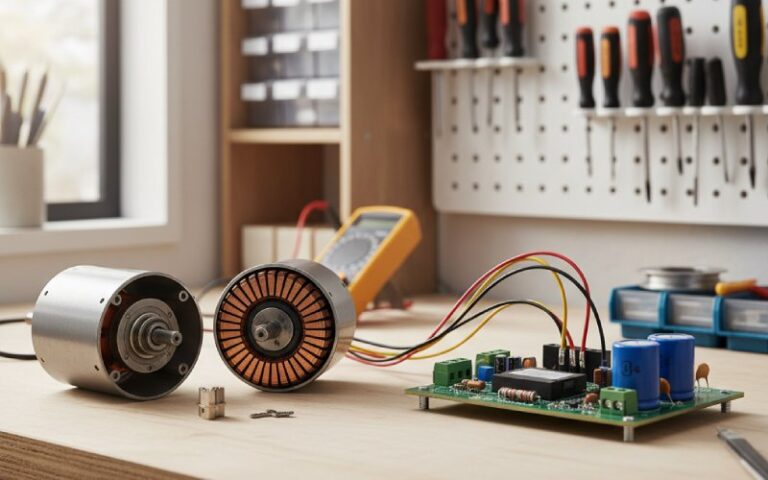
| Advanced features | Limited unless extra electronics are added | Better base for speed regulation, protection logic, sensing, and platform intelligence |
| Best commercial fit | Cost-led, corded, repair-aware product lines | Premium, battery-first, feature-rich product lines |
Why the commutator still matters from a factory point of view
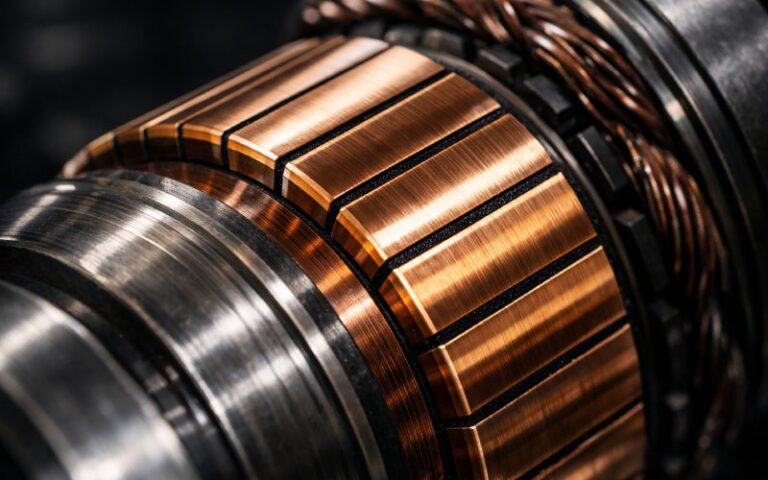
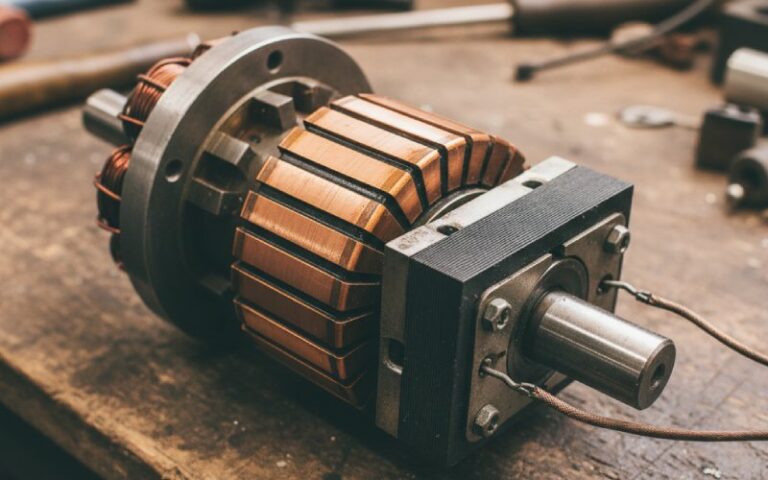
Because the commutator is not a leftover part to us. It is where a lot of the real motor behavior gets decided.
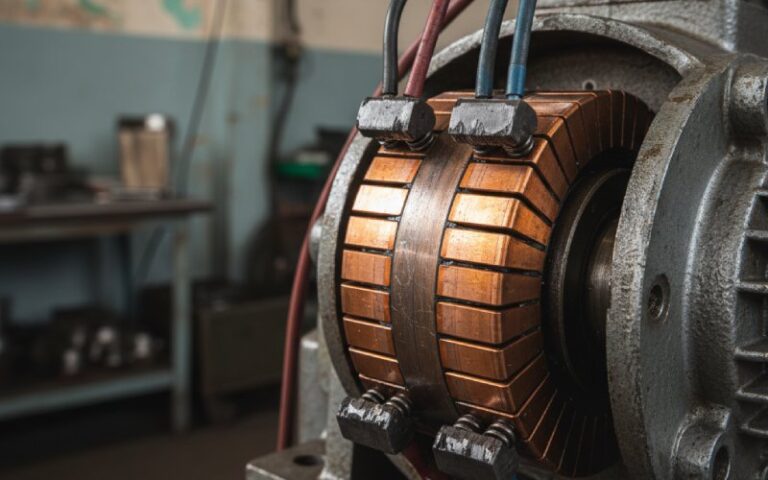
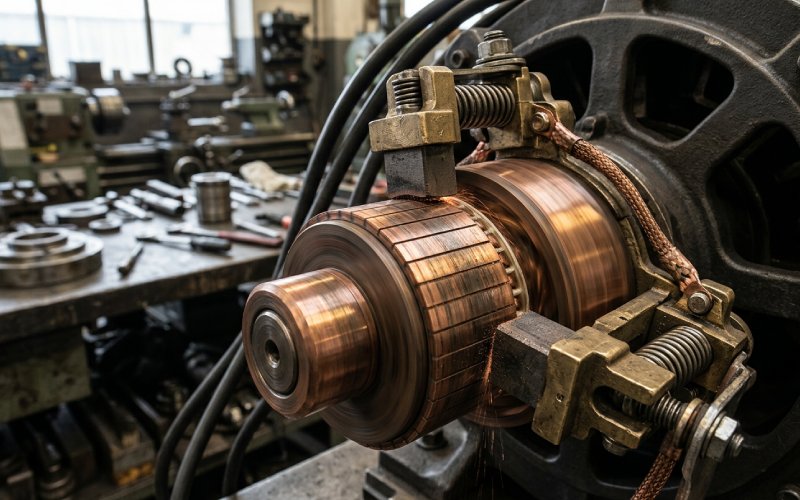
Material grade, segment consistency, mica control, turning quality, brush-track behavior, copper balance, thermal stability at the riser area, overspeed stability, spark behavior at the working current band. If those details are handled correctly, the motor behaves like a stable production component, not a cheap compromise.
This is also why many buyers underestimate the topic. They compare motor labels, then skip the commutator quality discussion. In production, that is backwards. Two tools may both be called brushed. Their field performance can still separate quickly because the commutator system was not built to the same standard.
Where brushless is the better answer
There are plenty of cases where brushless should win.
If the platform is battery-first, sold on runtime, expected to run longer cycles, or designed around tighter speed regulation and smarter protection functions, brushless usually has the stronger engineering case. Higher efficiency, lower maintenance, better power density, and more electronic control headroom are real advantages, not marketing phrases.
We do not try to force a commutator motor into those programs. That is not good engineering.
But the reverse mistake happens too. Some teams move to brushless because the market language sounds cleaner, even when the product brief is still cost-led, corded, intermittent-duty, and service-sensitive. In that case, the switch can raise complexity faster than it raises actual value.
The short answer
Many power tools still use commutator motors instead of brushless because a power tool is not a motor demo.
It is a cost target, a duty cycle, a power source, a repair model, and a control architecture packed into one housing. In that full-system view, brushed commutator motors still offer a useful combination of lower system cost, strong starting behavior, practical corded-tool fit, and manageable manufacturing risk.
That is why they are still here.

Need a commutator decision for your next tool platform?
If you are evaluating a brushed motor program for a drill, grinder, saw, mixer, blower, or other high-speed portable tool, our engineering team can support the commutator side earlier in the design cycle.
We work on application-based commutator selection, material matching, dimensional review, and consistency control for OEM and private-label projects where cost, stability, and production predictability all matter.
Next step options:
- Request commutator specifications
- Discuss your motor platform with our engineering team
- Send your drawing or sample for feasibility review
FAQ
What is the difference between a brushed motor and a commutator motor?
In power-tool discussions, a brushed motor usually refers to a motor that uses brushes and a commutator for mechanical switching. In other words, the commutator is the core switching component inside that brushed motor system.
Why are brushed motors still used in power tools?
Because many tools are still designed around cost control, strong starting behavior, simple control architecture, and corded operation. In those conditions, a brushed commutator motor can still be the more practical product decision.
Are brushless power tools always better?
No. Brushless is often better for battery runtime, efficiency, lifetime, and advanced electronic control. It is not automatically better for every corded, intermittent-duty, or price-sensitive platform.
Why do corded power tools still use commutator motors?
Because the architecture fits the job. High speed, strong starting torque, and simpler electrical control still make sense in many corded tools, especially where the product must stay commercially sharp.
Do brushed motors cost less than brushless motors?
In many projects, yes at the system level. The motor is only part of the picture. Once you include the controller, protection electronics, validation effort, and platform complexity, brushed designs often remain the lower-cost route.
When should an OEM choose brushless instead of brushed?
Choose brushless when the tool is battery-led, runtime-sensitive, feature-rich, or expected to run longer duty cycles with tighter speed control. Choose a brushed commutator system when the project is corded, cost-led, intermittent-duty, and needs a proven, production-friendly architecture.
Does commutator quality really affect tool life?
Yes. Commutator material, concentricity, surface quality, segment integrity, and brush-track behavior all influence sparking, wear, thermal stability, and consistency in real use. Tool life is not decided by the word “brushed” alone.