Commutator Mica Undercutting: Why Is Only Half the Insulation Removed?
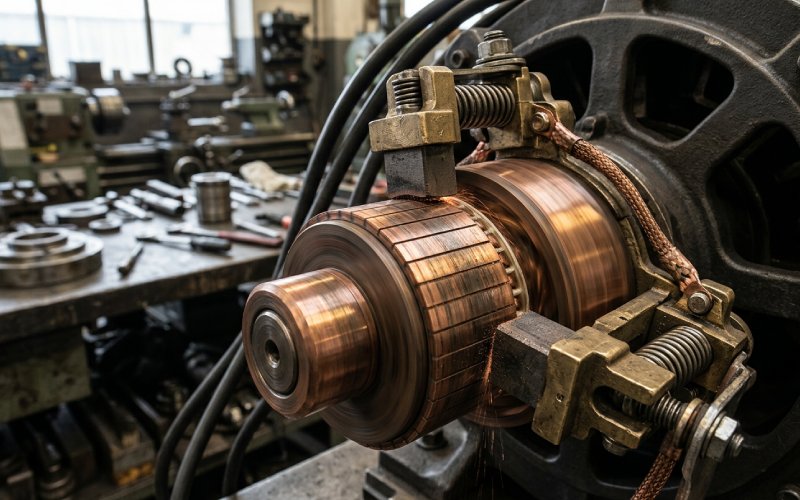
When buyers ask why only half the insulation is removed from a commutator, they are usually asking about commutator mica undercutting.
The short answer is not “because that is the standard.”
It is because the brush only cares about the upper running zone. The lower insulation still has work to do.
In our factory, we never treat mica removal as a cosmetic step. It is a brush-track control step. Too little undercut, and the brush starts riding hard insulation. Too much undercut, and you remove material that was never causing the problem in the first place. The correct cut is controlled. Not generous. Not symbolic. Not based on a shop slogan about “half.”
Table of Contents
What Commutator Mica Undercutting Actually Controls
A commutator does not fail at the slot because the slot looks wrong. It fails because the brush contact becomes unstable.
That is the point of undercutting.
We remove only the upper portion of the insulation so the mica stays below the copper running surface after turning and during service wear. The lower portion remains in place to preserve electrical separation and segment support.
What this controls in practice:
- Brush contact stability across the copper bar surface
- Segment edge behavior as the brush passes from bar to bar
- Wear balance between copper and insulation
- Debris retention risk inside the slot
- Longer maintenance intervals when the machine is working under real load
This is why “remove all the insulation” is the wrong instinct. The brush does not need a deep trench. It needs clearance at the track.
Why Partial Insulation Removal Protects Brush Contact
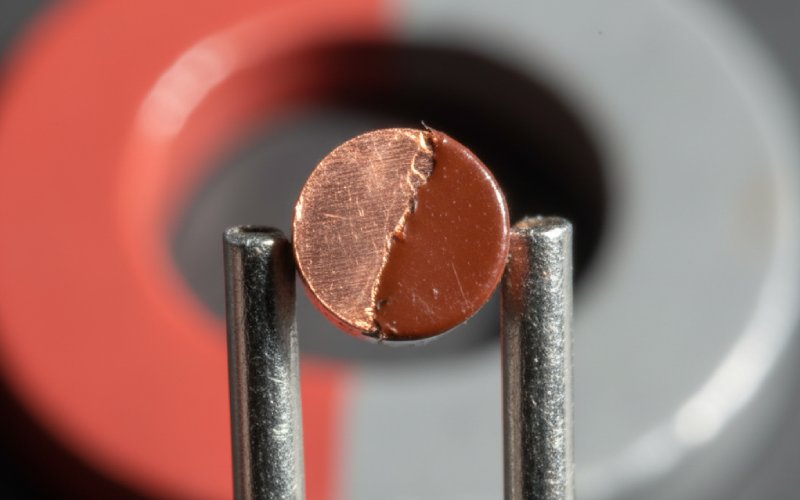
Copper wears. Mica barely does. That mismatch is the whole issue.
If the mica is left too high, the copper wears down first and the insulation starts standing proud. Then the brush stops seeing a smooth copper path. It starts crossing alternating zones of softer copper and harder insulation. Contact pressure changes. Film formation gets worse. Edge marking begins. Later, the usual sequence shows up: noise, brush wear, unstable commutation, sparking.
A correct commutator mica undercut prevents that sequence before it starts.
In service, we want:
- the mica recessed below the copper track
- the segment edges clean, not feathered
- the slot free of packed dust and loose fines
- the brush entering and leaving each bar without impact
That is the real target. Not a visual groove for its own sake.
Correct Mica Undercut Depth in Commutator Manufacturing
There is no serious production rule that says “always remove half.” That phrase survives because it is easy to repeat. It is not how we control quality.
In our factory, undercut depth is judged against the actual running surface and duty condition. We look at bar geometry, expected brush pressure, contamination level, speed range, and maintenance cycle. A commutator for clean, stable duty is not judged the same way as one running in dust, carbon-heavy service, or repeated stop-start load.
A correct undercut depth should do three things:
- keep the mica safely below the copper wear path
- avoid unnecessary weakening of slot geometry
- allow reliable cleaning and edge finishing after cutting
If the slot is too shallow, the mica will interfere with the brush track.
If it is too deep, you do not gain commutation quality. You just create more empty slot than the duty needed, and that can make cleanliness and edge control harder over time.
So the right question is not, “How much insulation was removed?”
The right question is, “Is the mica recessed enough for stable brush running without overcutting the slot?”
What Happens When Commutator Slots Are Too Shallow or Too Deep
This is where weak process control usually shows itself. Not on day one, maybe. Later.
| Undercut condition | What we see at inspection | What happens in operation | Business impact |
|---|---|---|---|
| Too shallow | Mica close to flush, rough brush entry, early edge marking | Brush instability, faster wear, poor film, higher sparking risk | More maintenance stops, more brush replacement, shorter service intervals |
| Correct depth | Mica below track, clean slot, controlled edge finish | Stable brush contact, smoother commutation, predictable wear | Lower downtime risk, better operating consistency, easier maintenance planning |
| Too deep | Slot looks aggressive, unnecessary recess, harder debris control | No real gain in contact quality, higher sensitivity to slot contamination | More rework risk, less process consistency, avoidable quality variation |
| Poor post-cut cleaning | Loose fines or residue left in slot | Heat, tracking, dirty running surface, unstable contact | Extra inspection time, early complaints, avoidable field issues |
| Poor edge chamfer | Burrs or sharp bar edges | Brush damage, streaking, localized wear | Higher service cost and earlier brush intervention |
Buyers usually focus on copper finish first. Understandable. But field failures often start at the slot, the edge, or the post-cut cleaning stage.
How We Control Commutator Slot Undercutting in Production
This is not a hand-feel operation in our process. It is controlled, checked, then checked again.
Our manufacturing approach is straightforward:
- We machine the running surface first so the undercut is referenced to the actual copper track.
- We cut the mica to a controlled recess, not to a vague visual impression.
- We inspect slot consistency across the full commutator, not just one section that looks good.
- We remove burrs and finish segment edges so the brush transition stays clean.
- We clean the slot thoroughly before final inspection and release.
We do not approve a commutator because the slot looks deep.
We approve it when the slot depth, edge condition, and brush-track behavior make sense together.
That matters. A slot can look sharp and still run badly.
Slot Profile, Debris, and Duty Cycle
Not every application punishes the slot the same way.
On low-speed or contaminated duty, debris behavior starts to matter more. A slot profile that works well in cleaner service can hold more conductive dust than expected in harsher conditions. On repetitive heavy-duty cycles, poor slot cleaning also becomes more expensive because the machine keeps reintroducing contamination into the same brush path.
This is why buyers should not evaluate commutator undercutting as a single isolated dimension. The deeper issue is process matching:
- operating speed
- load pattern
- contamination level
- brush grade compatibility
- service interval expectations
A supplier that only gives you a turned diameter and a polished copper surface is not giving you enough process information.
What Buyers Should Ask a Commutator Supplier About Undercutting Quality
For sourcing teams, this is where technical language becomes purchasing language.
Ask these questions:
- How do you control commutator mica undercut depth after turning?
- How do you verify slot consistency around the full circumference?
- How do you remove burrs and finish segment edges?
- How do you clean the slots before shipment?
- How do you adjust slot geometry for dirty, low-speed, or high-load duty?
- What inspection points do you use before release?
If the supplier answers only with surface finish numbers and general statements about “good workmanship,” that is not enough.
A reliable commutator supplier should be able to talk clearly about slot depth control, edge condition, debris management, and brush-track stability. Those points decide how the part behaves after installation. Not just how it looks in a carton.
Why This Matters in OEM and Replacement Commutator Sourcing
Poor undercutting does not always fail immediately. That is part of the problem.
It shows up later as:
- brush wear that seems too fast
- unstable running after a short service period
- repeated maintenance on machines that should be holding longer
- unexplained commutation complaints that keep getting blamed on brushes alone
In OEM projects, that leads to warranty noise.
In replacement markets, it leads to distrust of the part even when the copper and base dimensions were correct.
For buyers, the cost is not just the component price. It is downtime, service hours, replacement frequency, and the risk of a machine being reopened for a preventable reason.
That is why we treat commutator mica undercutting as a functional quality control item, not a finishing detail.
FAQ
1. Why is only half the insulation removed from a commutator?
Because only the upper running zone needs to be recessed below the copper track. The lower insulation still provides electrical separation and structural support between segments. In practice, the goal is controlled brush clearance, not total insulation removal.
2. Is “remove half the insulation” an actual manufacturing standard?
No. It is a rough workshop phrase. Real commutator manufacturing uses controlled mica undercutting based on bar geometry, running surface condition, and duty cycle.
3. What happens if the mica is not undercut enough?
The mica can stand too close to the brush path. As copper wears, the insulation starts interfering with contact. That usually leads to unstable brush running, faster wear, poor film formation, and a higher chance of sparking.
4. Can a commutator slot be cut too deep?
Yes. Overcutting does not automatically improve commutation. It can make slot control less stable, increase contamination sensitivity, and remove more material than the brush path actually requires.
5. Why is edge finishing important after mica undercutting?
Because the brush does not only run on the copper face. It also crosses segment edges constantly. If the edge is burred or left sharp after cutting, the brush will show it very quickly.
6. What should buyers inspect before approving a commutator?
Check more than copper appearance. Review mica recess, slot cleanliness, edge finish, circumferential consistency, and whether the supplier can explain how the undercut was controlled for the intended duty.
Need a Commutator Reviewed for Your Duty Cycle?
If you are sourcing OEM commutators, replacement commutators, or custom commutator manufacturing for high-load, low-speed, or contaminated operating conditions, send us your drawing, operating data, or sample part.
We can review:
- mica undercut requirements
- slot profile suitability
- brush-track stability points
- edge finish risks
- inspection priorities before production
A commutator that looks acceptable on the bench can still create avoidable service problems in the field. We prefer to correct that at the manufacturing stage.