What Is a Commutator Skimmer? Applications, Machine Types, and Buyer Checklist
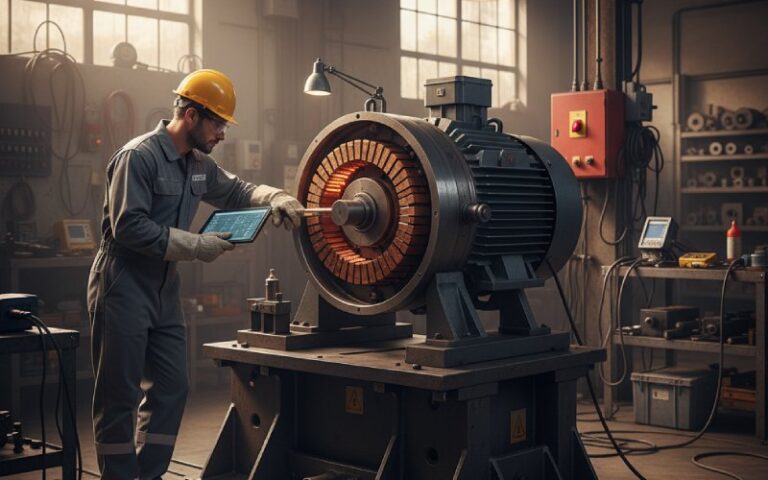
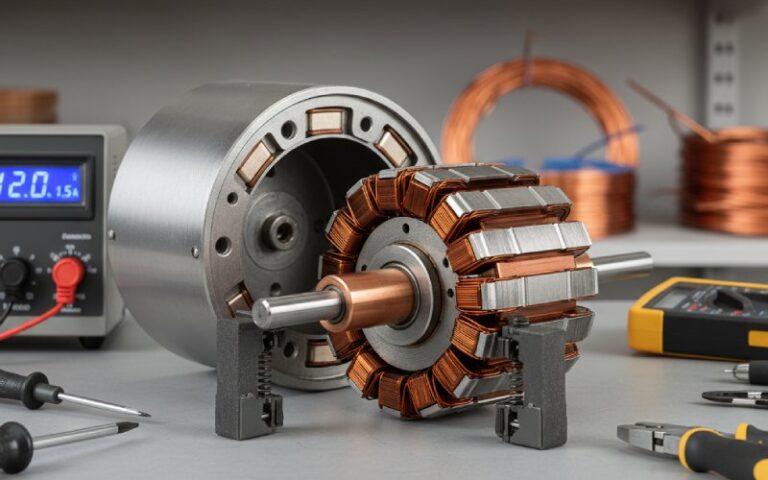
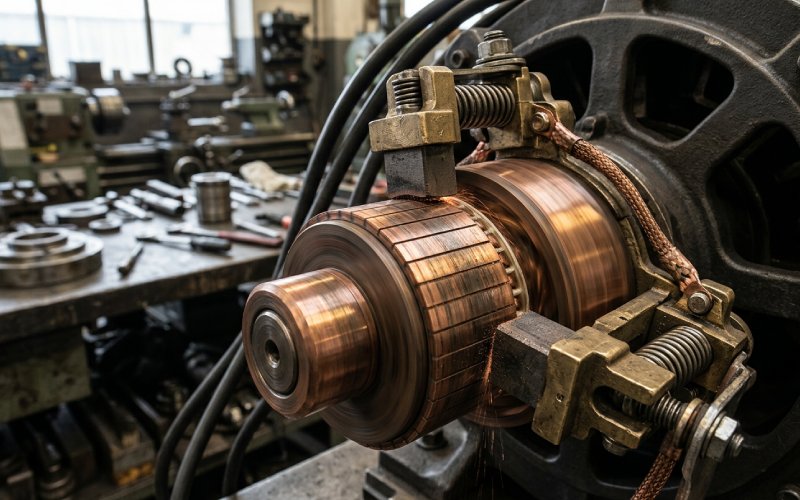
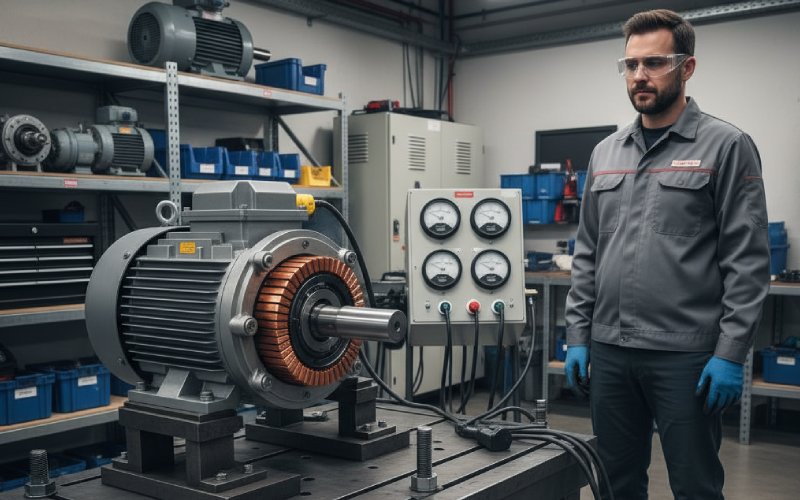
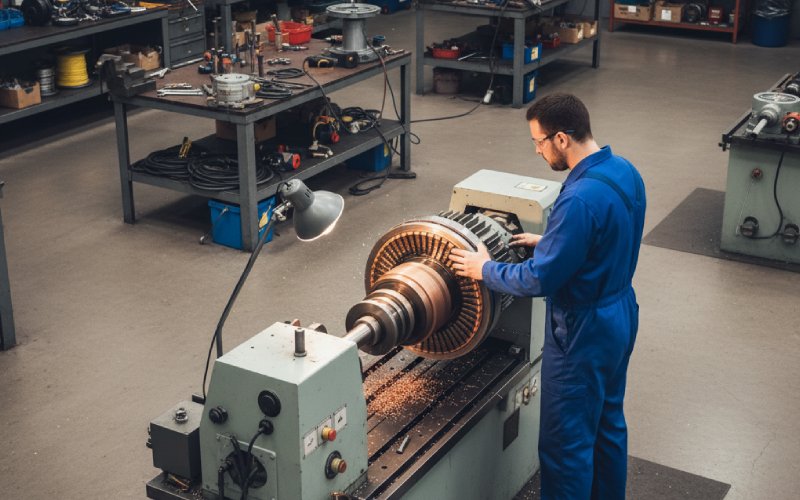
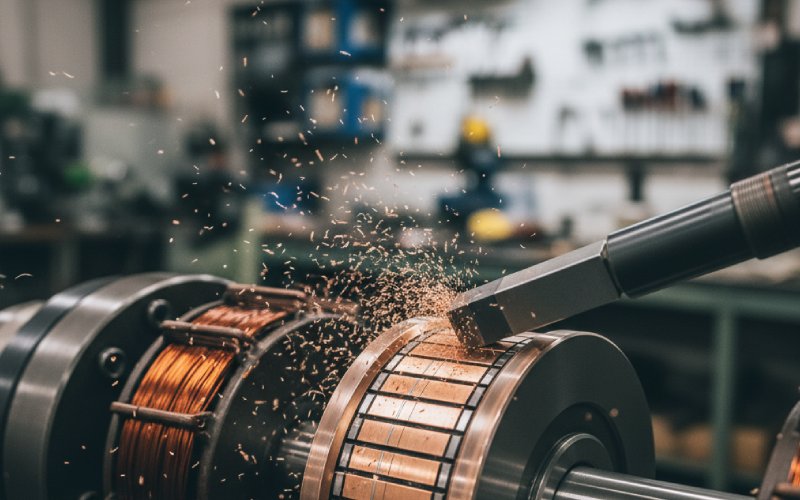
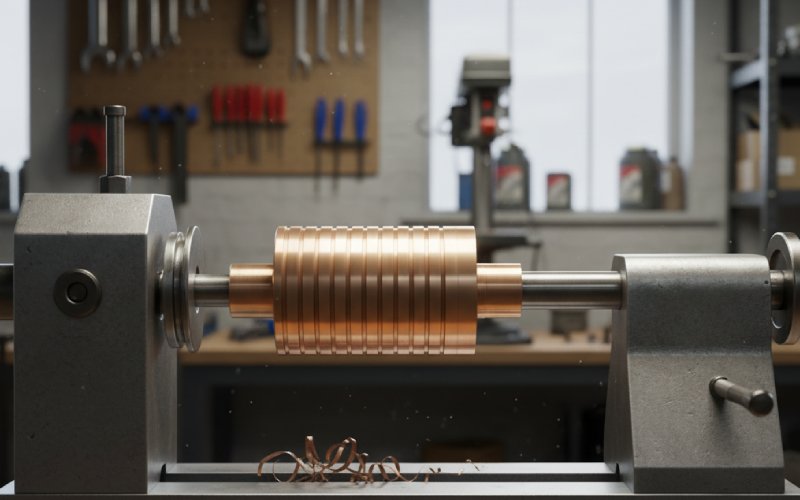
A commutator skimmer is a machine, or a machining step, used to restore the running surface of an armature commutator by removing a light and controlled layer of copper. The target is simple enough: recover a stable brush track, correct surface wear or bar height variation, and prepare the commutator for the next steps such as mica undercutting, deburring, cleaning, and brush seating.
In some workshops, people call the same job a commutator turning operation. In some RFQs, the machine is listed as a commutator turning machine. The naming shifts. The function stays close. The machine cuts the copper surface back into a usable condition without wasting commutator life through unnecessary stock removal.
Table of Contents
What Problems a Commutator Skimmer Is Meant to Fix
A commutator skimmer is used when the surface is still recoverable but no longer suitable for stable brush contact.
Typical cases include:
- grooves on the brush track
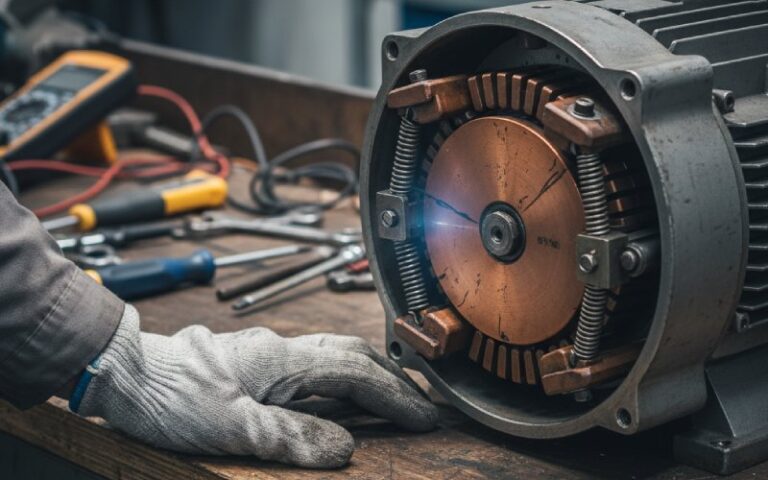
- local burning or dark tracking
- high bars or low bars
- flat spots after handling or storage
- out-of-round commutator surfaces
- uneven wear after service
- new armatures that still need final finishing before release
This matters because brush performance follows geometry more than appearance. A bright surface can still run badly. A surface with small burrs, poor roundness, or incorrect mica condition will usually show the same pattern later: unstable contact, higher wear, more dust, and avoidable rework.
A commutator skimmer fixes the surface condition and geometry. It does not fix everything around it. Loose bars, structural damage, bad winding work, and deeper commutation faults belong to another discussion.
Where the Commutator Skimming Process Fits
Skimming is one stage in a larger finishing sequence. Buyers sometimes treat it like a stand-alone copper-cutting step. That is usually where trouble starts.
A normal process chain looks like this:
| Process Stage | Main Function | What Needs Control |
|---|---|---|
| Incoming inspection | Confirm whether the commutator is suitable for skimming | Runout, wear pattern, groove depth, bar condition, shaft reference |
| Commutator skimming | Restore the brush track with a light controlled cut | Stock removal, cutting stability, part support |
| Mica undercutting | Recess insulation below the copper bar surface | Undercut depth, slot consistency, clean separation |
| Deburring and edge finishing | Remove sharp edges and loose material | Burr-free bar edges, no copper drag |
| Cleaning | Clear copper chips and slot contamination | Clean slots, clean track, no trapped debris |
| Seating preparation or downstream assembly | Prepare the part for stable brush contact in service | Surface condition, no handling damage |
| Final inspection | Confirm release quality | Surface uniformity, mica condition, runout, visual defects |
That order matters. If the skimming pass is clean but mica is too high, the result is weak. If the cut is correct but burrs are left on the segment edges, the result is weak again. A commutator skimmer should be evaluated as part of a process, not as an isolated machine purchase.
Commutator Skimmer vs Commutator Turning Machine
For most B2B buyers, these terms overlap.
Commutator skimmer usually points to the finishing function: a light, controlled cut used to restore the commutator surface.
Commutator turning machine is often the broader equipment term. It may describe a stand-alone machine, a repair-type setup, or a production-line machine that includes skimming as one part of the total cycle.
So the better question is not which term is correct. The better question is this:
- Is the machine for repair work or new armature production?
- Is the cut only for light finishing, or also for higher correction range?
- Is mica undercutting included or separate?
- Is the machine built for one part family or many sizes?
- Is the buyer asking for a bench machine, a semi-automatic station, or a line-integrated system?
That is where real machine selection starts.
Main Commutator Skimmer Machine Types
This is the section many buyers actually need, even if they do not ask for it clearly in the first email.
1. Stand-alone skimming machine
This type is used when the main need is surface restoration only. The machine focuses on the turning pass and part support. Mica undercutting, deburring, and inspection are usually handled in separate stations.
It suits factories that already have downstream equipment or want a simpler machine layout.
2. Skimmer with undercutting function
This type combines copper surface skimming with mica undercutting in one solution or in one linked machine cell. It reduces transfer steps and helps control handling damage between operations.
It suits buyers who want tighter process continuity and fewer manual transfers.
3. Semi-automatic commutator turning machine
This type usually combines manual loading with controlled machining movement, preset cycle logic, or assisted positioning. It gives more repeatability than general-purpose turning methods while staying below the cost and complexity of a full automatic line.
It suits medium-volume production and repair operations with a broader part mix.
4. Fully automatic line-integrated skimming machine
This type is designed for armature production lines where output, repeatability, and reduced operator dependence matter more than flexibility alone. It may connect with indexing systems, automatic loading, undercutting, deburring, inspection, or data collection.
It suits higher-volume production with stable part families and tighter process windows.
5. Repair-shop type machine
This type is selected for maintenance and recovery work rather than new part production. The part range may vary more. The defect condition varies more too. Machine flexibility becomes important, but so does correct locating, because repaired parts often come in with mixed wear history.
It suits service centers, repair workshops, and mixed-batch applications.
6. Production-type machine for dedicated armature programs
This type is built around known part dimensions, target output, and process repeatability. The design logic is narrower and more disciplined. Less universal, usually more stable inside its actual size range.
It suits OEM and volume armature manufacturers that already know their product window.
How to Choose the Right Machine Type
The wrong selection usually comes from matching the machine name to the inquiry, instead of matching the machine structure to the part and process.
A buyer should look at these points first:
1. Part locating and datum control
If the shaft support or locating method is unstable, the cut will follow setup error rather than true commutator condition. The copper may look fresh after machining. The brush track may still be wrong.
2. Required correction range
Some applications need only a light finishing cut. Others need the machine to recover more serious wear or geometry variation. Those are not the same machine requirement.
3. Part size range
Commutator OD, shaft diameter, armature length, and part weight all affect machine structure. A machine that claims wide coverage on paper still has to hold stable support in real production.
4. Process after skimming
If undercutting, deburring, and cleaning are required, decide whether they should be integrated or handled as separate stations. This changes both machine scope and line layout.
5. Output target
A machine that fits the part but misses the required daily output is not a correct solution. Manual loading, semi-automatic cycling, and full automation belong to different production cases.
6. Defect pattern
A buyer should define whether the main issue is groove wear, out-of-roundness, burrs, bar variation, or inconsistent upstream assembly. Otherwise the quotation stays generic and the root problem stays untouched.
What Buyers Should Send Before Requesting a Quotation
A serious quotation starts with part data, not with a price request alone.
| Data Item | Why It Matters | What Happens When It Is Missing |
|---|---|---|
| Commutator outer diameter range | Sets machine capacity and tooling range | The quoted machine may not cover actual parts |
| Segment count | Affects process behavior and inspection focus | Surface risk is judged too loosely |
| Shaft diameter and locating reference | Determines clamping and support method | Setup becomes unstable in real production |
| Armature length and weight | Affects rigidity and machine layout | Vibration and positioning problems show up later |
| Required output per shift | Defines automation level and cycle target | The machine fits the part but not the factory pace |
| Current defect photos | Shows whether the issue is wear, runout, burrs, or assembly variation | The supplier quotes the wrong machine type |
| Need for undercutting or deburring | Decides whether the machine should be stand-alone or linked | Extra stations are discovered too late |
| Drawings or sample dimensions | Speeds up technical matching | Quotation remains broad and non-committal |
This part is often skipped. Then the machine discussion drifts into general talk, which does not help either side much.
What a Good Commutator Skimming Solution Should Deliver
We use a simple standard.
A correct solution should do three things at the same time:
- restore the brush track with minimum copper removal
- maintain repeatable geometry across the real part range
- fit the actual downstream process after cutting
If one of these is missing, the solution is partial. It may still run. It usually creates extra work somewhere else.
FAQ
What is the difference between a commutator skimmer and a commutator turning machine?
In many cases, there is no major functional difference. “Commutator skimmer” usually points to the finishing operation or the surface-restoration function. “Commutator turning machine” is the broader equipment term used in quotations and machine descriptions.
When should a commutator be skimmed?
A commutator should be skimmed when the surface shows recoverable wear, grooves, bar height variation, local burning, or out-of-roundness, and when the part is still structurally suitable for restoration.
Can skimming replace mica undercutting?
No. Skimming restores the copper surface. Mica undercutting addresses the insulation level between segments. In many applications, both are required as part of the same finishing sequence.
Which machine type is better for a repair workshop?
A repair workshop usually needs a machine with broader part adaptability and stable manual or semi-automatic control, because the incoming part condition can vary from job to job.
What is the most common buying mistake?
Treating the machine as a simple copper-cutting device. The actual requirement usually involves locating accuracy, correction range, downstream processing, and output target together.
What should be checked after the skimming pass?
Surface uniformity, burr condition, mica status, cleanliness, and runout should all be checked before release. A clean visual finish alone is not enough.