
What Is a Commutator? A Straight-Talk Guide for Motor Buyers
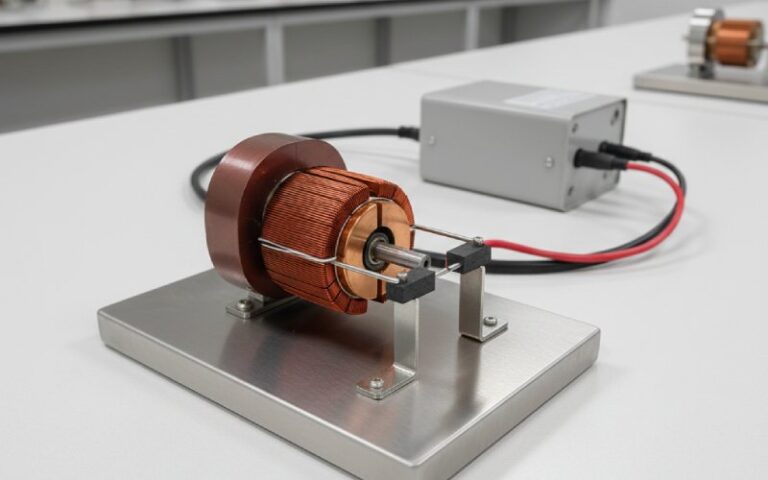
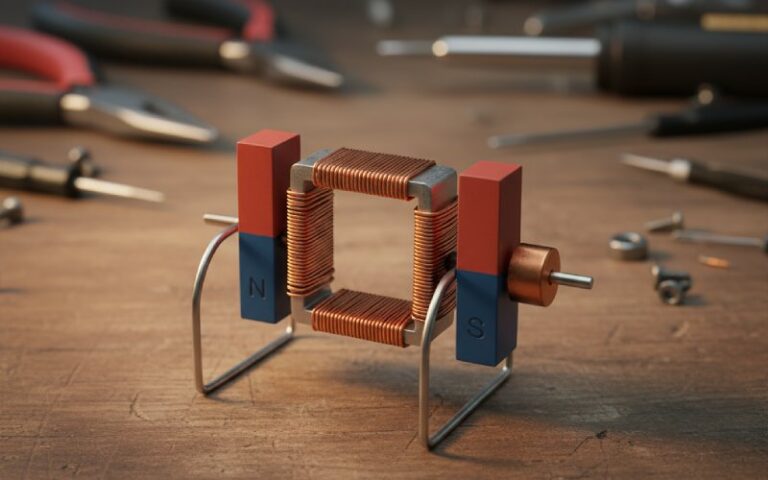
You already know that a commutator is the rotary electrical switch in DC motors and generators that reverses current in the armature so torque or DC output stays in one direction.
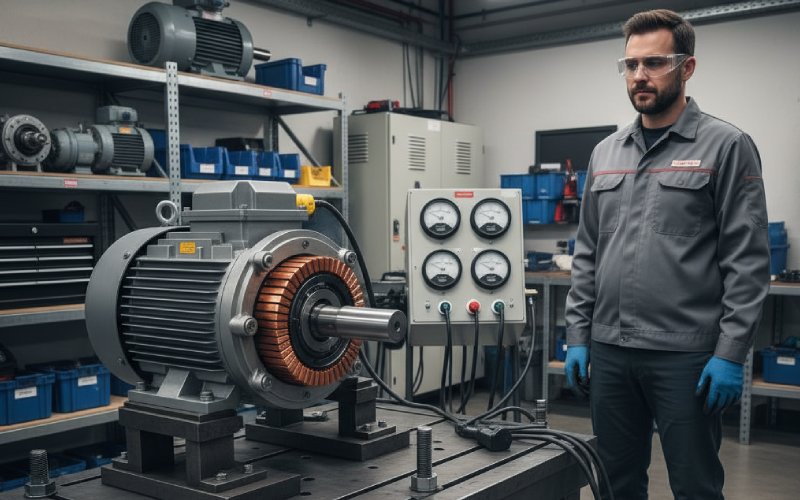
But this page is for people who actually buy, specify, or maintain machines that have commutators in them.
Table of Contents
1. Short answer: what is a commutator, practically?
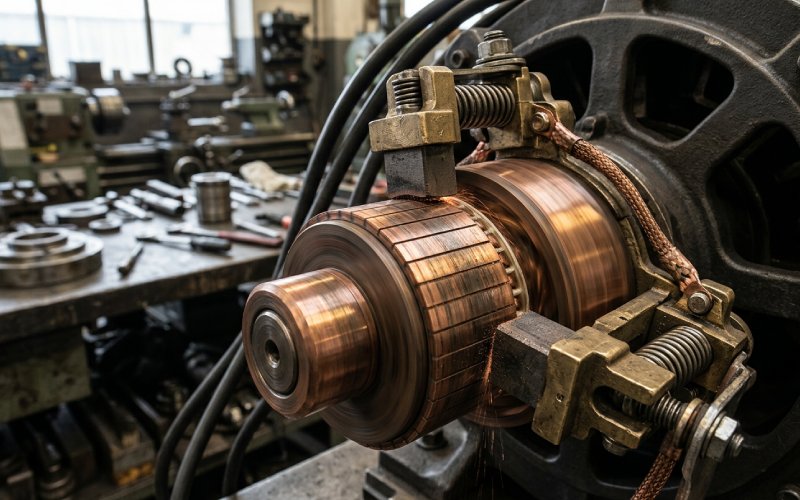
A commutator is:
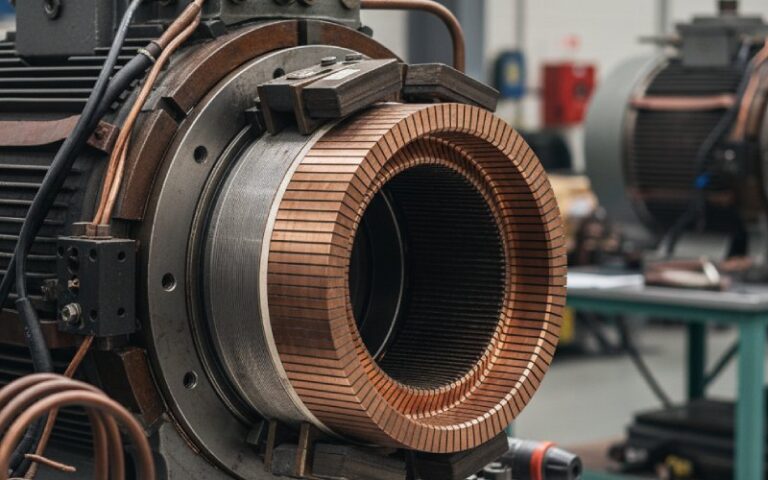
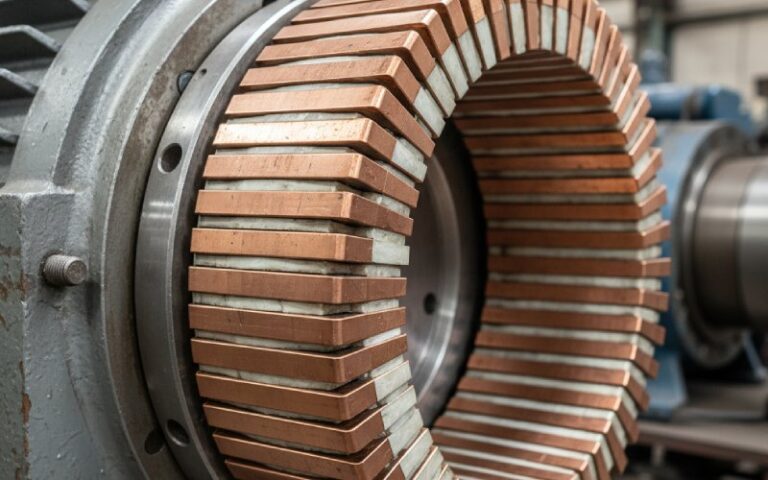
- A cylinder made of many copper segments, insulated from each other (often with mica or resin).
- Fixed to the rotor shaft.
- Sliding under carbon or graphite brushes connected to your external circuit.
Its job in real projects:
- In a DC motor: flip current in the rotor every half turn so the torque doesn’t reverse and the shaft keeps rotating in the same direction.
- In a DC generator / dynamo: mechanically “rectify” the alternating EMF in the armature to a one-direction DC output at the terminals.
That’s all. The rest is about how long it lasts, how stable the contact is, how much noise and loss you’re willing to tolerate.
2. Where commutators actually show up in B2B orders
If you’re sourcing motors or parts, you’re usually seeing commutators in:
- Brushed DC motors
- Low-voltage drives, actuators
- Industrial automation retrofits
- Universal motors
- Power tools, mixers, small appliances, some pumps – AC supply, but still a classic commutator on the rotor.
- Traction / crane / rolling-stock motors (older fleets)
- Starter motors for engines
- Special DC generators (excitation, test benches, legacy systems)
Every time you approve a specification that includes “brushes + commutator”, you’re also signing up for:
- Periodic brush replacement
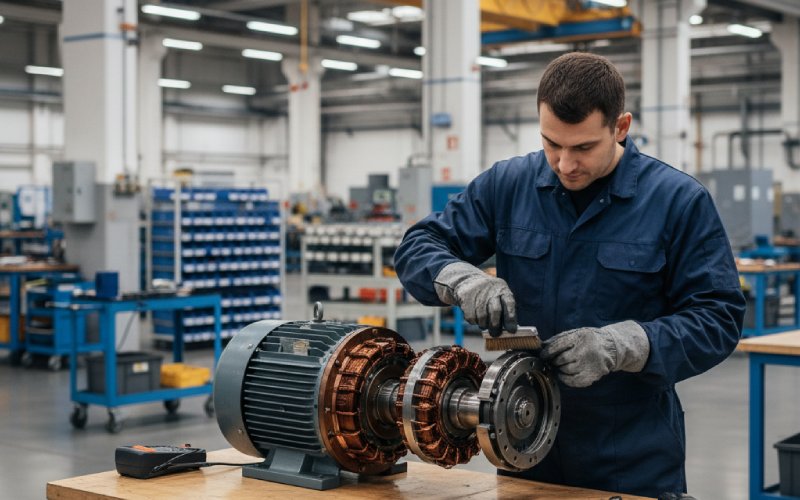
- Commutator turning or grinding during overhauls
- Downtime if someone ignores sparking too long
Mechanical contact is both the trick and the weak point. The copper–brush interface wears, heats, and eventually needs service.
3. Main commutator types (and what they’re good for)
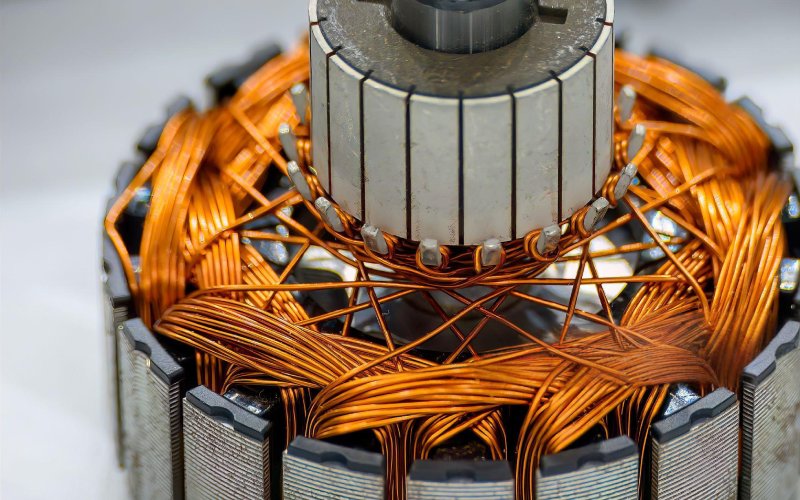
Most industrial buyers only really meet a few practical families. Names vary a bit by supplier, but the guts are similar.
Common commutator constructions
| Commutator type | Quick description | Typical use cases | Cost level* | Notes for buyers |
|---|---|---|---|---|
| Molded / plastic-mold | Copper segments embedded in molded plastic hub | Small DC motors, universal motors, tools | Low | Good for volume, limited size, watch heat class and plastic spec |
| Shell / banded | Individual copper bars clamped around an insulated cylinder, often with steel band | Medium–large DC motors, generators | Medium | Repairable; bars can sometimes be replaced, turned multiple times |
| V-ring / claw type | Segments arranged with undercut claws or V-shapes, strong mechanical lock | High-speed motors | Medium–high | Better at handling centrifugal forces, check max RPM rating |
| Flat / disc | Segments on a disc rather than a cylinder | Special actuators, tight axial spaces | Medium | Less common, double-check brush geometry and available tooling |
| Silver-copper specialty | Copper alloyed / plated with silver on surface | High-current, high-temperature, or critical low-resistance paths | High | Ask for resistivity numbers and test data, not just “silver content” marketing |
*“Cost level” here is relative, not a price list.
If you send an RFQ that says only “24-segment commutator, 30 mm OD”, you’ll get a product. Whether it’s actually the right type for your environment and service life is a different question.
4. Key specifications that matter more than the definition
In documentation, commutators look like a simple cylinder with bars and a few letters next to it. In procurement, a lot hides in those letters.
Here’s what engineers usually think about, even if they don’t always write it on the drawing:
Mechanical basics
- Outer diameter (OD), inner diameter (ID), total length Affects brush size, peripheral speed, and shaft choices.
- Segment count (bar number) More segments → smoother commutation, higher voltage capability, but also finer manufacturing and higher cost.
- Runout and roundness Too much eccentricity and your brushes bounce, arc, and eat themselves.
- Slot / riser design How the armature coils connect. This is usually locked by the motor design, but matters when you ask for “equivalent replacement”.
Electrical & material choices
- Copper grade
- Electrolytic tough pitch
- Oxygen-free, or silver-bearing for special cases
- Insulation between segments
- Mica for large machines
- Resin or molded plastic for small motors
- Bar-to-bar resistance & dielectric tests Suppliers should have routine tests here; you don’t need the formulas, you just want repeatability.
Thermal & duty questions
- Continuous or intermittent duty?
- Ambient, hot-spot temperature expectations?
- Cooling: open, forced air, enclosed?
You don’t need to write essays. But if you skip these topics, the supplier guesses. And their guess is biased toward easier production and lower cost, unless you tell them otherwise.
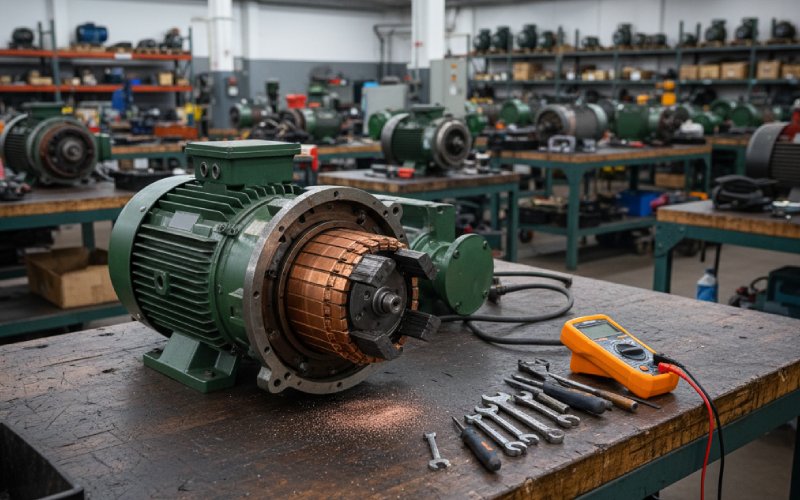
5. Typical commutator failure patterns (and what they try to tell you)
You can read full standards about commutator maintenance. Here’s the field version.
- Uniform dark brown film on copper
- Usually healthy. Normal patina between copper and carbon brush.
- Heavy grooving across bars
- Brushes too hard or contaminated dust. Sometimes misalignment.
- Localized burned bars
- Often one coil or connection with higher resistance; could also be a spring pressure issue on one brush arm.
- High mica (insulation proud of copper)
- After several turnings, mica needs undercutting again. If not, brushes ride on mica and lose contact.
- Severe out-of-round surface
- Rotor balance or bearing problems; commutator just reports the issue by wearing unevenly.
Almost every “mystery” motor fault with brushes and sparks comes down to some combination of:
- Wrong brush grade / pressure
- Commutator geometry out of spec
- Environment (dust, oil, humidity) not considered during design
The exact physics is in textbooks. For maintenance planning, you mostly need pattern recognition and a clear service limit (surface roughness, max runout, minimum diameter).
6. Commutator vs armature vs brush – fast alignment
People still mix these three words in RFQs and purchase orders, which complicates sourcing.
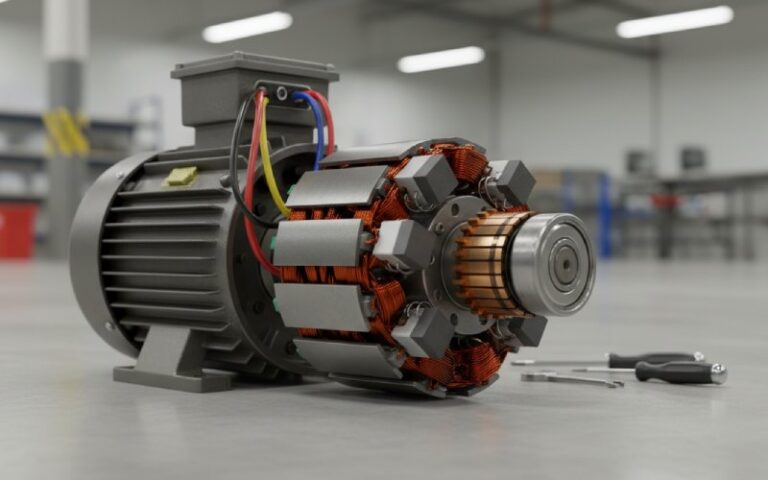
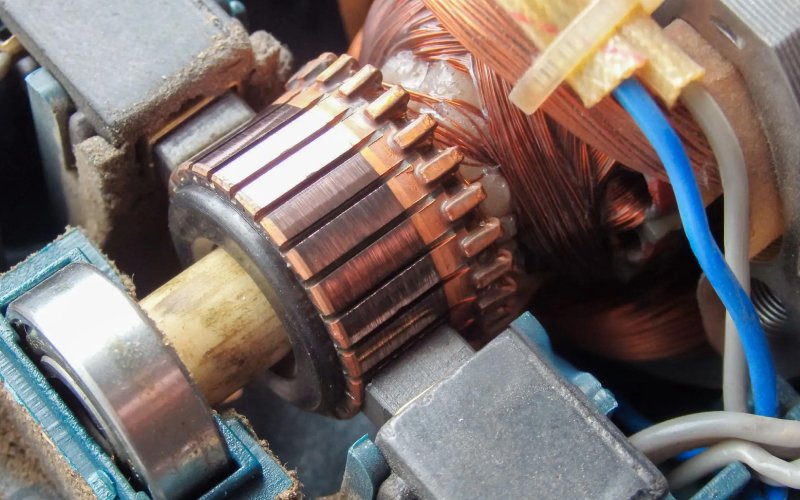
- Armature – the rotor core + windings.
- Commutator – the segmented copper assembly fixed to that same rotor, with connections to each winding.
- Brushes – stationary contacts (usually carbon/graphite blocks) that press on the commutator and connect to your supply or load.
If you want accurate quotes, your documents should specify which part you mean. “Need new armature” is not the same as “need new commutator and will reuse armature iron”.
7. Why commutators still exist when brushless is everywhere
Modern drives prefer brushless DC or AC machines for efficiency and minimal maintenance. Commutated machines are gradually being replaced in many applications.
Yet commutators keep appearing on purchase orders because:
- Existing plants have huge installed bases of DC machines.
- Replacing a motor plus its drive and mechanical interface is more disruptive than replacing brushes and turning a commutator.
- Universal motors remain convenient in portable tools: simple control on AC mains, high speed, high power density.
So the realistic strategy is often: manage commutators well instead of pretending they’ll vanish next year.
8. Checklist for specifying a commutator (or a motor that uses one)
When you send data to a supplier, the commutator rarely gets its own page. Still, try to be explicit about these items somewhere in your technical file:
- Electrical side
- Rated voltage and current
- Armature circuit (series, shunt, compound, universal)
- Peak current (starting, stall, braking)
- Mechanical side
- Rated speed and overload speed
- Mounting arrangement, shaft tolerances
- Maximum permitted vibration on site
- Duty and environment
- Duty cycle (S1, S2, etc., or your own description)
- Ambient temperature, altitude, humidity range
- Presence of dust, oil mist, conductive particles
- Maintenance expectations
- Target brush life (hours or cycles)
- Acceptable service interval for commutator turning
- On-site vs off-site overhaul policy
You don’t need all of these for every small motor. But for any machine whose failure means lost production, writing these down once is cheaper than re-explaining them after a failure.
9. FAQ: quick answers for “what is commutator” searches
1. What is commutator in a DC motor?
A commutator in a DC motor is the segmented copper ring on the rotor that reverses current through the armature windings every half turn, so the developed torque stays in one rotational direction and the shaft keeps spinning smoothly.
2. What is commutator in a generator?
In a DC generator (dynamo), the commutator collects the alternating EMF induced in the armature coils and outputs it as a one-direction DC voltage at the terminals, working like a mechanical rectifier.
3. What materials are commutators made of?
Most commutators use copper segments for conductivity, with mica or other insulating materials between segments. The body may be molded plastic or an insulated cylinder, depending on size and type.
4. Why does a commutator wear out?
Because brushes press on the rotating copper surface, friction and electrical arcing slowly remove material from both the brushes and the commutator. Misalignment, vibration, wrong brush grade, contamination, or overcurrent speed this up.
5. How often should a commutator be serviced?
There’s no single number. Large industrial DC machines usually get scheduled inspections based on operating hours or calendar intervals (for example, annually), with turning and undercutting when surface condition or diameter reaches a defined limit. Small motors are often replaced entirely rather than overhauled. Check your motor manufacturer’s maintenance limits.
6. Is a commutator needed in AC motors or brushless DC motors?
No. Standard AC induction motors and brushless DC motors do not use commutators; they use either rotor bars (squirrel cage) or electronic switching via inverters and semiconductor devices. Commutators are mainly used in DC and universal motors and in DC generators.
7. Can I upgrade a commutator motor to brushless without changing mechanics?
Sometimes, but not always. Mechanical envelopes, shaft heights, torque–speed curves, and control gear often change. For many plants, it’s simpler to keep the existing commutator machine and improve maintenance, at least in the medium term.