Universal Motor Commutator Manufacturer in China
Built for series-wound (universal) motors used in power tools, home appliances and high-speed applications.
Get engineering-grade commutators with stable conductivity, insulation reliability and consistent brush contact.
Quick highlights
Custom sizes, segment counts and materials based on your drawing or sample
DFM feedback first (so you don’t waste time on wrong specs)
Electrical verification available: HiPot ~1500V, Insulation Resistance >50MΩ @ 500V
Silver content option: ~0.03–0.08% Ag (as specified)
Universal Motor Commutator Manufactured by XDC
Inspect XDC’s line of Universal Motor commutators, optimized for high-speed power tools and appliances. We produce custom parts aligned exactly with your engineering files. Our approach guarantees satisfaction by delivering pre-production samples prior to volume manufacturing. Browse our finished products below, and directly send us your drawings to get a quote.
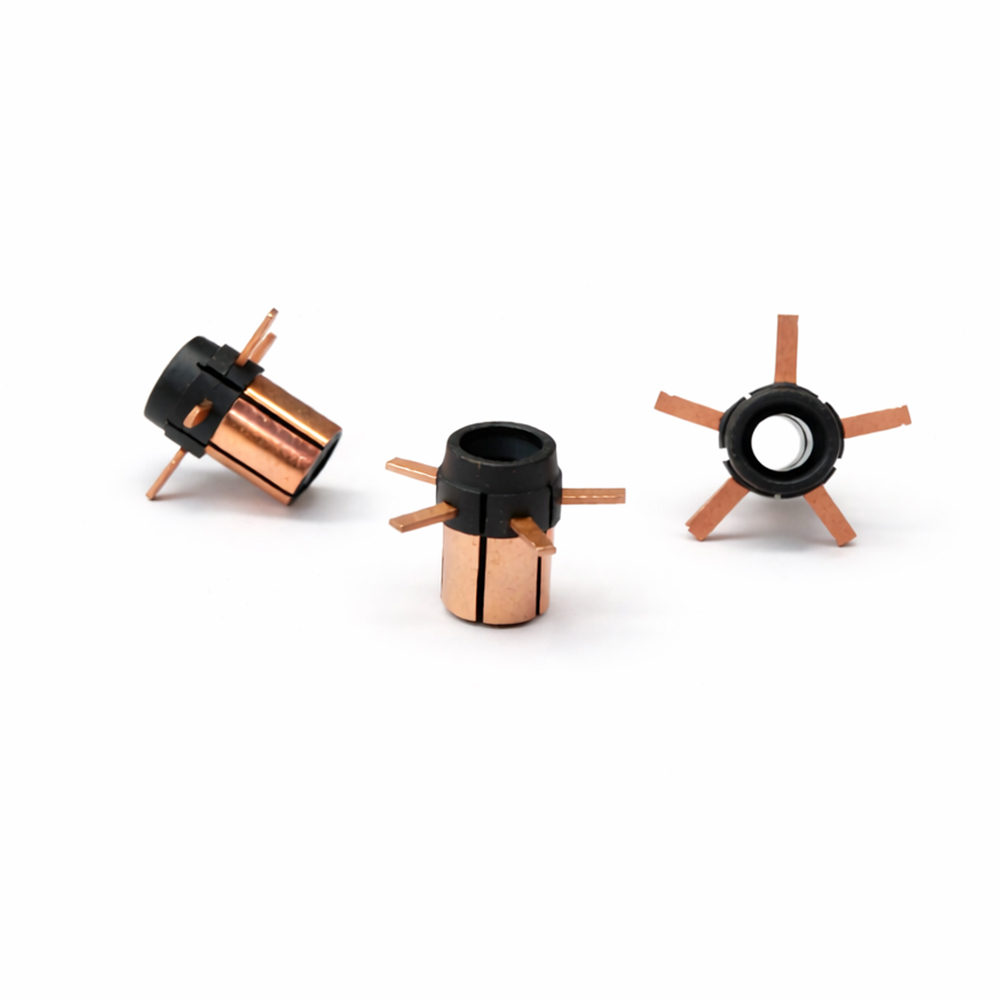
5-Bar Micro Commutator
The 5-segment geometry reduces electrical erosion at the brush interface compared to 3-slot designs. This 5.6mm unit is engineered to maximize the service life of high-cycle micro motors.
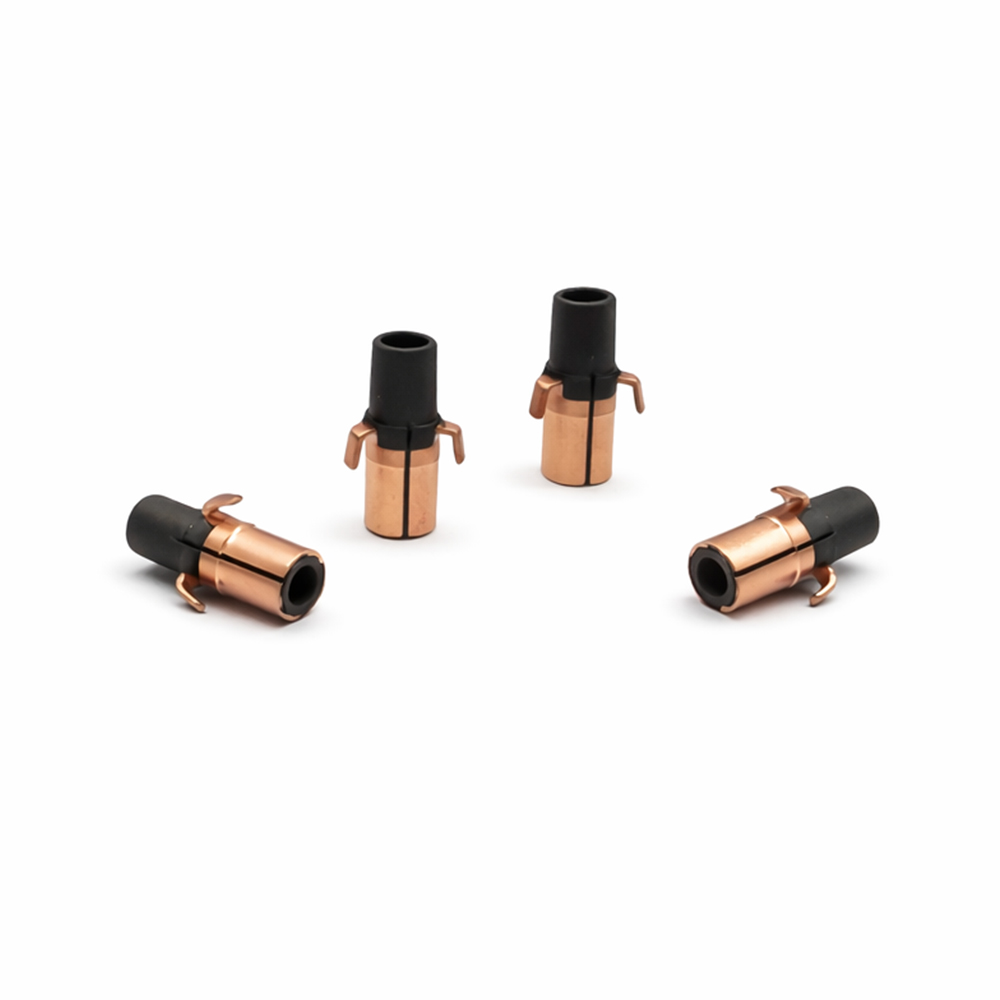
3-Segment Strain-Relief Commutator
The bent-hook profile is engineered to minimize stress concentration at the wire connection point. This design safeguards against wire fatigue and breakage, ensuring the structural integrity of the winding circuit.
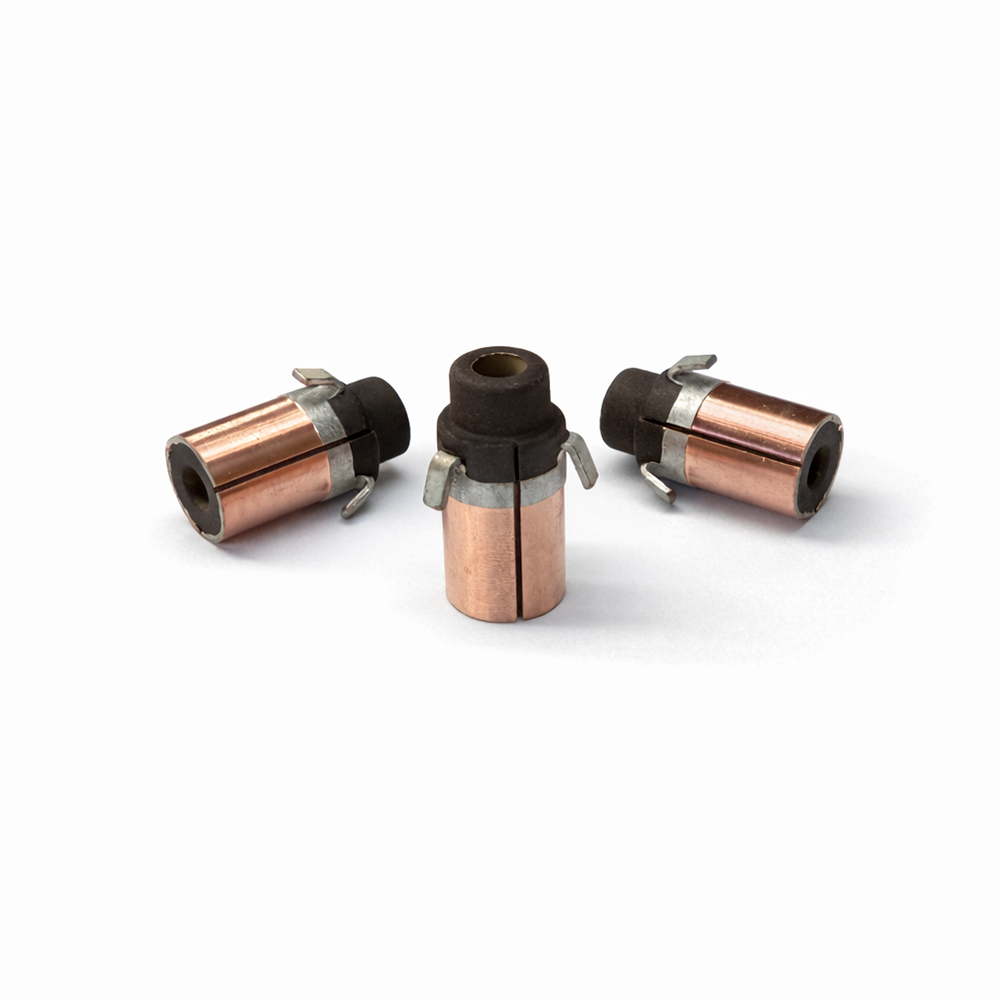
High-Retention 3-Segment Commutator
Engineered with reinforced anchoring features, this 7.6mm unit exhibits superior copper bar pull-out strength. This robust construction prevents segment loosening, ensuring reliability even under sustained mechanical vibration.
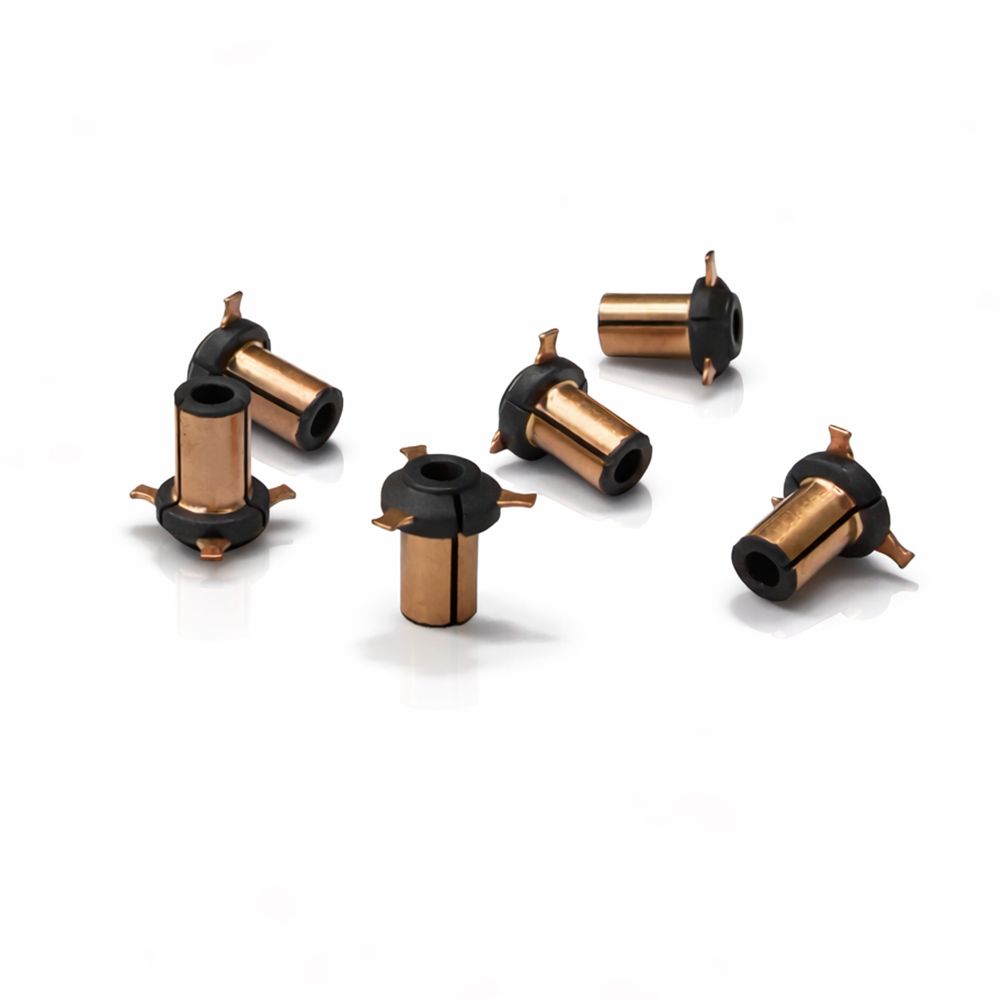
High-Conductivity Micro Commutator
Crafted from high-purity copper alloy, this 2.9mm unit minimizes contact resistance. It is designed to maximize energy efficiency in battery-powered, low-voltage micro motor systems.
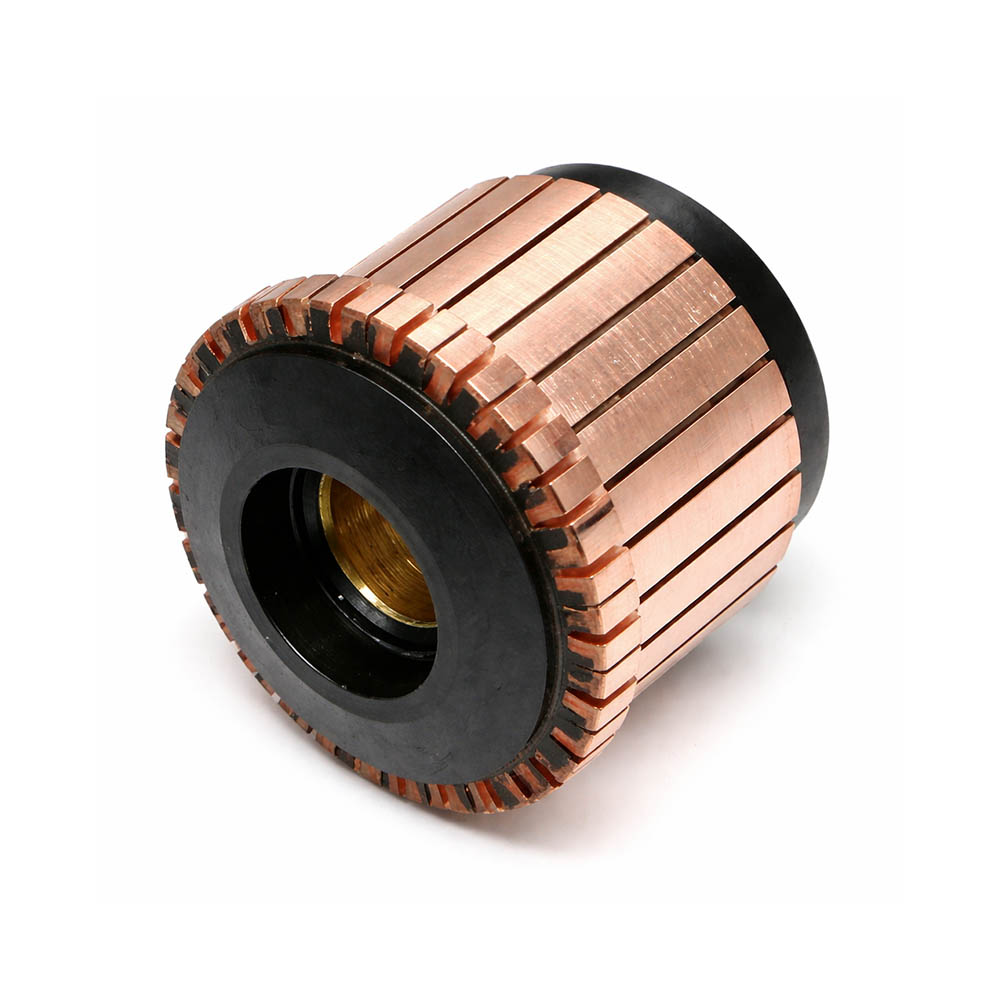
42mm Variable-Load Commutator
Optimized for 4-pole industrial motors, this 28-segment unit (42mm OD) excels in variable-load environments. Its robust design maintains electrical stability during rapid torque fluctuations, ensuring reliable heavy-duty operation.
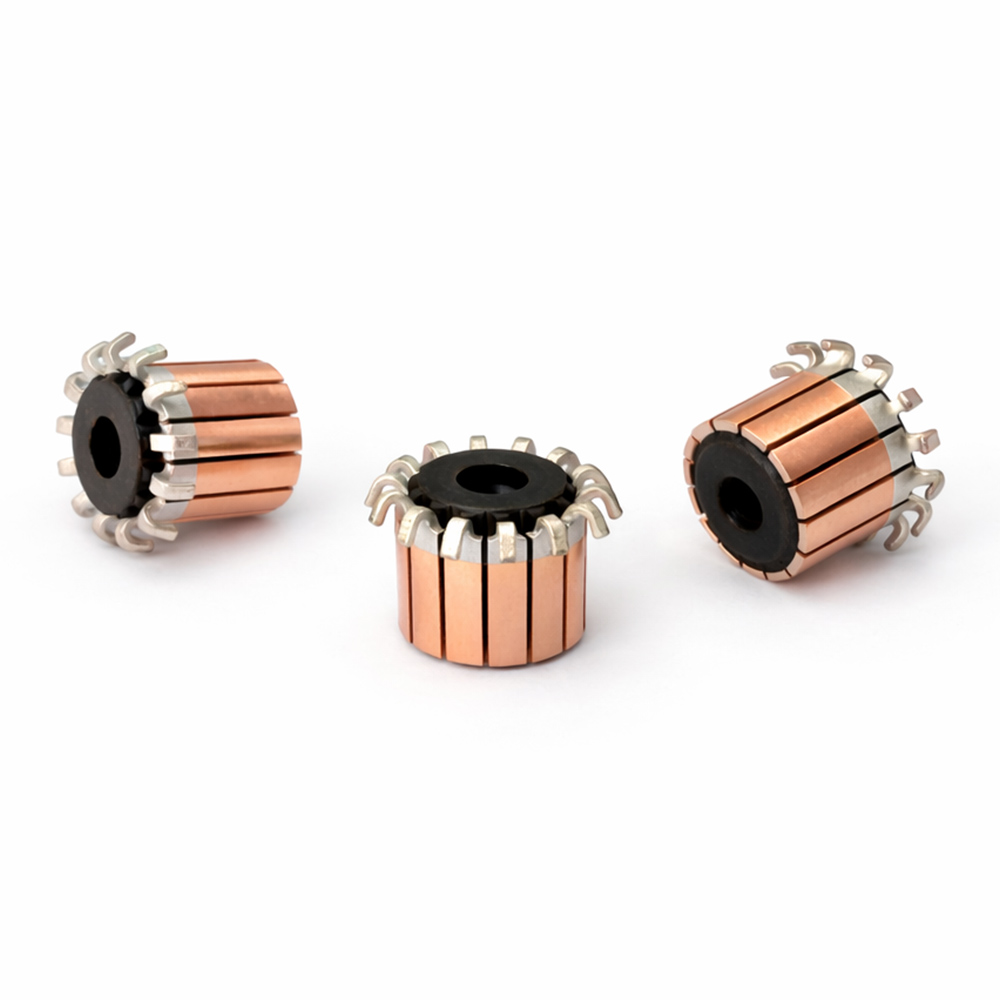
14-Slot Current-Distributing Commutator
The high-segment count allows for simultaneous brush contact across multiple bars. This effectively distributes current load, minimizing localized overheating and ensuring uniform wear patterns for professional motor applications.
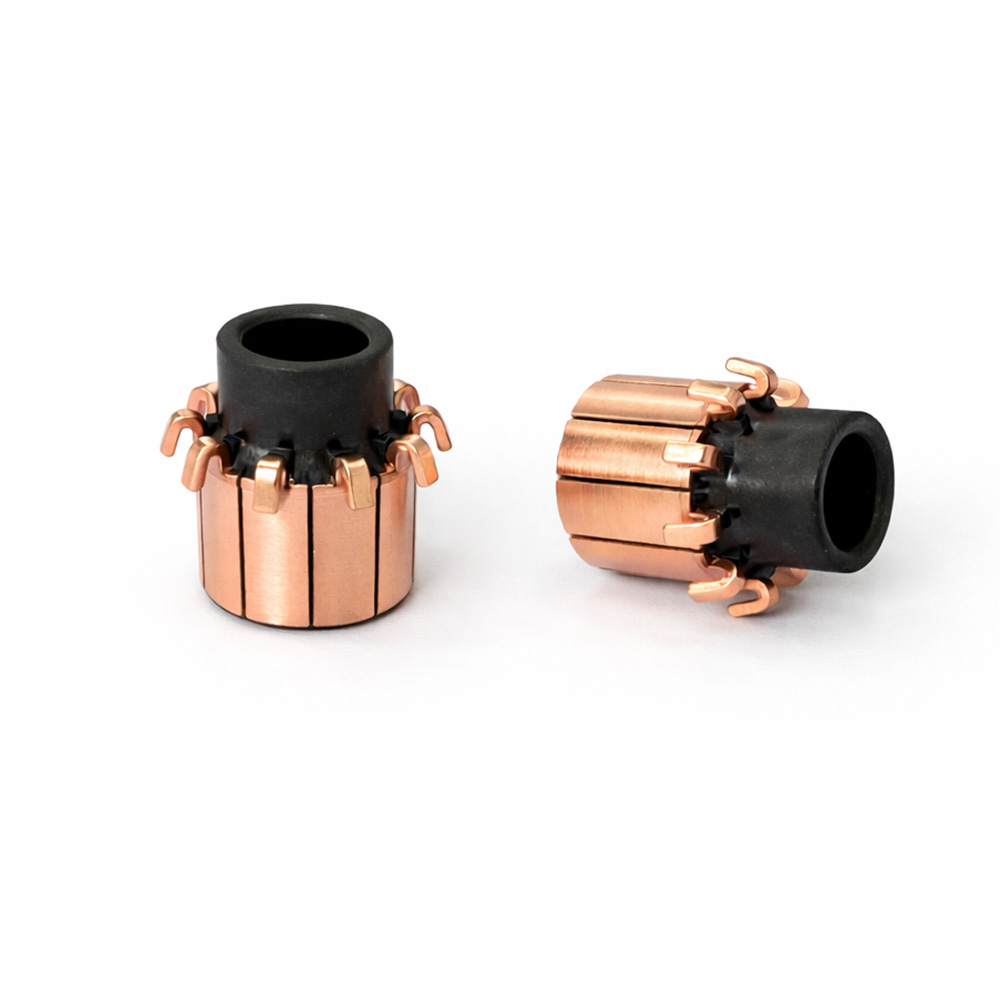
Wear-Optimized 10-Bar Commutator
Specific copper alloy hardness is utilized in this 15mm, 10-slot unit to strictly match brush grade specifications. This material pairing prevents uneven wear and threading, ensuring consistent performance over the motor’s lifespan.
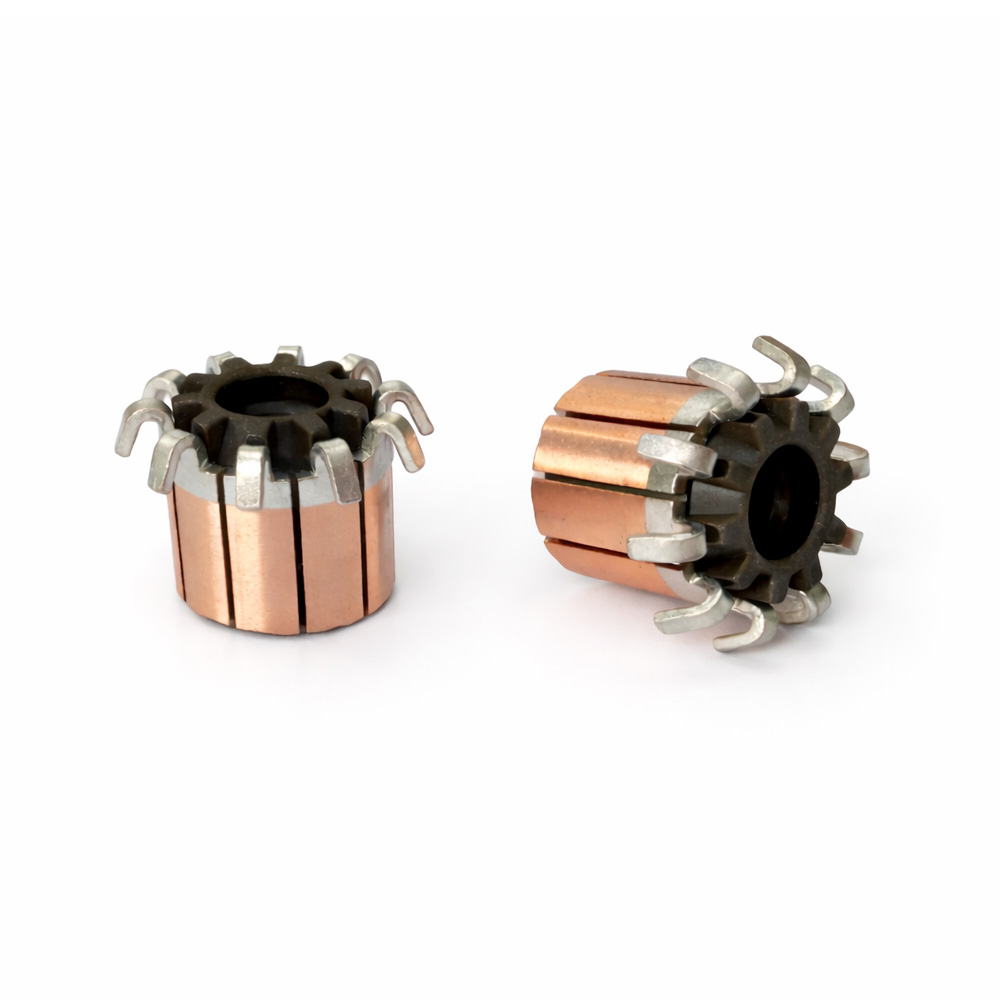
15.2mm OD 10-Slot Copper Commutator
Precision 15.2mm OD motor commutator with 10 slots, featuring durable copper segments and reliable insulation for smooth switching, low sparking, stable conductivity, and long service life.
Typical Applications
We engineer commutators for a wide range of motor platforms and industries, including:
Small industrial & workshop equipment
Portable or bench-top machines that require high output power from a small frame size.
Kitchen appliances
Blenders, juicers and mixers where the motor must deliver strong starting torque and operate over a wide speed range.
Handheld & portable power tools
Drills, grinders, saws, rotary hammers, electric planers and sanders with high-speed armature winding designs and variable loads.
General household appliances
Hair dryers, compact fans and other small appliances based on high-speed universal motors.
Automotive small motors
Wiper motors, window-lift motors, small pump motors and auxiliary drives in 12–24 V systems.
E-bikes and light electric motorcycles
Compact drives where vibration resistance and secure segment anchoring are critical.
How to Choose the Right Commutator (Fast & Practical)
If you’re unsure, start with this checklist. You can send it without sharing confidential drawings.
Step 1 — Define your motor basics
Supply: AC / DC, rated voltage, frequency (if AC)
Target RPM range and duty cycle
Power / load type (constant load, variable load, stall risk)
Step 2 — Define brush & commutation requirements
Brush grade/material (if known)
Expected lifetime target
Noise / sparking / EMI constraints (if any)
Step 3 — Confirm geometry & interfaces
OD / ID / height
Segment count (bars)
Shaft/armature interface, slot design, hook type (if applicable)
Step 4 — Confirm insulation & verification
Insulation material preference (mica / resin, etc.)
Electrical tests required (HiPot, IR, run-in test, etc.)
If you have any of the following, selection becomes very fast:
A 2D/3D drawing (DWG/DXF/STEP/IGS/PDF)
A physical sample
A photo with key dimensions + segment count
Customisation Options for Your Commutator
We manufacture commutators to match your design and operating conditions:
Dimensions: OD / ID / height per drawing
Segment count: 3 to 96 bars
Copper material: Electrolytic copper or specified grade (e.g., UNS C08000)
Silver content option: ~0.03–0.08% Ag
Insulation: Mica / resin system per requirement
Hub materials: Phenolic resin (Bakelite), Glass-fiber reinforced PA, or high-temp DAP (Diallyl Phthalate)
Balancing: Static/dynamic balancing options for high-speed rotors
Surface finishing: Turning, undercut, deburring, brush-track finishing
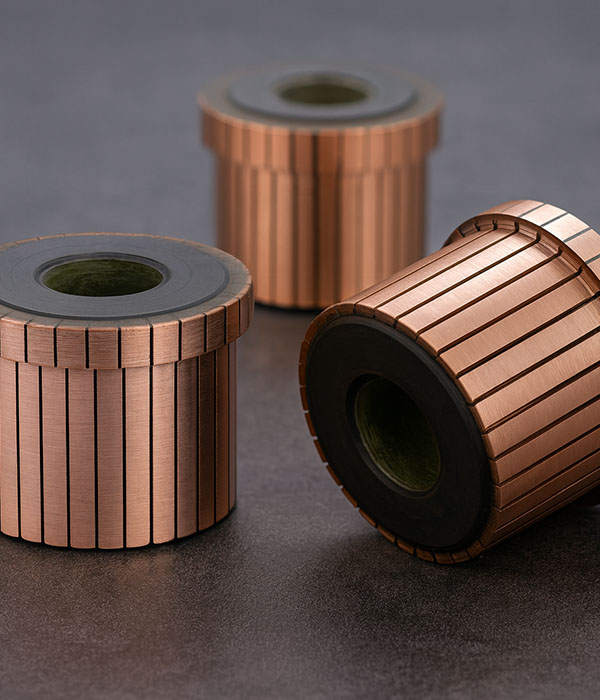

Engineering Capability Summary
For specs outside these ranges, please send your drawing for engineering review.
| Item | Typical / Supported | Notes |
| OD range | 4.0 mm – 150.0 mm | Custom per drawing |
| ID range | 1.5 mm – 60.0 mm | Custom per shaft/armature tolerance |
| Height range | 30 mm – 120.0 mm | Custom |
| Segment count | 3 – 96 bars | Higher counts for smoother commutation |
| Concentricity / runout | ≤ 0.005 mm – 0.01 mm (TIR) | Critical for high-speed brush stability |
| Surface roughness | Ra 0.4 – 0.8 μm | Optimized for ideal brush patina formation |
| Operating speed | Up to 40,000 RPM | Based on balancing, OD, and hook design |
Quality & Testing
We can provide inspection records and test results per batch/order.
Electrical verification (available)
HiPot test: ~1500V (per your requirement/spec)
Insulation resistance: >50MΩ @ 500V (per your requirement/spec)
Common checks
Dimensional inspection (OD/ID/height/segment geometry)
Visual defects: burrs, cracks, insulation gaps, copper surface condition
Segment-to-segment insulation check
Brush-track surface inspection after finishing
Balancing verification for high-speed designs (if required)
Want to qualify faster? Ask us for sample inspection report format and traceability items we can provide for your project.
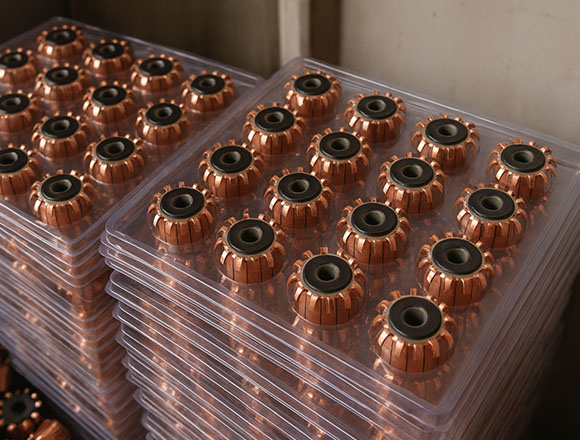
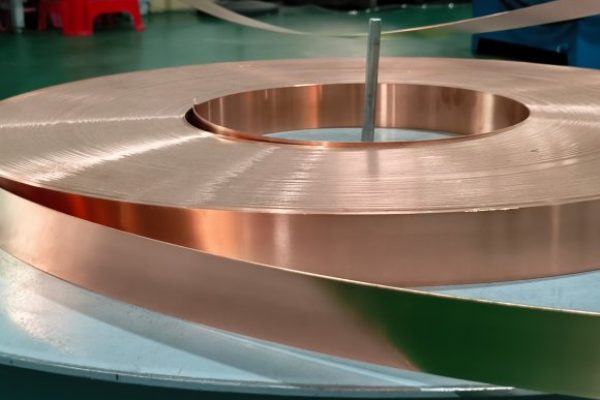
Manufacturing Process
Material preparation (copper segments + insulation)
Segment forming & assembly
Pressing / curing (depending on insulation system)
Turning / finishing / undercut (as required)
Inspection + electrical verification
Packaging with protection against oxidation and mechanical damage
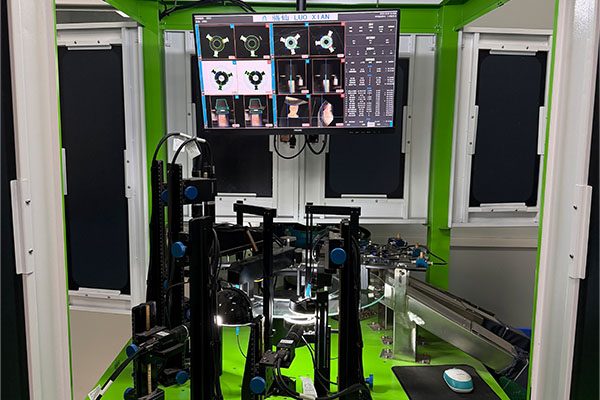
What You Will Get
Quotation with clear lead time and MOQ options
DFM feedback if your drawing has risk points (tolerance stack, insulation margins, brush track)
Inspection records: dimension + electrical (as required)
Samples for verification before volume production (recommended for new designs)
* NDA & IP Protection
We understand drawings and samples are sensitive. We can support:
NDA signing before receiving confidential drawings
Restricted access to your files internally
File retention policy: 【PLACEHOLDER: e.g., delete after X months upon request】
Marked drawings / watermarks accepted
Request a Quote
Fast quote requires at least one of the following:
Drawing (DWG/DXF/STEP/IGS/PDF)
Sample
Photo + key dimensions + segment count + application info
Accepted file types: DWG, DXF, STEP, IGS, PDF, ZIP, RAR, JPG, PNG
*Typical response within 12 business hours
*NDA available before you share confidential files
WhatApps
+86 17820674273
Address
Taixing Science and Technology Park, No. 3 Taixing Road, Dongguan City, Guangdong Province
FAQ
Universal motor commutators are typically designed for series-wound motors that may run on AC or DC, often with high RPM and frequent load changes. The commutation environment can be more demanding, so segment design, insulation system, and finishing for brush contact are critical. If your motor is purely DC brushed (e.g., many pump motors), a DC-specific commutator spec may be more appropriate.
Segment count is influenced by armature design, winding layout, commutation smoothness requirements, and brush conditions. Higher segment counts can improve commutation smoothness but depend on geometry and insulation constraints. If you share segment count target or armature details, we can confirm feasibility.
Any one of these is enough to start:
Drawing / 3D file
Sample
OD/ID/height + segment count + application + target RPM + duty cycle
If you have test requirements (HiPot/IR/balancing), include them so pricing matches your qualification needs.
Yes. We can support HiPot ~1500V and insulation resistance >50MΩ @ 500V testing (or per your specified standards), and provide records if requested.
Yes. Samples are recommended for new designs. We’ll align the sample plan with your qualification requirements and intended production process.
Lead time depends on whether it’s an existing design or a new custom design, plus tooling/fixtures needs and test requirements. After receiving your drawing/sample and requirements, we will confirm lead time clearly in the quotation.
Related Resource
At XDC, we share our deep insights into commutators, manufacturing processes, and industry experience on our blog. We invite you to explore these articles to learn more about our expertise.
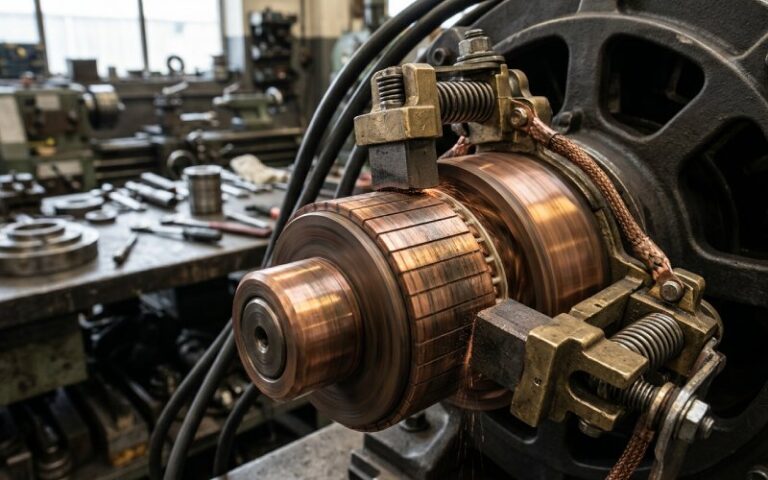
Commutator Sparking and Wear: Why Brushes Must Align With the Motor Neutral Plane
The motor neutral plane is the running position where the coil under the brush can reverse current with the…
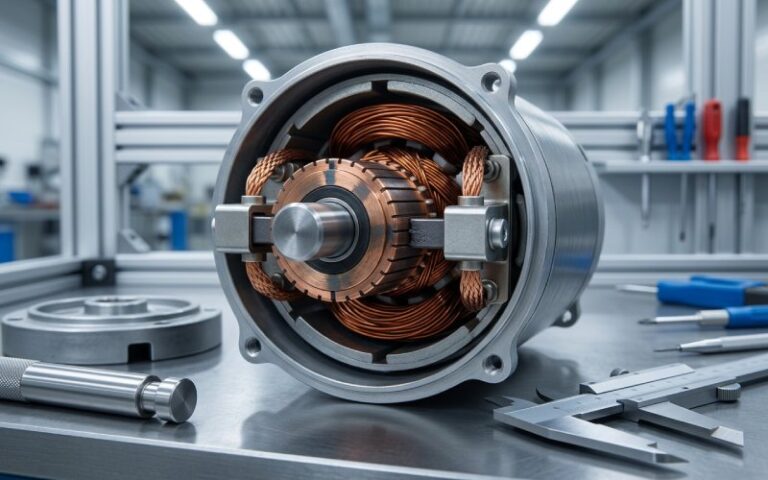
DC Motor Squealing Noise: Is It the Carbon Brush or the Commutator?
When a DC motor starts squealing, most people replace the brushes first. Sometimes that works. Sometimes the noise goes…
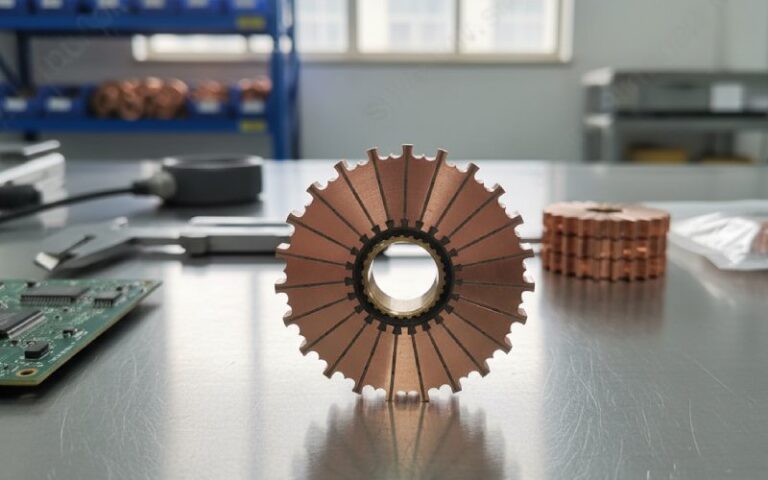
How to Check a Commutator for Roundness or Runout
Most bad readings start before the indicator touches copper. That is usually the whole job, really. Not the gauge.…