Split Ring (Commutator) for DC Generators
Custom copper segments • Mica insulation • Precision machining • Inspection records available
Buying a split ring for production or repair?
Send your drawing, dimensions, or a sample. We quote based on your generator speed, current, segment count, OD/ID, and insulation requirements.
What is a split-ring commutator in a DC generator?
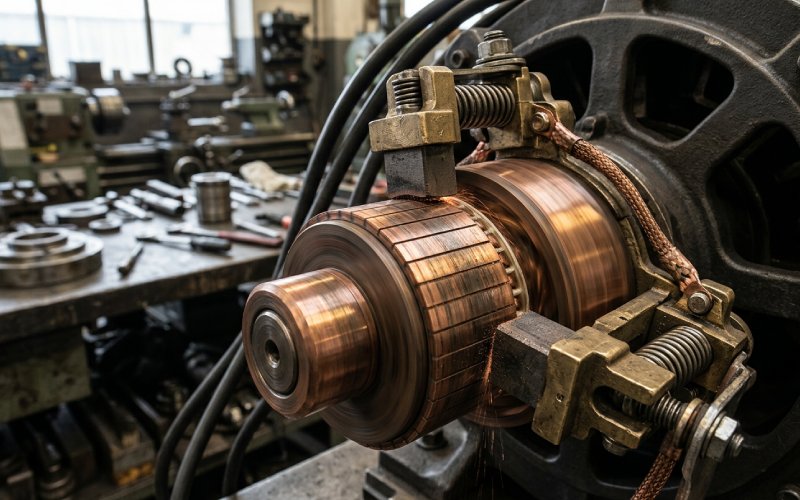
n a DC generator, the armature windings naturally generate an alternating voltage as the rotor turns in the magnetic field. The split-ring commutator reverses the connection of the armature coil to the external circuit every half turn—so the voltage at the brushes becomes unidirectional (DC).
What We Manufacture
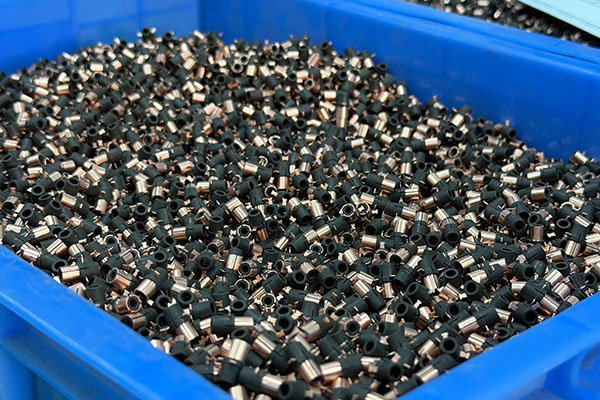
We manufacture split ring commutators and segmented commutators used in DC generators, including:
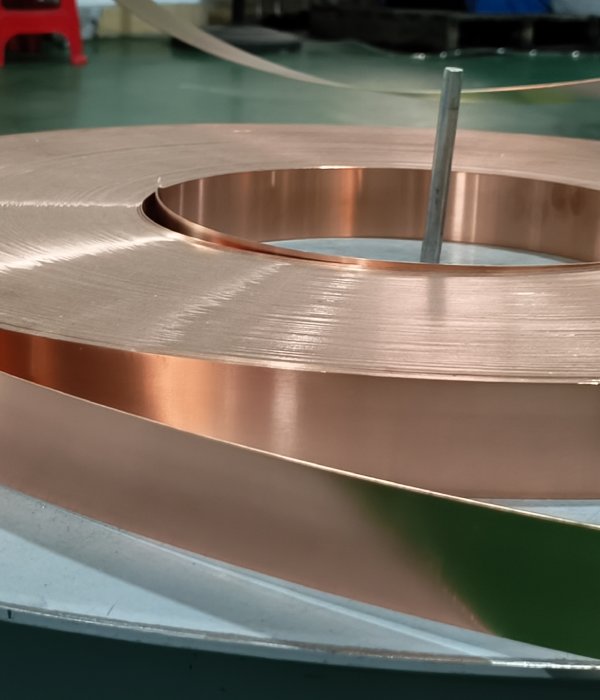
Copper segments (custom segment geometry, slot/riser options)
Mica insulation (inter-segment & V-ring / end insulation options)
V-rings / clamping rings (as required by design)
Risers / hooks / tangs (if your design uses them)
Machined OD/ID/faces for assembly and balancing requirements
Typical materials (examples):
Copper: Electrolytic copper (C11000) / Silver-bearing copper (C10700) (Ag content: 0.03% – 0.1% for enhanced softening resistance)
Insulation: Class F / Class H (up to 180°C) epoxy-bonded mica paper
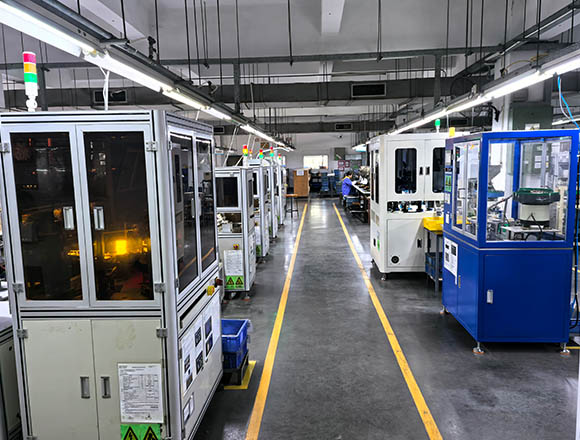
Key Specifications (Customize to Your Drawing)
Below are the parameters we confirm for every quote:
Segment count (bars): 3 to 150+ bars (customized to your design)
Outer diameter (OD): 12 mm to 400 mm
Inner diameter (ID): 4 mm to 150 mm
Commutator length / stack height: 10 mm to 300 mm
Copper grade: ETP Copper / Silver-bearing Copper / Oxygen-Free Copper
Mica type & thickness: 0.4 mm – 1.2 mm (machined with standard or deep undercut)
Operating speed: Up to 10,000 rpm (depending on OD and structural design)
Current / duty: From fractional HP applications to heavy-duty industrial loads
Surface finish & runout requirements: Per drawing (TIR typically ≤ 0.02mm)
Balancing requirement: ISO 1940 Grade G6.3 or G2.5 per customer spec
Recommended information to send (fastest quotation)
Drawing (PDF/DWG/STEP) or clear photos with dimensions
Segment count, OD/ID, length
Speed (rpm), current, application environment (dust, humidity, temperature)
Any known failure history (sparking, wear, overheating)
Engineering Notes for Better Commutation
If your generator experiences sparking or rapid brush wear, we can review:
Neutral plane & brush grade compatibility
Mica undercut / insulation protrusion considerations
Segment geometry & edge treatment to reduce arcing
Surface hardness / conductivity trade-offs based on your duty cycle
Runout & concentricity impact on brush contact stability
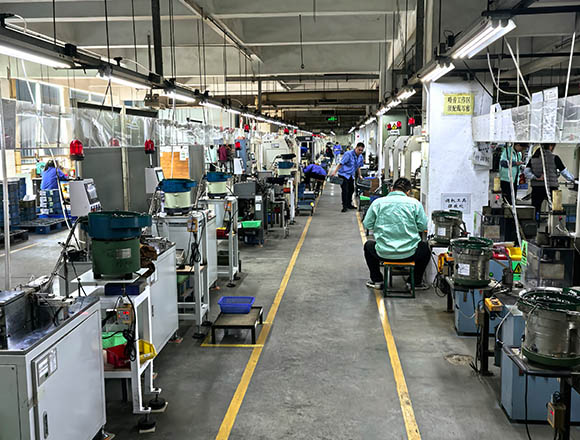
Quality Control & Inspection (Records Available)
We can provide inspection records according to your requirement, including:
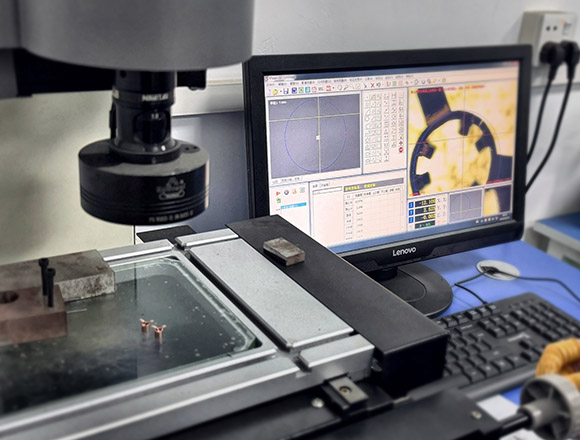
Dimensional inspection (OD/ID/length, segment width, slot size)
Runout / concentricity: High-precision dial indicator / CMM (checking TIR)
Insulation resistance tests: 500V DC Megger test (Bar-to-Ground Hi-Pot up to 2.5kV as required)
Bar-to-bar resistance (consistency check using micro-ohmmeter)
High-speed spin test (if required for high-RPM applications)
Visual inspection: burrs, burns, cracks, mica integrity and undercut depth
Standards / acceptance criteria:
Per your specific drawing and engineering tolerances
Compliant with general industry guidelines such as IEC 60034 or NEMA MG 1 standards where applicable.
Applications of DC Generator Split Ring Assemblies
XDC supports a broad range of applications where dc generator split ring assemblies are critical:
Educational and laboratory DC generators
• Visible commutator and brush arrangement for teaching electromagnetic induction and commutation
• Robust construction to withstand frequent handling and demonstration use
• Visible commutator and brush arrangement for teaching electromagnetic induction and commutation
• Robust construction to withstand frequent handling and demonstration use
Industrial DC generators and DC motors
• Reliable commutation under continuous or intermittent duty
• Suitable for power supply, process control, and other industrial DC systems
• Reliable commutation under continuous or intermittent duty
• Suitable for power supply, process control, and other industrial DC systems
Special DC machines
• Custom shapes and segment counts for traction-style machines, test benches, and engineered prototypes
• Tight tolerance designs for high-speed or high-temperature environments
• Custom shapes and segment counts for traction-style machines, test benches, and engineered prototypes
• Tight tolerance designs for high-speed or high-temperature environments
Lead Time / MOQ / Packaging
Prototype / sample lead time: 10 – 15 days
Mass production lead time: 25 – 35 days (after sample approval)
MOQ: 5 sets for custom prototypes; scalable batch pricing available for production runs.
Shipping terms: EXW / FOB Shanghai / DAP (via DHL/FedEx/UPS for urgent air freight)
Packaging: Anti-oxidation vacuum sealing + EPE foam shock-proof packaging + Export-grade wooden crates (custom packing available).
Why Work With XDC
1. Custom manufacturing
based on drawings or samples
2. Engineering communication
confirm critical dimensions, undercut specs, and commutation-related requirements before production
3. Inspection documentation
provide test/inspection records per request
4. Stable supply
for repair centers, motor rewinders, and OEM batch orders
5. Confidentiality
NDA available for your drawings and proprietary data
6. Quality system
ISO 9001:2015 Certified Manufacturing
Get a Quote in 24 Hours
Upload your drawing or share basic dimensions. Our team will confirm critical parameters and respond with:
price & lead time
recommended material/insulation options
inspection items available for your acceptance
What you’ll receive:
✅ Quotation + manufacturing feasibility notes
✅ Suggested inspection plan (if requested)
✅ Simple next steps for prototype or batch
No drawing? Upload clear photos and the key dimensions.
Your files are used only for quotation and production review. NDA available.
WhatApps
+86 17820674273
Address
Taixing Science and Technology Park, No. 3 Taixing Road, Dongguan City, Guangdong Province
FAQ – Understanding the Function of the Commutator Split Ring in a DC Generator
A split ring is the commutator. It switches the armature coil connections every half turn so the current collected by the brushes flows in one direction.
A typical DC generator uses a commutator (split ring). Slip rings are generally used in AC machines or for feeding current to a rotating field winding (depending on design).
Common causes include incorrect brush grade, poor surface finish, excessive runout, wrong neutral plane, insulation issues (mica), contamination, or overload. We can review your application and drawing to identify likely causes.
Drawing (preferred) or sample, segment count, OD/ID/length, speed (rpm), current, duty cycle, and any special inspection requirements.
Yes. We can reverse-engineer key dimensions from your sample and confirm critical requirements with you before production.
Dimensional inspection, runout/concentricity, insulation resistance, bar-to-bar resistance, and other checks per your spec. Tell us your acceptance criteria and we will align the inspection plan.
Related Resource
At XDC, we share our deep insights into commutators, manufacturing processes, and industry experience on our blog. We invite you to explore these articles to learn more about our expertise.
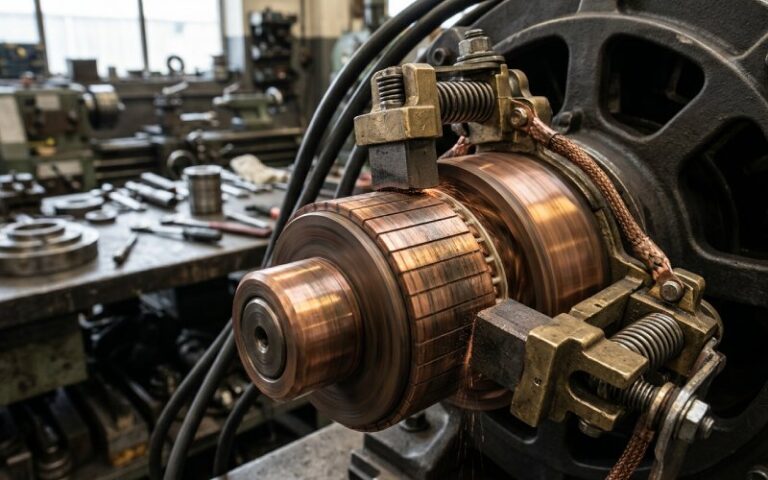
Commutator Sparking and Wear: Why Brushes Must Align With the Motor Neutral Plane
The motor neutral plane is the running position where the coil under the brush can reverse current with the…
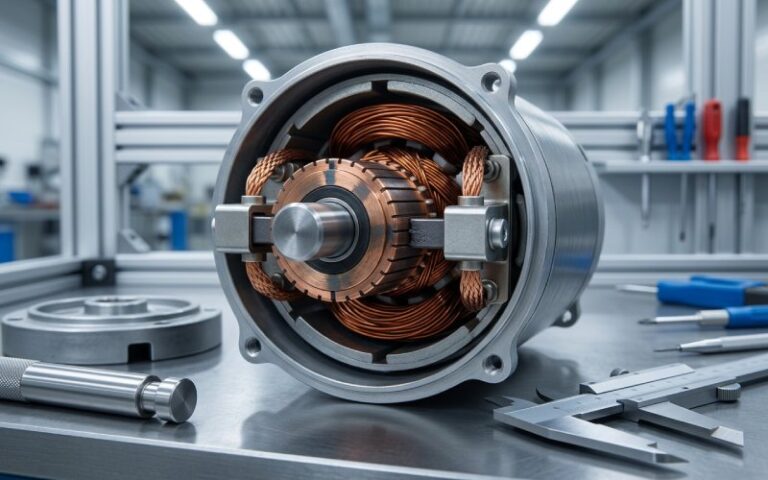
DC Motor Squealing Noise: Is It the Carbon Brush or the Commutator?
When a DC motor starts squealing, most people replace the brushes first. Sometimes that works. Sometimes the noise goes…
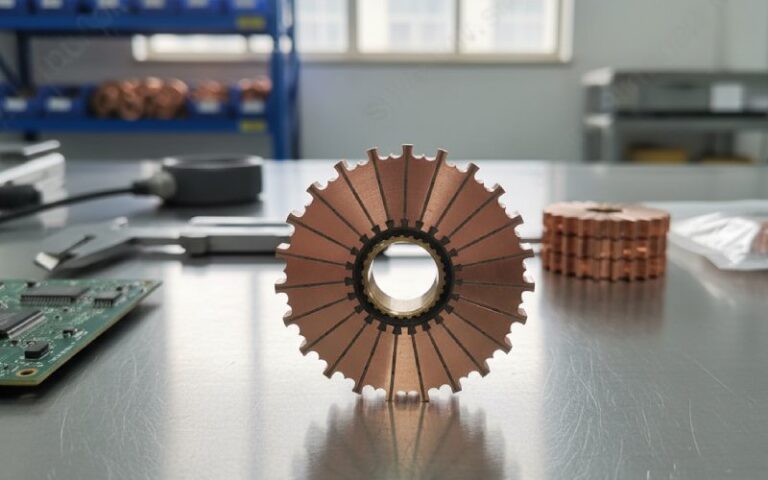
How to Check a Commutator for Roundness or Runout
Most bad readings start before the indicator touches copper. That is usually the whole job, really. Not the gauge.…