Is It Safe to Use Sandpaper on a Commutator Surface?
Yes. Sometimes. Not as often as people think.
In our factory work, sandpaper on a commutator surface is a controlled maintenance step, not a repair strategy. It can be acceptable for light surface dressing or brush seating. It is not the right answer for out-of-round copper, raised mica, bar-edge burning, repeated film failure, or a commutator that keeps coming back with the same pattern.
That distinction matters more than the abrasive itself.
A lot of surface damage gets mislabeled as “needs cleaning.” It does not. It needs geometry correction, undercutting, or a review of the current commutator specification. If you are already deciding between sanding and replacement, you are asking the right question.
Table of Contents
The short answer
It is safe to use sandpaper on a commutator surface only when the issue is truly surface-level.
That means light contamination. Mild glazing. Controlled brush seating.
It is not safe, or at least not useful, when the actual problem is one of these:
- repeated sparking
- visible grooves or flats
- raised mica
- recurring black bands after cleaning
- bar-edge damage
- fast return of the same wear pattern
At that stage, sanding stops being maintenance and starts hiding the defect.
Where we allow sandpaper, and where we do not
On our production and service side, we separate commutator surface issues into two groups: surface correction and structural correction.
Surface correction may allow a fine abrasive pass. Structural correction does not.
| Commutator condition | Is sandpaper acceptable? | What our engineers do | Commercial decision |
|---|---|---|---|
| Light carbon film or minor glazing | Yes | Light dressing, full cleaning, inspection | Keep in service |
| New brush seating | Yes | Controlled seating only, then dust removal | Keep in service |
| Repeated dark tracking after dressing | No | Check brush grade, load, commutation, contamination source | Review for rework or replacement |
| Grooving, flat spots, visible runout pattern | No | Re-machine or grind true | Rework first; replace if wear margin is low |
| Raised mica or poor undercut condition | No | Undercut, deburr, inspect bar edges | Rework first |
| Recurring burn marks on specific bars | No | Investigate electrical cause, not just surface | Often replacement or redesign |
| Surface needs sanding several times per year | No | Review operating condition and commutator specification | Strong replacement signal |
That last row is the one buyers should pay attention to.
If a commutator needs sanding again and again, the problem is usually no longer cleaning. It is wear pattern, copper loss, loading, brush interaction, or an incorrect design margin. In plain terms: you may have a maintenance symptom caused by a specification problem.
When sandpaper is actually safe
We use it in narrow cases. Narrow means narrow.
1. Light surface dressing
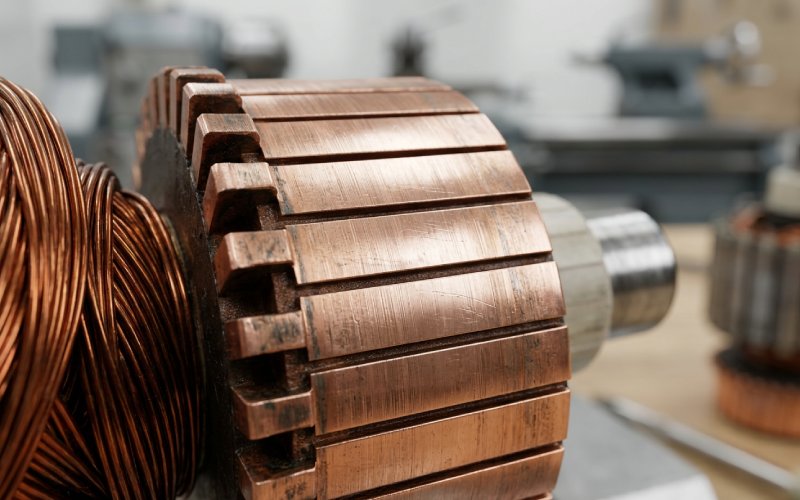
If the copper surface has mild deposits and the contact path is still stable, a fine non-metallic abrasive paper can be used for a short, controlled pass. Light pressure. No reshaping. No “making it look new.”
A bright copper finish is not the goal. Stable running is.
2. Brush seating
This is where people blur two different jobs.
Using abrasive paper to seat a new brush is not the same as repairing a damaged commutator. Seating is about matching the brush face to the track. Repair is about the commutator itself. Copper geometry. Slot condition. Mica height. Surface pattern. Different job.
If the surface already has deeper trouble, seating does not solve it.
When sandpaper is the wrong move
This is the part that gets expensive.
Out-of-round or uneven surface
Hand sanding follows the defect. It does not remove it. Sometimes it makes the contact pattern worse because pressure is not uniform. You get a cleaner-looking surface and less stable brush contact. Bad trade.
Raised mica
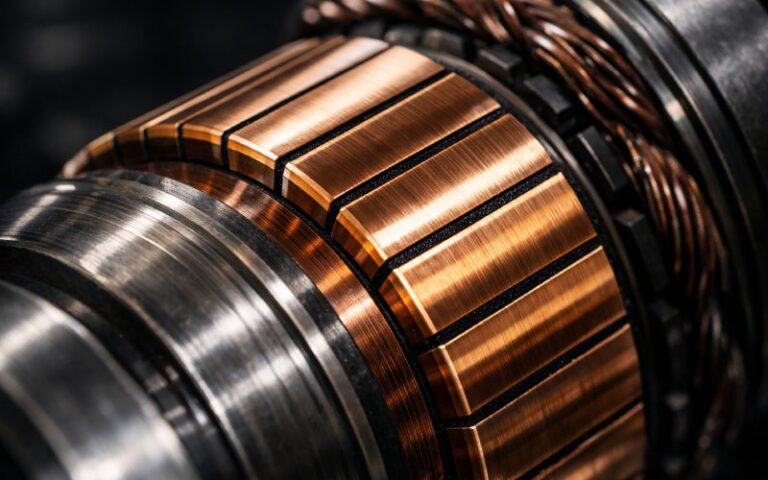
If mica stands proud of the copper, sanding the copper does not fix the real contact interruption. The brush still crosses a hard ridge. Wear goes up. Sparking usually follows.
Recurring burn pattern
If the same bars or the same zone keeps discoloring, stop treating it as dirt. That is usually an electrical or operating condition problem. Sanding may erase the evidence for a day. The machine will write it again.
Oil, vapor, or conductive contamination
If the surface is being re-contaminated by the environment, cleaning the commutator without fixing the source is just a loop. Clean. Run. Darken again. Repeat. Not useful.
A rule we use in factory assessment
If you are sanding the same commutator more than twice a year, stop calling it maintenance.
At that point, one of these is usually true:
- the commutator is already losing usable geometry
- the mica condition is no longer right
- the brush grade is not matching the duty
- the load cycle is harsher than the original design expected
- the commutator specification is undersized for the application
Sanding vs. rework vs. replacement
Most buyers do not need more theory here. They need a decision path.
Use this one.
Keep the current commutator
Keep it in service when the issue is limited to light surface film, mild glazing, or controlled seating, and the wear pattern does not come back quickly.
Rework the current commutator
Rework makes sense when there is enough material left and the problem is mechanical: runout, slot condition, burrs, shallow undercut, edge condition.
Replace the commutator
Replacement becomes the better choice when:
- the same surface fault keeps returning after correction
- copper loss is already significant
- commutation marks suggest the part is no longer stable in service
- the unit requires repeated intervention to remain usable
- the original design margin no longer matches the real duty cycle
That is usually where customers move from maintenance thinking to sourcing thinking.
What repeated sanding usually tells us
Not always, but often, repeated sanding points to a deeper mismatch.
We see this in three common cases:
1. The commutator is too lightly specified for the duty
The machine runs, but the wear rate says otherwise. Surface correction keeps the unit alive for a while, then the same defects return. That is usually not a technician problem. It is a design margin problem.
2. The operating environment is harsher than assumed
Dust, oil vapor, unstable loading, start-stop frequency, heat. The original part may have been acceptable on paper and wrong in real operation.
3. The replacement logic has been too reactive
A lot of sites keep reworking a commutator because it is cheaper this month. Then they buy a new one only after the downtime cost already exceeded the price difference.
That is backwards.
A commutator should be evaluated not just by part cost, but by:
- maintenance frequency
- downtime exposure
- brush wear rate
- repeatability of the surface pattern
- expected service interval after correction
That is how buyers avoid false savings.
What our engineering team checks before recommending replacement
When a customer asks whether sanding is still acceptable, we do not answer from one photo alone. We review the operating context with it.
Usually we ask for:
- commutator outside diameter
- segment count
- application type
- speed and load condition
- brush grade in use
- surface photos from multiple angles
- how often the surface needs correction
- whether the same pattern returns in the same location
That lets us judge whether the issue is still surface-level, suitable for rework, or already pointing to a new industrial commutator supplier solution.
Practical answer for maintenance teams and buyers
So, is it safe to use sandpaper on a commutator surface?
Yes, for light dressing and brush seating. No, as a substitute for proper rework or replacement judgment.
That is the clean version.
If the commutator only needs a light correction once in a while, sanding may be acceptable. If it needs repeated sanding, or shows grooves, raised mica, repeated dark bands, or bar-edge burning, the real decision is no longer about abrasive paper.
It is about whether the part should be reworked, re-specified, or replaced.
Need a second opinion on your commutator surface?
If your commutator shows recurring dark bands, uneven wear, bar-edge marks, or rapid return of the same defect after dressing, send our team the following:
- surface photos
- outside diameter
- segment count
- brush grade
- speed and load condition
We will help you judge whether the part should stay in service, be reworked, or be replaced with a more suitable specification.
Talk to our engineers here: Request a commutator assessment
FAQ
Can I use sandpaper on a commutator to remove black marks?
Only if the marks are light surface film and not part of a repeating failure pattern. If the same black marks return quickly, the issue is usually bigger than surface contamination.
Is emery cloth safe for a commutator surface?
We do not recommend it. For commutator work, abrasive choice and residue control matter. The wrong material can create more trouble than it removes.
Does sanding fix brush sparking?
Not usually. If sparking is caused by runout, mica condition, brush mismatch, or unstable commutation, sanding only cleans the symptom.
How do I know whether to rework or replace a commutator?
Look at recurrence. If the same fault keeps returning after correction, replacement or a specification review is often more economical than repeated maintenance.
Should a healthy commutator look bright and polished?
Not necessarily. A good-running surface is not judged by shine alone. Stable contact and consistent wear matter more.
When should I contact a commutator manufacturer instead of continuing repair?
When sanding becomes routine, when defects return in the same area, or when downtime risk starts costing more than a new part. That is usually the point where engineering review makes more sense than another surface fix.