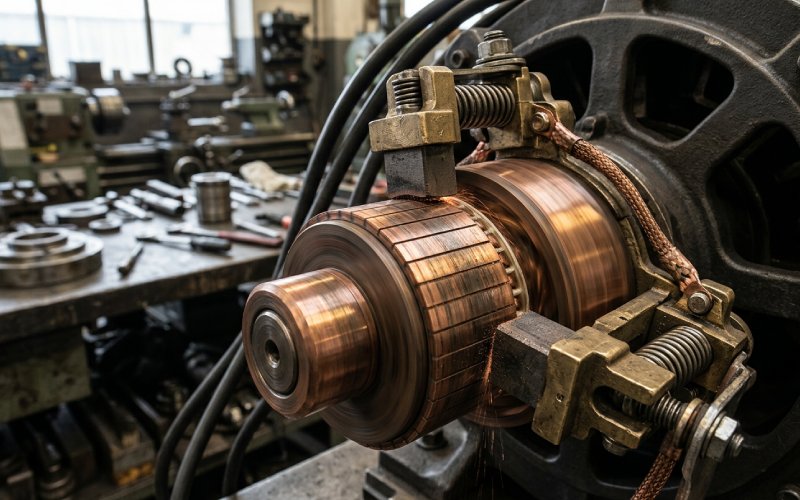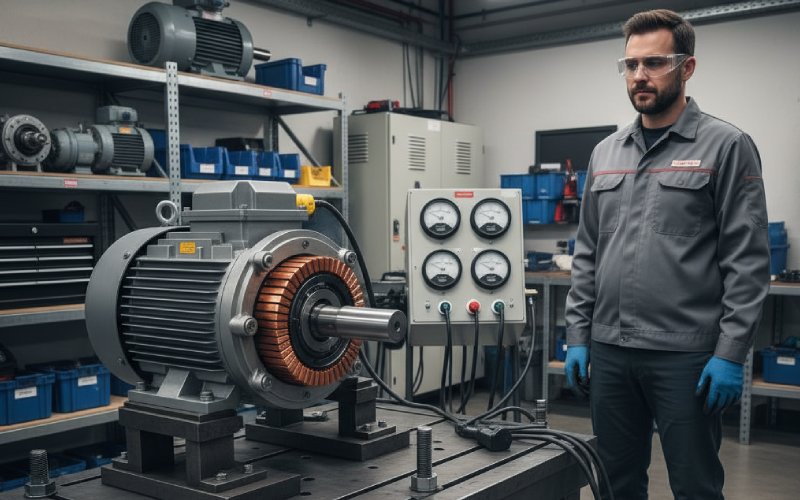
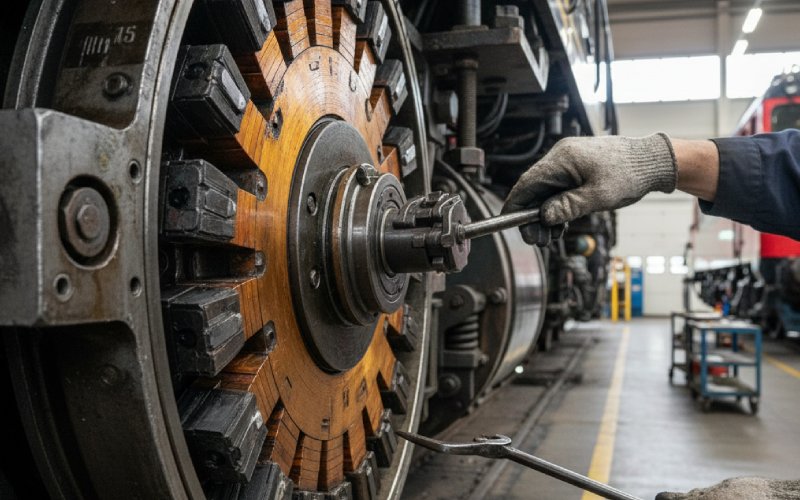
Railway Traction Motor Commutator Manufacturer Guide: Failure Analysis, Service Limits, and Replacement
A traction motor commutator does not fail by accident. It gets pushed there.
In railway traction and legacy DC systems, the commutator sees vibration, load shocks, unstable cooling, contamination, repeated thermal cycling, and brush contact that is never as clean in service as it was on the bench. That is why buyers who only compare drawing dimensions often miss the real issue. A replacement commutator is not just a dimensional part. It is a duty-matched part.
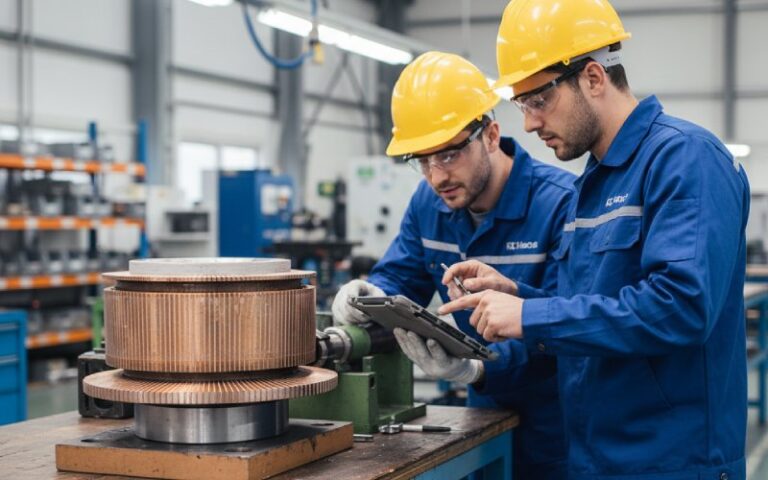
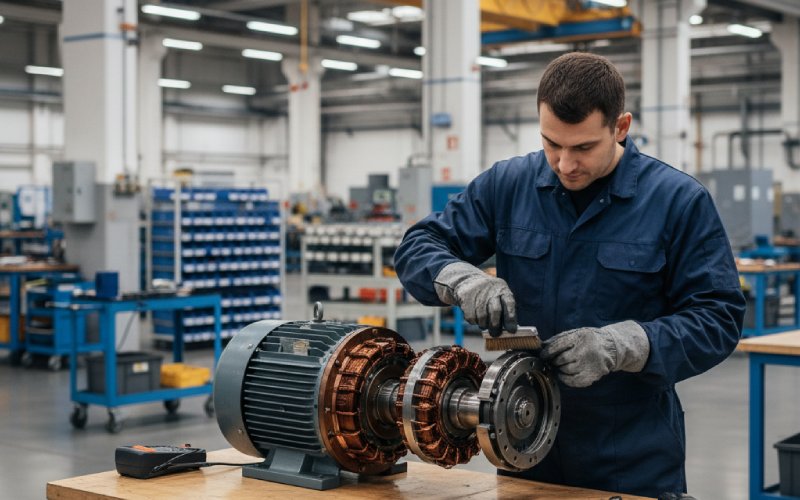
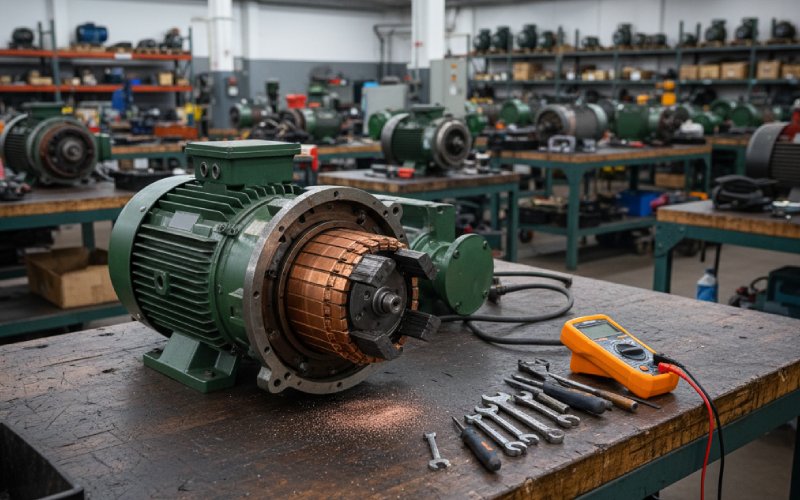
At our factory, we do not separate manufacturing from field failure analysis. We study burned bars, uneven film, high mica, flashover traces, loose segments, slot-edge marking, and recurring brush path patterns. Then we push those findings back into new commutator production. Better bar stability. Better surface consistency. Better insulation control. Better repeatability from one batch to the next.
That matters in two situations:
- Railway traction motor commutator replacement
- Custom commutator manufacturing for legacy DC motors still in service
Same product family. Different service history. Same question from the buyer, usually: Can the new commutator last longer than the last one?
Table of Contents
Why Railway Traction Motor Commutators Fail Earlier Than Expected
Traction duty is harsher than many procurement specs make it look.
Current changes are sharp. Vibration is constant. Brush contact is influenced by shock, dust, humidity shift, and mechanical movement across the whole assembly. A commutator can look acceptable after cleaning, then show its real condition once the motor goes back under load. That is common in railway traction. It also shows up in older DC drives used in rolling mills, cranes, hoists, mining systems, and retrofit industrial lines.
Three things usually shorten life first:
1. Unstable running film
A commutator does not want a mirror finish for long. It wants a stable working film. If the film becomes patchy, too light, too heavy, streaked, or broken by contamination, wear accelerates. Then brush temperature rises. Then bar edges start speaking.
2. Mechanical inaccuracy disguised as an electrical problem
Excessive runout, loose bars, poor segment support, weak brush pressure consistency, or unstable brushgear geometry often gets misread as “brush issue” or “sparking issue.” Not the same thing.
3. Maintenance thresholds passed too late
Once the surface shows deep grooving, recurring threading, severe bar burning, or mica standing too high, the problem is already past routine cleaning. At that point, buyers need to decide whether they are still maintaining a commutator, or delaying replacement.
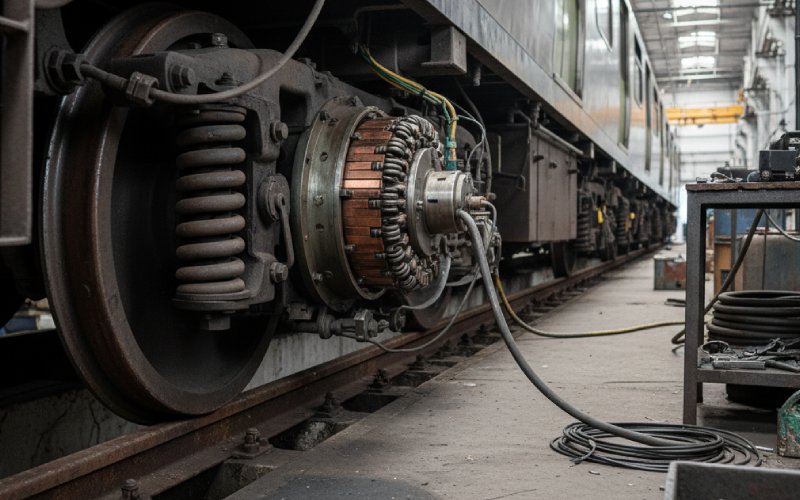
Common Railway Traction Motor Commutator Failures We See
Below is the way we classify field-returned commutators before we recommend repair, rebuild, or new manufacture.
| Surface / fault pattern | What it usually means | What it tells us as a manufacturer | Typical buyer decision |
|---|---|---|---|
| Light, even film | Low load, low filming tendency, or early running stage | Surface finish and brush track uniformity are still acceptable | Keep in service, monitor |
| Medium, even film | Stable commutation window | Geometry and contact conditions are generally healthy | Best condition for continued service |
| Heavy or patchy film | Contamination, overload history, unstable temperature, or contact inconsistency | Need to review bar finish, insulation cleanliness, and application match | Inspect deeper before reuse |
| Streaking | Film disturbance, often not yet destructive | Surface may still be usable, but contact stability needs review | Maintenance may be enough |
| Threading | Persistent film breakdown with metal transfer | Surface integrity is already degrading | Repair or replacement depending on depth |
| Grooving | Mechanical wear plus arcing or abrasive action | Surface finish alone will not solve the root issue | Re-machine only if the rest of the structure is sound |
| Bar-edge burning | Weak commutation margin | Bar geometry, mica condition, and system matching matter more | High-risk for repeat failure |
| Flashover marks | Severe overload, contamination, insulation weakness, polarity or commutation instability | Full assembly review required, not cosmetic work | Often replacement territory |
| High mica / poor undercut | Brush bounce, poor contact, rising wear | Undercut control and bar-edge finishing were not maintained | Correct immediately |
| Loose or lifted bars | Mechanical instability in the commutator body | Structural integrity is compromised | Replacement strongly advised |
For buyers, the key point is simple. Not every damaged commutator should be resurfaced. Some units are already telling you the structure has moved beyond economical correction.
When to Maintain a DC Motor Commutator, and When to Replace It
This is where many projects waste time.
Some teams keep machining old commutators because the motor is hard to remove or because downtime is expensive. Understood. But repeated resurfacing is not a strategy. It is often just a delay.
We normally push the decision into three bands.
1. Maintenance is still reasonable
This applies when the commutator still has:
- stable bar seating
- acceptable runout
- usable mica condition
- no evidence of loose segments
- no recurring flashover pattern
- no structural burning around risers or bar roots
In this band, the issue may still be handled by controlled resurfacing, proper undercutting, brush re-seating, brushgear correction, or contamination control.
2. Repair is possible, but the buyer should compare cost against new manufacture
This is the middle zone. It includes:
- repeated grooving
- measurable out-of-round condition
- uneven bar wear
- advanced threading
- recurring bar-edge distress
- inconsistent service life after previous maintenance
This is where many OEMs and overhaul shops ask us for a replacement commutator quote in parallel with repair work. A sensible move. If the old unit has already consumed multiple maintenance cycles, a new custom commutator often gives a cleaner cost picture.
3. Replacement is the better decision
We recommend new manufacture when we see:
- flashover damage across multiple bars
- loose, lifted, or crushed segments
- serious burning at bar edges or riser connections
- commutator body instability
- repeated failure after previous machining
- duty conditions that the original commutator design was never really suited for
At that point, the question is no longer “Can this be turned again?”
The better question is: What should change in the new commutator so this failure does not return?
That is the manufacturer’s job. Ours.
What We Change in a New Custom Commutator After Failure Analysis
A serious commutator manufacturer should not stop at reverse-engineering dimensions. That only recreates the old problem with fresh copper.
When we build a new commutator for railway traction motors or legacy DC systems, we review five things before production starts.
1. Bar material and insulation system must match real duty, not only the old drawing
A motor running repeated overloads, harsh starts, unstable cooling, or dirty air may need a different manufacturing emphasis than the original part received. Not always a completely different design. Sometimes the difference is in material selection, insulation treatment, or tolerance discipline. Small shifts. Big effect in service.
2. Segment stability matters more than buyers expect
If bars move, even slightly, the brush track pays for it first. So we focus on segment retention, pressing consistency, and dimensional stability through machining and final inspection. A commutator that looks correct at rest but loses stability after thermal cycling is not a good commutator.
3. Mica control is not a finishing detail
Undercut depth, slot cleanliness, and bar-edge condition affect brush behavior from the first running hours. A poor undercut or rough edge can shorten bedding-in and push the motor into avoidable sparking. We treat this as a production control point, not as a cosmetic afterthought.
4. Runout control must be tight before the part leaves the factory
Too much lateral or radial error shows up later as brush chatter, uneven film, and localized wear. Buyers often notice the symptom in operation and blame the brush grade. Sometimes the fault was already in geometry.
5. Dynamic balance and assembly consistency affect commutator life indirectly, but heavily
Railway traction applications do not forgive vibration. Legacy DC systems with shock load do not either. A commutator cannot be considered in isolation from the armature assembly it lives on. So for replacement projects, we review fit, concentricity, and balancing requirements as part of the manufacturing package.
Railway Traction Motor Commutator Replacement: What Buyers Should Send Us
The fastest way to move from failure report to production is to send complete service data, not just part dimensions.
For a custom commutator inquiry, we recommend sending:
- existing drawing or sketch
- overall diameter and length
- number of bars
- shaft and mounting details
- motor current, voltage, speed, and duty cycle
- photos of the failed commutator surface
- photos of brush tracks and brushgear
- failure history, including flashover, sparking, or rapid wear
- whether the part is for railway traction, industrial DC drive, crane duty, rolling mill duty, or another legacy DC system
If no drawing exists, that is still workable. We can quote from sample analysis, dimensional measurement, and service condition review.
Why Buyers Choose a Commutator Manufacturer Instead of Repeating Repairs
Because repeated repair rarely fixes a weak design margin.
A new commutator gives you room to correct what the service history already exposed:
- poor life under vibration
- unstable film formation
- recurring bar-edge burning
- frequent resurfacing intervals
- short brush life
- repeat flashover after overhaul
- inconsistent performance from one batch to another
This is where manufacturer capability matters more than catalog language. Buyers are not only buying copper segments. They are buying process control. Inspection discipline. Fit accuracy. Repeatability. And, frankly, fewer shutdown arguments later.
FAQ: Railway Traction and Legacy DC Commutators
What is the main reason a railway traction motor commutator fails early?
Usually not one reason. It is a combination of vibration, unstable film, contamination, runout, poor brush contact, thermal cycling, and late maintenance decisions. In traction service, these factors stack quickly.
Can an old commutator always be resurfaced instead of replaced?
No. Resurfacing only makes sense when the structure is still sound. If the commutator has loose bars, repeated flashover marks, serious burning, or recurring out-of-round condition, new manufacture is often the better decision.
Does a darker commutator surface always mean trouble?
No. Surface color alone is not enough. We look at uniformity, brush path consistency, bar-edge condition, and whether the film is stable or breaking down. A medium, even film is usually the best sign.
Why does a newly repaired motor sometimes spark again under load?
Because the surface was corrected, but the real cause was not. That cause may be runout, weak bar stability, brushgear error, unstable commutation conditions, or a design that no longer matches the duty cycle.
What is the advantage of ordering a custom commutator instead of copying the old one exactly?
A direct copy repeats old limits. A custom commutator lets the manufacturer adjust production priorities around actual service history, failure mode, and application demands. That is usually where service life improves.
What industries still need legacy DC commutators today?
Railway traction is one. Heavy industrial DC systems are another. Older cranes, rolling mills, hoists, mining equipment, retrofit lines, and specialized process motors still rely on commutator-based machines where replacement parts must be built accurately and consistently.
Need a Replacement or Custom Railway Traction Motor Commutator?
If your current commutator shows short service life, repeated sparking, heavy grooving, flashover marks, or unstable brush wear, send us the drawing, dimensions, operating data, and failure photos.
We manufacture railway traction motor commutators, legacy DC motor commutators, and custom replacement commutators based on actual service conditions, not only nominal dimensions.
Send your drawing or sample for engineering review and quotation.