How Commutator Technology Competes in an Increasingly Brushless World
Brushless keeps taking ground. That part is obvious.
What is less obvious is why OEMs still come to us with new commutator projects.
We are a commutator manufacturer. So the question we deal with every day is not whether brushless is modern. It is. The real question is narrower, and more expensive:
When does a high-precision commutator still produce the better motor system decision?
That is where many projects drift off course. A team replaces a commutated design because brushless looks cleaner on paper, then runs into new controller cost, a longer validation cycle, tighter EMI requirements somewhere else in the system, or a repair model that no longer fits the product. Not every motor needs electronic commutation. Not every product should pay for it.
For a large part of the market, the issue is still contact quality. Startup. Current reversal. Surface stability. Wear pattern. Batch repeatability. That is not old technology. That is production reality.
Looking for a custom commutator for an existing motor platform?
Send us your drawing, sample, or motor data sheet for a design review.
Table of Contents
Brushless is stronger in many places. That does not settle the selection.
We do not sell against physics.
If the application is chasing high continuous efficiency, very high speed, sealed-for-life operation, low acoustic signature, or a compact thermal layout, brushless usually has the cleaner path. No need to argue around that.
But a lot of OEM programs are not built around those priorities.
Some are built around:
- direct DC operation
- limited electronics
- repeated hard starts
- serviceable assemblies
- existing brushed motor platforms
- cost pressure across the whole system, not just the motor body
- faster qualification of a known architecture
That changes the decision. Quickly.
A commutator does not compete by pretending to be brushless. It competes by removing overhead the application never needed in the first place.
Where commutator technology still holds its ground
We see this pattern across appliance motors, power tools, automotive auxiliary motors, pumps, actuators, and restart-heavy duty cycles. Different products. Similar argument.
1. When the motor system needs simplicity more than elegance
A brushed platform with a well-made commutator still makes sense when the product needs direct DC operation, straightforward speed control, or a low-complexity architecture. Less controller burden. Less integration work. Fewer things to qualify.
That matters more than many teams admit in the first meeting.
2. When startup behavior decides whether the product feels reliable
A motor does not earn trust at rated speed. It earns trust at startup. Under load. On cold mornings. On unstable supply. After thousands of restart cycles.
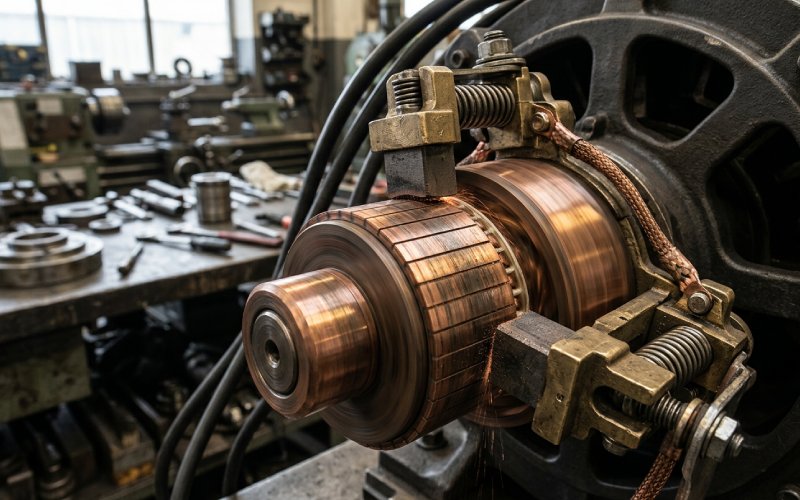
This is where commutator quality becomes visible. Segment geometry, insulation stability, copper finish, concentricity, and brush track consistency all start to show up as real system behavior. Not theory. Not brochure language.
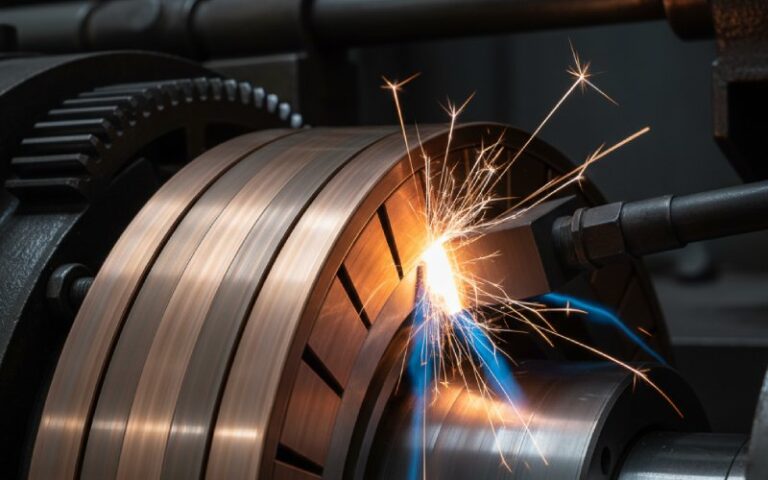
A weak commutator creates rough starts, unstable switching, hotter contact zones, faster brush damage, and eventually the kind of field failure people like to blame on “the motor” in general.
3. When serviceability still has value
Brushless gets described as maintenance-free. Fair enough. But in many B2B products, serviceable is still useful. A motor that can be maintained, reworked, or kept in production through component replacement is sometimes a better commercial decision than a sealed architecture that forces complete replacement.
This is especially true when the equipment itself is expected to stay in service for years and the motor is only one part of a larger assembly.
4. When the project is not starting from zero
A lot of programs are not greenfield. They are revisions.
The customer already has a brushed motor platform in the market. They are trying to reduce early wear, lower spark-related complaints, improve batch stability, or fix a startup issue without rebuilding the whole drive architecture.
That is exactly where a custom commutator supplier should be useful.
What actually makes one commutator perform better than another
This is the part that gets flattened too much online.
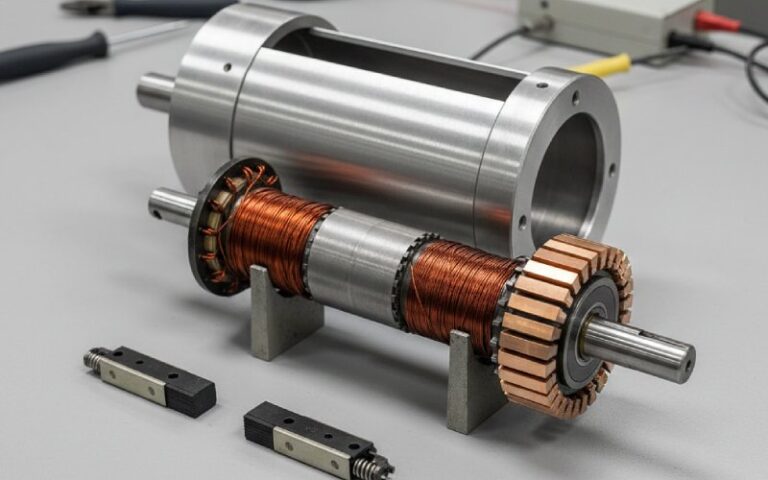
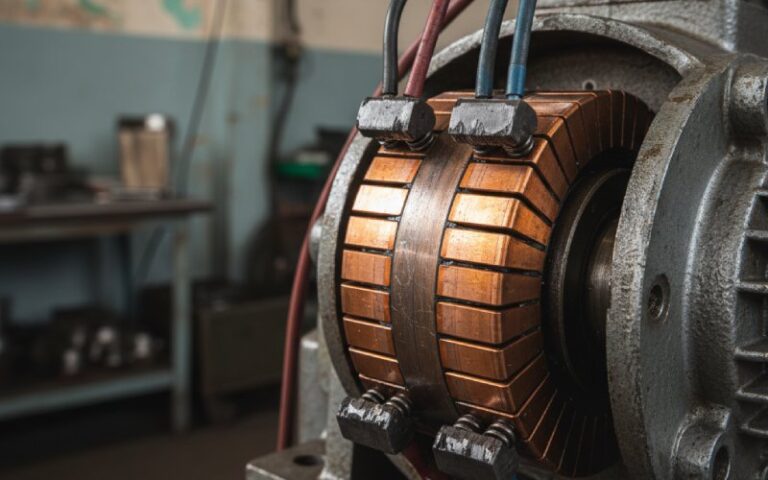
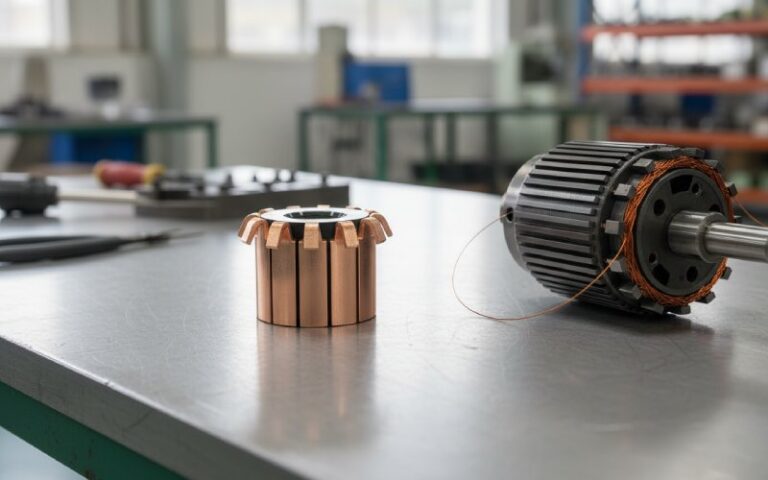
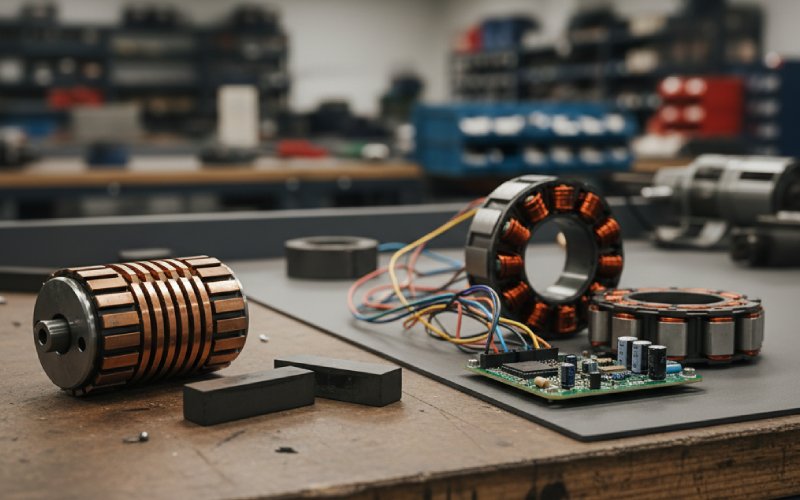
A commutator is not just copper segments in roughly the right shape. Cheap copies can look acceptable in a photo and still behave badly in production. The failure usually starts at the contact interface, then spreads outward into heat, wear, noise, and life inconsistency.
We pay attention to the points that change real motor behavior:
Segment geometry
The segment profile affects switching quality, contact transition, and the way the brush sees the surface over time. Small geometric errors do not stay small once current density rises.
Copper quality and surface finish
Poor finish does not wait very long before becoming a wear issue. The brush track becomes unstable, local heating increases, and the contact condition gets harder to control from batch to batch.
Mica control and insulation integrity
Insulation is quiet when it works. Then expensive when it does not. Dimensional consistency here matters more than many purchasing teams expect, especially in high-cycle or vibration-prone applications.
Concentricity and runout
A commutator that is technically usable but mechanically inconsistent will keep feeding the same downstream problems: unstable contact, uneven brush loading, surface damage, rising noise, and reduced life.
Material pairing with the brush system
A commutator should not be chosen in isolation. The copper system, brush grade, spring force, current profile, and duty cycle all interact. Ignore that, and the motor may still run. It just will not run well for long.
Production repeatability
One approved sample is not the same thing as a stable supply program. OEM buyers do not only need a part that works once. They need a commutator supplier that can hold critical dimensions and behavior across volume production.
That is where many low-cost offers start to fall apart.
A good commutator saves more than the component cost
This is where procurement, engineering, and after-sales usually meet.
The direct part price matters. Of course. But on real programs, the better question is broader:
What does the commutator do to the total cost of the motor platform?
A stronger commutator design can help reduce:
- early-life wear issues
- unstable startup behavior
- spark-related complaints
- repeat motor validation caused by inconsistent samples
- batch-to-batch variation
- unnecessary redesign loops
- field returns linked to contact failure
That is the commercial side of a technical component. A poor commutator rarely fails alone. It usually drags labor, testing time, service cost, and customer trust down with it.
Quick comparison: where a precision commutator still wins
| Project condition | What the customer usually needs | Why a custom commutator still makes sense | What the OEM gains |
|---|---|---|---|
| Existing brushed motor platform needs improvement | Better life, smoother startup, lower complaint rate | No need to rebuild the full motor architecture | Faster upgrade path |
| Repeated start-stop duty | Stable current reversal and contact durability | Commutator design directly affects switching behavior | Better restart consistency |
| Cost-sensitive motor system | Lower total system complexity | Fewer electronics and less control overhead | Lower total project cost |
| Serviceable equipment | Replaceable wear system, repair logic | Commutated designs still fit maintenance-based products | Better long-term service flexibility |
| Tight launch schedule | Faster sampling and validation on known architecture | Easier to optimize one critical component than redesign the whole drive | Shorter development loop |
| Brushless was considered, but adds too much overhead | Balanced engineering decision | Sometimes the simpler architecture is the better product decision | Lower integration burden |
How we approach custom commutator development
We do not start from catalog language. We start from the motor behavior you are trying to control.
In most projects, we review:
- motor type
- voltage and current profile
- startup load
- target speed range
- duty cycle
- brush system
- available installation space
- expected life target
- known field failure pattern, if there is one
Then we work backward into the commutator design.
Sometimes the issue is wear.
Sometimes it is switching stability.
Sometimes it is not even life at all. It is just sample inconsistency that keeps disrupting motor validation.
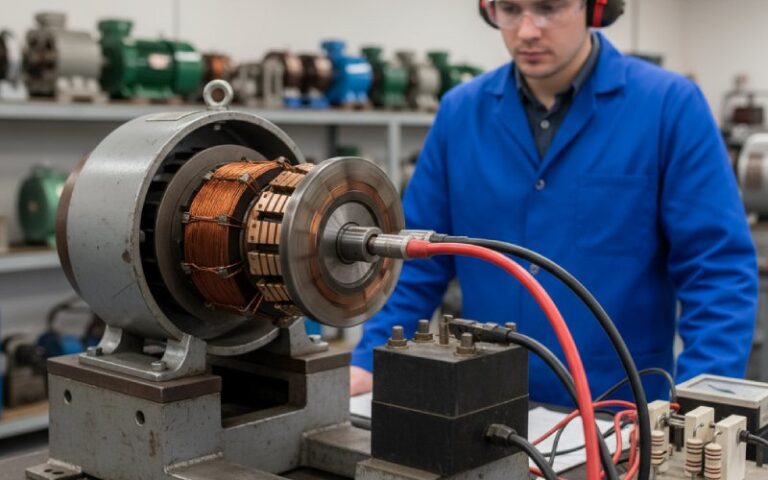
A serious custom commutator manufacturer should be able to support all three stages, not only quotation:
- drawing review
- prototype or reverse-sample development
- volume production with dimensional control
That is how component supply becomes engineering support, which is usually what OEM customers need anyway.
Where we usually add value fastest
Not every inquiry needs a long development cycle.
We can often move quickly when the customer already has one of these:
- a motor drawing
- a worn commutator sample
- basic OD / ID / height / segment count data
- brush data
- application notes on startup load or failure mode
- target annual volume
That is usually enough to start a practical conversation.
The market is not choosing between old and new. It is choosing between fit and mismatch.
That is the part that gets missed.
Brushless is the right answer for many products. We know that. Our customers know that too. But plenty of DC motor programs still depend on a commutator, and those programs do not fail because the market moved on. They fail because the contact system was treated like a commodity.
It is not.
A commutator still decides too much inside a brushed motor to be sourced casually. Startup feel. Wear pattern. Surface stability. Noise tendency. Service life. Batch consistency. A cheap part can pass inspection and still create expensive behavior later.
So no, commutator technology is not trying to win every argument in a brushless market.
It only needs to win the applications where:
- simple architecture still matters
- controllable maintenance still matters
- startup reliability still matters
- supply consistency still matters
That is a smaller battlefield than before. Still a real one.
And that is where we work.
FAQ
Is commutator technology still relevant in modern motor design?
Yes. Not everywhere, but clearly yes. It remains relevant in brushed DC motor systems where direct DC operation, controlled component cost, restart behavior, serviceability, and architecture simplicity still matter more than maximum efficiency or fully electronic commutation.
Can you customize a commutator for our existing motor?
Yes. This is a common request. Customers usually come to us with an existing drawing, an armature sample, or a motor that has wear, sparking, startup, or consistency issues. We review the current design and propose a manufacturable commutator solution around the actual application.
What applications still use commutators at volume?
Common examples include household appliances, power tools, pumps, automotive auxiliary motors, actuators, universal motors, and other brushed DC motor platforms where startup load, cost structure, and service logic still support a commutated design.
What information do you need before quotation or sampling?
The most useful starting data includes:
drawing or sample
OD / ID / height
number of segments
shaft or armature details
voltage and current range
application type
target quantity
known failure mode, if any
Even partial data is useful. A used sample often tells us more than a clean drawing.
When should we stop forcing a commutator solution?
When the product requires very high continuous efficiency, very high speed, low-maintenance sealed operation, low acoustic noise, or a tighter thermal package than a brushed architecture can realistically support. In those cases, changing the commutator alone will not fix the mismatch.
Why not just buy the lowest-cost commutator?
Because the visible cost of the part is only one line in the project. A low-grade commutator can increase sample rejection, wear instability, spark issues, warranty risk, and production inconsistency. Cheap parts often become expensive after assembly.
Talk to a Custom Commutator Supplier
If your motor project is still built around a brushed architecture, the commutator is not a detail. It is one of the parts that decides whether the product becomes stable in production or difficult in the field.
Send us your drawing, sample, or motor parameters.
We will review the commutator design from the standpoint of manufacturability, fit, and likely performance risk.