How the Commutator, Brush Holder, and End Frame Work Together in a Starter Motor
In starter motor work, these three parts should not be judged one by one. The commutator is the switching surface. The brush holder controls how the brush approaches that surface and stays on it. The end frame fixes the whole relationship in space, including the commutator-side shaft support. When one part drifts, the other two stop behaving normally. Returns that look like “commutator wear” often start somewhere else.
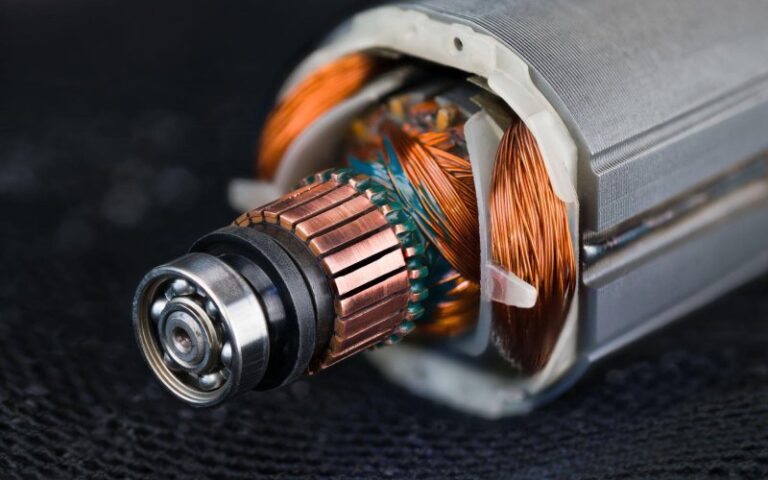
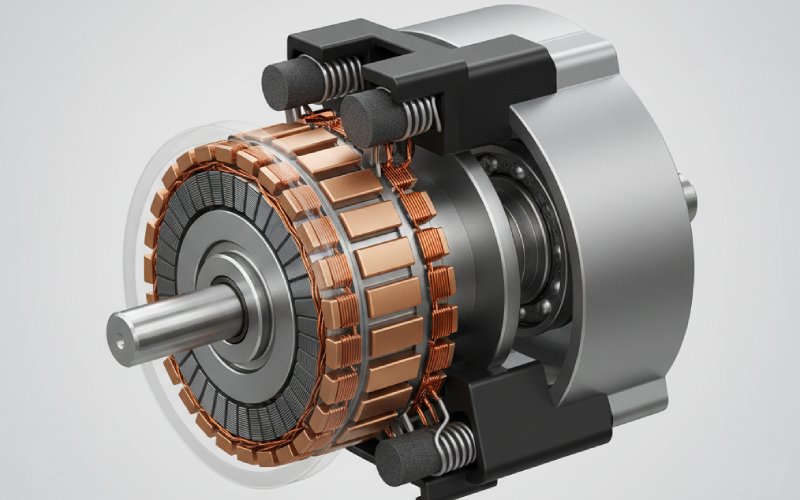
The electrical path is compact, but the stack-up is not forgiving. In common starter layouts, the brushes are spring-biased inward around the commutator, and the brush/terminal structure is built around a support plate or frame that receives the commutator zone. That means current transfer, brush motion, terminal insulation, and shaft position are all crowded into the same end of the motor. Small mechanical errors get translated into electrical problems very quickly.
Table of Contents
The starter motor commutator does not fail by itself
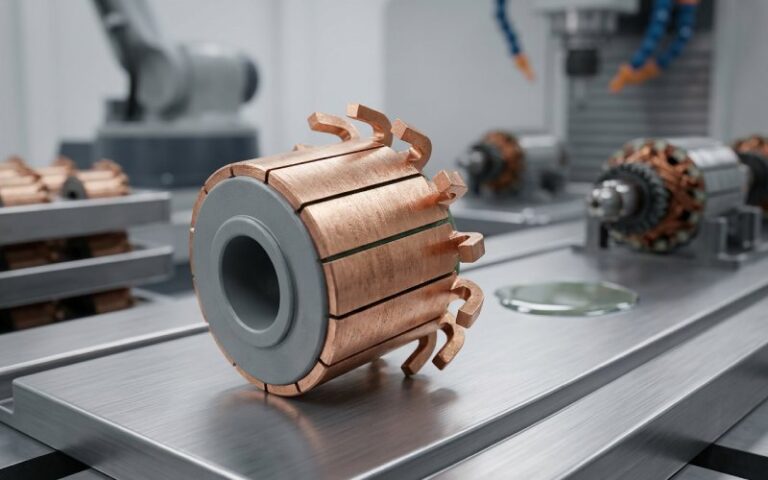
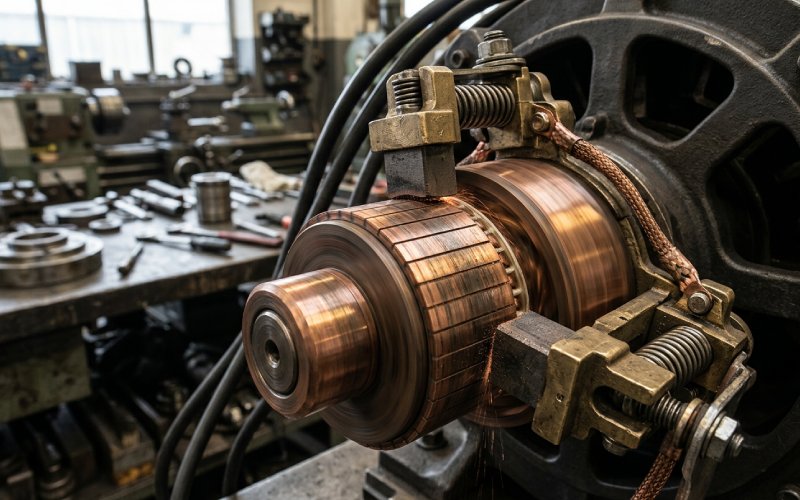
On the bench, the commutator is less a “part” and more a witness surface. It reacts to contact drop, brush grade, film condition, humidity, environmental impurities, speed, and pressure. So when the copper looks wrong, we do not start by blaming the copper. We ask what changed the brush contact first.
That is why good-looking diameter can still mean a bad starter motor commutator. Burn marks on bar edges, dark patches, uneven film, pitting, or streaking usually point to commutation trouble before they point to simple wear. We inspect bar chamfer, mica undercut, burrs, runout, and surface finish together. Oil contamination matters too. It changes the film and pushes brush wear higher than it should be.
The brush holder is not a bracket. It is a control part
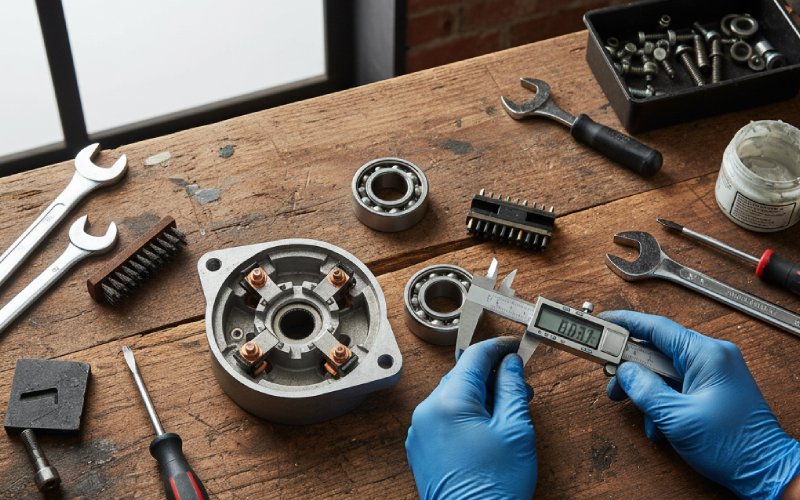
A brush holder has one basic job, and it still gets mishandled in the field: guide the brush so it can move freely with enough control. Not tight enough to stick. Not loose enough to rattle. If the pocket is distorted by heat, if the brush size is off, if the holder sits too far from the commutator, the brush starts to vibrate, spark, chip at the edges, or wear its sides shiny. Once that starts, the commutator surface follows.
Spring force is part of the holder system, not an afterthought. Low pressure reduces contact stability. Unequal pressure makes one path work harder than the others. Excessive pressure is not clean either; it raises friction and heat. In our inspection flow, springs are checked as a set, brush shunts are checked for discoloration or looseness, and new brushes are not released until they slide freely and are properly seated to the commutator contour. Emery cloth stays out of the process.
The end frame is the quiet part that sets the geometry
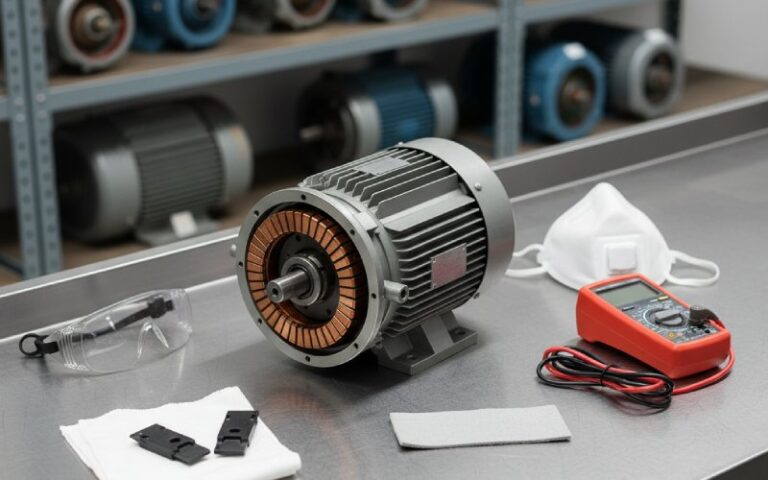
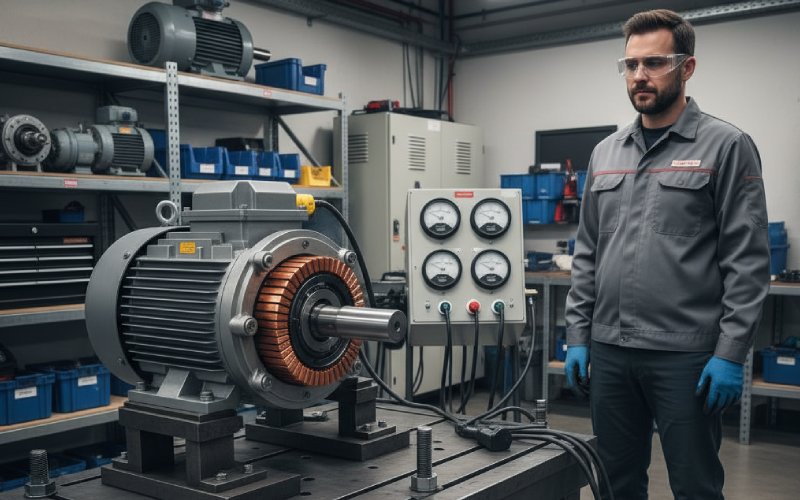
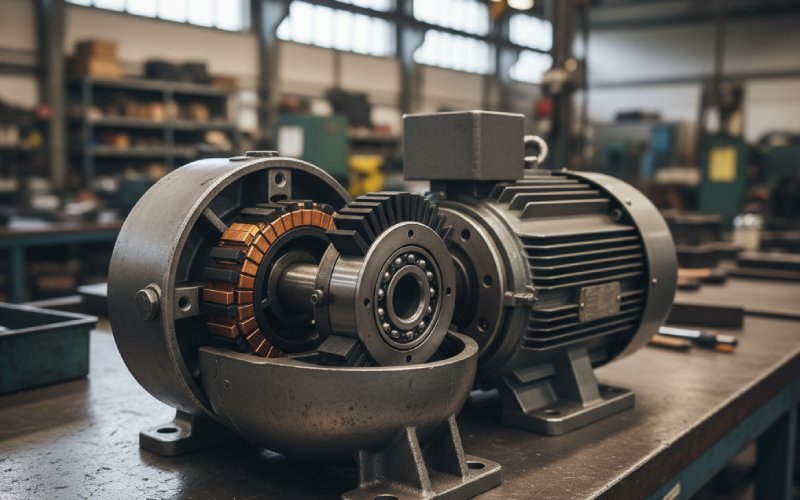
A lot of failures get misread because the end frame looks passive. It is not. The commutator-end assembly carries shaft support at that side of the armature, and in many designs it also fixes the brush frame position, insulation stack, sealing parts, and alignment features. If the frame face is twisted, if the bearing pocket is worn, if the alignment pin or insulator stack is wrong, the brush can land on the commutator at the wrong attitude even when the brush and copper are both new.
This is where repeat failures come from. A rebuilt unit gets a fresh commutator and brushes, maybe even a new brush holder, but the end frame still lets the shaft run slightly off true. Then you see chatter marks. Side-polished brushes. Flexible lead damage. Intermittent contact. Later, the complaint becomes “poor commutator life.” The geometry failed first. The copper only recorded it.
How the defect travels across all three parts
One path is contamination. Carbon dust, copper dust, humidity, and other contaminants reduce the insulating strength of the air around the brush zone. Oil shifts the film condition and can drive patchy tracks and high brush wear. In severe cases, contamination stops being a wear issue and becomes an electrical leakage or arcing issue inside the commutator-end area. That jump happens faster than many buyers expect.
Another path is vibration. If the end-frame side support loses control of the shaft, the brush system starts behaving as if the commutator is eccentric or unstable. The brush then bounces, the shunt suffers, the edges break, and the contact surface goes out of shape. People often replace the most visible part in that chain. Not the first bad part.
Where root cause usually starts
The table below is close to how we sort failures in production review and return analysis.
| Part | What it really controls | What we usually see first | What must be checked before replacement is approved |
|---|---|---|---|
| Commutator | Switching surface, bar-to-bar consistency, film stability | Edge burning, dark patches, streaking, pitting, uneven wear path | Runout, surface finish, chamfer quality, mica undercut, burrs |
| Brush holder | Brush guidance, holder distance, pocket condition, spring delivery | Sticking brush, shiny brush sides, chatter marks, chipped edges, uneven wear | Pocket wear, brush freedom, spring balance, holder angle, holder-to-commutator gap |
| End frame | Shaft support, concentricity, brush frame location, terminal insulation stack | Irregular wear pattern, shunt stress, intermittent contact, housing-side marking | Bearing pocket, alignment features, insulators/O-rings, frame face condition, fastening location |
If a sourcing team treats these checks as separate departments, the starter comes back. If they are handled as one interface, service life stabilizes.
Our inspection order before a starter motor leaves the line
We keep the release logic simple.
- Check the end frame first. Bearing fit, alignment features, insulation stack, seating face.
- Check whether the commutator runs true. Do not judge copper before you judge geometry.
- Check the brush holder next. Brush freedom, holder wear, holder distance, lead condition.
- Then check spring consistency. Not one spring. All of them.
- Finish with commutator surface prep and brush seating. Correct edge condition, correct mica condition, correct seating method, then vacuum the dust out before final run.
That order saves time because it prevents cosmetic repair. A starter motor commutator can be reworked perfectly and still fail early if the brush holder or end frame is allowed to carry old distortion into the new build.
FAQ
Can a worn end frame damage a new commutator?
Yes. The end frame carries the commutator-side shaft support and sets brush system location. If that geometry is off, the brush no longer tracks the commutator correctly, and the new copper wears under unstable contact conditions.
Do new brushes fix starter motor arcing on their own?
Usually not. New brushes still need correct holder clearance, stable spring force, proper seating, and a commutator surface with the right chamfer, undercut, finish, and cleanliness. If the old film or burr condition stays in place, arcing often stays too.
Is higher spring pressure a good quick fix for brush problems?
No. Low pressure is bad, but high pressure is not automatically good. Both low and excessive spring pressure show up in brush-system trouble. What matters is the correct and uniform pressure for the application, with free brush motion inside the holder.
Can contamination inside the commutator end frame create electrical failure, not just wear?
Yes. Carbon dust, humidity, and other contaminants reduce dielectric strength around the brush zone. Oil and dirt also disrupt the contact film. Under severe conditions, that can move the problem from wear into arcing, leakage, or shorting near the brush holder and housing area.
What should B2B buyers ask for when sourcing a commutator end frame assembly?
Ask about alignment control, holder pocket consistency, spring-force uniformity, insulation stack integrity, and commutator surface preparation standards. Asking only for brush material and copper size is not enough. The assembly life is usually decided by geometry and contact control before it is decided by raw material alone.
For starter motor reliability, we treat the commutator, brush holder, and end frame as one controlled interface. That is how we reduce false root-cause calls, unstable rebuild quality, and repeat field returns. Not by polishing one part harder. By holding the relationship between all three.