7 Common Causes of High Commutator Drop and How to Reduce It
High commutator drop is rarely one bad part.
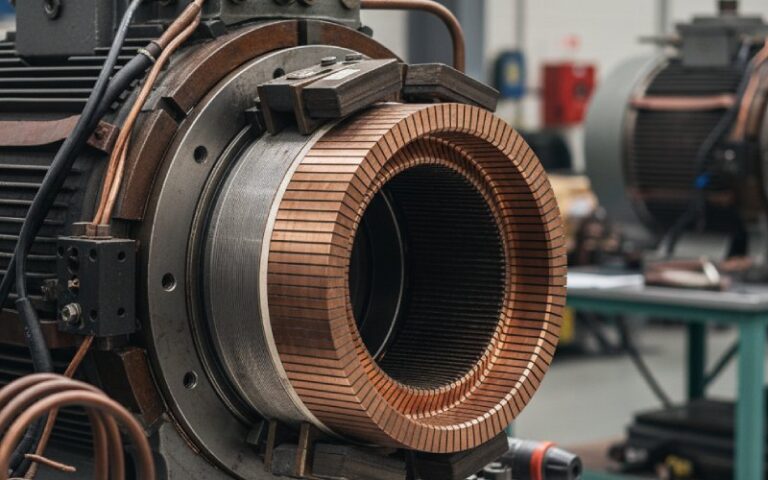
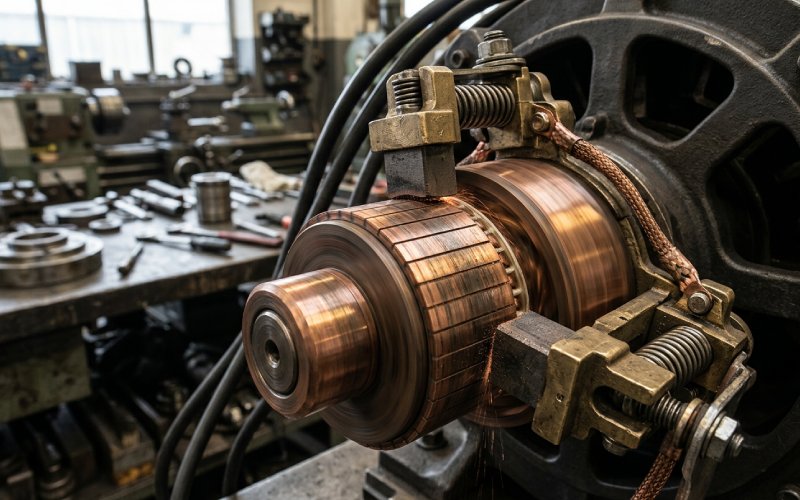
Most of the time, it is a contact system issue that shows up on the commutator surface first. Brush pressure moved. The track got too smooth. Mica stood too high. Slot edges were left rough. The film never stabilized. Or the rotor started to run with more movement than the brush could tolerate.
Buyers often ask a narrow question: Is the commutator causing the drop?
Our answer is usually narrower than expected. Sometimes yes. Often partly. The commutator, brush, holder, alignment, and operating condition all push on the same interface.
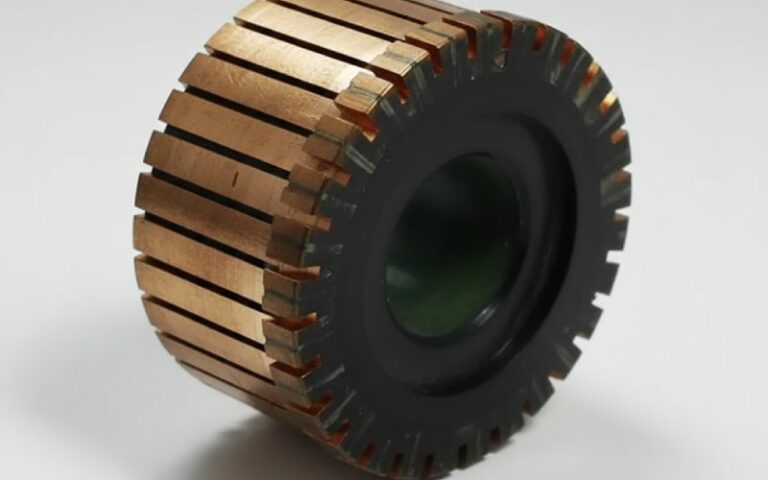
From a manufacturing standpoint, that matters. A lot. A commutator that looks acceptable on a drawing can still create unstable contact in service if the copper bar consistency, surface finish, undercut quality, bar-edge condition, or runout control are loose.
This is where many field problems begin.
If you are reviewing a motor issue now, start with the table below. If you are sourcing a new part, look at the same points before the next batch is built.
Table of Contents
Quick Diagnosis Table
| Cause | What shows up first | What is really happening | What usually helps |
|---|---|---|---|
| Uneven or low brush pressure | Hot brushes, uneven wear, unstable current sharing | Contact area changes from brush to brush | Reset spring pressure and verify holder condition |
| Surface too rough or too smooth | Fast wear, glazing, chatter, unstable film | The brush cannot build a stable running track | Correct the finish and reseat properly |
| High mica or poor slot edge condition | Edge marking, sparking, brush bounce | Contact breaks at each bar transition | Rework undercut, deburr, clean slots |
| Contamination or weak surface film | Streaks, color change, friction rise | Interface resistance starts climbing | Remove contamination and correct the source |
| Runout, vibration, or alignment error | Random burning, chatter, irregular wear | Contact becomes intermittent | Check rotor movement, bearings, balance, concentricity |
| Wrong brush grade for the duty | Good geometry, bad running | Brush behavior does not match load and speed | Re-match brush grade to the application |
| Holder geometry or neutral error | Bar-edge burning, unstable commutation | The brush is working in the wrong electrical zone | Recheck holder position, spacing, and neutral setting |
1) Uneven or Low Brush Pressure
This one gets underestimated because it is simple.
When brush pressure is low, the contact is weak. When brush pressure is uneven, current sharing shifts. The brush with lower drop starts carrying more. The hot spots move. Wear stops looking uniform. Then someone blames the commutator alone.
We see this often on motors that have already been serviced more than once. Springs age. Holders wear. Brush length changes the effective force. Dust builds up around the box and the movement is no longer clean.
From the manufacturing side, this is exactly why commutator consistency matters. If the contact track is already unstable, even a small pressure variation becomes visible faster. A commutator with better bar-to-bar uniformity gives the brush system more room before it slips into trouble.
What we usually recommend:
- Measure every spring, not just one
- Check brush freedom inside the holder
- Compare temperature and wear pattern across all brush arms
- Confirm the commutator track is not amplifying the pressure imbalance
If your motor is running with visible current-sharing drift, it is worth reviewing both the brush system and the commutator geometry.
2) Surface Finish Is Outside the Useful Range
Too rough is bad. That part is obvious.
Too smooth is not much better.
A mirror-bright track often gets treated as a sign of quality. In operation, not always. The brush does not need a decorative surface. It needs a stable running surface. If the commutator track is too rough, wear climbs. If it is too smooth, the film becomes unstable, seating gets worse, and the contact can turn inconsistent under load.
This is why we do not target shine. We target repeatable working texture.
In production, surface finish control is not just a final cosmetic step. It depends on copper bar consistency, machining stability, tool condition, and how well the part stays true during processing. Poor raw material consistency often shows up later as an uneven track, even when the part looked fine at first inspection.
What we usually recommend:
- Check whether the track is actually glazed, not just smooth
- Refinish only to a controlled working texture
- Clean residue fully after machining
- Reseat brushes after rework, not before operation
For new parts, this is one of the easiest quality points to screen when selecting a custom commutator supplier.
3) High Mica, Burrs, or Poor Bar-Edge Condition
The brush notices every bar transition.
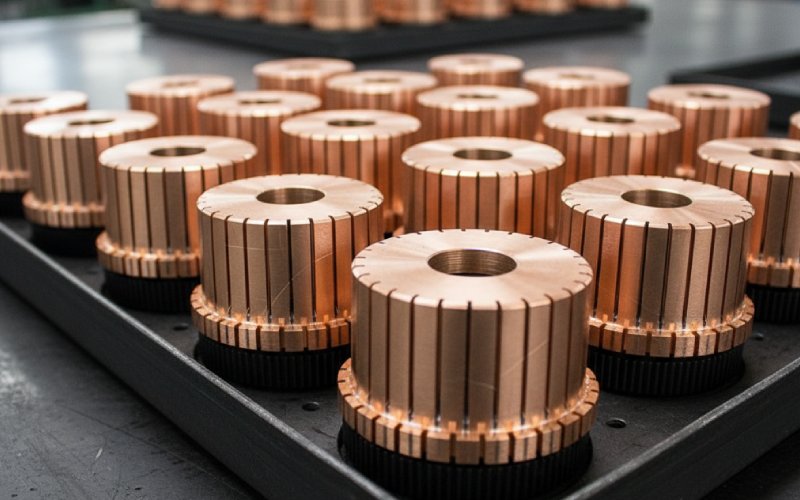
If the mica is standing proud, if the undercut is inconsistent, if copper burrs remain in the slot, or if the bar edges are too sharp, the contact breaks and reforms again and again. Small interruption. Repeated many thousands of times. The result is not small anymore.
You usually see edge marking first. Then chatter. Then sparking. Sometimes a rise in temperature before the surface damage becomes obvious.
This is one reason low-cost parts fail in a very specific way. The drawing may say the undercut is there. The real question is whether the slot depth is consistent, whether the burr removal is clean, and whether the edge finishing was done with discipline instead of speed.
In our own production control, slot cleanliness and bar-edge condition are never treated as side details. They are contact details. Which means electrical details.
What we usually recommend:
- Inspect mica height all around the circumference
- Check for burrs after undercutting or rework
- Verify the slot is clean and open
- Look closely at the bar edges, especially where burning begins
If your application is sensitive to commutation quality, ask your supplier how they control slot finishing and edge consistency in batch production. That answer tells you a lot.
4) The Surface Film Is Unstable, or the Interface Is Contaminated
The film is not decoration either.
A healthy commutator surface usually develops a controlled working film. When that film turns patchy, streaked, too light, too dark, or too uneven, the contact starts drifting. Resistance goes up. Friction changes. The machine may still run, but not well.
Contamination does the same thing from another angle. Oil mist, carbon dust, abrasive residue, metal fines, process dirt. Any of these can disturb the interface. Cleaning helps, yes. Only if the source is also removed.
This is where field troubleshooting and manufacturing quality touch each other. If the commutator surface is inconsistent from bar to bar, the film often becomes inconsistent faster. That is one reason stable copper machining and track finish matter more than buyers sometimes expect.
What we usually recommend:
- Read the film pattern before cleaning everything off
- Look for streaking, patchiness, or abrupt color changes
- Check the environment, not only the motor
- Correct the operating cause, not just the visible residue
For OEM motors running in dirty or variable environments, a more stable commutator design usually reduces how quickly these problems build.
5) Runout, Vibration, or Alignment Problems
Not every electrical symptom starts electrically.
A commutator can be well made and still run badly if the rotor movement is poor. Excessive runout, weak bearings, poor balance, shaft movement, coupling misalignment. Any of these can make the brush lose contact for a fraction of a second. That is enough. Repeat it long enough and the drop rises, the surface marks, and the brush starts bouncing.
This kind of case is easy to misread. The damage appears on the commutator, so the commutator gets blamed first. But the surface may only be recording a deeper mechanical fault.
From our side, this is why concentricity and dynamic stability are not optional checks. A commutator is not only a copper assembly. It is a rotating contact part. If the finished piece cannot hold stable geometry in operation, none of the nice material language matters.
What we usually recommend:
- Check total runout before changing materials
- Inspect bearing condition and seat integrity
- Review balance and shaft alignment
- Compare wear pattern around the full circumference, not one local area
When buyers ask how to reduce repeated brush bounce, our first question is usually not about brush grade. It is about rotor truth and commutator stability.
6) The Brush Grade Does Not Match the Duty
A brush can fit and still be wrong.
This is one of the more expensive mistakes because it often survives inspection. Dimensions are fine. Installation is fine. The machine still runs poorly. Then the contact drop stays high, the film never settles, and wear becomes irregular for no obvious reason.
The problem is not size. It is match.
Brush behavior has to suit current density, speed, load variation, reversing pattern, environment, and the actual commutator surface it runs on. A mismatch here will not be corrected by machining quality alone. Not fully.
That said, the opposite is also true. A well-matched brush will still struggle on a commutator with poor bar consistency, weak edge control, or unstable track finish. This is why we never look at the commutator in isolation and never advise customers to do that either.
What we usually recommend:
- Review the brush grade against the real duty, not the nominal duty
- Compare the running pattern before and after brush changes
- Check whether the commutator surface is helping or fighting the brush
- Treat the brush-commutator pair as one system
If you are changing both parts at once, it makes sense to source the commutator and application support from a supplier that understands the pair, not just the drawing.
7) Holder Geometry, Neutral Setting, or Upstream Electrical Faults
Some commutator damage is secondary damage.
Holder spacing, holder height, brush angle, neutral position. Small errors here can create large effects at the interface. The brush enters the wrong zone, bar-edge stress rises, and the surface starts showing it quickly.
Then there are upstream faults. Loose riser joints. Armature-side imbalance. Uneven electrical loading. These problems often leave marks on the commutator even when the commutator itself was built correctly.
That is why we do not look at burned bars and jump to conclusions. Pattern matters. Position matters. Repetition matters. A random-looking failure often has a very organized cause once the full system is reviewed.
From a manufacturing angle, precision on its own is not the whole story. Precision has to survive assembly. If the holder geometry in the motor is poor, even a very good commutator will be forced into bad contact conditions.
What we usually recommend:
- Recheck holder height after any turning or rework
- Confirm holder spacing and brush alignment
- Review neutral setting under real running conditions
- Inspect the armature side if the surface pattern looks electrically directional
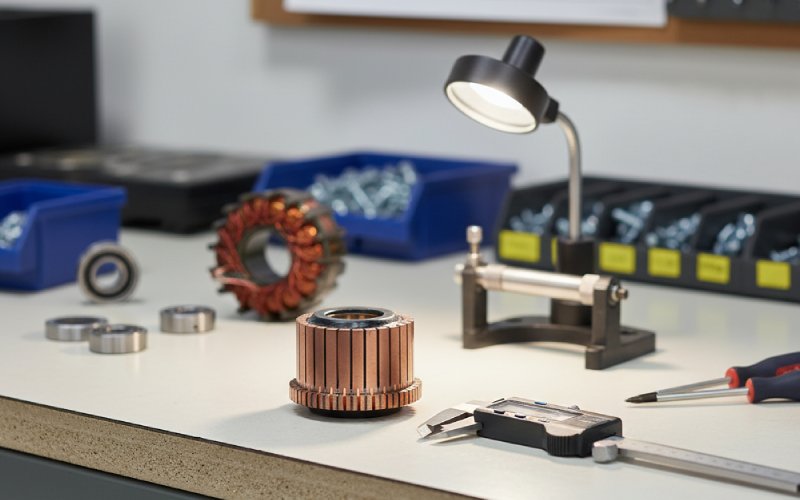
What We Check First When Customers Report High Commutator Drop
We keep the sequence short.
- Surface film and wear pattern
- Brush pressure balance
- Track finish and seating condition
- Mica undercut, burrs, and bar edges
- Runout, vibration, and rotor stability
- Holder geometry and neutral position
- Upstream electrical faults
Most cases are stacked, not isolated. A little pressure loss. A little glazing. A little contamination. A little movement in the rotor. Add them together and the measured drop becomes the last symptom, not the first.
Why This Matters When Choosing a Commutator Manufacturer
A buyer usually gets two kinds of quotes.
One quote is based on shape, size, and price.
The other is based on contact performance, production consistency, and what happens after the motor leaves the test bench.
They are not the same quote.
If your application is already sensitive to brush wear, unstable commutation, or repeated field returns, then the commutator supplier should be reviewed on more than dimensions. Ask about:
- Copper bar consistency
- Surface finish control
- Mica undercut process
- Bar-edge finishing
- Runout inspection
- Batch-to-batch repeatability
- Support for custom motor conditions
That is usually where the gap is.
If you are sourcing for OEM production, repair programs, or a custom motor project, you can review our commutator manufacturing capabilities or send the drawing to our engineering team.
FAQ
What does high commutator drop usually indicate?
Usually not one thing. Most of the time it points to unstable brush contact. That can come from pressure imbalance, poor track finish, contamination, runout, wrong brush grade, or geometry errors around the holder and neutral setting.
Can a new commutator still cause high drop?
Yes. A new part can still run poorly if the surface finish is wrong, the bar edges are rough, the mica condition is inconsistent, or the part does not hold good running geometry. New does not automatically mean stable.
Is polishing enough to reduce commutator drop?
Not always. A polished surface can still be the wrong surface. If the track becomes too smooth or glazed, contact may get worse rather than better. The target is a usable running finish, not maximum shine.
Why does one side of the brush rig run hotter?
Usually because current sharing is no longer even. Unequal spring pressure is common. So is unstable contact caused by runout, holder wear, or local surface condition.
Can poor commutator manufacturing increase drop even if the motor design is correct?
Yes. It happens more often than buyers expect. Variations in copper bar geometry, undercut quality, edge finishing, concentricity, or track consistency can all show up later as unstable contact and higher drop.
When should the commutator be replaced instead of reworked?
Replace it when the geometry is no longer reliable, the surface damage is too deep, the bars or slots cannot be restored cleanly, or the repeated operating issue has already damaged the working track beyond stable recovery.
Need Support on a High-Drop Motor Application?
If you are reviewing a repeated field issue, a new motor design, or a replacement program, send us your drawing or sample. We can review the commutator structure, operating condition, and production points that usually drive contact stability.
Explore our custom commutators or contact us for a technical review: Request a quote.