Future of Commutator Motors in a Brushless-Dominated Market
If you spend any time around electric drives today, it feels like everything is going brushless. New specs ask for higher efficiency, quieter operation, and tighter control. Power electronics keeps getting cheaper. Marketing decks are full of “BLDC” and “EC motor” slides.
And yet, the old-school commutator motor is still everywhere.
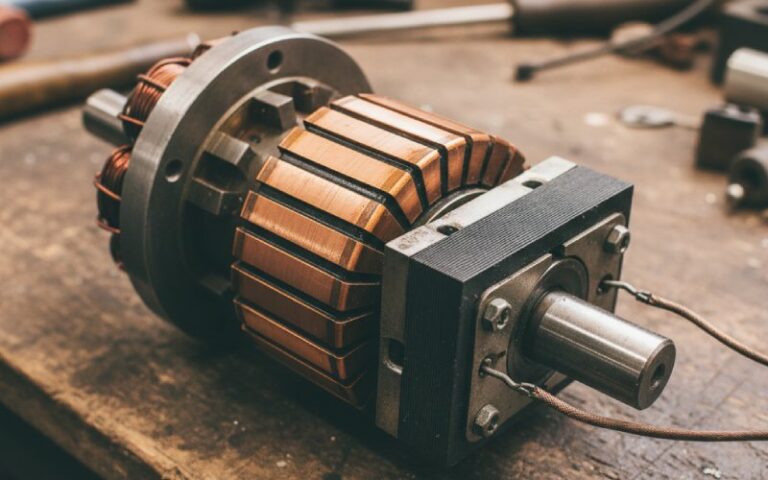
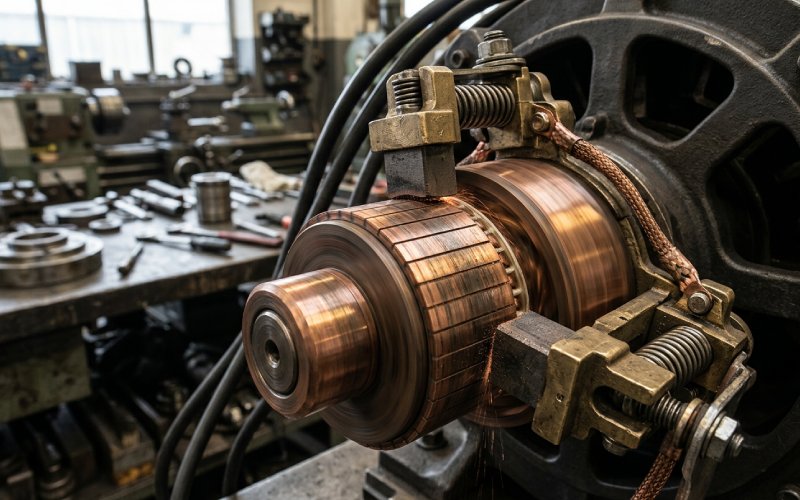
It’s in low-cost tools, window lifters, toys, small pumps, and a surprising number of appliances. When you open up everyday products, you still see brushes, a commutator, and a very familiar smell of carbon dust.
So the real question isn’t “Will brushless kill commutator motors?”
The more honest question is: What role will commutator motors play in a world where brushless is the default choice for anything modern and premium?
- In this article, we’ll walk through:
- Where it still makes sense to design in a commutator motor.
- How the technology around commutators is quietly evolving.
- What smart OEMs and motor makers can do now to avoid getting trapped between regulations and cost pressure.
Table of Contents
1. Brushless is clearly winning — but not everywhere
Let’s start with the big picture.
Most of the growth in the motor world is happening on the brushless side. For anything that runs a lot, uses real power, or sits in a regulated category (like HVAC or white goods), engineers are under steady pressure to move to BLDC or other high-efficiency platforms.
But that’s only half the story.
Brushed, commutator-type motors are still made in huge volumes. They keep showing up in designs where:
- the bill of materials is brutally constrained,
- lifetime hours are limited,
- or the electronics budget is close to zero.
- Why brushless has grabbed the spotlight:
- Energy use: BLDC motors usually waste less power as heat, which matters a lot when your product gets audited for efficiency.
- Reliability: No brushes means fewer wear parts and fewer service calls in critical systems.
- Control: Electronic commutation enables smooth speed control, torque control, and integration with sensors and software.
- Regulations: Many efficiency and eco-design standards effectively push higher-volume products toward brushless options.
2. Where commutator motors still make sense
The mistake in a lot of “everything is going brushless” takes is assuming every product optimizes for the same things: efficiency, lifetime, and a full-featured control system. In practice, many products are built to optimize survival on a costed BOM first, and everything else second.
In that world, commutator motors still have real strengths.
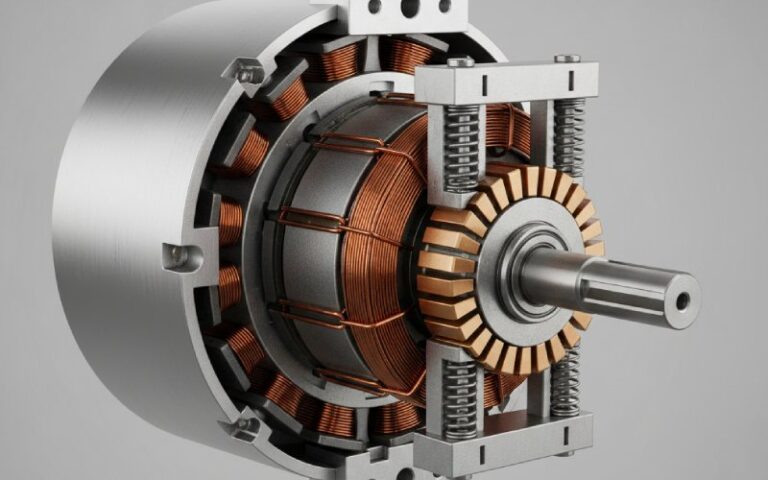
One way to think about them: they’re a self-contained electromechanical drive plus commutation system that works as soon as you wire it up. No firmware, no motor controller, no sensor fusion. Just apply voltage and it spins.
- Typical sweet spots for commutator motors today:
- Severe cost pressure: Low-margin appliances and devices where adding a proper BLDC drive stage is simply not affordable.
- Short-duty or short-life products: If the motor is only expected to run a few hundred hours over its entire life, BLDC’s extended lifetime advantage can be overkill.
- Electrically “dirty” environments: Some industrial and process setups prefer a robust brushed motor to a delicate electronics-heavy solution.
- Very simple control: On/off, maybe a couple of discrete speeds, nothing that demands advanced electronics.
- Legacy platforms: Long-running product lines with approvals, tooling, and supply chains built around commutator motors.
3. Side-by-side: future roles of commutator vs brushless
To avoid broad generalizations, it helps to put the two technologies next to each other and look at the future roles they’re likely to play, not just their technical differences.
| Aspect | Commutator Motors (Brushed DC / AC) | Brushless Motors (BLDC / EC) |
|---|---|---|
| Core value | Lowest upfront cost, self-commutating, easy to drive with simple electronics | High efficiency, precise control, long life, great for connected systems |
| Main limitations | Brush wear, commutator maintenance, electrical noise, lower efficiency | Needs dedicated electronics, firmware, and EMC-conscious design |
| Regulatory outlook | Increasingly squeezed in high-power, long-duty products | Favored by most modern efficiency and eco-design regulations |
| Best-fit niches | Cost-critical, short-life, rugged or “fit-and-forget” tasks | EVs, HVAC, robotics, pumps, fans, appliances, industrial and medical drives |
| Innovation focus | Materials, brush life, manufacturing, noise reduction | Control algorithms, integration, magnet and semiconductor optimization |
| 10–15 year horizon | Gradual volume decline, stable or even growing in a few focused niches | Continued growth and share gain across most segments |
- The point of this comparison is simple:
- The future isn’t “brushless versus commutator,” it’s brushless everywhere it pays off — and commutators in the places where they still have structural advantages.
4. The tech isn’t frozen: what’s actually changing in commutator motors
It’s easy to assume commutator motors are “done” as a technology, but that’s not what’s happening inside factories and R&D labs. There’s a steady stream of small but meaningful improvements that keep these machines competitive within their niche.
A lot of this work never hits headlines. It shows up as quieter operation in a cheap hand tool, or a slightly longer brush life in a pump that no one thinks about until it fails.
- Key areas where commutator motors are getting better:
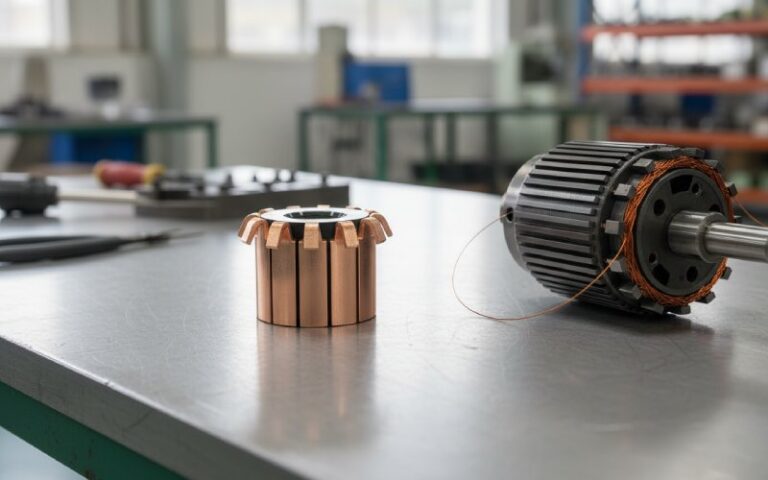
- Brush and commutator materials:
New brush formulations and copper alloys aim to reduce wear, arcing, and dust while stretching service life. - Miniaturization and packaging:
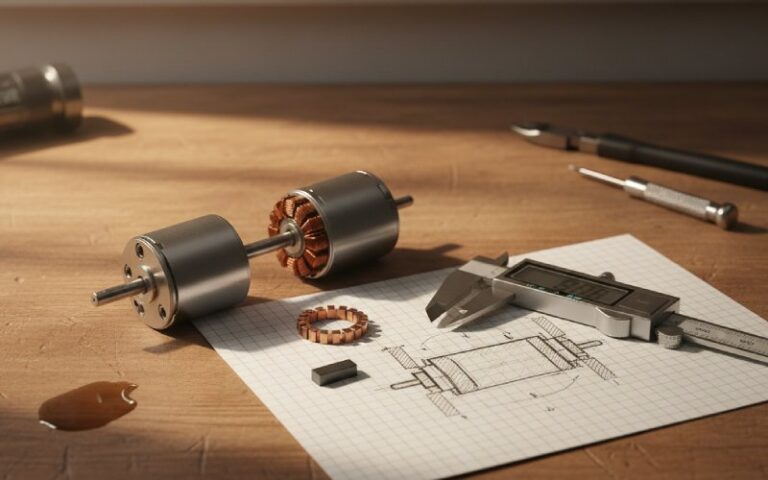
More compact rotors, refined stack geometry, and tighter tolerances help fit motors into smaller housings. - Noise and vibration:
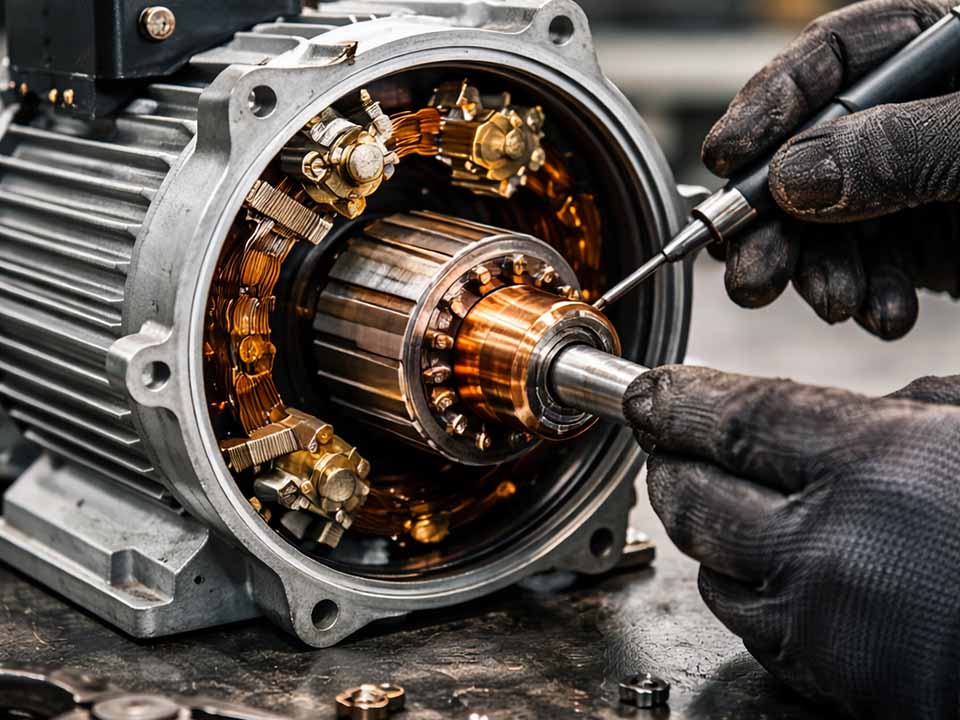
Adjusted slot geometry, skewing, and better balancing reduce the “whine” and rattle customers complain about. - Process improvements:
Automated manufacturing, more precise machining, and better impregnation/varnish processes cut scrap and improve consistency. - Simple electronics added on top:
Soft-start, current limiting, and basic monitoring circuits are being paired with brushed motors to reduce stress and extend life, without going full BLDC.
- Brush and commutator materials:
5. Three realistic futures for commutator motors (to ~2035)
No one can predict the exact numbers, but you can sketch a few reasonable paths for what happens to commutator motors over the next 10–15 years.
The overall motor market is likely to keep growing as we electrify more of everything: vehicles, tools, building systems, industrial processes. Brushless options will soak up a lot of this growth.
Commuta tor motors, on the other hand, will probably see slower growth or gentle volume decline, with a shift in where they’re used rather than an overnight collapse.
- Three scenarios worth keeping in mind:
- Scenario A – “Orderly transition” (the boring but likely one)
Brushless gradually replaces commutators in bigger, higher-value applications. Commutator motors stay in low-cost, short-duty designs where they still make economic sense. The market shrinks, but slowly and predictably. - Scenario B – “Regulation hammer”
New efficiency rules start to bite in smaller appliances, tools, and other categories that have historically been “safe.” A bunch of commutator-based designs are suddenly non-compliant and must be redesigned around BLDC or other alternatives. - Scenario C – “Supply-chain hedge”
Magnet prices, semiconductor shortages, or geopolitical shocks make electronics-heavy designs harder or more expensive to build. OEMs deliberately keep some brushed designs in their portfolio as a hedge — fewer chips, no rare-earths, simpler control.
- Scenario A – “Orderly transition” (the boring but likely one)
6. Application-by-application: where commutators will likely stick around
Talking in abstractions can hide the real trade-offs. It’s more useful to look at a few product families and ask how they might evolve.
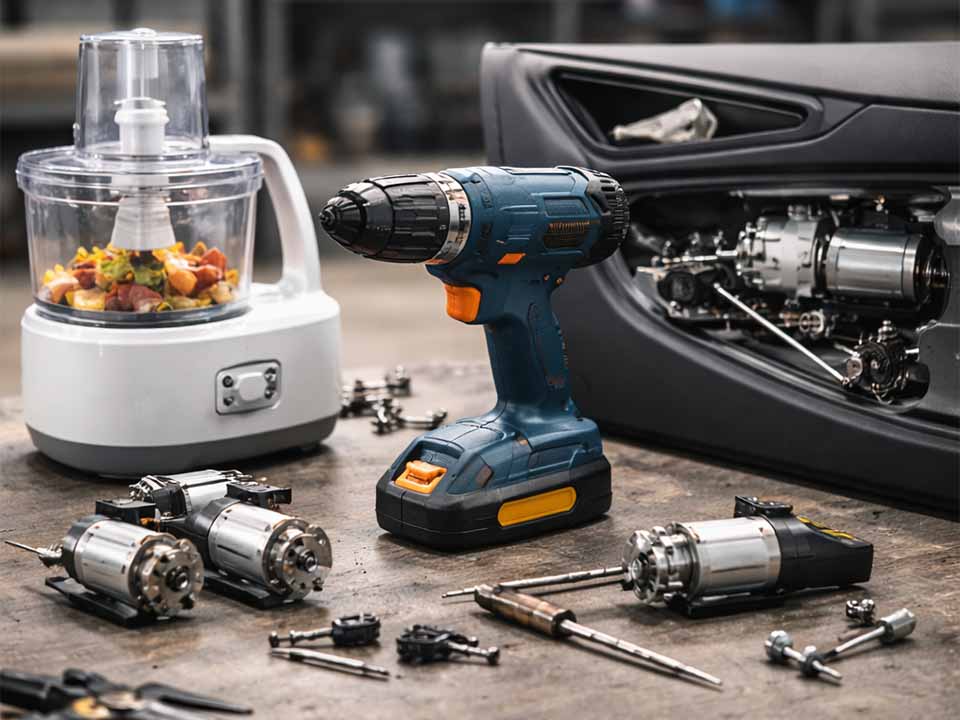
Some car actuators today still use brushed motors because they’re cheap, robust, and thoroughly validated. On the other hand, you’re not going to see a modern EV traction drive with brushes; that battle is already over.
- A rough outlook by application area:
- Automotive actuators (windows, seats, mirrors, locks):
Expect more brushless in high-end and EV platforms, but brushed motors will likely hang around in cost-sensitive models and emerging markets for quite a while. - Power tools and DIY gear:
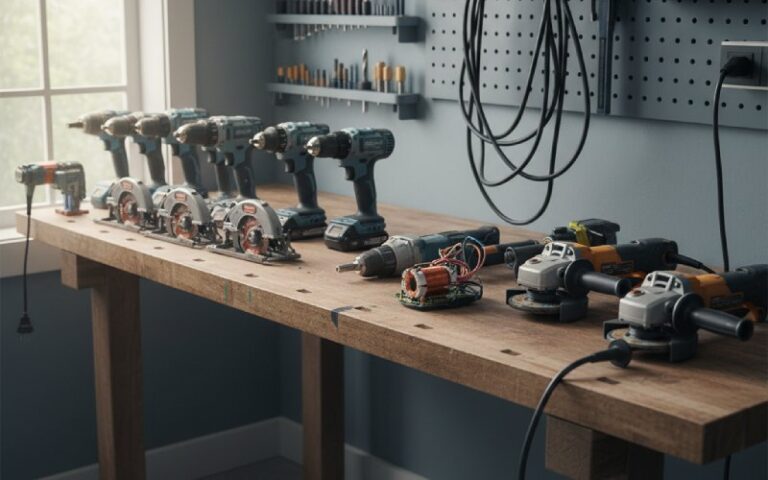
High-end tools are already shifting to brushless for better performance and longer runtime, especially cordless. Entry-level corded tools may remain brushed for a long time simply because they’re “good enough” and cheap. - Home appliances and white goods:
Big energy users (like premium washing machines, variable-speed compressors, and high-efficiency fans) are moving toward BLDC. Simpler devices and lower-end models will drag their feet and keep commutator motors where economics demand it. - Industrial automation, pumps, and fans:
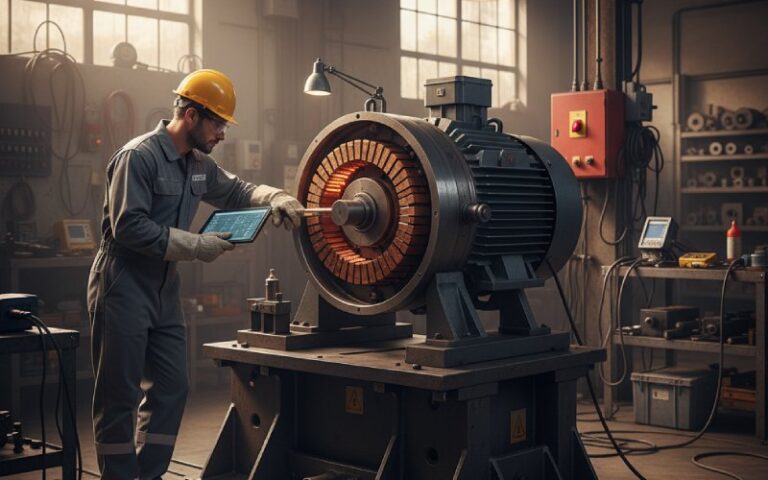
Regulations and energy bills both push heavily toward higher-efficiency motors. Commutator motors are likely to shrink back to portable or intermittent-duty tasks where their weaknesses hurt less. - Toys, hobby products, and low-end gadgets:
Brushed motors are still the easy default here. In performance hobby and RC segments, brushless will keep growing, but low-cost toys will probably stay brushed until something radically changes on cost.
- Automotive actuators (windows, seats, mirrors, locks):
7. If you’re an OEM: how to handle commutators without getting stuck
If you’re buying or specifying motors, the useful question is not “Should we get rid of commutator motors?” but “Where do they still help us win — and where are they quietly turning into a liability?”
A lot of trouble comes from treating all commutator applications the same, instead of sorting them by how much risk and opportunity they carry.
- A practical way to approach your product range:
- Step 1: Map your products by duty cycle and regulation risk
- High-duty, high-power, or regulated products: assume a BLDC (or other efficient motor) transition is either already under way or will be soon.
- Low-duty, unregulated, or extremely price-sensitive products: commutators may still be the best choice for the next 10+ years.
- Step 2: Squeeze more value out of existing brushed designs
Work with suppliers on better brush materials, refined geometry, and small electronics add-ons (soft-start, basic protection) that extend life and reduce noise without blowing the budget. - Step 3: Plan “paired” platforms
When you design a new mechanical platform, consider leaving room for both a commutator motor and a BLDC version. That lets you address different markets — and change your mix — without redoing the whole system. - Step 4: Watch regulations early, not late
It’s much cheaper to plan for an efficiency step a few years ahead than to scramble when a directive finally kicks in.
- Step 1: Map your products by duty cycle and regulation risk
8. If you’re a motor manufacturer: how to win in a smaller, sharper niche
For companies that build commutator motors, the goal in the coming years is not to fight brushless everywhere. That’s an exhausting battle. The goal is to own the spaces where commutators are still the right answer, and to serve them better than anyone else.
That often means leaning into the “boring” details: brush wear curves, acoustic signatures, tolerance stacks, and how motors behave on marginal power supplies.
- High-impact moves for commutator-focused motor makers:
- Specialize in tough environments
Become the obvious choice for designs that need to survive dust, vibration, temperature swings, or dirty power — places where extra electronics feel fragile. - Measure and publish durability improvements
Longer brush life and lower wear are powerful selling points. Don’t just improve them quietly: show the data. - Offer smooth upgrade paths
For major motor families, develop mechanically compatible BLDC options. OEMs like having the choice to shift up the tech ladder without redesigning their mechanical stack. - Use modern engineering tools even for “old” tech
Finite element analysis, digital twins, and simulation aren’t only for brushless motors. They can uncover noise and loss reductions in commutator designs that used to be hidden.
- Specialize in tough environments
9. The sustainability angle: more nuanced than “brushless good, brushed bad”
Sustainability discussions often paint commutator motors as the obvious villain: they’re less efficient and produce brush dust. There’s some truth there, but the full picture is a bit more complicated.
Brushless motors usually do win on lifetime energy consumption, especially in products that run for thousands of hours. That can dwarf other impacts.
On the other hand, BLDC systems carry their own footprint: magnets, electronics, and more complex control hardware. In small, low-duty devices, the difference isn’t always as clear-cut as it seems in a slide deck.
- A more balanced way to look at it:
- For high-duty, high-energy applications, brushless is usually the greener choice over the product’s life, even if it’s more complex and costly upfront.
- For intermittent, low-energy products, the balance between manufacturing footprint, electronics waste, and energy consumption is a closer call.
- There is genuine sustainability value in making commutator motors last longer, run a bit more efficiently, and fail less often where they are still the dominant option.
10. What you can actually do next
All of this is interesting in theory, but it only matters if it changes what you do on Monday morning.
If you’re responsible for products that use commutator motors today, you don’t have to pick a single “camp.” You can treat commutator motors as one tool among several — still useful, but not automatically the default.
- Concrete actions worth considering:
- Inventory your commutator usage:
List which products use them, how many hours they typically run, and how visible their energy usage is to customers or regulators. - Separate “must-migrate” from “can-stay” applications:
- Must-migrate: high energy use, long duty, or strong regulatory pressure.
- Can-stay: short duty, hard cost limits, rough environments with minimal oversight.
- Talk to suppliers in detail, not just about price:
Ask about brush tech, new materials, noise improvements, and simple driver options that can give you a bit more life and performance. - Pilot at least one “hybrid” project:
Take a current brushed design and test what happens if you add a modest smart driver: better start-up behavior, overload protection, or speed shaping. Use real data to decide if it’s worth rolling out further.
- Inventory your commutator usage:
Closing thoughts
In a brushless-dominated market, commutator motors won’t be the stars of the show. They’ll be the supporting actors — the ones you notice only when they’re missing.
They’ll still matter when:
- you have to hit a brutal price point,
- the environment is too harsh or noisy for delicate electronics,
- or you need something proven, simple, and easy to source.
If you treat commutator motors as “old tech that will go away on its own,” you’ll probably end up reacting late to regulations and cost shifts.
If you treat them as a focused, evolving niche technology and plan around that, you’ll have more flexibility, less risk, and a clearer roadmap — even in a world where brushless motors get most of the attention.