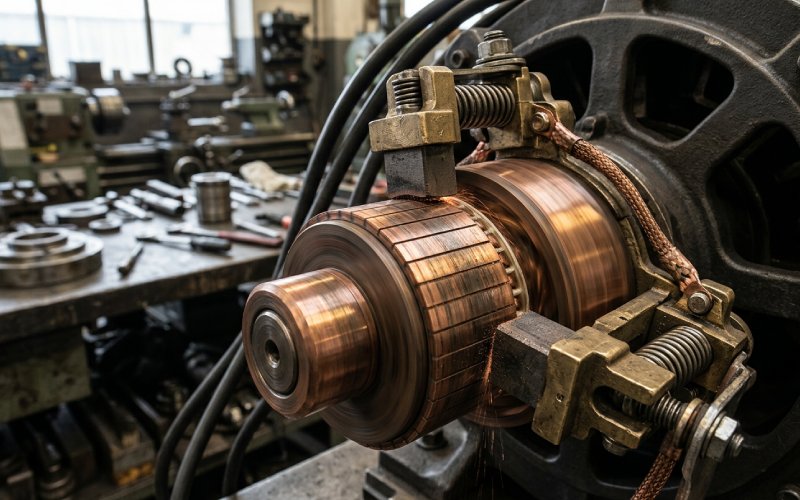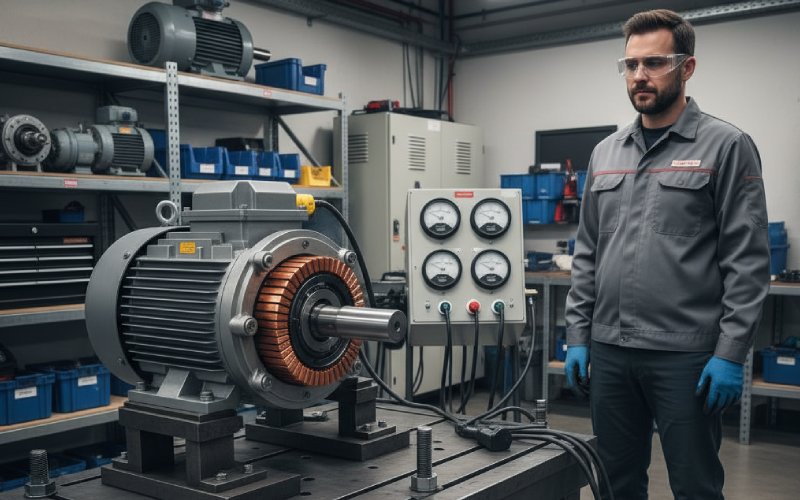
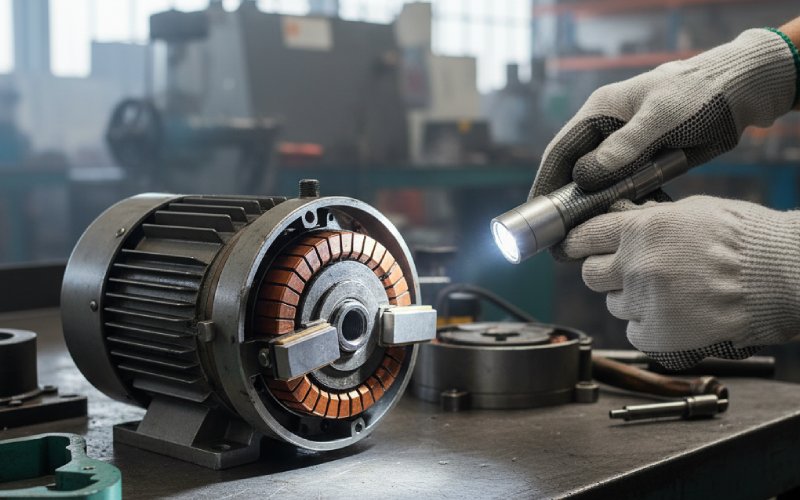
What Happens If the Commutator in a DC Motor Is Damaged?
A damaged commutator does not usually fail in one clean step. It starts smaller than that.
First the brush contact becomes unstable. Then sparking changes. Then the surface color changes. Then brush wear stops looking normal. Heat follows. Copper follows after that.
From our factory side, this is the point that matters: once the commutator surface loses control, the motor is already moving away from stable operation. In early cases, the issue can still be corrected. In later cases, the commutator is no longer just worn. It has become a source of secondary damage for brushes, armature connections, insulation, and production uptime.
So, what happens if the commutator in a DC motor is damaged?
It stops switching current cleanly. The motor may still run, but current transfer becomes uneven, arcing increases, brush contact worsens, temperature rises, and wear accelerates across the brush track. If ignored, the result is often severe copper damage, unstable performance, and eventually a repair decision that costs more than replacing the commutator at the right time.
Table of Contents
Signs of a Bad Commutator in a DC Motor
In most workshops, the first mistake is waiting for a complete failure. That is late.
A bad commutator usually shows itself earlier through operating changes:
- visible sparking at the brush track
- uneven or rapid brush wear
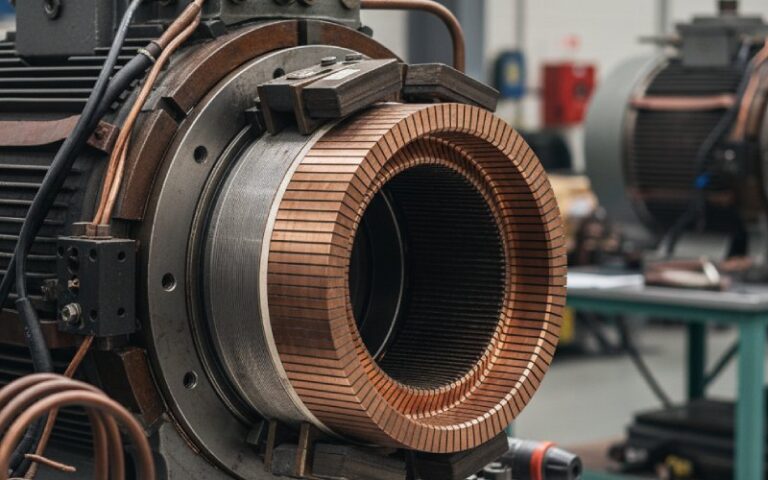
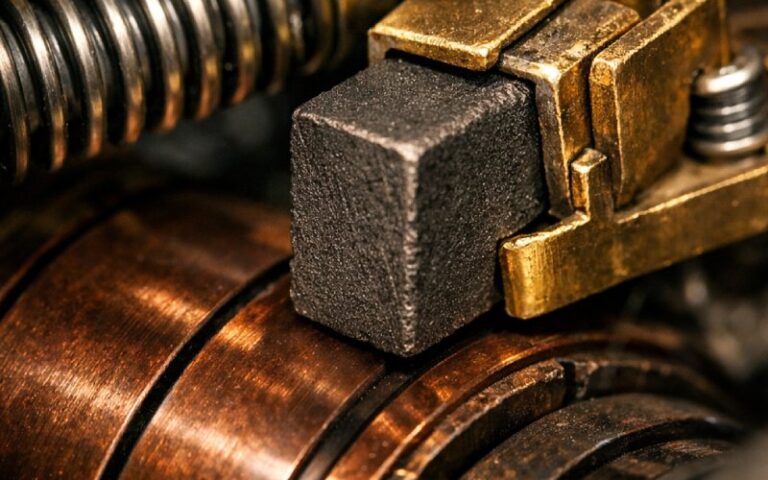
- dark, burned, or patchy commutator surface
- brush chatter, noise, or unstable contact
- rising operating temperature near the brush zone
- grooves, streaks, or dragged copper on the surface
- repeated trouble on one segment or one area of the circumference
Not every spark means the same thing. Not every dark track means the same thing either. But once the surface pattern is no longer uniform, the motor is already telling you something useful.
What Commutator Damage Does to Motor Performance
The practical effect is not abstract.
When the commutator is damaged, the brush cannot transfer current evenly from one segment to the next. That creates local resistance, unstable commutation, and small arcs where the contact should have been clean. A motor in this condition may show:
1. Higher arcing and brush dust
More spark. More carbon dust. More contamination inside the motor housing.
And contamination does not stay passive for long.
2. Faster brush wear
A rough or out-of-round commutator cuts brush life quickly. In some cases the brush starts bouncing. In some cases edge wear becomes the first clue. Either way, brush consumption rises and the contact gets worse, not better.
3. Localized overheating
This is where surface damage turns into structural damage.
Heat concentrates at the contact zone first. Then the copper softens. Then the surface begins to smear, drag, or burn.
4. Unstable speed or torque behavior
Not always dramatic. Sometimes the motor still looks usable.
But under load, unstable current transfer can show up as rough running, inconsistent speed, reduced efficiency, or harder starts.
5. Secondary armature risk
Once one bar, one lead, or one repeating section starts failing differently from the rest, the problem may already be deeper than brush contact alone. At that stage, surface correction by itself often does not hold.
Common Causes of Commutator Damage
A commutator rarely damages itself for no reason. The surface is where multiple problems meet.
Poor brush contact
Incorrect brush pressure, poor seating, wrong brush grade, or brush-holder misalignment can all disturb contact and start electrical and mechanical wear together.
High mica or poor surface finish
If the mica stands too high, the brush stops riding smoothly. If the surface finish is rough, contact film becomes unstable. Small issues here become expensive later.
Out-of-roundness or high and low bars
Once the commutator loses concentricity, the brush begins to bounce. That bounce creates intermittent contact. Intermittent contact creates arcing. Then the surface gets worse fast.
Overload and excess heat
Too much load, poor cooling, repeated starts, or blocked operation can overheat the commutator. When copper softens, surface drag and distortion become much more likely.
Contamination
Oil mist, abrasive dust, metal particles, and carbon buildup all interfere with stable film formation on the brush track. A dirty commutator does not stay a simple cleaning job for very long.
Weak manufacturing quality
This part matters more than many buyers expect.
If the commutator starts with poor copper quality, inconsistent insulation between segments, weak dimensional control, poor mica trimming, or unstable concentricity, the motor begins life with less margin. It may run. Still. But in demanding duty, the weakness shows early.
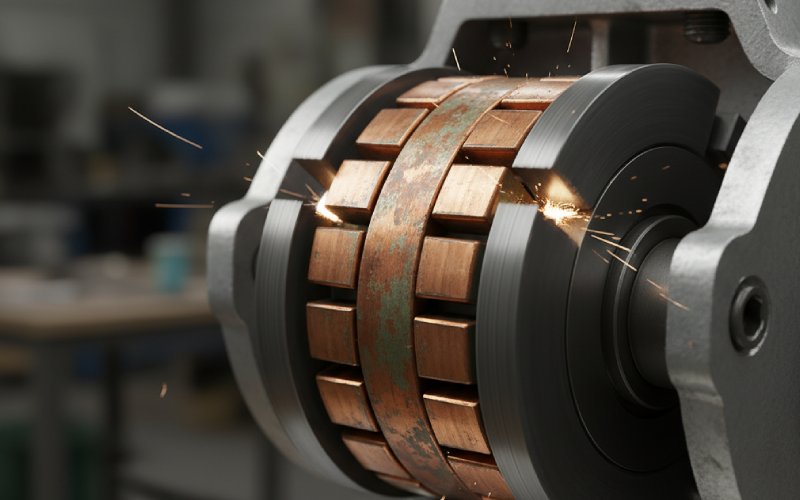
Commutator Wear Patterns and What They Usually Mean
This is where field diagnosis becomes useful. A damaged commutator leaves a pattern, and the pattern often points to the real cause.
| Surface condition | What it usually suggests | Likely consequence if ignored | Typical action |
|---|---|---|---|
| Light but repeated sparking | unstable brush contact, film trouble, pressure issue | faster brush wear, rising heat | inspect brush pressure, seating, alignment |
| Dark or patchy track | uneven film, contamination, heat concentration | unstable commutation, growing surface damage | clean, inspect, correct operating condition |
| Grooving | abrasive wear or electrical machining | reduced contact area, higher wear rate | resurface and remove root cause |
| Streaking or threading | metal transfer, unstable contact, low pressure | accelerated track damage | correct pressure and surface condition early |
| Copper drag or smeared copper | overheating, softened copper, vibration | severe commutator distortion | stop operation and inspect for rebuild |
| Bar-edge burning | poor commutation, alignment or setting problem | deep segment damage, heavy arcing | inspect full commutation system |
| Repeating damage on one segment or one zone | possible armature connection issue or localized electrical fault | escalating localized failure | inspect beyond the surface only |
| Flat spots or out-of-roundness | mechanical distortion, high/low bars, bearing-related issues | brush bounce, rapid wear, unstable running | measure runout and machine or replace |
The key point is simple.
A uniform surface usually means the commutator is still behaving. A patterned surface means it is already reporting a problem.
When Repair Is Still Possible
Not every damaged commutator needs full replacement immediately.
In early-stage cases, repair may still make sense if the problem is limited to:
- light contamination
- unstable surface film
- minor roughness
- moderate grooving
- high mica
- brush seating or pressure issues
In that range, resurfacing, undercut correction, cleaning, brush correction, and operating-condition adjustment can often return the commutator to usable condition.
But the window is not wide.
When Repair Is No Longer Enough
This is where many users lose money.
If the commutator shows loose bars, severe burning, repeated damage on one segment, copper drag, major out-of-roundness, or deep bar-edge erosion, the problem has already moved beyond a routine brush-track correction. Continuing to run the motor in this state usually adds cost to the armature, not just to the commutator.
At that point, replacement becomes the better decision in many cases. Not because replacement is simpler. Because delay is more expensive.
Why Commutator Quality Matters More Than Most Buyers Expect
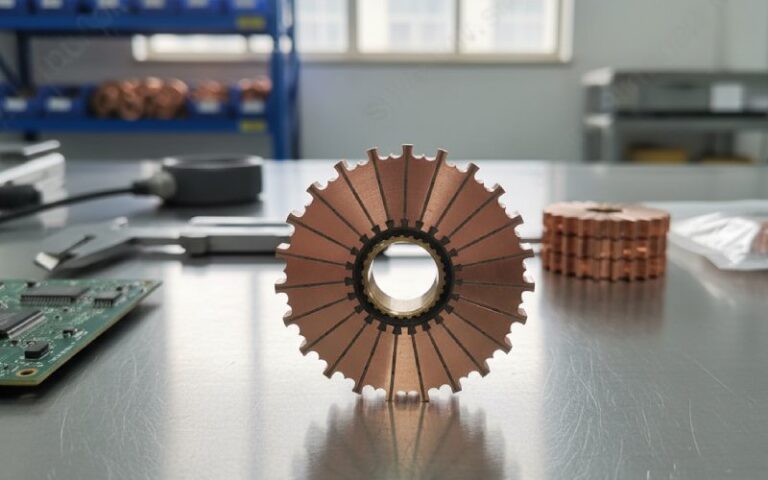
A commutator is not just a copper ring with segments. The service life depends on how precisely it is built.
From a manufacturing standpoint, the details that affect long-term performance most are these:
Copper quality and consistency
Poor copper structure does not forgive heat, load swings, or heavy brush duty. High-purity and stable copper material helps the surface wear more predictably and reduces the chance of abnormal drag or premature bar damage.
Segment insulation stability
Uniform insulation between segments matters for electrical reliability, but also for dimensional control. If segment-to-segment stability is poor, the brush track becomes harder to keep consistent under load and temperature change.
Mica depth and processing accuracy
Too high, and brush bounce begins. Too inconsistent, and the track wears unevenly. Precision here is not decorative. It directly affects commutation quality.
Concentricity control
This one gets underestimated.
A commutator with poor concentricity will create mechanical instability at the brush interface even before visible damage appears. In high-duty applications, that small deviation becomes a large maintenance problem.
Batch consistency
For OEM buyers and volume users, one good sample is meaningless. What matters is repeatability across batches, dimensions, material behavior, and balance under real operating conditions.
If the replacement commutator is made to weak tolerances, the same failure pattern often returns. Maybe slower. Still returns.
Looking for Replacement DC Motor Commutators?
If your current commutator shows repeated sparking, uneven wear, bar-edge burning, or copper drag, the issue may already be past surface correction.
We manufacture replacement and custom commutators for DC motor applications where dimensional accuracy, copper quality, and operating stability matter. For buyers dealing with repeated field failures, the goal is not only to replace the worn part. It is to stop the same failure from coming back for the same reason.
For custom projects, our engineering team can support commutator selection based on motor size, segment design, working load, and service conditions.
How to Decide Between Repair and Replacement
A rough rule from factory practice:
- Repair makes sense when the damage is still mostly on the surface.
- Replacement makes sense when geometry, copper condition, or segment integrity is already compromised.
- Full electrical inspection is necessary when one segment, one repeating zone, or one armature path behaves differently from the rest.
If the motor has already consumed brushes abnormally, produced heavy sparking for a period of time, or developed clear track patterns that return after cleaning, replacement should be evaluated early. Not after the next shutdown.
FAQ About Damaged DC Motor Commutators
What are the first signs of a damaged commutator?
The earliest signs are usually sparking changes, uneven brush wear, dark or patchy surface color, brush noise, and rising temperature near the brush zone. The motor may still run, which is why early commutator damage is often missed.
Can a DC motor run with a damaged commutator?
Yes, it can. For a while.
But running does not mean running correctly. A damaged commutator often allows continued operation while increasing wear, heat, dust, and risk of secondary damage.
Does commutator damage always mean replacement?
No. Minor contamination, surface film problems, or small geometry issues may still be repairable. Severe burning, copper drag, loose bars, or repeated localized damage usually point toward replacement or deeper rebuild work.
Can a bad commutator destroy new brushes?
Yes. New brushes installed on a damaged commutator often wear quickly, chip, arc, or seat poorly. Replacing brushes without correcting the commutator condition usually does not solve the real problem.
What causes commutator sparking?
Common causes include poor brush contact, wrong pressure, poor seating, rough surface finish, high mica, out-of-roundness, overload, contamination, and deeper armature or connection faults. The spark pattern matters. Random and light is one thing. Repeated and localized is another.
When should a commutator be replaced instead of repaired?
Replacement should be considered when the surface damage is no longer superficial, especially in cases of severe burning, copper smearing, flat spots, loose bars, repeated trouble on one segment, or damage that returns soon after maintenance.
Why does replacement commutator quality matter so much?
Because poor material control or weak dimensional accuracy can recreate the same failure mode even after installation. A replacement part should restore reliability, not just restore rotation.
Final Word
When the commutator in a DC motor is damaged, the problem is not limited to appearance. It changes current transfer, brush behavior, heat distribution, and service life across the motor system.
Early damage can sometimes be corrected. Late damage usually spreads cost.
If you are sourcing replacement commutators for repair, OEM production, or custom motor applications, choosing the right manufacturing quality at the start is usually cheaper than correcting repeated failure in the field.