Does the Number of Commutator Segments Affect Motor Smoothness?
Short answer: yes.
Long answer: yes, but not in a straight line, and not on its own.
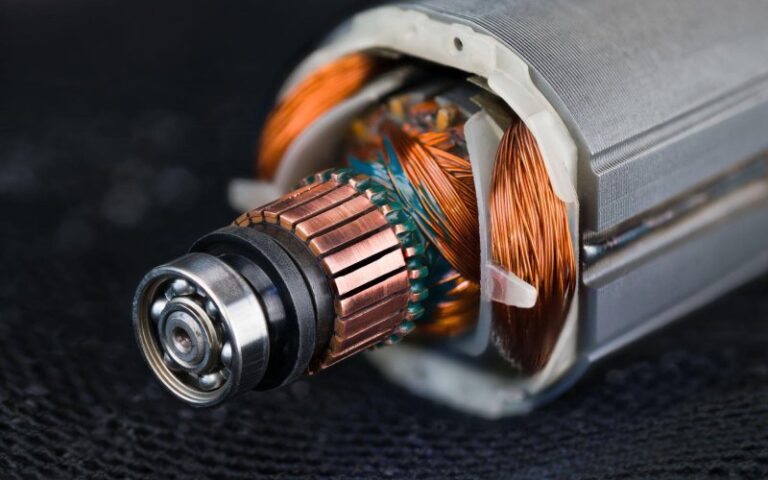
If you buy or design brushed DC motors, you already know the commutator is where most of the trouble — and most of the fine-tuning — lives. Segment count sits right in the middle of that.
This article keeps the basics light and focuses on what really matters when you’re deciding:
- How many commutator segments do we actually want?
- What does that choice do to torque ripple, noise, control quality, cost, and reliability?
- What should purchasing ask the motor or commutator supplier, so engineering doesn’t complain later?
Table of Contents
1. What we mean by “smoothness” here
Let’s make “smooth” more concrete. In this context it usually means:
- Low torque ripple (angle-dependent torque variation)
- Minimal velocity ripple at the shaft (especially at low speed)
- Acceptable acoustic noise and vibration
- Current ripple low enough not to annoy your driver or power supply
- EMI and commutation spikes under control
Segment count affects all of these, but not in the same direction.
2. Why more commutator segments can mean smoother torque
The theory side is fairly kind to “more segments”.
- The more coils and commutator segments you have, the closer the armature current distribution is to an ideal current sheet instead of discrete “packets”. In the extreme (infinite coils/segments) torque would be perfectly smooth.
- Brushed DC motors with only a few coils and segments show significant current ripple; with many coils/segments, current becomes almost pure DC.
- With more commutator slots, the electromagnetic torque angle stays close to the ideal 90° between rotor and stator flux. Fewer slots → angle jumps more → higher torque ripple.
So in a simplified view:
More segments → smaller torque “steps” → lower torque ripple amplitude → motion looks smoother.
At least on paper.
3. But “more segments” also pushes ripple to higher frequency
There’s a second effect that often gets ignored in simple explanations.
Each time the brush crosses from one segment to the next, you get:
- A commutation event
- A voltage / current spike you can actually use to measure speed
The frequency of this ripple is roughly:
f_ripple ∝ segment_count × mechanical_speed
So when you increase segment count, two things happen:
- Torque step size gets smaller (good)
- Number of steps per revolution goes up (ripple moves to higher frequency)
Higher-frequency ripple is easier for:
- The mechanical system to filter (inertia, compliance)
- The control loop to ignore (if bandwidth is lower than ripple frequency)
From a system perspective, that often feels smoother, even if total ripple energy is similar.
So when people say “more segments = smoother motor”, what they usually see in practice is:
- Less low-frequency “cogging-like” behavior
- More high-frequency, low-amplitude content that your mechanics and control filter out
4. Practical design rules that sit behind segment count
A few relationships matter when you talk with a motor designer or commutator supplier:
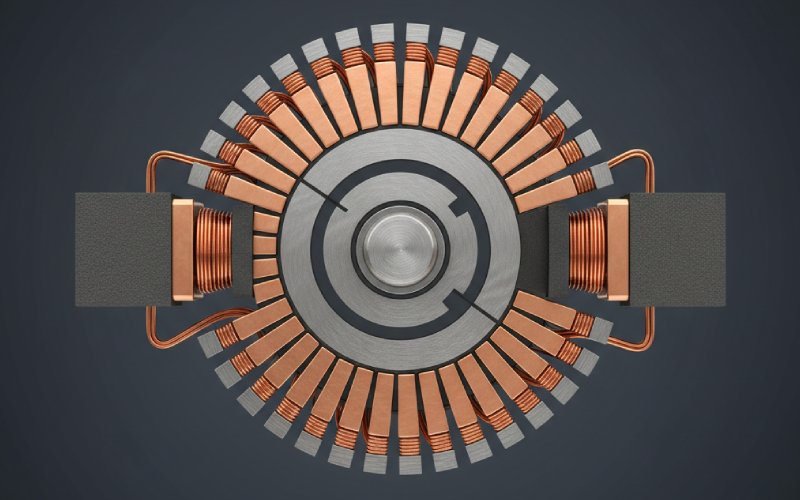
- Segments ≈ number of active armature coils in many designs. Segment count ties directly to the chosen winding scheme.
- For permanent magnet DC machines, a traditional design rule gives a minimum segment number on the order of
N_min ≈ (E × P) / 15where E is induced voltage and P is number of poles. - Large industrial machines can have hundreds of segments, small motors maybe 3–24.
- More segments usually means:
- Smaller segment pitch and width
- Narrower brush contact per segment or more overlap
- Tighter tolerances on machining and insulation
So segment count is not picked in isolation. It comes along with:
- Rated voltage and speed
- Winding layout
- Diameter and max commutator surface speed
- Brush material and geometry
That’s the real design box your supplier is working inside.
5. Where more commutator segments really help smoothness
Engineers tend to notice the benefits most in a few situations:
5.1 Low-speed control and positioning
For low-speed or near-stall operation (actuators, robotics, medical drives):
- Few segments → noticeable “detents” and angle-dependent torque ripple
- Many segments → torque vs. angle curve looks more uniform, closer to the ideal sinusoid
That gives you:
- Better velocity stability at low RPM
- Less speed wobble in closed-loop control
- Fewer complaints about “jittery” motion from system integrators
5.2 Current ripple and driver behavior
With more coils/segments, phase currents become smoother; in the limit, just a DC component.
That can:
- Reduce current ripple the driver has to source
- Lower supply ripple on shared DC buses
- Make small low-cost drivers behave more predictably
5.3 Measurement from commutation spikes
If you’re using commutation spikes as a poor man’s encoder:
- More segments → more pulses per revolution → better speed resolution
But there’s a trade: at high RPM, too many segments push ripple frequency very high, which can stress your analog front-end and filtering.
6. Where more segments start to hurt you
There is a point where adding segments is not free at all. Procurement feels it first; maintenance later.
6.1 Segment width, resistance, and heating
Narrow segments:
- Increase path resistance if copper cross-section shrinks too much
- Can increase I²R loss and localized heating on the commutator surface
- Make the design more sensitive to brush seating and wear pattern
At very small segment pitch, keeping bar-to-bar insulation thickness, copper thickness, and roundness all inside spec is harder and more expensive.
6.2 Brush wear, film stability, and arcing
More segments mean more switching events per revolution. That can:
- Increase the total number of micro-arcs over time
- Make brush film formation more delicate
- Tighten the window for acceptable brush grade and spring pressure
If the brush does not maintain good contact on these narrower bars:
- You see pitting, burning, or scoring on the segments
- EMI and acoustic noise rise
- Field returns follow
6.3 Contamination and serviceability
Very fine bars and mica slots:
- Are more easily bridged by conductive dust or oil
- Can be more demanding to undercut or re-true during maintenance
- Need better process control in production (cleanliness, inspection)
For harsh environments or low-cost products with minimal protection, slightly fewer, more robust segments might be the safer bet.
7. Segment count vs motor smoothness vs cost – quick table
This is simplified and assumes a small–medium brushed DC motor (not a huge industrial machine). Use it as a conversation starter, not as a drawing spec.
| Segment Count (approx) | Typical Use Case | Torque / Speed Smoothness | EMI & Commutation Spikes | Cost / Complexity for Buyer |
|---|---|---|---|---|
| 3–8 | Toys, simple pumps, low-cost fans | Noticeable torque ripple, visible speed wobble at low RPM | Fewer, stronger spikes, low frequency | Lowest BOM, simple commutator, relaxed tolerances |
| 9–18 | General industrial drives, office equipment | Good enough for most constant-speed tasks; acceptable ripple | Moderate amplitude, mid frequency | Balanced: standard manufacturing, decent life-cycle cost |
| 19–36 | Precision drives, medical/robotics, servo-like tasks | Very smooth torque and speed, especially at low RPM | Many small spikes, high frequency, easier to filter | Higher piece price, tighter QA, more demanding brushes |
| >36 | Custom high-voltage / high-pole / special purpose | Potential for excellent smoothness but very design-dependent | Very high ripple frequency, careful driver / EMC design | Expensive, long lead time, tight supplier capability needed |
Your actual boundaries will shift with:
- Armature diameter
- Pole count and winding type
- Rated voltage and speed
But the shape of the tradeoff stays similar.
8. What purchasing should actually ask about segment count
Instead of only asking “How many segments?”, a better checklist is:
- Application requirement
- Do we need low-speed smoothness, or is constant-speed operation enough?
- Positioning accuracy? Any vision system watching motion?
- Torque ripple and smoothness targets
- Is there a numeric spec? Allowed torque ripple % or speed ripple % at given load?
- Segment count and winding concept
- Ask for segment count with description of winding (lap/wave, slots, poles).
- Ask for typical torque ripple behavior vs angle or speed if the supplier has it.
- Brush system
- Brush material and size vs segment pitch.
- Recommended current density and typical life under your duty cycle.
- Quality controls on the commutator
- Bar-to-bar resistance test method and limits
- Runout tolerance, roundness, and surface finish checks
- Visual criteria for segment damage (pitting, burning, scoring) and acceptable levels
If a supplier only answers with “we use a 12-segment commutator” and nothing else, they haven’t really answered the smoothness question.
9. Rules of thumb engineers quietly use
These aren’t standards, just patterns you’ll see again and again:
- If you halve segment count in a sensitive servo application, expect complaints about low-speed jitter.
- Doubling segments does not automatically halve torque ripple, because:
- Winding, magnet design, and mechanical construction also contribute.
- Pushing segment count very high without rethinking brush design gives you:
- Better smoothness on paper
- More risk of noise, arcing, and premature wear in the field
- For many industrial drives, moving from a “cheap” segment range (say 7–9) to a “mid” range (11–15) gives most of the smoothness benefit without a huge price jump.
For new projects, a good tactic:
Start with the smallest segment count that meets torque/velocity ripple targets, then see if adding a few more gives meaningful system gain.
If the rest of the system swallows the remaining ripple, you don’t need to chase theoretical perfection.
10. FAQs: Commutator Segment Number and Motor Smoothness
1. Does more segments always mean a smoother motor?
Not always.
More segments usually reduce low-frequency torque ripple, but the final smoothness also depends on:
Winding distribution
Magnet design and air-gap
Mechanical resonance and load inertia
Power electronics and control algorithm
You can absolutely build a noisy motor with a lot of segments if the rest is poor.
2. If I double the segment count, do I halve torque ripple?
No.
Torque ripple is not linear with segment count. You’re changing:
Ripple amplitude
Ripple frequency
Interaction with mechanical system and control loop
Often you get a clear improvement, but rarely a clean 50% change.
3. Can I specify the exact number of segments to a motor supplier?
You can, but it’s usually better to specify:
Electrical requirements (voltage, speed, torque, duty cycle)
Mechanical constraints (envelope, bearings, shaft, environment)
Smoothness target (torque/velocity ripple, noise limits)
Then let the designer propose segment count, winding, brush design, and so on to meet that.
If you force a segment number that fights the winding concept, you may get odd side effects: higher loss, poor commutation, faster wear.
4. Can we modify an existing commutator to change segment count?
Practically, no.
Changing segment count means:
New commutator body and insulation
New armature winding and terminations
Often new tooling and balancing process
You’d usually redesign the rotor, not “cut in” extra segments on an existing one.
5. Does commutator segment count affect EMI and noise?
Yes, indirectly.
Fewer segments → fewer, larger switching events → spikes with higher amplitude but lower frequency
More segments → more, smaller events → higher frequency content, easier to filter but can stress layout if ignored
Board layout, cabling, and grounding often decide whether this becomes a real problem.
6. How do I know if we “chose too few” segments in a current design?
Typical signs:
Strong speed ripple at low RPM even in closed-loop control
Audible “pulsing” at constant speed under load
Torque ripple causing visible vibration in precision mechanics
Current waveform with pronounced low-order ripple components
If you see these and the commutator is very coarse (e.g., 3–7 segments) for a demanding application, segment count is a prime suspect.
7. What should I actually write into the spec?
Instead of “10-segment commutator”, consider:
“Brushed DC motor, torque ripple ≤ X% at Y Nm and Z RPM”
“Speed ripple ≤ A% at B RPM under C load”
“Acoustic noise ≤ D dB(A) under nominal load”
Then in the design review, ask the supplier:
What is the commutator segment count?
How does it relate to the winding and pole count?
What are the expected torque and speed ripple curves?
That keeps options open while still steering toward the smoothness you need.