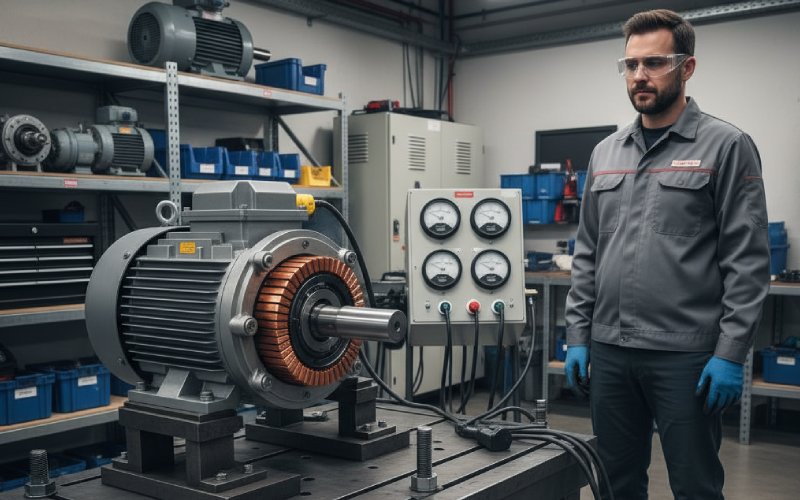
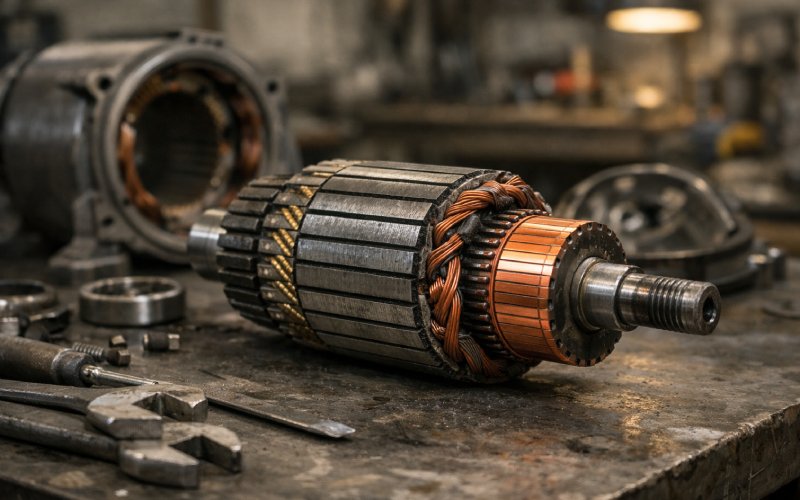
Diagnosing High Spots or Uneven Wear on Commutator Segments
A commutator with “high spots” is not always a commutator with one segment physically standing proud. That is the first mistake. In our rebuild line, the label only counts after three things agree: the witness pattern on the copper, the mechanical measurement, and the brush behavior under load. Until then, a “high spot” might be high mica, a burr at the bar edge, an out-of-round condition, a brush that cannot move freely, weak or uneven spring pressure, or an electrical fault that keeps marking the same bar group and fools people into chasing geometry.
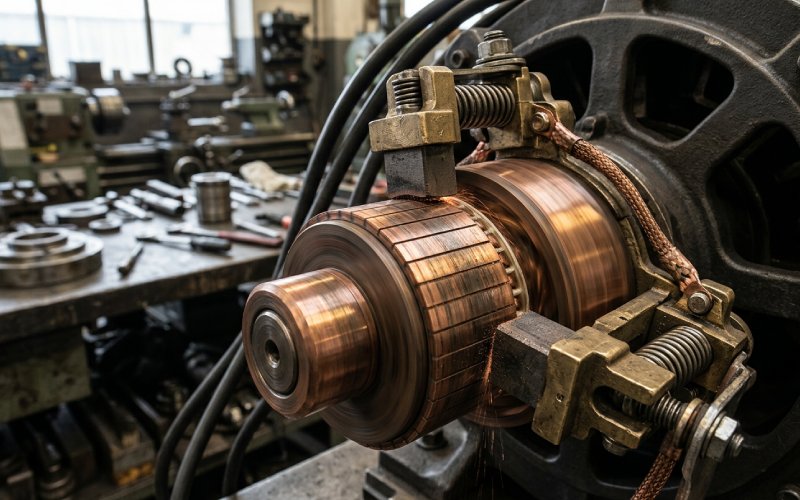
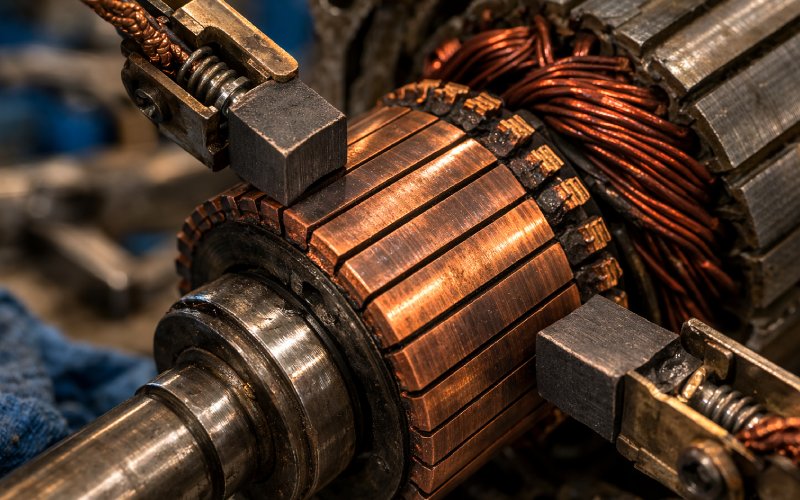
Another trap: the bar that looks best can be the one causing the trouble. A true high bar is often polished. The damage shows up on the bars after it, because the brush lifts, loses contact, then lands again on the following segments. Those trailing bars go rough, pitted, burned, sometimes low. So the shiny bar is not innocent. It is often the striker.
Table of Contents
What the wear pattern usually means
| What you see on the commutator or brush face | What it usually points to | Check next, not later |
|---|---|---|
| One polished segment followed by a short train of rough or burned segments | Real high bar, loose bar, or a bar that rises hot | Bar-to-bar height, hot vs cold condition, tightness |
| Dark fringe at slot edges, vibration, sudden brush noise | High mica, poor undercut, burrs, copper fins | Slot condition, burrs, chamfer, debris packed in slots |
| Chatter, squeal, broken brush edges, scattered local burning | Out-of-round, flat spot, weak spring force, holder instability, low-load running | Runout, holder setting, spring equality, operating load |
| The same circumferential zone marks across several brushes | Mechanical truth problem or vibration | Bearings, balance, foundation, concentricity |
| Repeating bar groups, alternate dark/light bars, selective wear by polarity or brush arm | Electrical cause, not just surface geometry | Interpole condition, riser joints, equalizers, armature circuit integrity |
These pattern links line up with field evidence from brush wear guides, commutator surface condition guides, and troubleshooting notes on chatter, high mica, out-of-round surfaces, bar-group marking, and selective brush wear.
The first split: mechanical mark or electrical mark
Here is the fast read we use. If the mark repeats at one physical place around the circumference, and multiple brush arms react when they cross that same place, start with mechanics. If the pattern repeats by bar group, by pole pitch, or shows up more on one polarity than the other, stop blaming surface finish alone. You may be looking at current distribution, interpole weakness or excess, a poor riser connection, an equalizer issue, or a winding defect. Uneven wear that appears “segment related” is often circuit related.
Selective brush wear is useful here. In service work, faster wear on negative brushes can point toward weak spring tension. Faster wear on positive brushes can point toward weak interpole action. Not proof. A clue. Enough to change the order of checks.
Never trust a cold-only inspection
We see this a lot: the commutator indicates round when stopped and cool, then behaves like it has a high bar only after it reaches operating speed and load. That usually means a hot-only defect. Loose bars, thermal distortion, or a bar assembly that shifts when the machine is working. If you inspect cold, machine the surface, reassemble, and declare victory, the defect simply comes back. Same complaint. Same brush sparking. New copper removed for nothing.
That is why our rule is simple. Mark the suspect segment positions before shutdown if possible. Inspect the witness marks immediately after the run. Compare cold measurements with hot evidence. If the story changes between those two states, the problem is deeper than surface roughness.
The root causes we see most often
1) True high bar or loose segment
A true raised segment gives a very specific trail: one polished bar, then rough or burned followers. If the same defect returns after grinding or turning, the surface was never the real issue. The bar pack may need tightening or deeper corrective work. Machining alone just resets the clock.
2) High mica, bad undercut, or burrs at the bar edge
High mica does not need much height to upset contact. The brush hits the insulating ridge, bounces, then the copper edge gets hammered. Burrs do the same thing, only dirtier. Slot contamination can add another layer by letting current leak or by mechanically disturbing the brush. When the symptom looks like light chatter with edge distress, inspect the slots before touching the full diameter.
3) Brush cannot follow the surface
A commutator is never perfect enough to excuse a tight holder, stiff shunt, dragging spring finger, or excessive holder-to-surface distance. The brush must move freely to track the surface. If it sticks, it loses contact. If it wobbles, same result. What appears to be uneven segment wear may actually be repeated interruption of contact from poor brush support.
4) Unequal spring pressure
Unequal spring pressure creates selective current sharing. The harder-loaded brush tends to take more current, run differently, and mark the surface differently. Weak spring force is one of the most common starting points in commutator trouble. We check equality before we debate brush grade. Not glamorous, but it saves time.
5) Low-load or idle operation
This one gets missed because it sounds backward. Very light load can increase frictional trouble at the interface, make the brushes vibrate, and produce chatter, sparking, broken edges, or rapid dusting. So yes, a machine can damage its commutator while doing “almost nothing.” If the wear started during commissioning, testing, or long idle running, keep underload near the top of the list.
6) Out-of-round, flat spots, bearings, vibration
When the same area of the commutator keeps getting marked, think geometry and support system. Out-of-round condition, eccentricity, bearing defects, armature imbalance, poor foundations. Those faults do not always produce one dramatic bar. Sometimes they create blotches, repeating dark zones, broken brush edges, or generalized chatter that technicians misread as a brush-grade problem.
7) Electrical faults that look mechanical
Bar marking can be electrical in pattern even when the surface looks mechanically damaged. Alternate bar discoloration, repetitive bar groups, burned spots tied to risers or equalizers, weak or incorrectly adjusted interpoles, wrong neutral position, overload, even under-compensation under load. If a turned commutator quickly recreates a disciplined, repeating pattern, do not keep machining it. Test the circuit.
Our shop sequence for diagnosing uneven wear on commutator segments
- Map the pattern before cleaning. Mark the suspect bars and the brush arms crossing them. A wiped surface tells fewer truths.
- Split the fault into physical-place repeat or electrical repeat. One fixed circumference location suggests mechanics. Repeating bar groups suggest circuit influence.
- Check brush freedom and holder condition. Dirty or damaged holders, tight brushes, stiff shunts, or wrong holder stand-off can create fake “segment wear” symptoms.
- Measure runout and bar-to-bar variation. Do it with the armature rotated. Then compare with the witness marks.
- Check spring equality. Not just one spring. All of them. Unequal pressure distorts current sharing fast.
- Inspect slot condition. High mica, poor undercut, copper burrs, or packed contamination can produce chatter with no major diameter error.
- When the pattern still points electrical, test under load. Brush-drop behavior, interpole condition, riser integrity, equalizer connections, and armature faults belong here.
What not to do
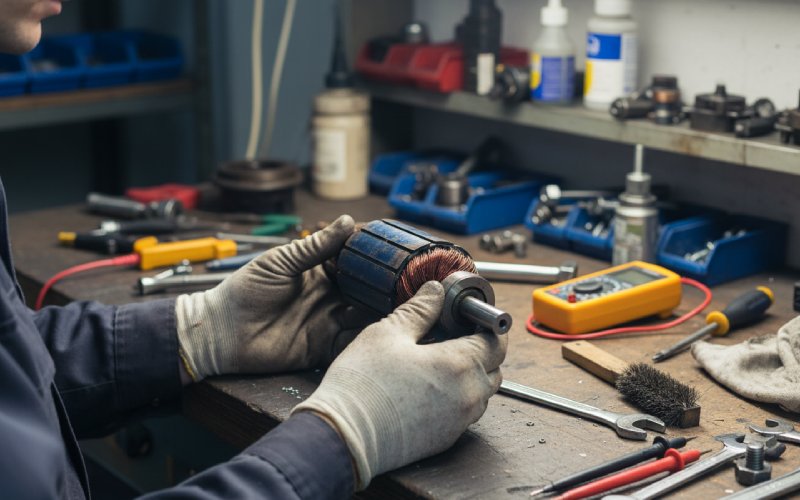
Do not turn the commutator first and ask questions after. Fresh copper hides the pattern that tells you whether the defect is a proud bar, a hot-only bar, a holder problem, or an electrical repeat. It also introduces new variables: fresh roughness, fresh slot work, fresh seating. Sometimes you end up repairing the evidence instead of the machine.
Also, do not accept a quiet no-load run as proof of success. Light-load operation itself can create chatter and unstable brush contact. The machine needs to be checked in the condition that produced the complaint. Otherwise the fault is just waiting for load.
FAQ
What is the difference between a high spot and a high bar on a commutator?
A high spot is the symptom you see at the brush track. A high bar is one possible cause. High mica, burrs, out-of-round condition, flat spots, contamination, and restricted brush motion can create the same symptom without one copper segment truly standing proud.
Can a commutator be round when cold and faulty when hot?
Yes. Some commutators check round at rest and cold, then develop a bar rise only at operating speed and load. That is why cold inspection by itself can miss loose-bar or thermal distortion problems.
Does low load really cause uneven commutator wear?
Yes. Very light load can increase interface friction, brush vibration, chatter, and sparking. It can also break brush edges or fray shunts over time.
Is the polished segment the damaged one?
Often, yes and no. It may be the raised bar causing the event, but the worst burning can appear on the bars that follow it because the brush is lifted and then lands again on those segments. The polished bar is frequently the origin point, not the whole damage picture.
When should uneven segment wear make us suspect an electrical fault?
When the pattern repeats by bar group, by pitch, by polarity, or returns quickly after surface correction. Also when selective wear favors one brush polarity, or when burned areas tie back to risers, equalizers, or commutation settings rather than one physical place around the circumference.
Should we change brush grade first?
Usually not first. Brush grade matters, but weak springs, poor holder freedom, high mica, underload chatter, vibration, and electrical faults are common upstream causes. Change grade after the mechanical and circuit basics stop lying to you.