DC Motor Squealing Noise: Is It the Carbon Brush or the Commutator?
When a DC motor starts squealing, most people replace the brushes first.
Sometimes that works. Sometimes the noise goes away for three days and comes back sharper than before.
That is usually the point where the wrong repair path gets expensive.
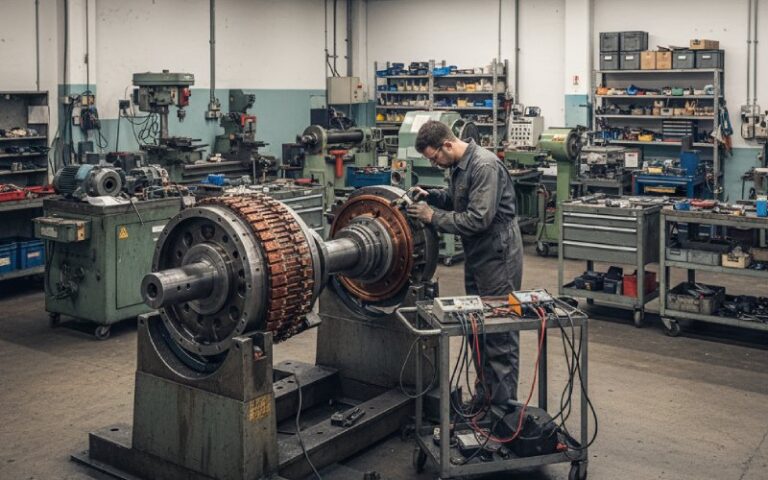
From our side as a commutator manufacturer, the real question is not which part is making noise. The useful question is simpler: which contact condition has become unstable. Brush seating. Spring pressure. Surface film. Segment geometry. Mica height. Roundness. Load. A squeal can start at the brush face, yes. It often stays alive because the commutator side was already out of control. Brush noise commonly appears together with sparking, unstable contact, poor seating, contamination, high mica, out-of-round running, or weak spring force.
That matters for buyers too, not only for repair teams. If repeated brush noise is actually tied to segment profile, surface finish consistency, or commutator runout, then the problem is no longer a maintenance detail. It becomes a component quality issue. Poor roundness, poor undercutting, weak edge preparation, or inconsistent bar hardness can keep pushing the brush into chatter, heat, and abnormal wear. Accurate machining for concentricity and roundness, proper undercutting depth, and bar-edge chamfering are repeatedly identified as critical to stable operation.
Table of Contents
Common DC motor squealing noise patterns
The sound usually tells you where to look first. Not always. Still useful.
| Noise pattern | What we suspect first | What it usually means on the commutator side | What we check before recommending replacement |
|---|---|---|---|
| Short squeal right after new brushes are installed | Poor brush seating | Contact area is still partial, film is unstable, local friction is high | Brush face contact pattern, holder fit, spring balance |
| Dry continuous squeal with light sparking | Surface film or contamination problem | Friction has gone up; copper track may be patchy or chemically disturbed | Film color, dust, oil vapor, slot cleanliness, brush path condition |
| Chirp or chatter repeating with rotation | Geometry problem | High bar, low bar, flat spot, high mica, or out-of-round condition | Runout, segment profile, mica height, shaft relation |
| Noise gets worse under load | Commutation problem | Trailing edge distress, poor neutral setting, electrical interruption of contact | Sparking pattern, segment marks, brush edge condition |
| Brush change helps briefly, then noise returns | Root cause is not the brush alone | Surface or dimensional defect remained in the machine | Copper track, spring pressure, segment consistency |
| Broken brush corners or chipped edges | Mechanical impact at contact | High mica, bar edge condition, chatter, or severe roundness issue | Undercut, chamfer, brush holder clearance, vibration path |
Uneven brown film can still be normal. Streaking, threading, grooving, copper drag, bar-edge burning, and repeated slot-bar marks are the patterns that need attention, because they point to unstable contact, metal transfer, overheating, or commutation faults rather than simple age. Light load, low spring pressure, contamination, and poor commutation show up again and again behind those patterns.
Need help checking the commutator side first? Send us your drawing, dimensions, or failure photos. We can review whether the noise pattern points to brush selection, commutator geometry, or a manufacturing consistency issue.
Carbon brush problems that cause motor squeal
Yes, sometimes it really is the brush.
We usually see it in four forms.
1. Poor seating after replacement
A new brush that only touches on a narrow band will run hot at the contact edge. That can sound like a squeal long before the face looks badly damaged. Poor seating also shifts the contact condition as the brush wears in, which can move the machine toward sparking and faster commutator damage if left alone. Proper seating is meant to maximize contact area, reduce resistance, improve wear uniformity, and reduce electrical noise.
2. Weak or uneven spring pressure
This one gets underestimated. Then ignored. Then it turns into a bigger service report.
Low spring force reduces contact stability and makes streaking, chatter, or interruption of contact more likely. Uneven spring force between positions makes diagnosis messy because one brush track looks normal while another burns or chatters. Weak spring pressure is widely identified as a common cause of commutator and brush trouble, and low spring pressure is directly associated with streaking, threading, and brush movement in service guides.
3. Holder fit and brush freedom
A brush that cannot move freely in the holder will not stay stable against the copper. Noise follows. Then edge damage. Then somebody blames the grade.
If we see polished sides, chipped corners, or abnormal face marks, we check holder condition before talking about material changes. Excessive brush movement or poor fit in the holder is repeatedly linked with imperfection in the commutator or weak spring tension, and broken edges are commonly associated with chatter and out-of-round conditions.
4. Wrong grade for the duty
Not every squeal is caused by the wrong brush grade, but the wrong grade can make a marginal commutator fail faster. Too abrasive, too selective, too weak under the actual current density. Then grooving or copper transfer starts.
That is why we do not like changing brush grade blindly. If the copper geometry is already unstable, a new grade may only shift the failure pattern, not remove it.
Commutator defects that trigger brush noise and sparking
This is the part many articles stop short of. Ours should not.
If the noise survives brush replacement, repeats with shaft rotation, or comes with clear brush chatter, we move to the commutator side quickly.
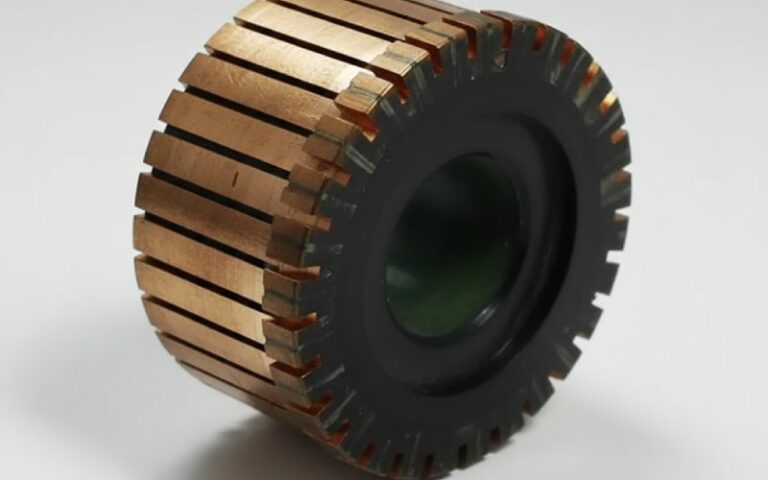
Out-of-round commutator
A commutator that is not running true pushes the brush in and out of stable contact. The sound can be a squeal. Or a chirp. Or a harsher chatter that gets worse with load. Out-of-round conditions are repeatedly tied to sparking, burning at the trailing edge, broken brush corners, and brush noise.
For a manufacturer, this is not a small detail. It comes back to machining discipline, shaft relation, clamping stability, and segment build consistency.
High mica or poor undercutting
High mica is one of the fastest ways to turn a stable brush track into a noisy one. The brush starts riding the insulation instead of flowing cleanly across the copper surface. You hear it. Usually before the whole surface looks destroyed.
High mica and poor undercutting are directly associated with brush noise, vibration, streaking, rapid deterioration, sparking, and brush chipping. Proper undercutting depth and clean slot preparation matter. Burrs matter too.
Poor segment profile and bar-edge condition
Even when overall roundness is acceptable, local segment errors can still make noise. High bar. Low bar. Flat spot. Rough resurfacing. Bad chamfer. These create impact and friction variations across the brush path.
That is why in our production thinking, “commutator quality” is not one number. It is a stack of details: segment concentricity, slot cleanliness, edge condition, undercut stability, and surface finish consistency. Service references repeatedly connect high bars, flat spots, poor chamfering, and rough slot work with chatter, sparking, and chipped brush edges.
Unstable surface film
A good film is not decorative. It is functional.
A uniform light-to-medium brown track is usually workable. Trouble starts when the film becomes patchy, chemically disturbed, too heavy in the wrong areas, or mixed with contamination. Then friction rises. Resistance shifts. The sound changes. Film condition is repeatedly treated as a critical indicator of running behavior, while colors outside normal brown tones are associated with contamination, high friction, and high resistance.
Why new brushes do not always solve the problem
Because they only replace one half of the interface.
This is the common sequence we see in failed samples sent to our factory:
- The motor squeals.
- The brushes are replaced.
- The sound drops.
- The machine returns to service.
- The noise comes back, now with clearer sparking or edge wear.
What happened? Usually one of these:
- the new brush was never fully seated,
- spring pressure stayed weak or uneven,
- the commutator was still out of round,
- mica height was already wrong,
- the surface film was contaminated,
- or the actual issue was electrical commutation, not friction alone.
That pattern is exactly why we treat repeated squeal as a contact-system stability problem, not a brush inventory problem. Seating errors can cause poor commutation and commutator damage, while streaking, threading, and bar-edge burning often continue unless the underlying load, pressure, contamination, or geometry problem is corrected.
What manufacturers check before replacing the commutator
Repair teams often begin with the easiest visible part. Manufacturers should not.
Our sequence is different.
1. Read the brush track first
We look for film consistency, streaking, threading, grooving, bar-edge burning, copper drag, and repeating slot patterns.
2. Check runout and roundness
If the copper path is not stable to begin with, brush life becomes secondary.
3. Check mica height and slot finish
High mica. Loose fins. Copper burrs left after poor slot work. All of those can create noise and edge damage.
4. Check segment profile consistency
Not only average diameter. Bar-to-bar behavior.
5. Review material and thermal history
Softened copper after overheating behaves differently under brush contact. So does an assembly that has lost mechanical stability.
6. Only then review brush grade and spring setup
Not because the brush does not matter. Because changing it first often hides the real defect.
References on armature repair and brush troubleshooting consistently point to clamping pressure, roundness, concentricity, undercutting, chamfering, spring force, and surface condition as the decisive checks when noise and chatter are present.
A manufacturing point many buyers miss
If the motor squeal is traced back to high mica, unstable segment profile, poor surface finish, or repeat runout, then the purchasing question changes.
It is no longer:
“Which brush should we buy next?”
It becomes:
“Is the commutator being made with the process control this application actually needs?”
For OEM and replacement buyers, that usually means asking about:
- copper material stability,
- segment forming consistency,
- mica slot accuracy,
- runout control,
- bar-edge finishing,
- thermal resistance under duty,
- and inspection method before shipment.
That is where a factory should sound like a factory. Not like a generic maintenance article.
When to repair and when to replace a commutator
Repair is still reasonable when the defect is mostly surface-level and the base structure is sound.
We usually consider repair first when:
- the issue is light contamination,
- the surface needs controlled refinishing,
- undercutting and edge preparation can restore stability,
- and the segment structure remains mechanically sound.
Replacement becomes the smarter path when:
- roundness cannot be held,
- segment looseness is suspected,
- thermal damage has softened parts of the copper,
- repeated chatter has already damaged the brush system,
- or the machine keeps returning with the same noise after brush-side corrections.
That decision should be economic, not sentimental. If repeat service stops production, replacement often costs less than one more failed attempt at partial repair.
What to send us for faster evaluation
If you are sourcing a replacement commutator, or trying to confirm whether the current one is the real cause of brush noise, send us any of the following:
- rotor or commutator drawings,
- outside diameter and stack dimensions,
- segment count,
- photos of the brush track,
- photos of worn brush faces,
- application load details,
- and your current failure description.
A clear photo of the brush path and one face of the removed brush already tells a lot.
FAQ
Is motor squealing usually caused by the carbon brush?
Not always. A brush can be the first visible failure, but repeated squealing often points to unstable contact caused by poor seating, weak spring force, contamination, high mica, out-of-round running, or segment geometry problems on the commutator side.
Why does the motor still squeal after replacing the brushes?
Because the brush may not be the root cause. If the commutator has runout, high mica, poor undercutting, unstable film, or local segment defects, a new brush can quiet the symptom briefly without fixing the contact condition underneath.
Can a dirty commutator cause squealing?
Yes. Contamination can disturb the surface film, increase friction, and raise contact resistance. Oil vapor, dust, and chemical contamination are common triggers when the copper track becomes patchy or abnormal in color.
What commutator defects most often cause brush chatter?
The usual ones are high mica, high bars, low bars, flat spots, out-of-round conditions, poor slot finish, and rough bar-edge preparation. These defects interrupt stable brush travel and often show up together with sparking or chipped brush edges.
Is a dark brown commutator surface always bad?
No. A uniform brown film can be normal and even desirable. The problem is not simply “dark.” The problem is uneven film, streaking, threading, grooving, bar-edge burning, or colors that suggest contamination and rising friction.
What should an OEM buyer ask a commutator supplier when brush noise is a field issue?
Ask about roundness control, segment consistency, mica slot accuracy, undercutting process, edge finishing, surface finish control, material stability, and inspection method. Noise complaints are often the field result of small manufacturing inconsistencies that were never controlled tightly enough.
Need a replacement or custom commutator?
If your motor still squeals after brush replacement, the next step should not be guesswork.
Send us your drawing, worn-part photos, or key dimensions. Our engineering team can review whether the issue is mainly brush-side, commutator-side, or a combination of both, and advise on repair vs replacement for your application.