DC Generator Commutator Manufacturer
Reliable DC generator output starts with a stable, precisely built commutator.
At XDC, we design and manufacture custom DC generator commutators for OEMs, repair shops, and industrial users who cannot afford unexpected downtime or unstable voltage.
What Does a DC Generator Commutator Do?
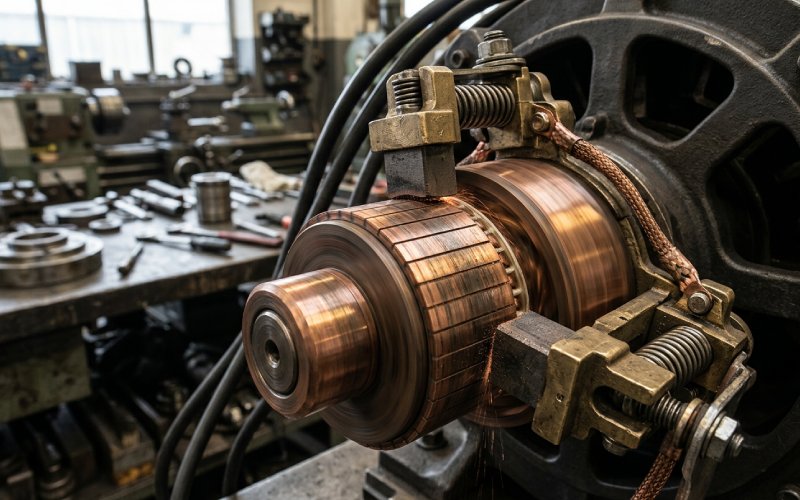
In a DC generator, the commutator is the mechanical rectifier that converts the alternating voltage induced in the armature windings into a unidirectional DC output at the terminals.
Every revolution, the commutator reverses the connection of the armature coils to the external circuit at the right moment. When the commutator is designed or manufactured poorly, you get:
Excessive sparking and brush wear
Voltage ripple and unstable output
Overheating and premature failure
A well-engineered commutator keeps your generator running smoothly, efficiently, and safely over its entire service life.
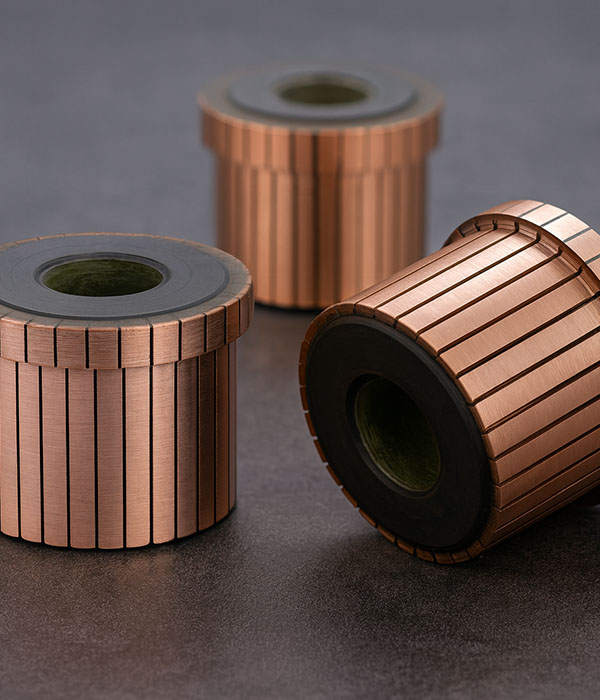
DC Generator Commutator Manufactured by XDC
See how XDC supports the power generation sector with custom DC generator commutators. We are dedicated to fabricating components that match your technical prints, validating quality through samples before launching into volume production. Review our track record below to understand our manufacturing precision, and directly send us your drawings to get a quote.
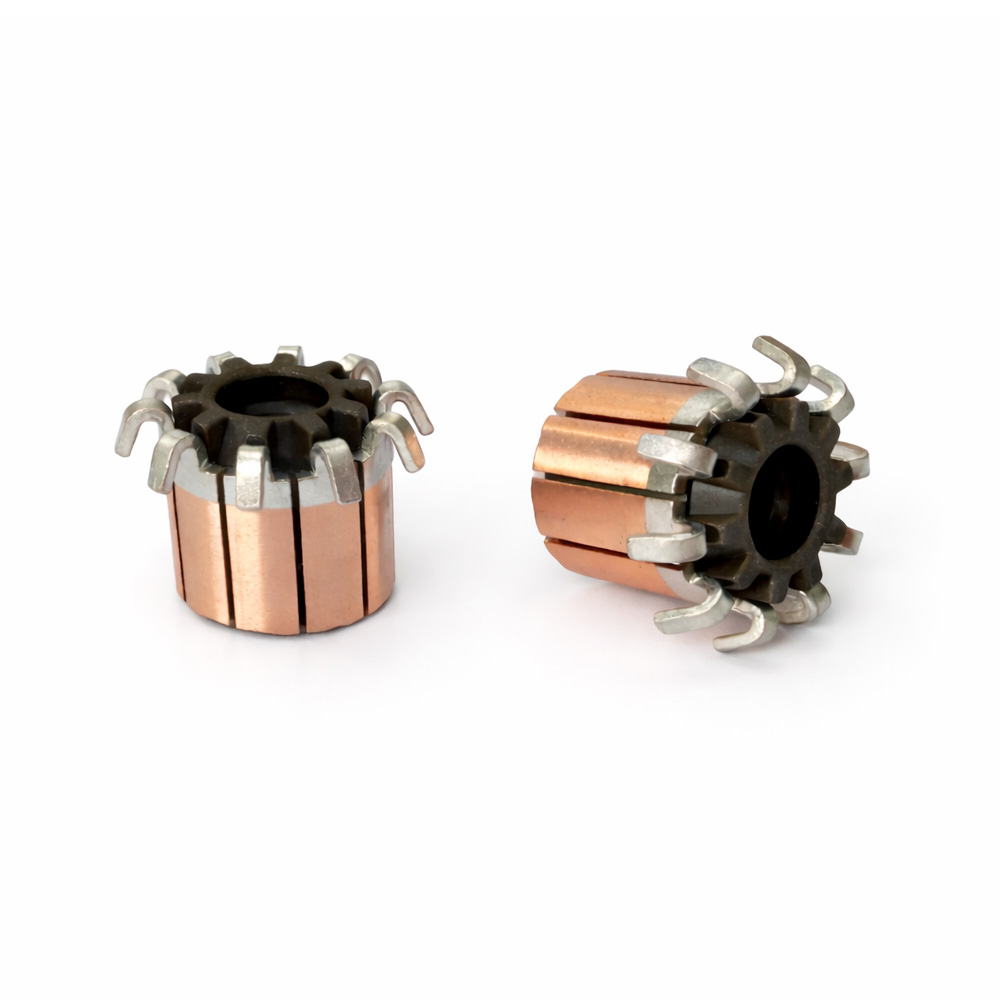
15.2mm Commutator
Specs: 15.2mm OD | 10 Segments
Application: Standard DC power generation. Optimized hook design minimizes voltage ripple and ensures stable current extraction under continuous load.
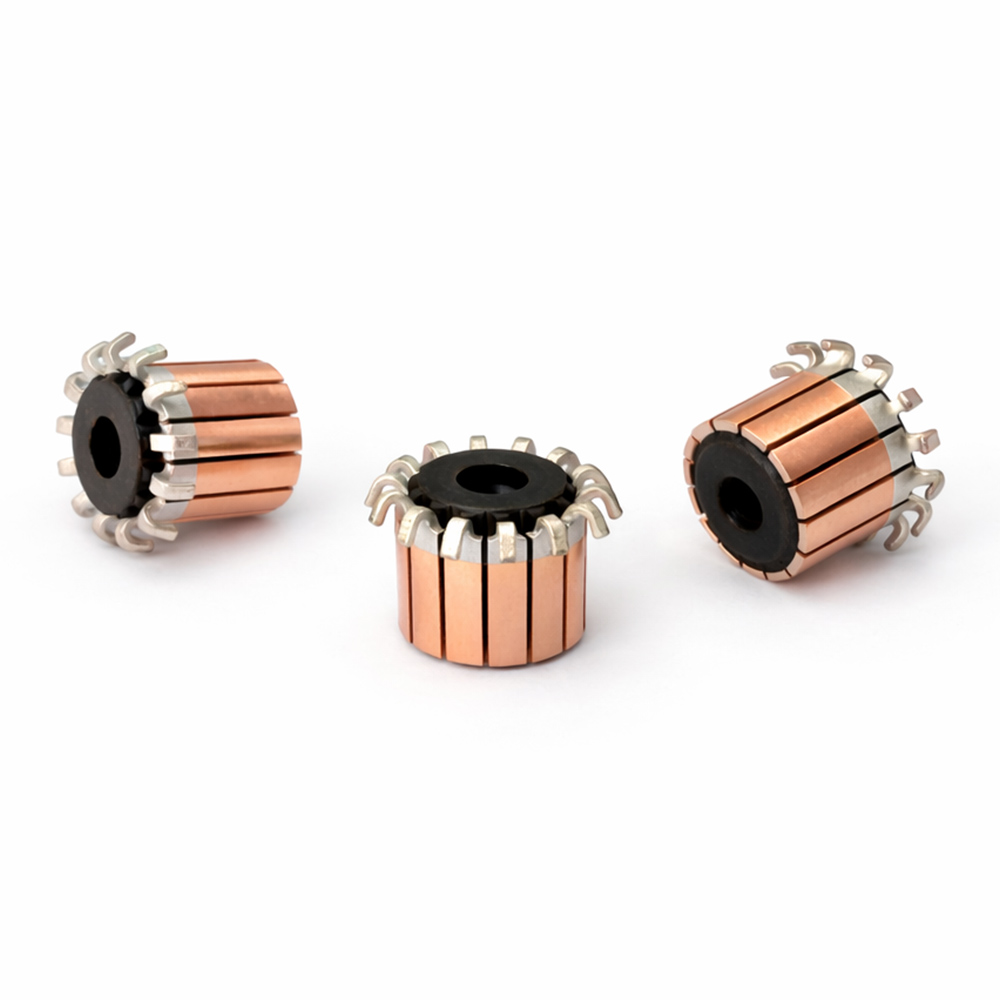
Precision 14-Bar Commutator
Specs: 11.4mm OD | 14 Segments
Application: Precision generators. High-density 14-bar layout provides superior rectification resolution, significantly reducing output ripple.
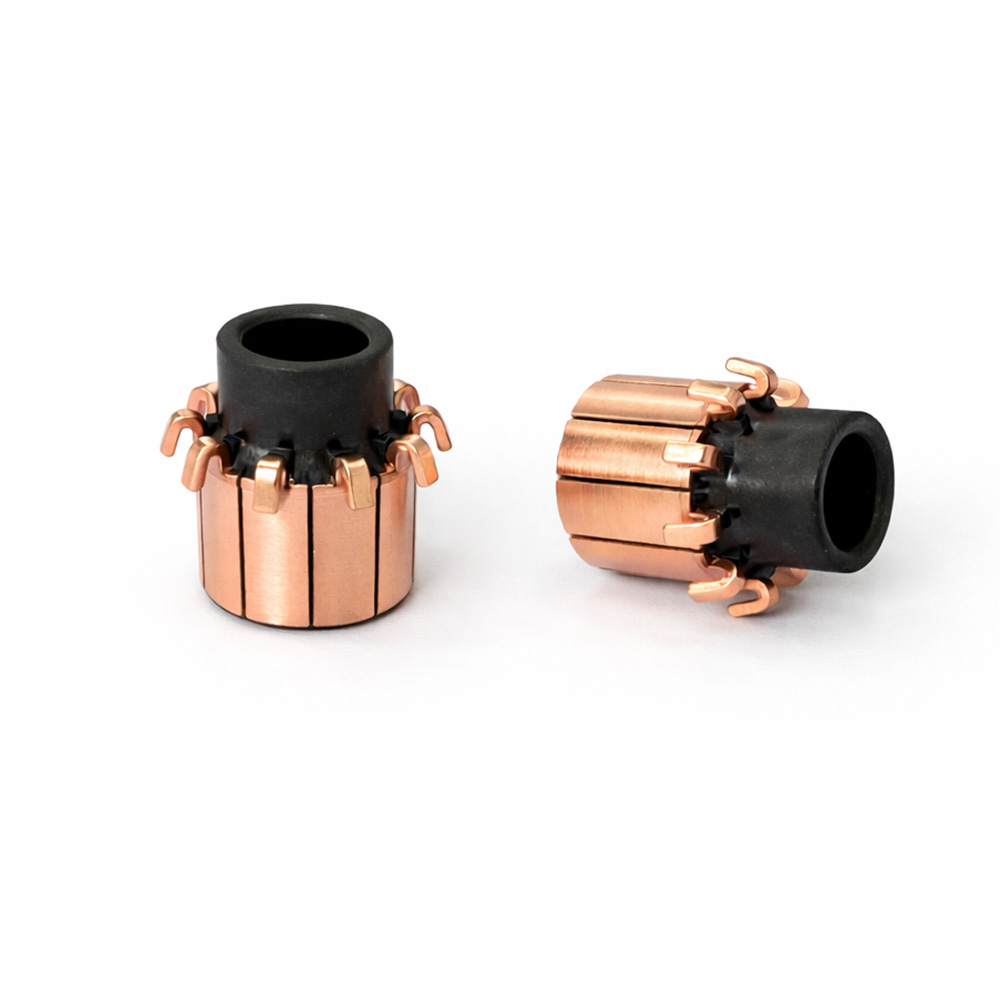
15mm Generator Commutator
Specs: 15.0mm OD | 10 Segments
Application: Continuous duty generation. Enhanced contact surface area ensures consistent electrical output and extended brush life under load.
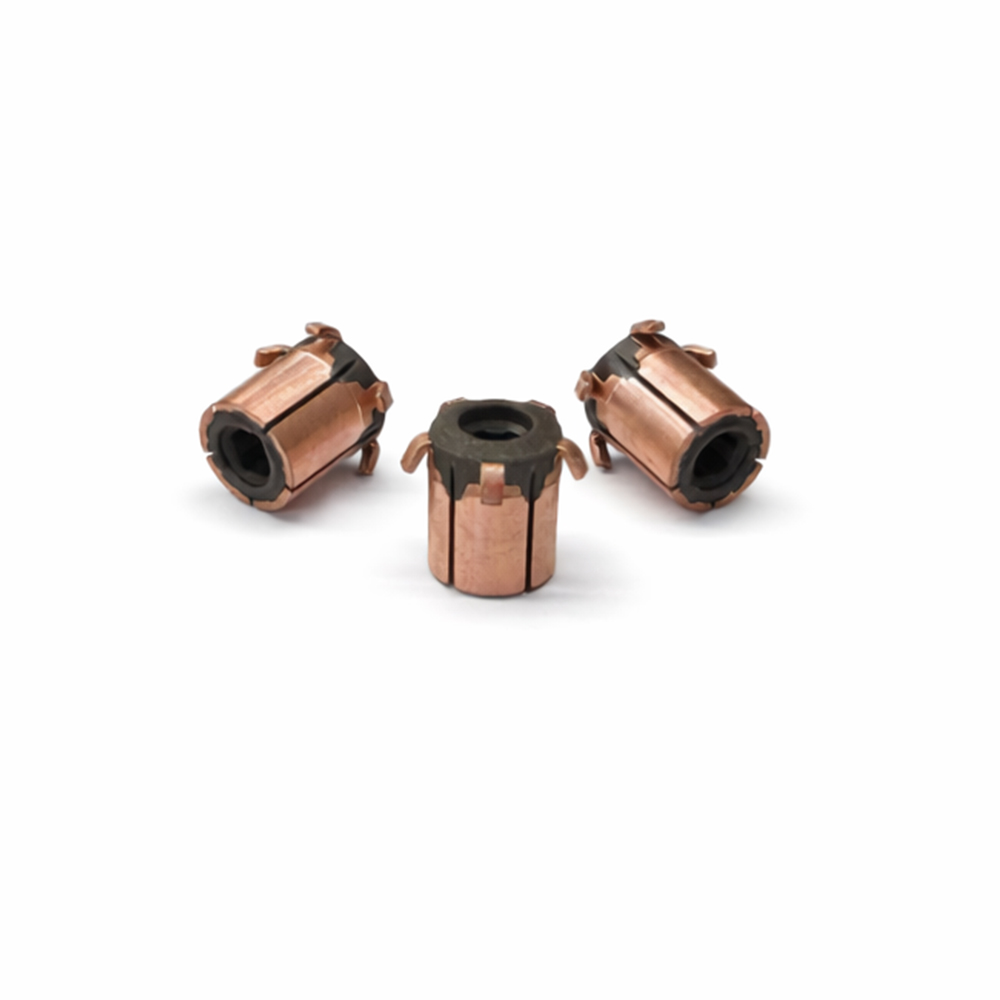
7mm Generator Commutator
Specs: 7.0mm OD | 5 Segments
Application: Miniature DC generators. The 5-bar odd-numbered slot configuration effectively minimizes magnetic cogging for smoother shaft rotation.
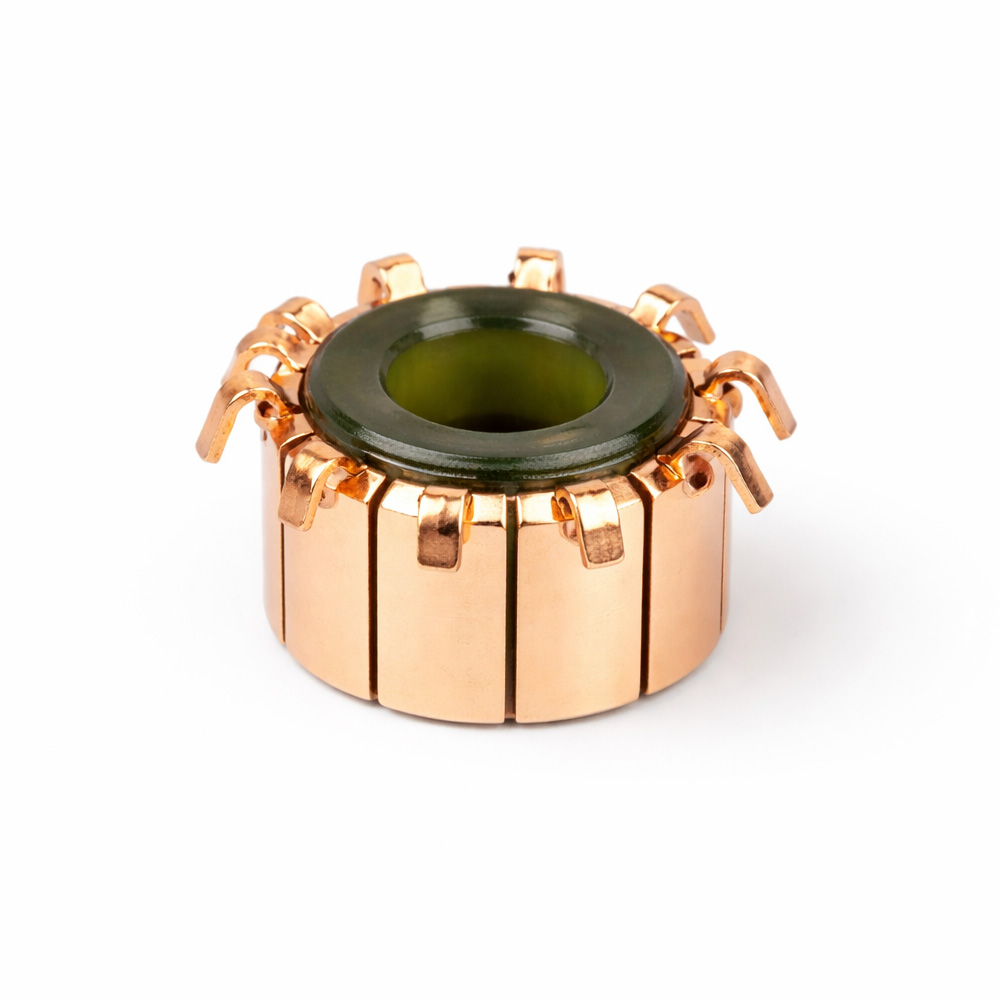
15.2mm DC Generation Commutator
Specs: 15.2mm OD | 10 Segments
Application: Engineered for low contact resistance and high mechanical durability, ensuring stable rectification in demanding environments.
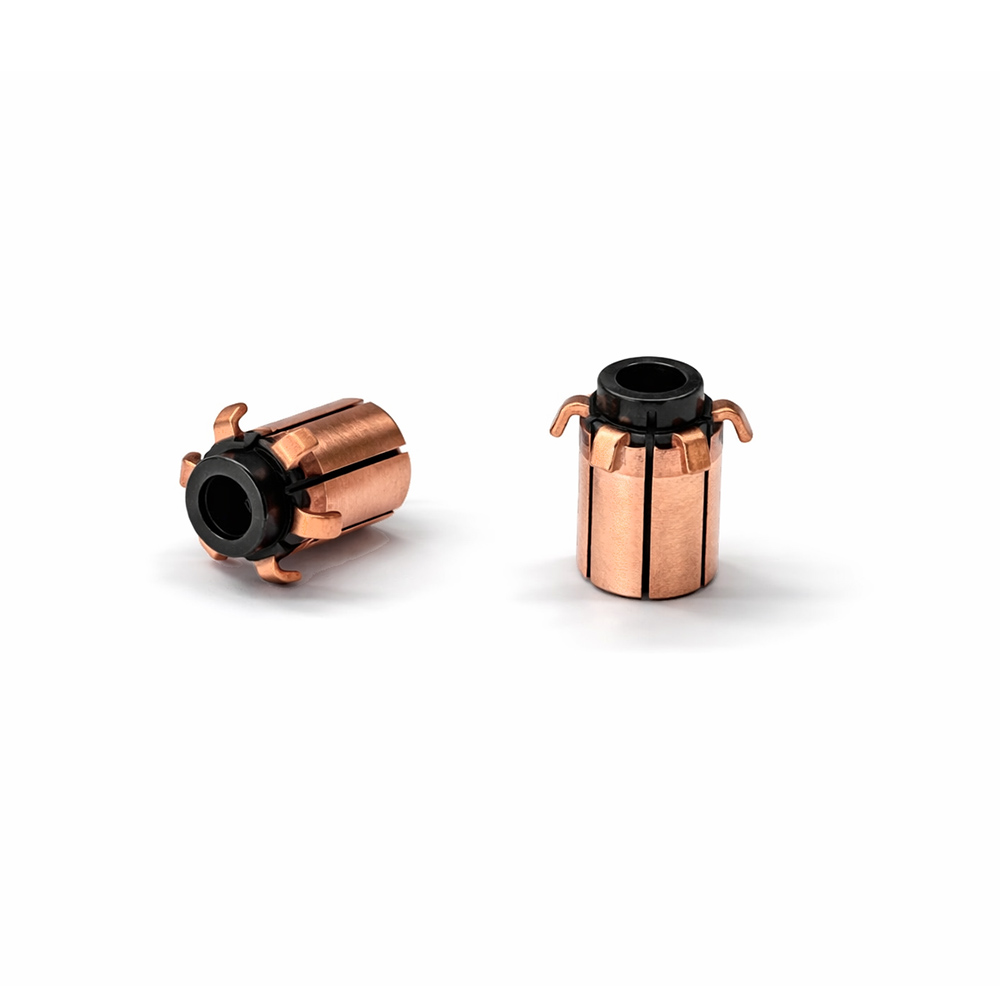
6-Slot Micro Generator Commutator
Specs: 6.5mm OD | 6 Segments
Application: Micro power generation. Upgraded 6-slot design improves output waveform and reduces ripple compared to traditional 3-slot models.
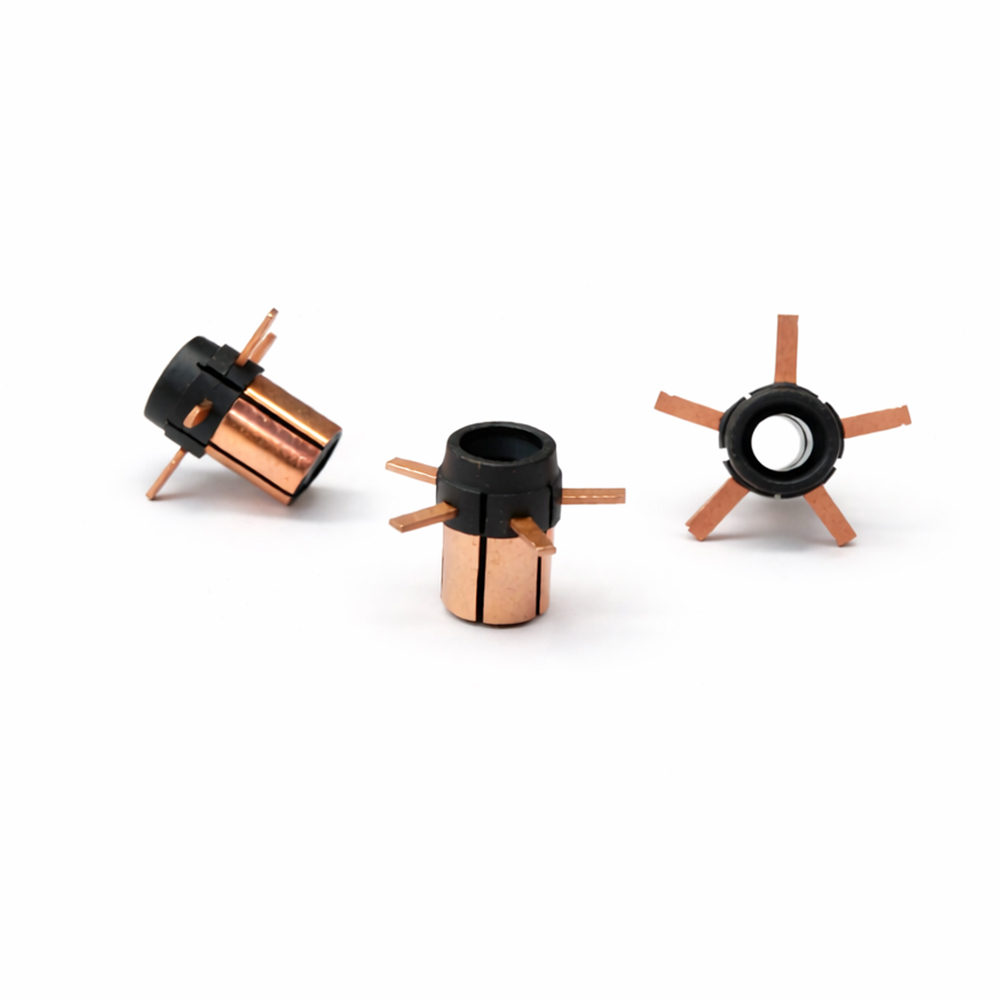
5-Segment Generator Commutator
Specs: 5 Segments | Anti-Cogging Design
Application: Lowers mechanical resistance to prevent magnetic locking, enabling easy startup for high-efficiency micro DC generators.
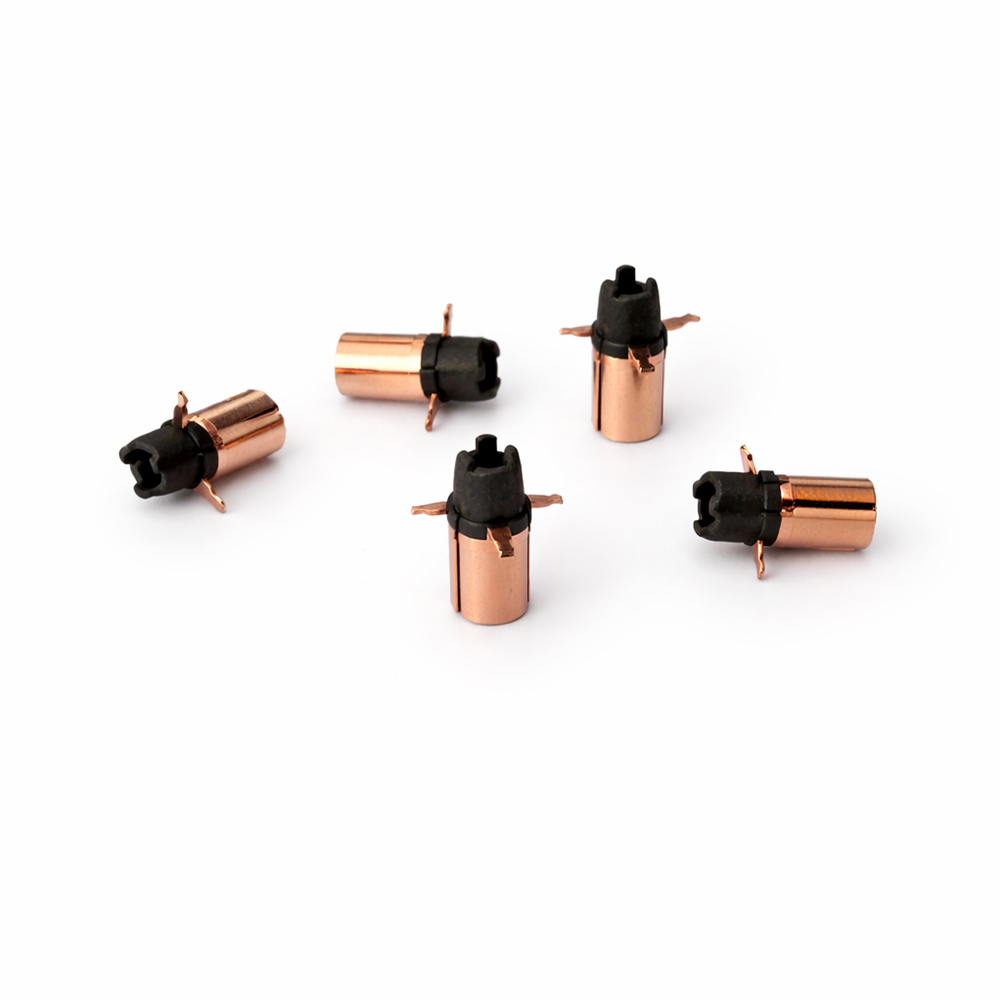
3-Bar Generator Commutator
Specs: 3 Segments | Right-Angle Tangs
Application: Rugged applications. Reinforced tang design ensures secure coil winding connections under high mechanical stress and vibration.
Technical Specifications
The following specifications are defined by your drawing or sample. If a tolerance is not specified, we will propose a tolerance & inspection plan during engineering review to match your speed/load and brush conditions.
Outer Diameter (OD) | 2.5 mm – 300 mm |
Inner Diameter / Bore (ID) | 2 mm – 200 mm |
Overall Length (L) | 3 mm – 300 mm |
Number of Bars (Segments) | 3 – 240 bars |
Mica insulation thickness (between segments) | 0.5 – 1.0 mm (typical), target 0.8 mm for common builds |
Mica undercut depth | 0.6 – 1.6 mm (typical); common targets ~1.0–1.3 mm |
Total Indicated Runout (TIR) at commutator surface | ≤ 0.076 mm (surface speed ≤ 1525 m/min) / ≤ 0.038 mm (> 1525 m/min) |
Surface roughness (Ra) | Industrial: 0.9–2.0 μm; Small commutators (<1 kW): 0.5–1.0 μm |
Segment material options | Cu-ETP (C11000) / OFHC (C10100) / Silver-bearing copper (CuAg) |
Hub / support options | Phenolic/insulating hub / Glass-fiber epoxy / Steel / Aluminum alloy |
Standard inspection (default) | 100% visual + key dimensions; runout + roughness sampling |
DC Generator Commutators Engineered for Stable Output
We manufacture split-ring commutators for DC generators (dynamo commutators) that focus on consistent performance in real operating conditions, not just on paper.
Reduced voltage ripple
Segment design and connection patterns are optimized to support smoother DC output when integrated with properly designed windings.
Low sparking under normal conditions
Accurate roundness, runout, and mica undercut depth help maintain clean commutation and minimize brush arcing when operated within the specified load range.
Long-term dimensional stability
Stable hub and support materials help maintain concentricity and contact conditions across the commutator’s service life.
Custom Geometry for Your Generator
Every generator is slightly different. We can customize:
Outside and inside diameter
Length and number of bars/segments
Bar width and pitch
Slot/mica width and depth
Mounting style (keyed, taper fit, shrink fit, etc.)
You send us the drawings, sample, or clear photos with main dimensions, and our engineers match or redesign the commutator to fit.
Materials Chosen for Electrical and Mechanical Reliability
We combine electrical performance, mechanical strength, and thermal stability to match the duty of your generator.
Copper Segments
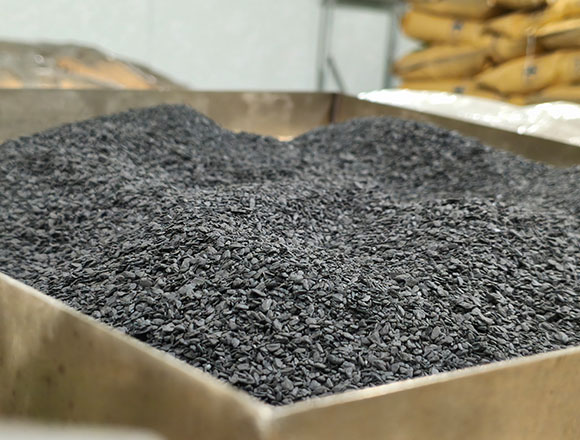
Precision-machined copper segments with controlled hardness for good conductivity and wear behavior.
Surface prepared for proper brush contact and to support stable film formation in operation.
Insulation System
Mica and other insulation materials selected according to your voltage rating and operating temperature.
Adequate dielectric strength and mechanical rigidity for long-term use.
Venting and Cooling Options
Where required, we can incorporate:
Axial or radial venting
Design features compatible with your fan/cooling arrangement
(If your application has special temperature or altitude requirements, we can review them case by case.)
How We Manufacture Your DC Generator Commutator
From sample to mass production, we follow a controlled process so you receive consistent parts, not just a one-time good piece.
Engineering & DFM Review
Review of your drawings, samples, and application requirements
Suggestions on geometry, tolerances, and materials where needed
Confirmation of key dimensions and interfacing parts
Production & Machining
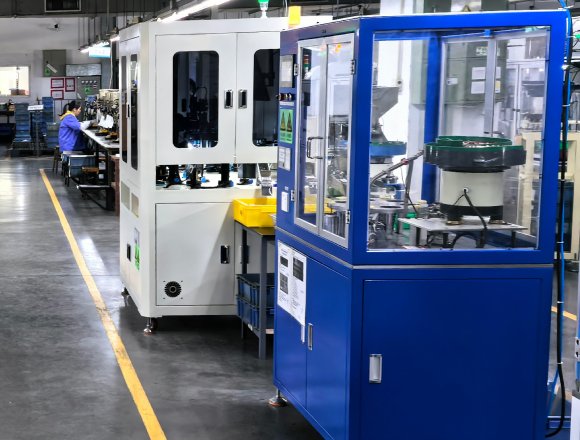
Machining of copper bars and hubs to your specified tolerances
Assembly, pressing and curing
Final turning, undercutting, and finishing of the commutator surface
Inspection & Testing
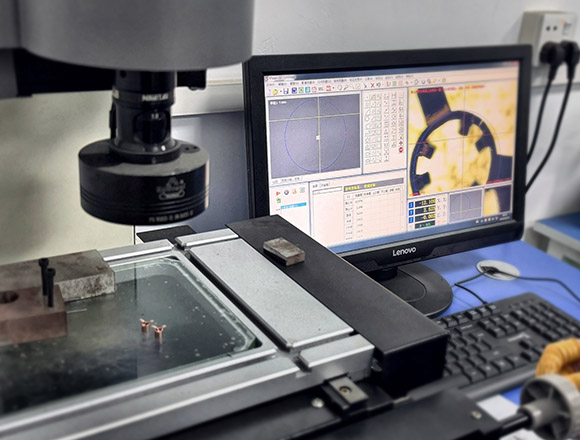
Each batch is inspected according to the agreed specification. Typical checks include:
Dimensional inspection of critical diameters, lengths, and runouts
Visual inspection of bar alignment, slots, and insulation
Electrical testing as specified (e.g. insulation resistance, hipot, etc.)
If you have an existing internal standard or OEM specification, we can work to those requirements after technical review.
DC Generator Applications We Support
Our commutators are used in DC generators and dynamos in areas such as:
Industrial DC generators
rolling mills, crane and hoist drives, mining winches, DC drives, excitation systems.
Traction and transportation
large generator commutator sets in traction vehicles and auxiliary train supplies.
Marine and offshore
shipboard DC propulsion, bow thrusters, and excitation generators in harsh salt-laden environments.
From Inquiry to Delivery – Our Process
Step 1 – Share Your Requirements
Send us your drawings, specifications, or photos of your existing commutator plus the main dimensions and operating conditions.
Step 2 – Engineering Review & Proposal
Our engineers review your information and, if needed, ask for clarifications. You receive a technical proposal and a commercial quotation.
Step 3 – Sample / Prototype
For new designs or critical applications, we can produce a sample for validation before moving to batch production.
Step 4 – Batch Production
Once the design is confirmed, we manufacture according to the agreed specification and quality plan.
Step 5 – Delivery & Support
We pack commutators securely for shipment and remain available for technical support during installation, commissioning, and operation feedback.
Request a Custom DC Generator Commutator Quote
Tell us about your DC generator and commutator requirements. Our engineering team will review your information and get back to you with a technical proposal and quotation.
Once we receive complete technical information, we typically respond within 12 working hours.
+86 17820674273
Address
Taixing Science and Technology Park, No. 3 Taixing Road, Dongguan City, Guangdong Province
DC Generator Commutator FAQs
We can work from drawings, a physical sample, or clear photos that show:
Main dimensions (OD, ID, length, number of bars)
Mounting details (keyways, tapers, fits)
Operating voltage and speed
The more complete the information, the more accurate our design and quotation will be.
Yes. In most cases we can reverse-engineer from your worn or damaged commutator. We may ask you to provide measurements or send the part for detailed evaluation before production.
Both use segments and brushes, but the design details and operating conditions can differ. When you contact us, please specify whether your application is a generator (dynamo) or a motor, so we can optimize the commutator accordingly.
Excessive sparking can come from several causes, including brush grade, spring pressure, surface condition, or winding issues. If you share photos and operating details, we can help you determine whether a new commutator design, a refurbished commutator, or other adjustments are required.
We support both small repair/maintenance quantities and larger OEM production batches. Let us know your expected volume and frequency so we can recommend an appropriate manufacturing plan.
Commutators are packed to protect the working surface and critical dimensions during transport. For export shipments, we use robust outer packaging and, where needed, additional anti-rust and moisture protection.
Latest from Blog
Our blog content will provide you with a wealth of information and inspiration. They not only reflect our expertise and experience, but also encourage you to explore and discuss relevant topics with us.
Commutator Sparking and Wear: Why Brushes Must Align With the Motor Neutral Plane
The motor neutral plane is the running position where the coil under the brush can reverse current with the…
DC Motor Squealing Noise: Is It the Carbon Brush or the Commutator?
When a DC motor starts squealing, most people replace the brushes first. Sometimes that works. Sometimes the noise goes…
How to Check a Commutator for Roundness or Runout
Most bad readings start before the indicator touches copper. That is usually the whole job, really. Not the gauge.…