Custom Copper Commutator Manufacturer for DC & Universal Motors
XDC manufactures custom copper commutators for DC motors, universal motors, starter motors, fuel pump motors, power tools, appliances, generators, and industrial drives. We support prototype validation, process qualification, and OEM production with engineering review focused on commutation stability, brush-track performance, insulation reliability, and dimensional consistency.
- Fast quotation response (typically within 12 hours)
- Drawing-based customization and sample-based evaluation
- Prototype to mass production support
- Engineering review for brush interface, speed, and load conditions
What We Manufacture
We produce custom copper commutators based on customer drawings, samples, or dimensional specifications. Product configurations include compact commutators for micro motors and larger commutators for high-current and industrial applications.
Customization scope includes:
- Outer diameter (OD), inner diameter (ID), and overall length
- Segment count, segment geometry, and pitch
- Hook, riser, face, flat, and right-angle structures
- Hub design, bore fit, and shaft interface requirements
- Copper material grade selection
- Mica insulation thickness and resin system selection
- Brush-track finish, undercutting, and machining tolerances
- Dynamic balancing support for high-speed applications
If you are replacing an existing part, we can evaluate your sample and recommend a manufacturable configuration before production.
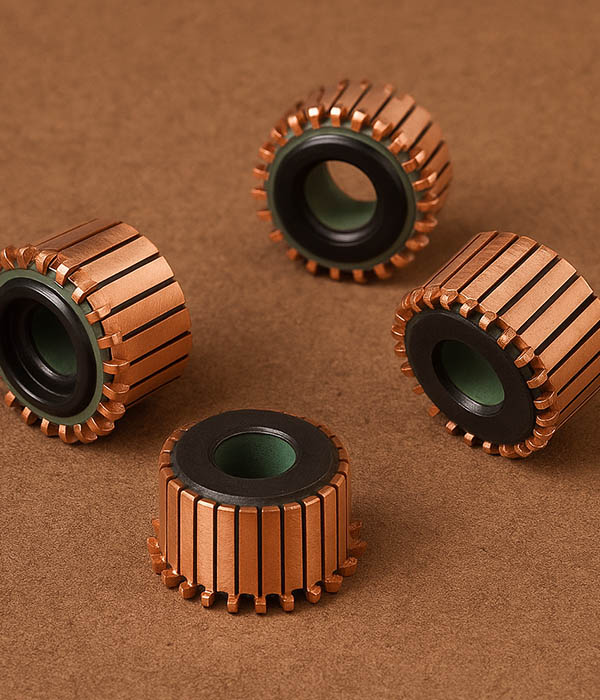
Copper Commutators We've Manufactured
Witness XDC’s range of high-grade copper commutators, built for maximum conductivity and thermal efficiency. We focus on fabricating parts that align perfectly with your mechanical layouts, ensuring quality with first-article units before moving into full-scale manufacturing runs. See our high-purity copper solutions below, and directly send us your drawings to get a quote.
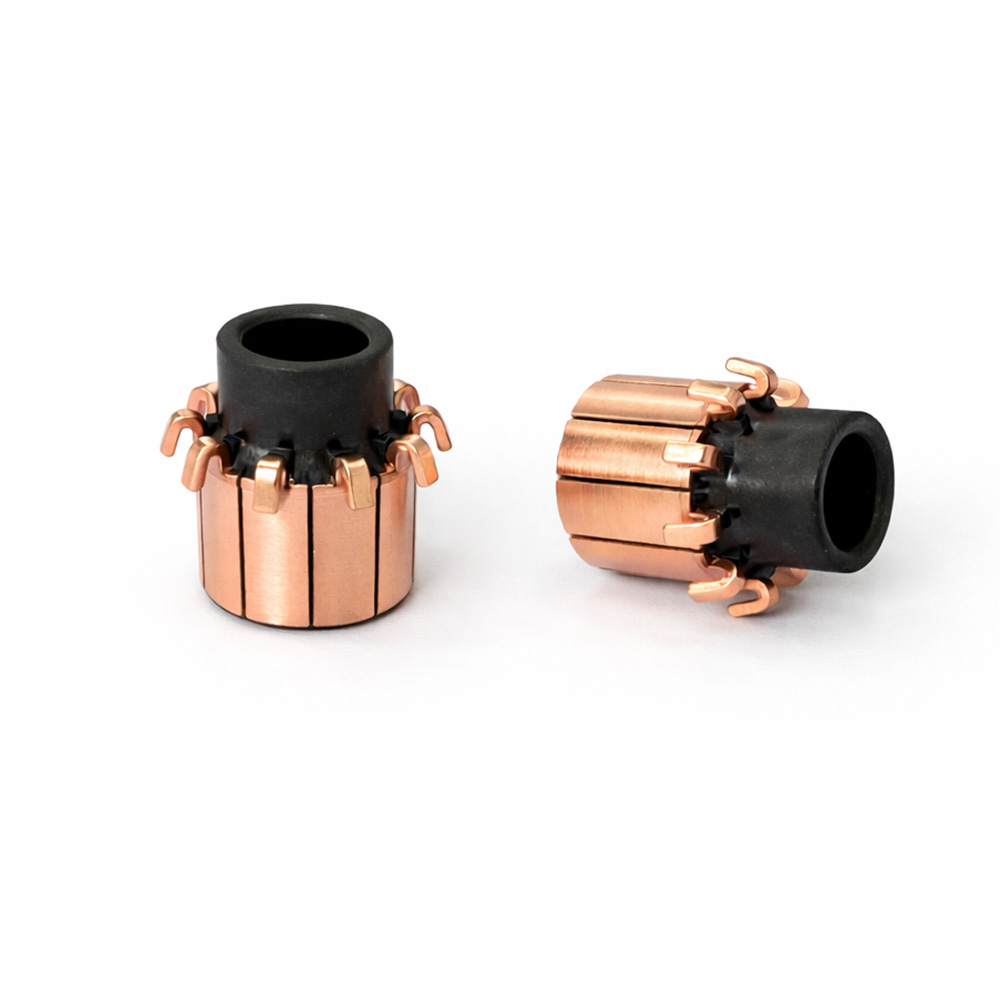
Precision-Slotted 10-Bar Commutator
Featuring high-precision segment undercutting, this 15mm unit prevents carbon buildup and ensures reliable arc suppression. The 10-bar architecture is optimized for consistent electrical switching in industrial-grade motor applications.
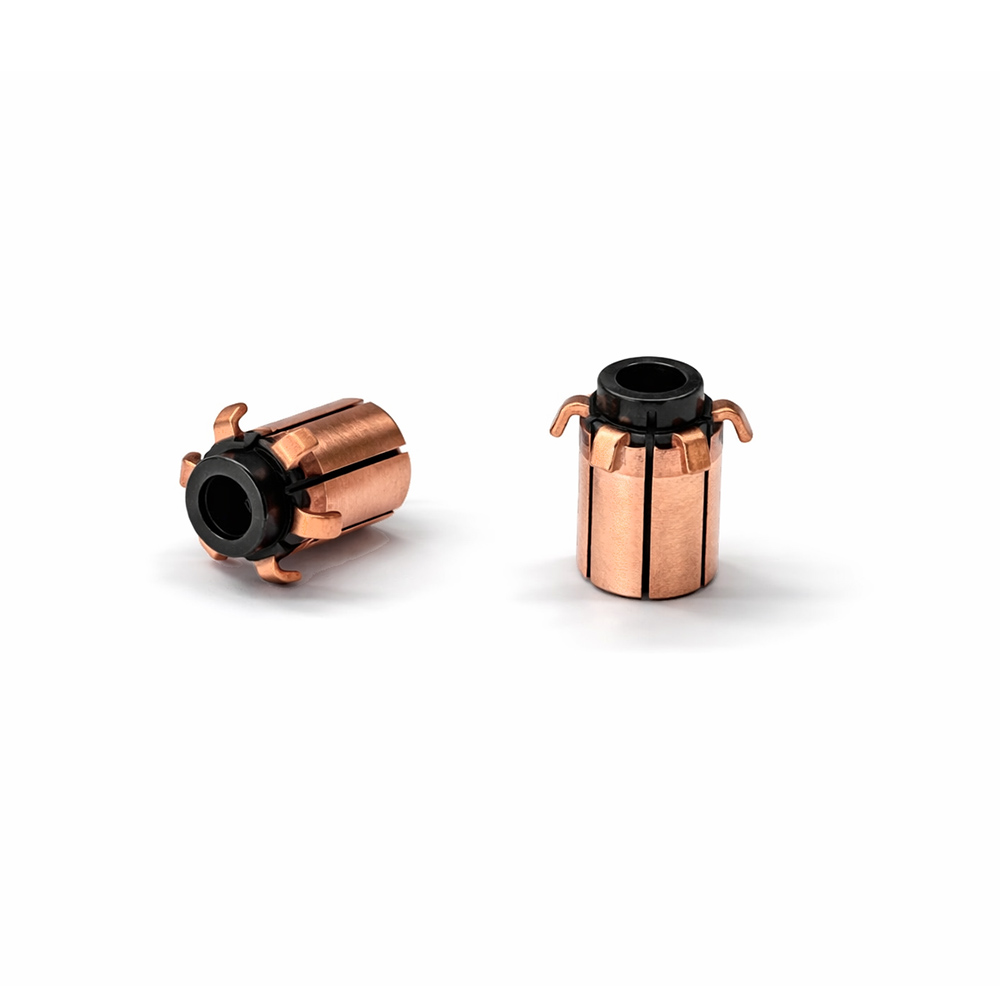
High-Resolution 6-Bar Commutator
With a 6.5mm OD, this 6-segment unit doubles the commutation frequency relative to 3-slot designs. It stabilizes the current waveform and minimizes torque ripples for precision micro-motor drives.
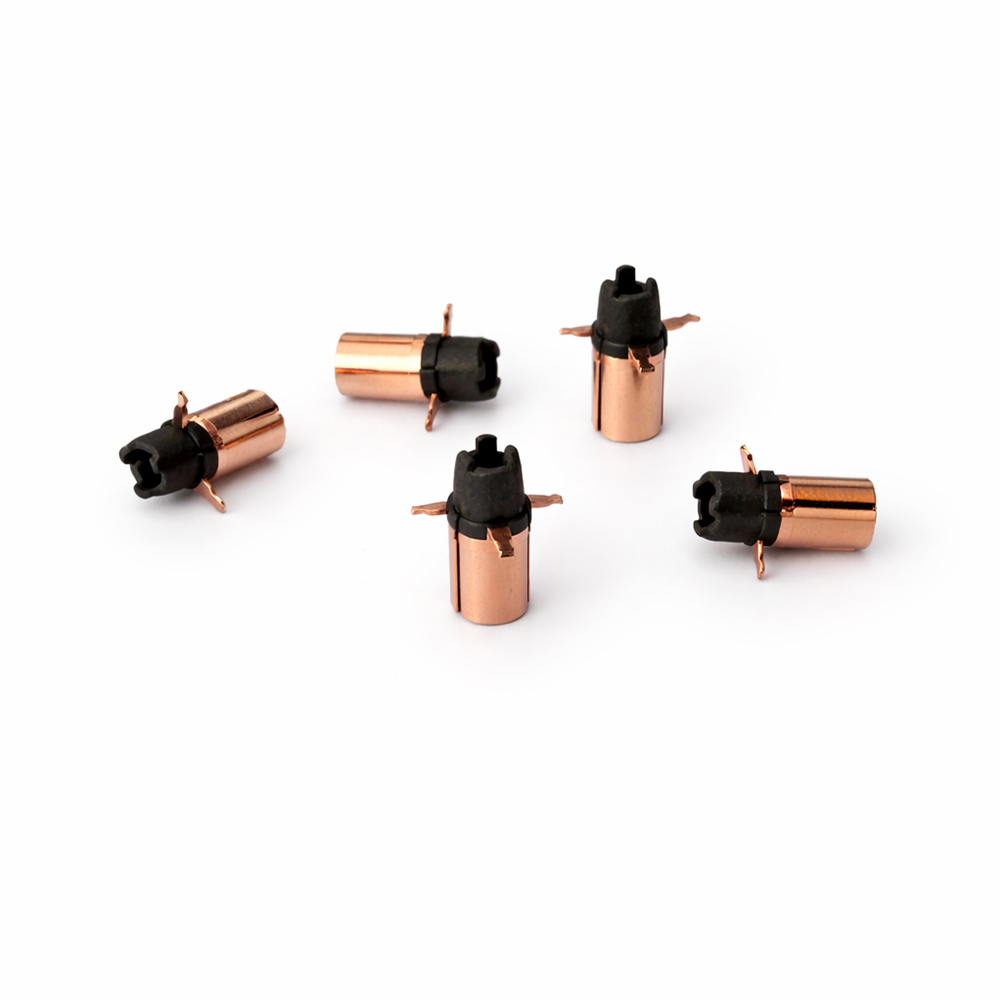
High-Conductivity 3-Bar Commutator
Engineered with high-purity copper for minimal power loss, this 3-bar right-angle unit provides superior conductivity. Its reinforced anchoring system prevents bar-lifting at high RPMs, ensuring sustained mechanical integrity.
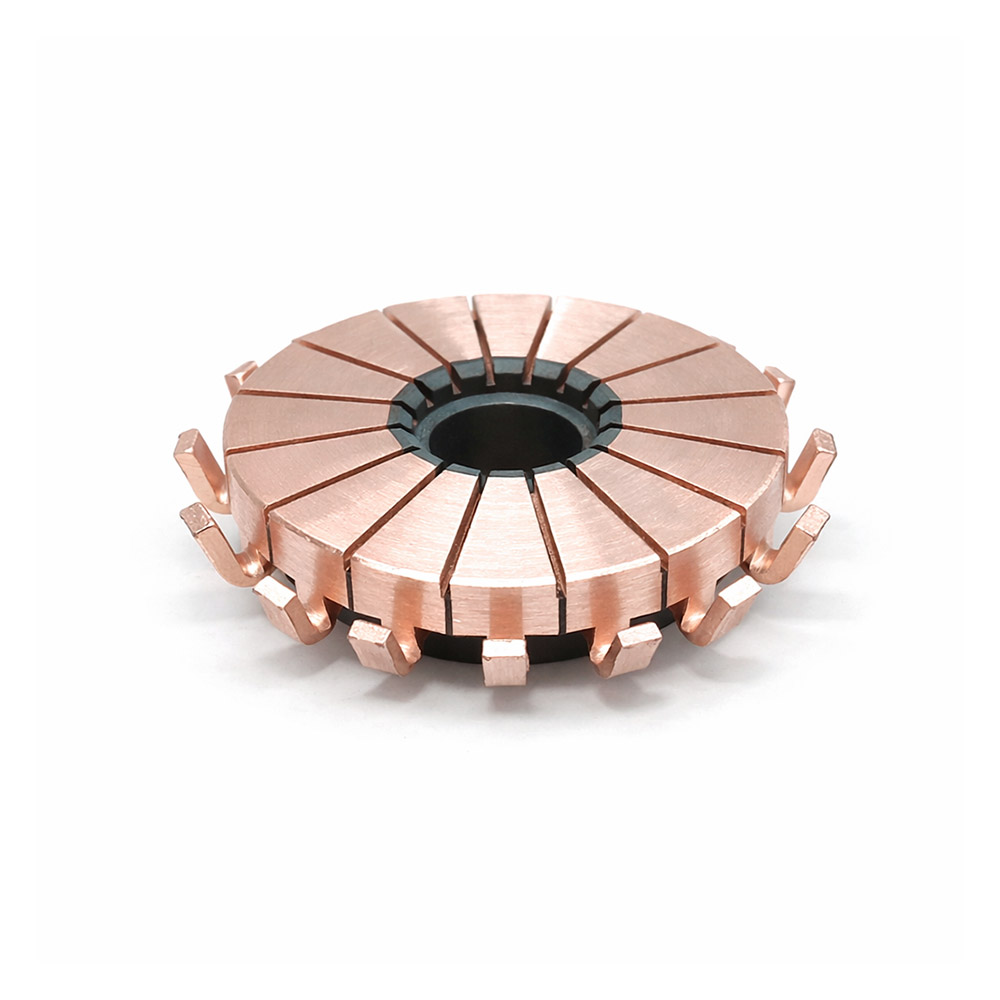
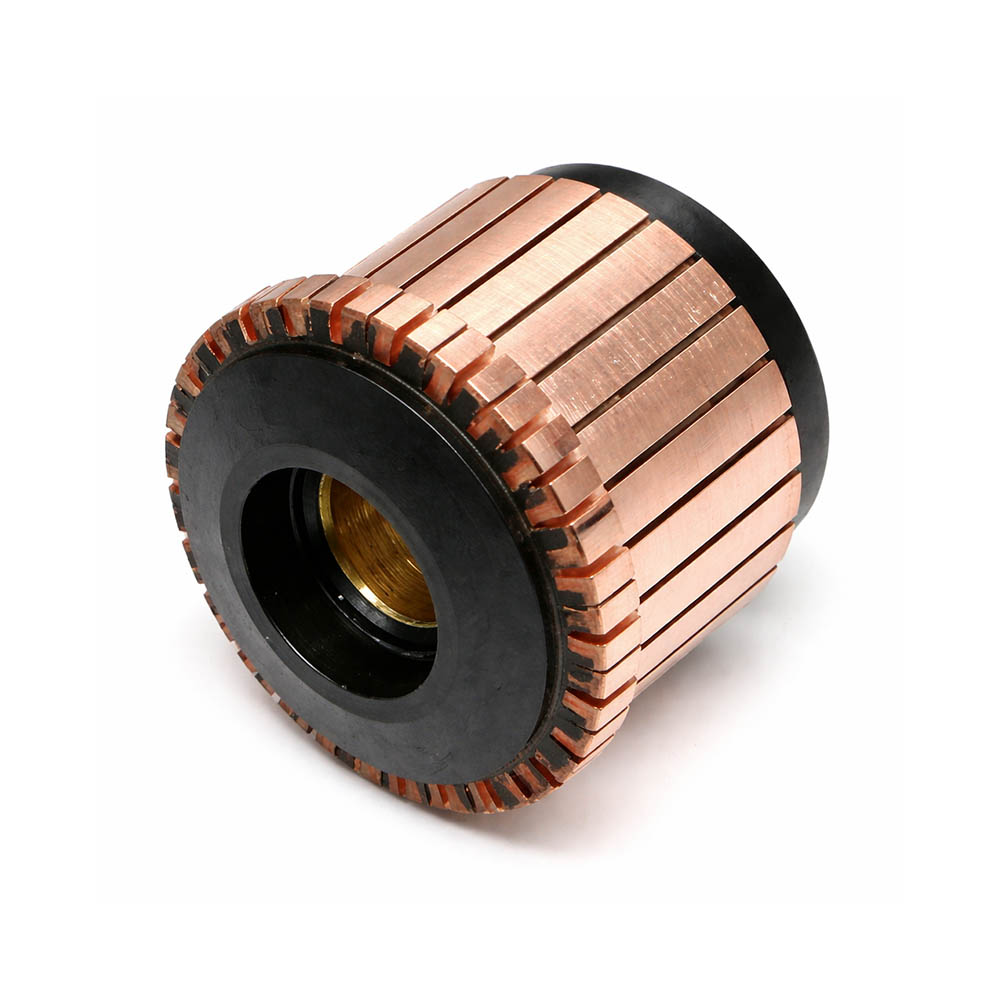
16-Segment Face Commutator
Designed with high-precision radial segment alignment, this 47.6mm unit optimizes electrical bridging. Its structural uniformity prevents uneven brush contact patterns, ensuring consistent commutation performance in low-profile industrial motor assemblies.
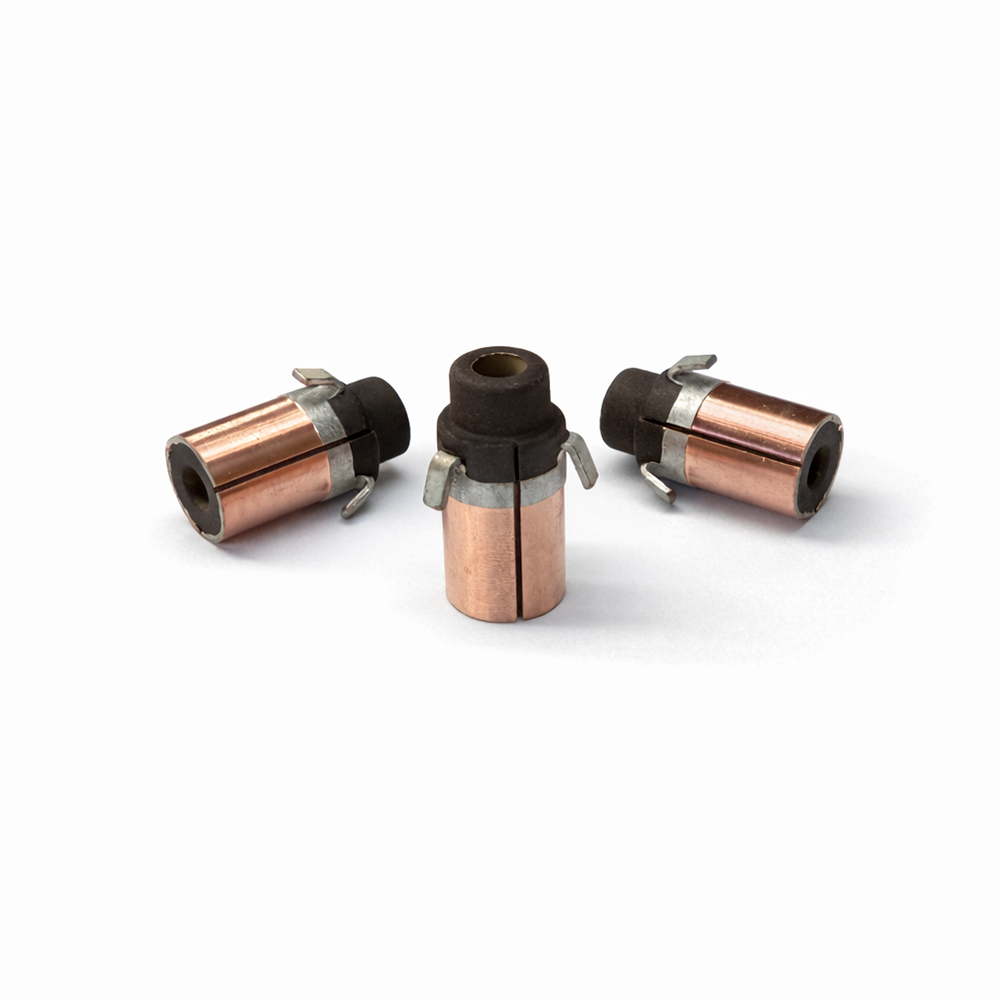
Micro Motor Copper Commutator
- Compact commutator structures for small brushed DC motors
- Stable brush contact under continuous or intermittent duty
- Customizable OD, ID, and segment count for micro assemblies
- Suitable for miniature drives, actuators, and precision motor modules
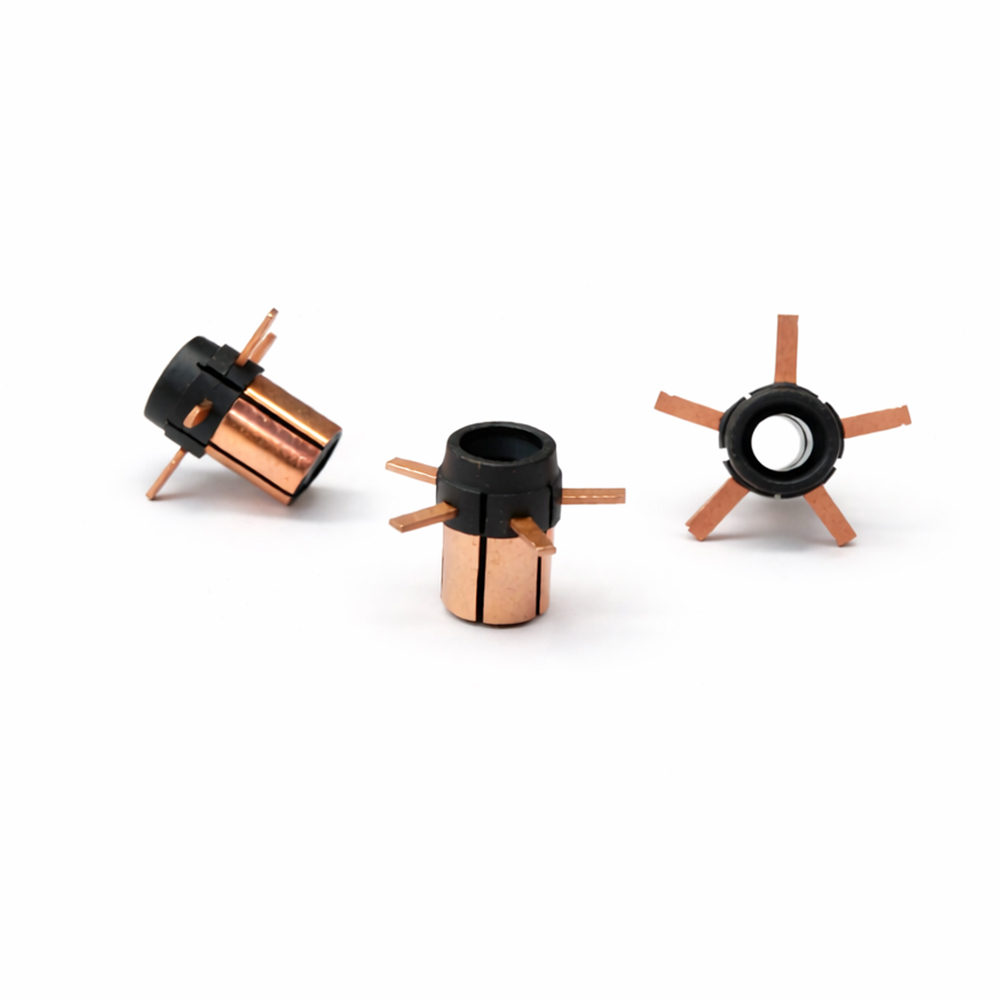
- Designed for high-speed, intermittent heavy-load operation
- Brush-track geometry optimized for commutation stability
- Segment and riser design options for wire connection reliability
- Suitable for power tools and household appliance motors
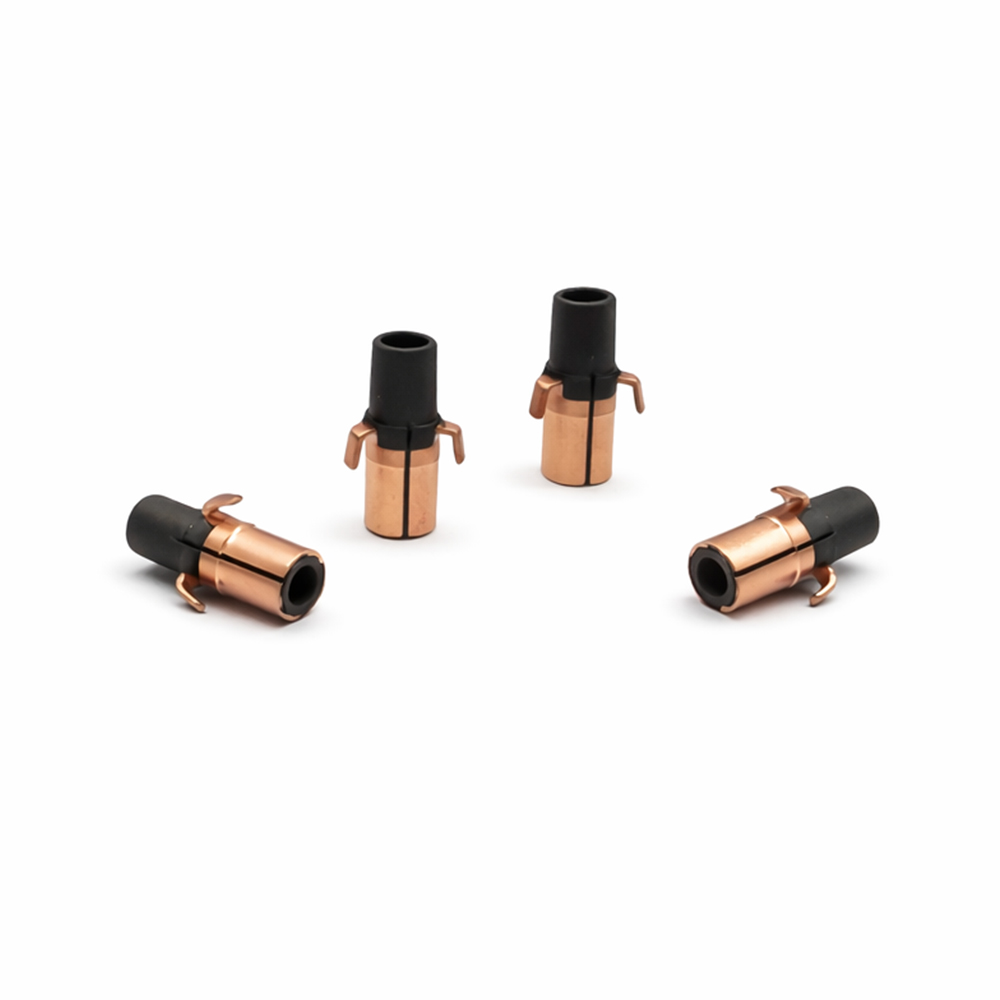
- Built for higher current loads and repeated start-stop cycles
- Reinforced structure options for mechanical integrity
- Durability-focused design for wear resistance and thermal stress
- Suitable for automotive and engine starting system
- Custom configurations for OEM and special-purpose motors
- Application-specific material and insulation combinations
- Stable batch consistency for repeat production programs
- Prototype and volume production supported
Technical Specifications & Capability Range
The values below are reference production ranges commonly used in precision commutator programs. Final values are confirmed during quotation based on drawing, test method, application duty cycle, and customer requirements.
Parameter | Reference Capability / Typical Range |
Outer Diameter (OD) | Ø4.0 mm to Ø150.0 mm |
Inner Diameter (ID) / Bore | Ø1.5 mm to Ø60.0 mm |
Commutator Length | 3.0 mm to 120.0 mm |
Segment Count (Bars) | 3 to 120+ segments |
Structure Type | Hook / Riser / Face / Flat / Right-angle |
Copper Material Options | Cu-ETP (C11000), OFHC (C10200), silver-bearing copper (CuAg0.03 / CuAg0.08 / CuAg0.10) |
Mica Insulation Thickness | 0.2 mm / 0.4 mm / 0.6 mm / 0.8 mm (application dependent) |
Insulation System | Mica + epoxy resin system, thermal class F (155°C), H (180°C), up to 200°C systems |
Brush-Track Surface Finish | Ra 0.4–0.8 μm (or per drawing) |
Runout / Concentricity Control (TIR) | Standard: ≤0.02 mm; Precision: ≤0.01 mm; Special process/fixture target: ≤0.005 mm |
Undercut / Slot Finishing | Per design and brush requirements |
Dynamic Balancing | Available; ISO 21940 balancing grades such as G6.3 / G2.5 (per rotor/application requirement) |
Dielectric Withstand (Hi-Pot) | 500 / 1000 / 1500 VAC, 1 minute, no breakdown (per specified test condition) |
Insulation Resistance | ≥100 MΩ at 500 VDC, room temperature (reference test condition) |
Brush-Track Peripheral Speed | Typical design range up to 35–40 m/s; higher values require application validation |
Brush Current Density | Application-dependent; typical reference range 12–30 A/cm² at brush interface |
Order Type | Prototype / Pilot batch / OEM production |
Final design suitability depends on brush grade, spring pressure, duty cycle, operating speed, cooling conditions, contamination level, humidity, and motor load. Please share your drawing and operating conditions for accurate evaluation.
Materials, Insulation & Engineering Support
Copper Material Selection
We select copper material grades according to electrical conductivity, wear behavior, operating speed, and service life targets.
Common options include:
- Cu-ETP (C11000): Standard high-conductivity copper for general motor applications
- OFHC (C10200): Oxygen-free high-conductivity copper for lower impurity content and high electrical performance
- Silver-Bearing Copper (CuAg0.03 / CuAg0.08 / CuAg0.10): Used in selected high-speed or wear-critical applications to improve strength and brush-track durability
Material selection is confirmed against motor duty cycle, brush grade, current load, and thermal conditions.
Mica Insulation & Resin Systems
Insulation structure is designed to maintain electrical separation between segments while preserving mechanical integrity under rotation, thermal cycling, and vibration.
Typical insulation options include:
- Mica sheet thicknesses: 0.2 mm, 0.4 mm, 0.6 mm, 0.8 mm
- Resin systems selected for thermal classes: F (155°C), H (180°C), and up to 200°C systems
- Insulation configuration adjusted for segment geometry, speed, and assembly constraints
Engineering Review for Custom Projects
For custom designs, we review:
- Motor type and operating profile
- Speed, duty cycle, and load conditions
- Brush material and spring force (if available)
- Space constraints and assembly interface
- Reliability target and expected service interval
This review helps align commutator structure, material selection, and process route before production.
Manufacturing Capabilities
XDC supports commutator production from prototype to OEM volume with process controls focused on dimensional repeatability, brush-track quality, and electrical reliability.
Typical manufacturing processes include:
- Segment forming and assembly preparation
- Mica insulation assembly and resin processing
- Pressing, curing, and structural stabilization
- Precision turning and grinding of brush-track surfaces
- Bore and hub machining for shaft-fit requirements
- Undercutting / slot finishing according to brush and design needs
- Dynamic balancing support for speed-sensitive applications
- Batch process control for repeat-order consistency
Production planning can support prototype, pilot, and repeat supply programs with documented inspection and lot traceability.
Quality Control & Testing
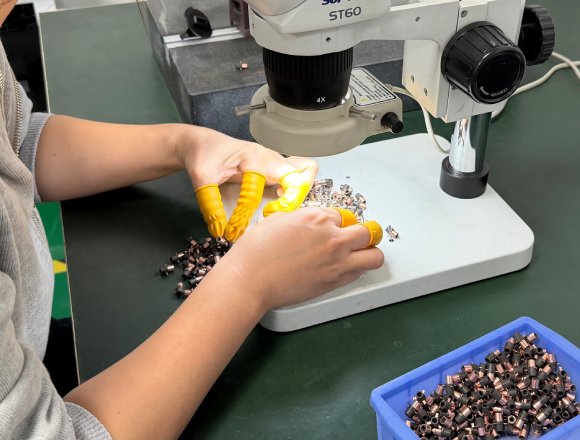
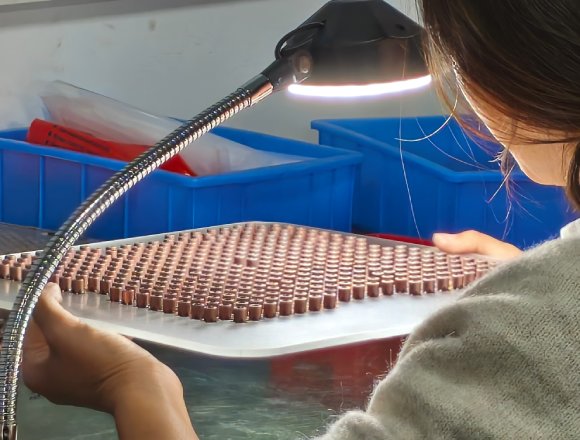
Quality control is integrated into incoming material checks, in-process inspection, and final release inspection. Inspection plans are defined by product type, critical dimensions, and customer requirements.
- Dimensional Inspection: Micrometers, bore gauges, dial indicators, optical comparators/projectors, and CMM support for first-article and critical-dimension verification
- Brush-Track Finish Verification: Surface roughness checks (Ra) according to drawing or internal process standard
- Runout / Concentricity Checks: TIR inspection with precision fixtures and dial indicators for lot verification
- Electrical Checks: Bar-to-bar continuity/resistance screening and insulation withstand (Hi-Pot) testing according to specified test voltage and duration
- Visual Inspection: Segment surface condition, insulation gap quality, burr control, and assembly integrity
- Dynamic Balancing Verification: When required by application or rotor assembly process
Why Choose XDC
Partnering with XDC means lower total cost of ownership: fewer unplanned shutdowns, longer intervals between brush changes, and more stable motor performance.
Specialized focus
XDC is dedicated to commutator technology. Our team has extensive expertise in commutator segment design, brush contact optimization, and DC motor commutation.
Advanced manufacturing
Precision machining, CNC undercutting, fine turning and grinding, and strict process control ensure consistent geometry, low runout, and excellent surface finish.
Comprehensive testing
From insulation resistance and bar-to-bar testing to dynamic balancing and visual surface grading, every unit leaving our factory is validated against demanding criteria.
Global support
As a leading Chinese manufacturer, XDC supplies commutators to customers across Asia, Europe, and the Americas, offering technical support and fast lead times.
Applications of Copper Commutators
Our custom copper commutators are used in motor-driven systems requiring stable current switching, reliable brush contact, and repeatable dimensional performance.
Industrial DC drives
Industrial DC drives for rolling mills, hoists, cranes and winches
DC Generators and Dynamos
DC generators and dynamos in power, marine and backup systems
Universal motor drives
Universal motor drives in power tools, vacuum cleaners and household appliances
Traction motors & DC motors
Railway traction motors and auxiliary DC motors
Starter Motors & Auxiliary Drives
Automotive starter motors and various auxiliary drives
Get a Quote for Your Copper Commutator
Ready to upgrade your DC or universal motor with a high-performance copper commutator from XDC?
Please provide your commutator drawings and inform us of any additional requirements for the product, and we will recommend an optimized design including segment count, dimensions, brush grade, and operating limits. Whether you require a single prototype or high-volume OEM production, XDC is ready to support you.
Get in touch with XDC today to discuss your project, request a quotation or schedule a technical consultation with our application engineering team.
+86 17820674273
Address
Taixing Science and Technology Park, No. 3 Taixing Road, Dongguan City, Guangdong Province
FAQ – Copper Commutators from XDC
The fastest way is to send a drawing or CAD file with OD, ID, length, segment count, structure type, and application details. If no drawing is available, send photos, dimensions, motor type, operating speed, duty cycle, and quantity. Sample-based evaluation is also supported.
Yes. We can review physical samples and evaluate key dimensions, structure type, and manufacturability. For critical applications, final production should be confirmed with a drawing and tolerance requirements.
Yes. Prototype and pilot batches are supported before OEM volume production. This is commonly used for R&D validation, replacement part confirmation, and process qualification.
Service life depends on brush grade, current load, spring pressure, operating speed, duty cycle, cooling, humidity, contamination, and alignment. Correct matching between commutator design and brush system is essential for wear control and stable commutation.
Yes, depending on commutator structure, material grade, balancing requirement, and brush system match. As a reference, many brushed designs target brush-track peripheral speeds up to 35–40 m/s, while higher-speed applications require specific validation.
Common options include Cu-ETP (C11000), OFHC (C10200), and silver-bearing copper grades such as CuAg0.03, CuAg0.08, and CuAg0.10, depending on performance and application requirements.
We typically use mica-based insulation with epoxy resin systems. Common thermal classes include F (155°C) and H (180°C), with higher-temperature systems available for selected applications.
Typical tests include bar-to-bar continuity/resistance checks and Hi-Pot insulation withstand tests. Reference Hi-Pot levels often include 500 VAC, 1000 VAC, or 1500 VAC for 1 minute, depending on design and customer specification.
We accept PDF, DWG, STEP, IGS, X_T, SolidWorks, and ZIP files.
Initial technical response is typically provided within 12 hours. Quotation speed depends on drawing completeness, application detail, and whether material or design review is required.
A commutator uses segmented conductive bars and brush contact to mechanically switch current in rotating electrical systems such as brushed DC and universal motors. Slip rings use continuous rings to transmit power or signals without commutation and are used for different rotating transfer functions.
Related Resource
At XDC, we share our deep insights into commutators, manufacturing processes, and industry experience on our blog. We invite you to explore these articles to learn more about our expertise.
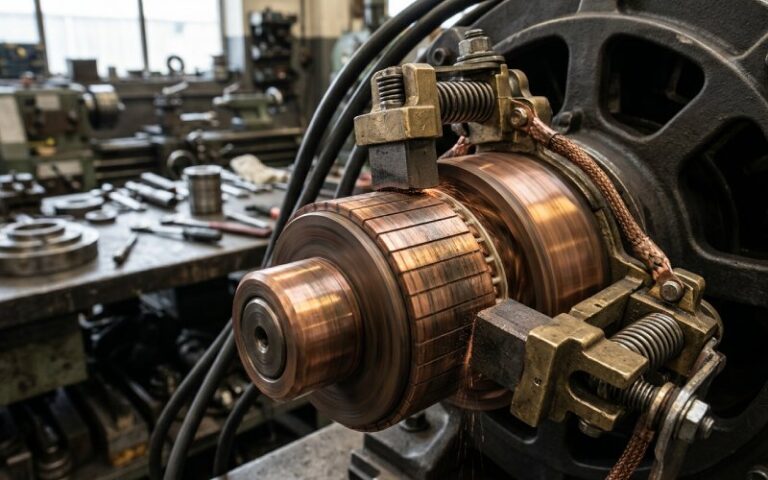
Commutator Sparking and Wear: Why Brushes Must Align With the Motor Neutral Plane
The motor neutral plane is the running position where the coil under the brush can reverse current with the…
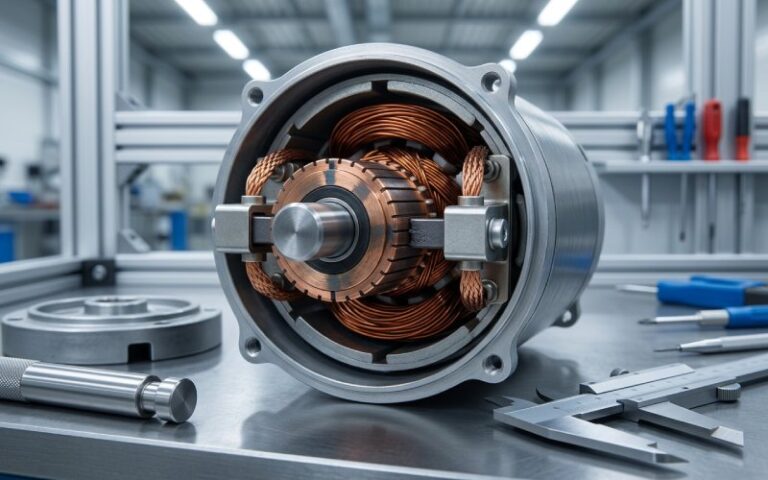
DC Motor Squealing Noise: Is It the Carbon Brush or the Commutator?
When a DC motor starts squealing, most people replace the brushes first. Sometimes that works. Sometimes the noise goes…
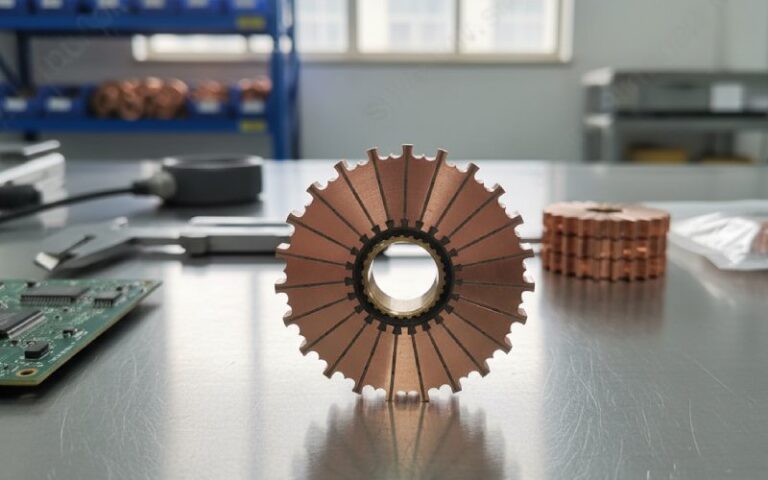
How to Check a Commutator for Roundness or Runout
Most bad readings start before the indicator touches copper. That is usually the whole job, really. Not the gauge.…