What Are Compensating Windings and How Do They Help Commutation?
TL;DR
- Compensating windings do not replace interpoles. They cancel armature reaction under the pole face. Interpoles handle the reversing emf needed during current reversal.
- Their real value shows up at the commutator. Less flux distortion means a steadier neutral zone, less erratic sparking, and less surface stress on the commutator.
- They matter most in hard-duty DC machines. Think heavy load swings, weak-field operation, reversing duty, traction service, rolling mills, hoists. Places where “good enough” commutation usually stops being good enough.
Table of Contents
If the Motor Starts Sparking Under Load, This Is Why the Topic Matters
A lot of DC machines look fine at light load. Then the current rises. Or the load changes fast. Or the machine reverses hard.
That is when the commutator starts telling the truth.
You may see:
- brush sparking that gets worse during load swings
- blackened or uneven commutator film
- hot brush arms or unstable brush contact
- bar-edge marking, dragging, or localized surface distress
- a machine that behaves acceptably at one load point and badly at another
At that stage, brush grade is not the only question. Neither is brush position.
Sometimes the missing piece is magnetic. More specifically, pole-face armature reaction.
What a Compensating Winding Actually Does
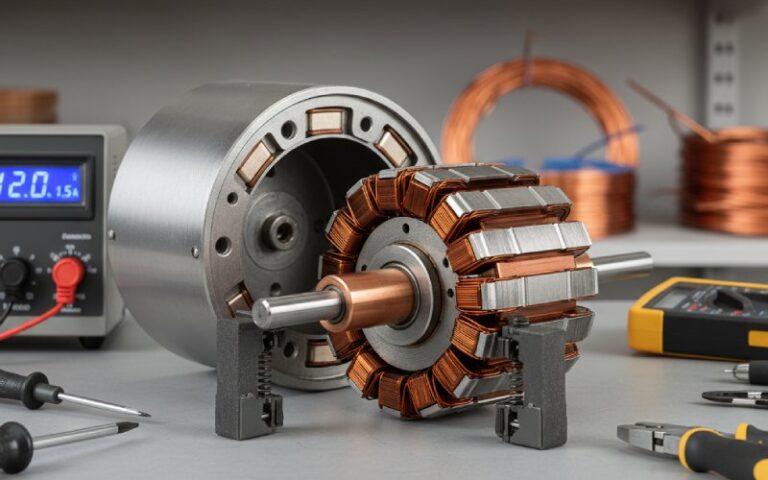
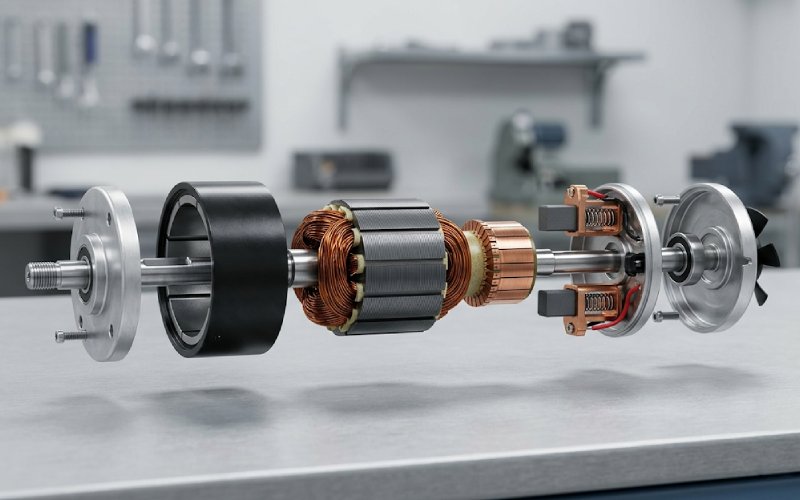
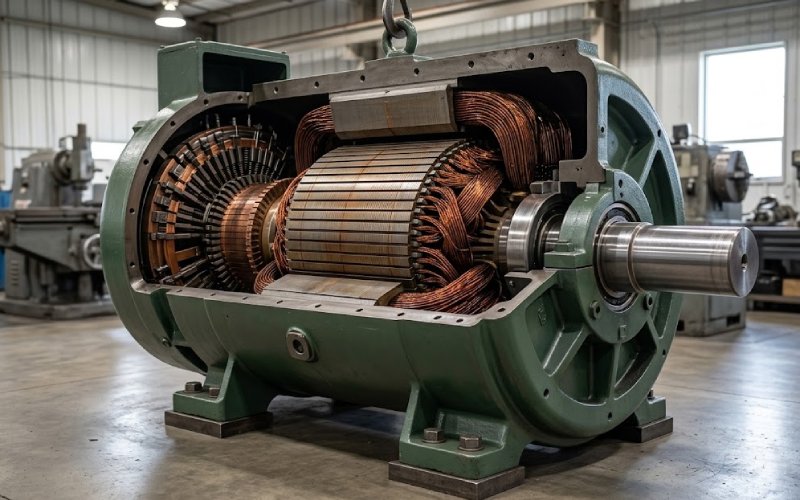
A compensating winding is a winding embedded in slots in the main pole faces and connected in series with the armature.
That location is the whole point.
It is not there to create a general-purpose field boost. It is there to oppose the armature mmf directly under the pole face, where the main flux gets bent out of shape when armature current rises.
So the effect is local. And practical.
Instead of letting one pole tip crowd with flux while the other weakens, the compensating winding pushes back against that distortion. The pole-face flux stays flatter. The neutral zone moves less. Commutation gets a cleaner magnetic environment to work in.
Not perfect. Cleaner.
How Compensating Windings Help Commutation
They help commutation by removing one of the conditions that makes commutation unstable.
That distinction matters.
During commutation, the short-circuited coil still has to reverse current. Its self-inductance resists that reversal. That part is why interpoles exist. They supply the commutating emf needed to overcome reactance voltage.
Compensating windings do something different:
- they reduce flux distortion under the pole face
- they limit neutral plane shift as load changes
- they reduce the extra induced effects caused by a badly distorted air-gap field
- they make brush position less sensitive to load variation
So no, a compensating winding does not do the interpole’s job.
It makes the interpole’s job possible over a wider, rougher operating range.
Compensating Winding vs Interpoles vs Brush Shift
| Item | Compensating Winding | Interpoles | Brush Shift |
|---|---|---|---|
| Main purpose | Cancel pole-face armature reaction | Assist current reversal in the short-circuited coil | Place brushes near the intended neutral zone |
| Physical location | In slots on the main pole face | Between main poles | At the commutator |
| Electrical connection | Series with armature | Series with armature | Mechanical adjustment only |
| Best at solving | Flux distortion under the pole arc | Reactance voltage during commutation | Fixed-load alignment |
| Weak point | Does not replace commutating emf | Does not flatten the whole pole-face flux distribution | Becomes unreliable when load changes widely |
This is where a lot of people flatten the story too much.
A machine with interpoles but poor pole-face compensation can still behave badly under violent load change.
A machine with compensation but weak commutating action can still spark.
Both can be true.
Why Series Connection Matters
The compensating winding is connected in series with the armature for a simple reason: the disturbance being corrected is created by armature current.
Current goes up, armature reaction goes up.
Compensating current goes up too.
That tracking is the feature. Without it, the winding would be late, mismatched, or useful only at one operating point.
In real duty, that would be almost useless.
Where Compensating Windings Are Usually Needed
They are usually justified in machines where armature reaction stops being a side issue and starts shaping commutator behavior directly.
Typical cases include:
- Rolling mill drives with steep load changes and repeated current surges
- Traction motors where load, speed, and current do not stay polite for very long
- Mine hoists and heavy reversing drives where direction changes and overloads punish the commutator
- Large DC motors running with weak field where the armature field becomes too influential
- Any high-inertia, high-dynamic-duty machine where stable commutation has to survive transitions, not just steady-state operation
Small DC machines often get by without compensating windings.
Large, hard-worked machines often do not.
What Changes at the Commutator When Compensation Is Right
The first thing that improves is not theory. It is behavior.
You tend to get:
- less load-sensitive sparking
- a more stable neutral zone
- better brush contact conditions across changing duty
- lower risk of commutator surface damage driven by poor magnetic balance
- less chance that a healthy commutator gets blamed for a field-distribution problem
That last one matters in maintenance work.
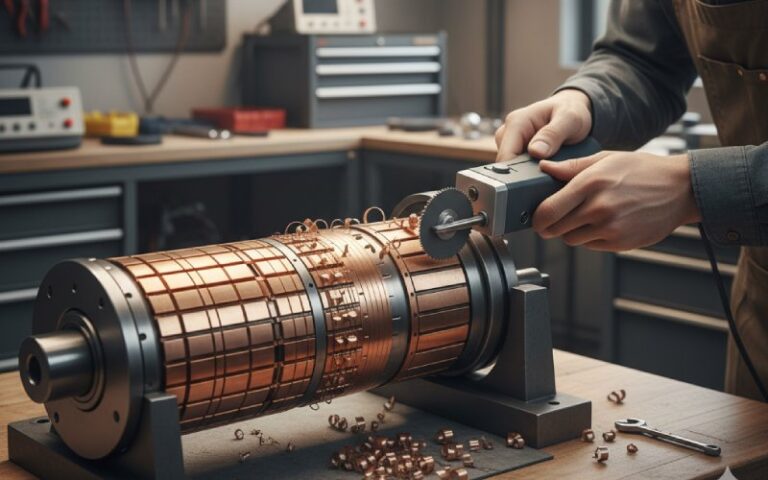
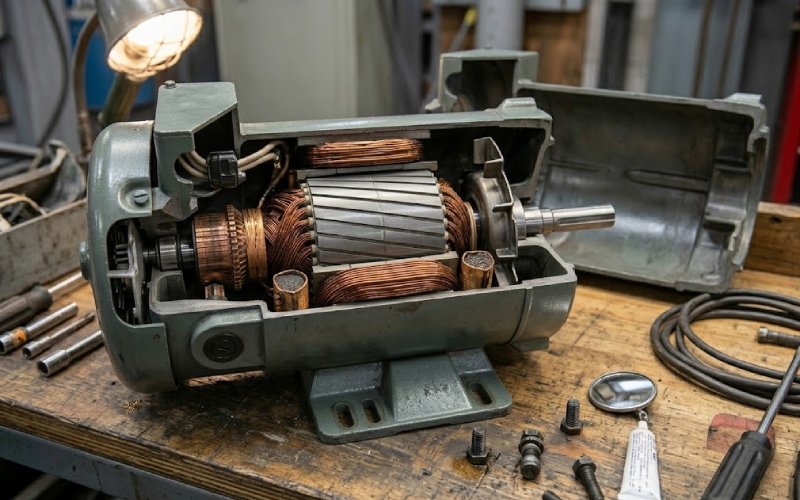
A commutator can be machined, stoned, undercut, cleaned, and still keep misbehaving if the magnetic conditions during commutation are wrong.
The surface is where the damage shows. It is not always where the fault begins.
Common Symptoms of Poor Compensation
If compensation is inadequate, open-circuit, wrongly connected, or badly matched to duty, the symptoms usually show up as operating instability rather than a single neat failure sign.
Look for patterns like these:
1. Sparking that grows with load, not just with speed
If the machine is calm at light current but breaks down as armature current rises, pole-face armature reaction should be on the list.
2. Brush position becomes annoyingly sensitive
A machine that seems to want a different brush setting at different loads is often telling you the neutral zone is moving too much.
3. Commutator distress concentrates after rapid load change or reversal
That is a common clue in reversing mills, traction duty, and hoisting service.
4. Interpoles seem “correct,” but commutation is still not clean
That can happen when the coil reversal support is present, but the main-pole flux distribution is still badly distorted under load.
5. Surface symptoms keep returning after routine commutator maintenance
If the surface gets cleaned up and the same pattern returns, stop treating it as a surface-only problem.
Practical Design Notes Engineers Usually Care About
A few points matter more than the usual broad definitions.
- Compensating windings are aimed at the armature effect under the pole arc. Not across the whole machine in some vague sense.
- They are mainly about cross-magnetizing armature reaction under load. That is the troublemaker here.
- They do not eliminate the need for interpoles. Current reversal still has to be forced through the short-circuited coil properly.
- They add copper, pole-face slotting, cost, and complexity. So they are used where the duty justifies them.
- They are a system choice, not a decorative one. Pole design, armature current level, field strength, duty cycle, and commutator requirements all sit in the same chain.
This is why retrofits are not always simple.
Adding or removing compensation changes more than one thing.
A Useful Rule of Thumb
If the machine lives at steady load, modest current swing, and mild commutation conditions, interpoles and correct brush setup may be enough.
If the machine lives in overloads, reversals, current shocks, weak field, or repeated transients, compensating windings stop being optional theory and start becoming commutator insurance.
Not cheap insurance. Still insurance.
Why This Matters for Commutator Life
A commutator does not fail in isolation.
Poor magnetic compensation can lead to:
- repeated arcing at the brush contact zone
- uneven film formation
- local overheating at bar edges
- accelerated brush wear
- rising maintenance frequency
- progressive damage that gets misread as a materials issue alone
That is why commutator performance cannot be judged only by surface finish or brush grade.
If the magnetic side is unstable, the commutator becomes the visible casualty.
Final Take
Compensating windings help commutation because they keep the main-pole flux from becoming unstable under armature load.
That is the clean version.
They do not replace interpoles. They do not magically erase reactance voltage. They do not fix every sparking problem. But in large DC machines with severe duty, they remove the field distortion that keeps turning normal commutation into a maintenance problem.
And once that distortion is gone, the commutator has a fair chance to do its job.
If your machine is showing persistent sparking, repeated commutator surface damage, or unstable brush behavior under changing load, the right next step is not always another brush adjustment. Sometimes the real question is whether the electromagnetic conditions around the commutator are correct at all.
If you are tired of premature commutator wear caused by heavy dynamic loads, Contact Our Engineering Team to ensure your next rebuild survives the field.
FAQ
What is the purpose of a compensating winding in a DC machine?
Its purpose is to cancel armature reaction under the pole face so the main flux distribution stays more stable and commutation becomes less load-sensitive.
How is a compensating winding different from an interpole?
A compensating winding corrects pole-face flux distortion. An interpole helps reverse current in the short-circuited coil during commutation. They work together, but they are not the same thing.
Are compensating windings necessary in all DC motors?
No. They are mainly used in larger or more heavily stressed DC machines where load changes, reversing duty, weak-field operation, or overloads make armature reaction severe.
How do compensating windings reduce commutator sparking?
They reduce the flux distortion and neutral-zone movement caused by armature current. That gives the commutator a more stable magnetic condition, which reduces one major cause of load-dependent sparking.
Can interpoles alone solve commutation problems?
Sometimes, in moderate duty. Not always in heavy-duty or fast-changing service. If the pole-face flux becomes badly distorted, interpoles alone may not keep commutation stable across the full load range.
What are the signs of poor compensation in a DC machine?
Common signs include sparking that worsens with load, unstable brush setting, recurring commutator surface distress, and commutation problems that return even after routine maintenance.
Do compensating windings improve commutator life?
Yes, indirectly. They reduce magnetic conditions that drive arcing, uneven film, and surface stress. That can lower wear and reduce repeated damage to the commutator and brushes.
Are compensating windings used in generators as well as motors?
Yes. The same armature-reaction problem exists in DC generators too, especially in larger machines or machines with demanding operating conditions.