Appliance Motor Commutators: Where They Are Still Used and What OEM Buyers Should Check
Not every home appliance motor still deserves a commutator. That part is settled. In current appliance programs, commutators stay where very high speed, hard starting torque, compact packaging, and low-cost control still matter. They fade out where long duty, lower audible noise, and efficiency targets take over the design brief.
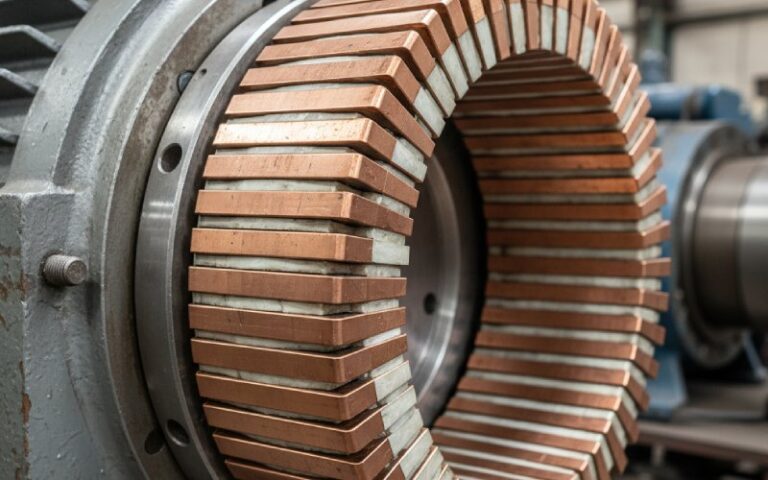
For OEM teams, the real question is not whether commutators are old or new. It is whether the motor duty cycle still favors a universal or brushed architecture. When the answer is yes, the commutator stops being a commodity part very quickly. Bar geometry, molded body strength, runout, brush-track stability, segment insulation, overspeed retention. Those details start deciding service life.
Table of Contents
Where commutators still make sense in modern home appliances
| Appliance category | Typical motor architecture | Why a commutator still survives here | What OEM buyers should check first |
|---|---|---|---|
| Vacuum cleaners | Universal motor | Very high speed, strong suction from a compact package, simple control | Overspeed retention, runout, brush bounce, EMI, molded body strength |
| Blenders, mixers, grinders, food processors | Universal motor | Strong starting torque, repeated start-stop duty, sharp load changes | Copper bar profile, brush-track stability, stall-current stress |
| Hair dryers and airflow appliances | Brushed DC or universal motor in cost-sensitive platforms | Compact package, simple drive, cost control | Heat, brush dust path, surface finish, indoor-use particle behavior |
| Some washing machines and washer-dryers | Collector motor in legacy or cost-driven platforms | Wide speed range without a more complex drive stack | Noise, brush wear, longer duty-cycle stability |
| Robot vacuums and small auxiliaries | Small brushed DC motors | Low power, simple H-bridge control, compact integration | Current spikes, frequent starts, life consistency, low-cost manufacturability |
This application map follows the way universal, brushed, and brushless motor architectures are currently used across home appliances: commutators remain strong in high-speed and intermittent-duty products, while many variable-frequency main drives have shifted toward brushless solutions.
Vacuum cleaner motor commutators: still a high-speed application
Corded vacuum cleaners are still one of the clearest homes for a universal motor commutator. The reason is plain enough. A vacuum motor has to produce strong airflow from a tight motor-fan package, and universal motors can run far above the speed limits that shape ordinary line-frequency motor thinking. They are also easy to control with low-cost electronics, which is why this architecture keeps showing up where price and power density both matter.
In our factory reviews, vacuum cleaner motor commutator projects are rarely about copper alone. We look at overspeed retention, segment geometry, molded body integrity, and roundness control early. A commutator that is merely acceptable at bench speed can become noisy and unstable once brush bounce, high peripheral speed, and thermal growth start stacking up. Out-of-round surfaces, high mica, and poor surface condition all show up fast at the brush interface.
There is also a newer filter on the discussion. Indoor-use appliances are being judged more closely for particle behavior around the motor system, not just suction or acoustic output. Brushed motor systems can contribute more particles than brushless ones, so the commutator, the brush system, and the airflow path should be reviewed together, not as separate purchasing items.
Blender, mixer, grinder, and food processor commutators: high torque at ugly startup
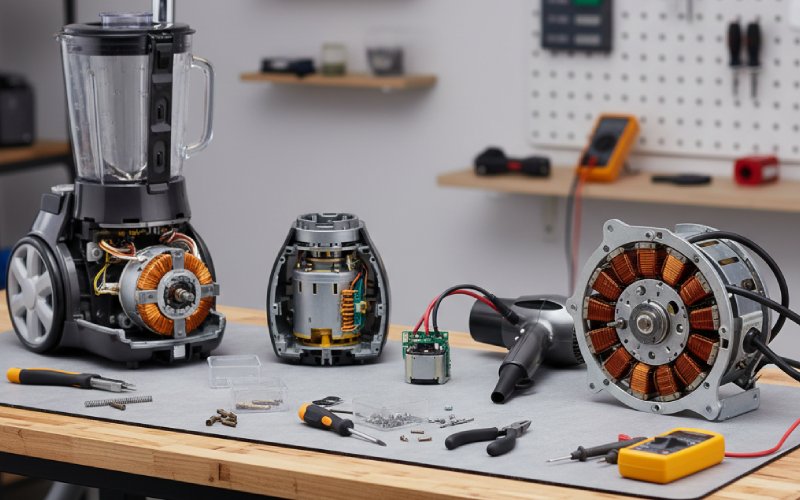
Kitchen appliances are still solid commutator territory. Not because they are simple. Because they are not. A blender motor commutator or mixer motor commutator sees repeated start-stop duty, abrupt load changes, occasional near-stall events, and short thermal cycles that are not especially forgiving. Universal motors remain common here because they give high starting torque and high speed from a compact, low-cost package.
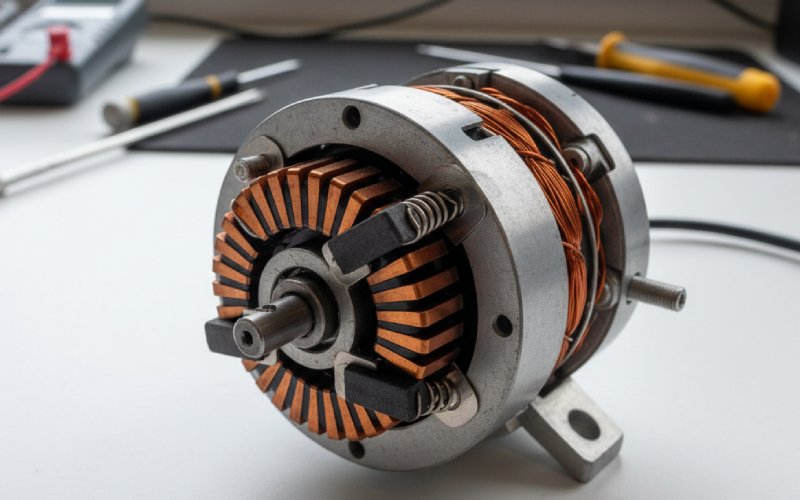
This is usually where OEM discussions become more specific. We may review hook type commutator, slot type commutator, or riser-connected structures depending on winding method, production flow, and mechanical retention target. Hooked segment designs are widely used where winding connection efficiency matters in smaller motor programs. Slot-type structures enter the discussion when mechanical strength and overspeed performance need more attention.
For this product family, the worst sourcing mistake is to specify the appliance motor commutator from wattage alone. That misses the whole point. The real stress comes from startup current, duty repetition, paste-like loads, blade shock, and how the brush actually rides the track after hundreds of aggressive cycles. Current density, sliding speed, contact pressure, and arcing all affect wear. Not evenly either.
Hair dryer commutators and other airflow appliances: still used, but under more pressure
Hair dryers and similar airflow appliances still use commutated motor systems in many cost-sensitive designs. The architecture remains attractive for compact packaging and simple control. That said, this category sits close to the user, so noise, brush wear, and particle behavior matter more than they do in many hidden motor applications. Premium programs have been moving faster toward brushless layouts for that reason.
When we review a custom commutator for home appliances in this segment, we pay unusual attention to surface finish, brush dust path, thermal stability of the molded body, and the consistency of the segment track after heat exposure. It is not enough for the motor to run. It has to stay controlled in a product that the end user holds close, often for repeated daily use.
Washing machine commutators: not gone, just not the default answer anymore
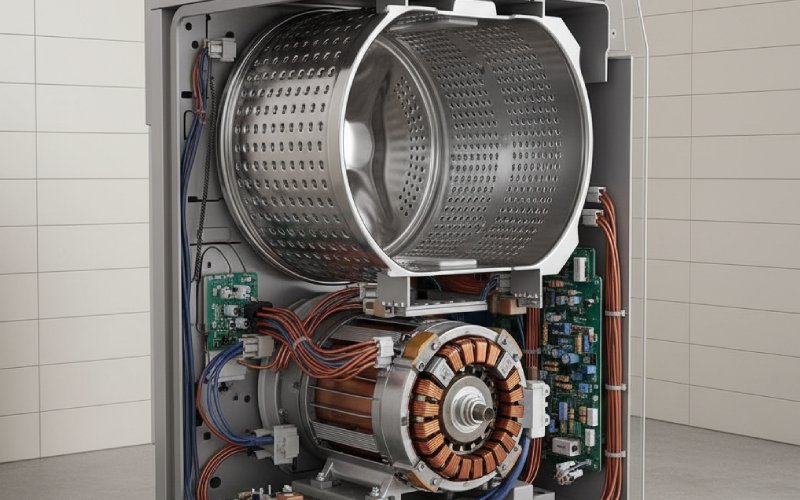
A washing machine commutator is still relevant in part of the market, especially in older platforms and cost-driven collector-motor layouts. But the center of gravity in variable-frequency home appliances has shifted toward brushless main drives. Washing machines, refrigerators, and air conditioners have all moved that way in a large share of current designs because brushless motors help on efficiency, noise, and maintenance-related wear.
So for laundry products, we treat commutators as a segmented opportunity, not a universal answer. That distinction matters in sourcing. A legacy platform may need a stable, cost-controlled replacement structure. A new premium platform may not need a commutator at all. Pretending otherwise wastes development time.
Robot vacuums and small appliance auxiliaries: the quiet second market
This part gets missed. A lot.
Even where the main drive moves toward brushless, many small auxiliaries still stay brushed. In robot vacuum designs, side brushes and other low-power motion channels are often built around compact brushed motors with simple driver circuits. For lower-power motors, the extra time and cost of a BLDC development path do not always make sense. That logic extends beyond robot vacuums into other appliance subassemblies as well.
For a commutator manufacturer, this second market is important. These programs may not use large collector motors, but they still require stable quality in miniature or low-power brushed architectures. Consistency matters more than headline power. The OEM usually wants fewer surprises in sampling, fewer life-test deviations, and simpler electronics.
What we actually change on a custom appliance commutator
1) Copper bar geometry is not a small detail
Repeated stall current in a mixer does not attack the commutator in the same way as very high no-load speed in a vacuum motor. The bar profile, edge condition, and segment geometry should be set against the real duty cycle. Not against a generic motor label. Wear behavior shifts with current density, sliding speed, pressure, and arc activity, so the copper design has to reflect the actual stress pattern.
2) Molded body strength and retention have to match overspeed risk
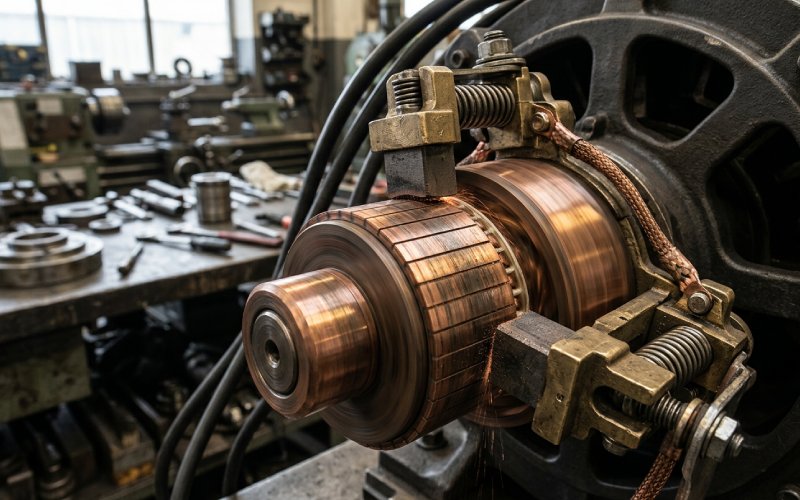
For high-speed universal motor commutator programs, the molded body is not just there to hold shape. It has to keep segment retention stable under heat, centrifugal force, and repeated thermal cycling. Depending on the structure, reinforcing features and segment locking methods become part of the reliability discussion much earlier than many buyers expect.
3) Runout, surface finish, and mica control decide whether the brush rides cleanly
A technically correct drawing can still fail in use if the brush sees an unstable track. Excessive runout, roughness errors, high mica, or localized surface defects can lead to chatter, sparking, noise, and accelerated wear. This is one of the reasons we never treat commutator finishing as a secondary process. It is part of performance.
4) Brush grade, spring pressure, and commutator design must be reviewed as one system
A strong commutator with the wrong brush system is still the wrong design. Mechanical wear changes with interface speed and pressure. Electrical wear changes with current and commutation quality. That is why we ask for brush specification, duty cycle, and speed range before freezing a custom commutator drawing. We are not trying to collect extra data. We are trying to avoid a predictable life problem.
Two engineering patterns we see again and again
In high-speed vacuum cleaner motor commutator projects, the visible symptom is often sparking or rising brush noise late in endurance testing. The root cause is usually less dramatic than buyers expect: roundness drift, inconsistent segment edge condition, unstable brush contact at speed, or retention margins that looked acceptable only at the beginning of the test. High-speed programs punish small mechanical mistakes.
In blender and grinder programs, the more common pattern is early copper wear or unstable commutation after repeated heavy-load starts. The motor is not running in a smooth laboratory load band. It is being hit with current spikes, abrupt torque demand, and short cooling intervals. In those programs we usually go back to copper bar profile, spring pressure, brush-track stability, and whether the selected commutator structure really fits the winding and duty profile.
What OEM buyers should send before asking for a quotation
If the target is a reliable custom appliance commutator, the minimum useful package is simple: motor type, rated voltage, speed range, duty cycle, brush grade, spring pressure, armature drawing, and the actual appliance load pattern. For vacuum cleaner motor commutators, overspeed target matters. For blender motor commutators, stall and restart behavior matter more. Same product family, different failure map.
If your project is seeing premature brush wear, unstable commutation, overspeed concerns, or inconsistent life-test results, send us your motor drawing and duty-cycle data. We review the commutator as a system part — structure, copper, molding, finish, and brush interface together — so the sampling discussion starts from the real operating condition, not from a catalog shortcut.
FAQ
Are commutators still used in modern home appliances?
Yes. They are still widely used in high-speed or intermittent-duty products such as vacuum cleaners, blenders, mixers, grinders, and a range of small brushed auxiliaries. They are much less dominant in variable-frequency main-drive appliances, where brushless solutions now take a larger share.
Which appliance category still depends most on universal motor commutators?
Vacuum cleaners and many kitchen appliances remain the strongest examples. Vacuum cleaners need compact high-speed output. Blenders, mixers, and grinders need aggressive starting torque and tolerate the cost structure of a universal motor better than many long-duty appliances do.
What is the difference between a hook type commutator and a slot type commutator?
In practical OEM work, hook type commutators are often discussed where winding connection efficiency and smaller motor production flow matter. Slot type commutators are more likely to enter the conversation when mechanical strength and overspeed performance need closer review. The right choice depends on the winding method, rotor structure, and operating stress.
Are washing machines still using commutators?
Some are. Especially older or cost-driven collector-motor platforms. But many modern variable-speed washing machine programs now use brushless main drives because they help with efficiency, lower noise, and reduced brush-related wear.
What should an OEM check before choosing a commutator manufacturer?
Do not stop at outer diameter and segment count. Check duty cycle, overspeed target, current density, brush grade, spring pressure, molded body strength, runout, surface finish, and the actual appliance load profile. A commutator drawing that ignores those inputs usually creates trouble later in life testing.