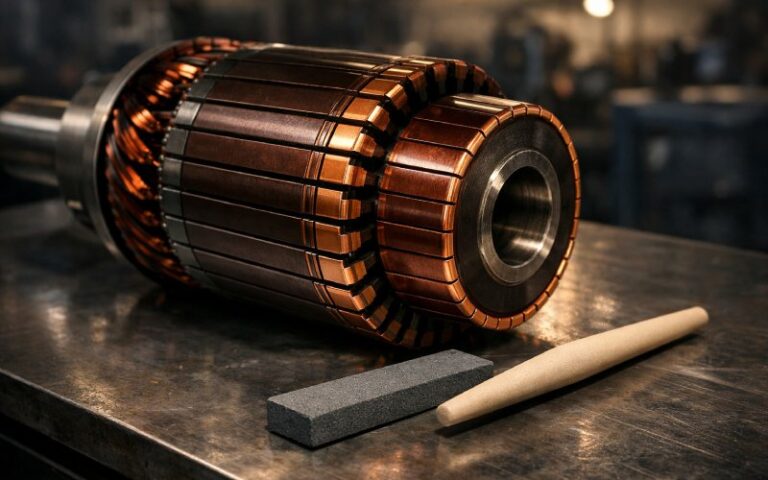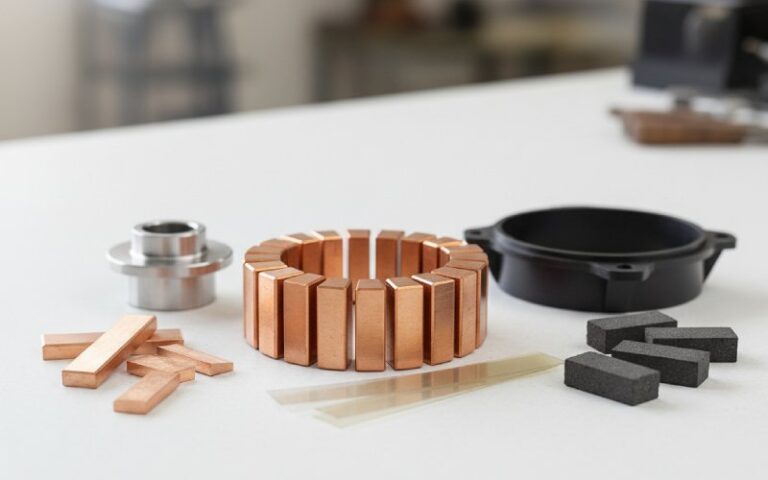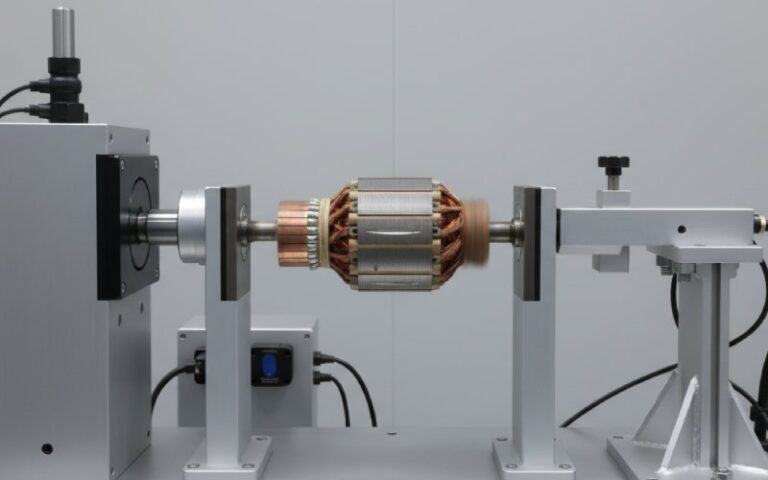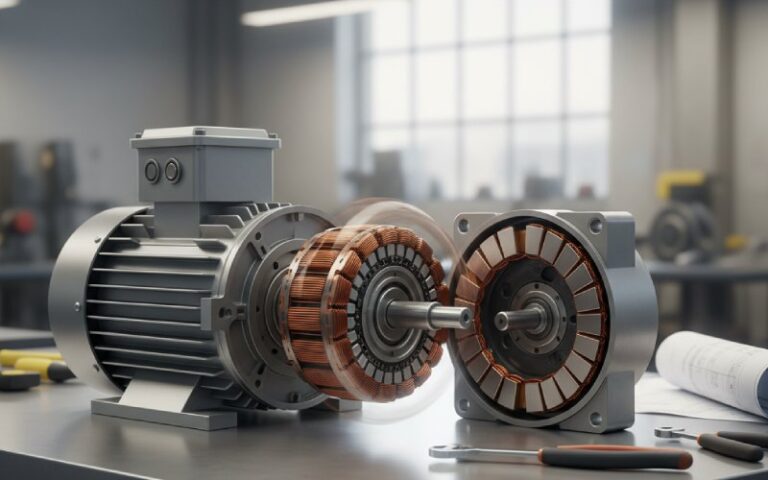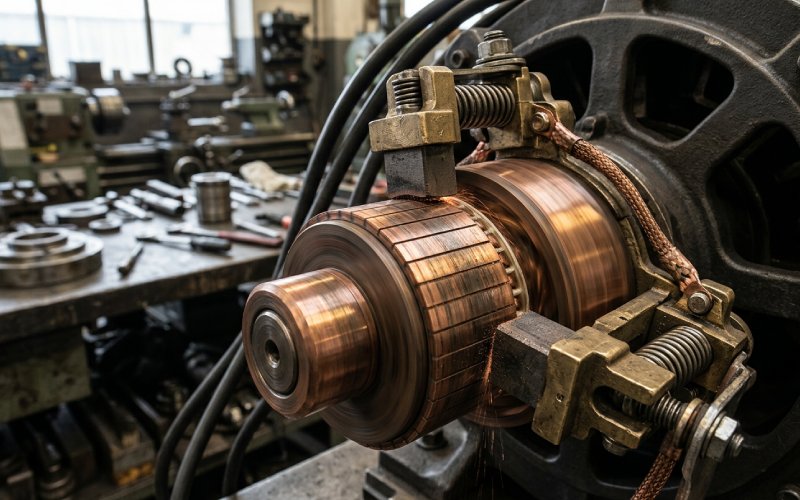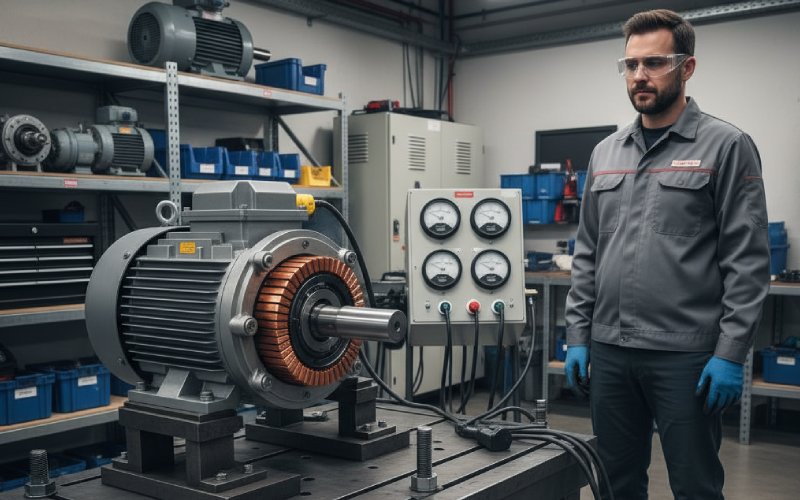
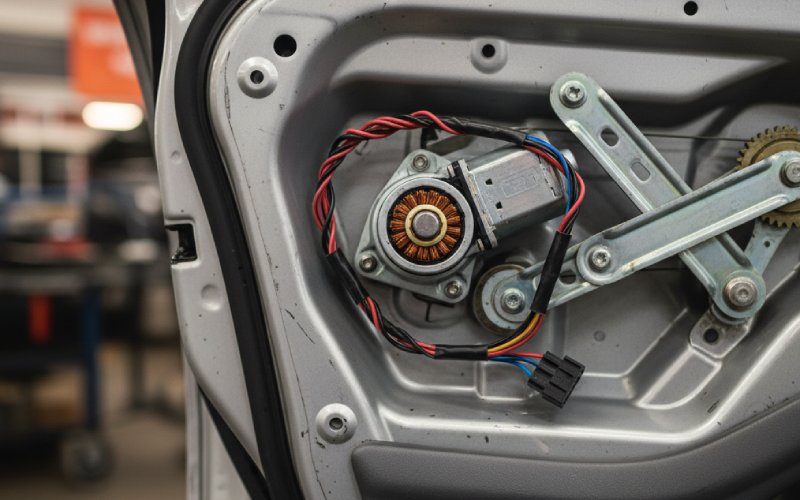
Automotive DC Motor Commutators for Window Lifts, Fans, and Pumps
In automotive auxiliary motors, the commutator is rarely the biggest part. It is often the part that decides whether the whole motor gets approved, returned, or quietly replaced six months later.
We see this in three product families again and again: window lift motors, fan motors, and pump motors. Same basic interface. Not the same operating reality.
A commutator that behaves well in a fan motor can become unstable in a window lift. A design that survives short intermittent duty can break down faster in a pump application where restart current, switching condition, and surface film behavior are less forgiving. That is where many projects go wrong. The drawing looks correct. The motor still fails in the field.
As a custom commutator manufacturer, we do not treat these applications as minor variations of one standard part. We build around the load pattern, the switching condition, the brush pair, the assembly tolerance, and the actual failure risk the customer is trying to eliminate.
Table of Contents
Why Commutator Quality Determines Automotive DC Motor Lifespan
In automotive DC motors, early failure is usually blamed on the brush, the armature, or the load. Sometimes that is true. But when we tear down failed units, the commutator surface tells the story faster than most electrical reports do.
A healthy commutator does not only conduct current. It has to switch cleanly, stay dimensionally stable, resist edge damage, support a stable contact film, and keep that behavior after repeated start-stop cycles. If one of those conditions drifts, the symptoms move outward:
- unstable current ripple
- abnormal acoustic tone
- hard restart
- rising brush wear
- local burning at segment edges
- uneven track formation
- intermittent torque drop
Not every customer sees these as “commutator problems” at first. A window system may report anti-pinch errors. A cooling fan may pass basic electrical checks but fail on noise. A pump may start showing unstable restart after thermal exposure. Different complaint. Same root zone.
That is why commutator design should not be handled as a late-stage copper part decision. It belongs much earlier, while the motor is still being defined.
Common Commutator Failure Modes in Automotive Motors
For automotive projects, we pay attention to failure patterns that look small during sampling and expensive during volume production.
1. Bar-edge burning
This usually shows up when switching is too aggressive for the geometry, the brush match, or the operating current. The damage starts locally. Then it spreads. Once that happens, contact quality tends to get worse quickly, not gradually.
2. Uneven film formation
A commutator surface does not need to look bright to be healthy. It needs to look stable. Patchy film, streaking, dark local zones, or irregular track width usually mean the contact system is drifting.
3. Excessive radial runout effect
Low radial runout matters more than many buyers expect. In automotive motors, especially window lifts and fan motors, small mechanical inconsistency can become electrical instability, then noise, then control trouble.
4. Segment-to-segment inconsistency
Not every field problem is caused by material grade. Poor consistency between segments, insulation variation, or edge condition variation can create switching differences around the circumference. That is enough to disturb ripple behavior and wear balance.
5. Brush compatibility mismatch
A good commutator can still fail with the wrong brush pair. Contact resistance, film build-up, wear rate, and commutation stability are all tied to the brush system. We review them together. Always.
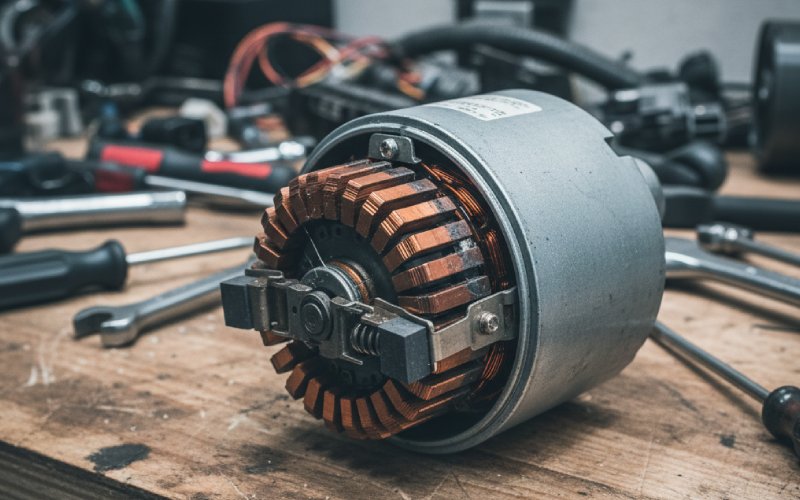
Window Lift, Fan, and Pump Motors Do Not Need the Same Commutator Strategy
A lot of supplier mistakes come from using one commutator logic across all auxiliary motor platforms. That saves time at quotation stage. It costs time later.
Here is how we separate them in practice.
| Application | Typical operating pattern | Main commutator risk | What we optimize first | What customers usually notice first |
|---|---|---|---|---|
| Window lift motor | Frequent start-stop, reversal, short high-load movement | Ripple instability, edge damage, contact inconsistency during reversal | Segment geometry, runout control, stable brush seating in both directions | False anti-pinch events, speed fluctuation, intermittent noise |
| Fan motor | Long running time, higher speed, thermal cycling | Acoustic tone growth, track instability, wear spread over time | Surface consistency, brush stability at speed, edge condition control | Noise complaint, performance drift after heat exposure |
| Pump motor | Repeated restart, compact motor package, harsher switching condition | Local arc damage, blackened segments, restart instability | Material matching, switching stability, damage containment at segment edges | Hard restart, current increase, shorter service life |
That table looks simple. Real projects are not. Still, this is where the technical direction should start.
Window Lift Motor Commutators: Stable Ripple Matters More Than People Admit
Window lift motors are not judged only by whether the glass moves. They are judged by how repeatably the motor behaves during short travel, reversal, stall approach, and obstruction events.
In this application, the commutator affects more than wear life. It can influence current signature quality. That matters because many motor control strategies read motor behavior through current change, not through generous sensing hardware.
So for a window lift commutator, we focus on:
- stable segment transition
- clean bar-edge condition
- controlled runout
- balanced switching under clockwise and counterclockwise operation
- brush contact behavior that does not drift too early with use
This is not where we chase “maximum conductivity” as a slogan. We chase repeatability. If the ripple signature starts moving around, the customer may see control issues before they see obvious electrical failure.
Fan Motor Commutators: Noise Is Usually the First Warning
Fan motors expose weak commutator design by repetition. High speed. Long cycles. Hot environment. Very little forgiveness for tonal instability.
In these programs, the commutator has to stay boring. That is the target.
When the track develops unevenly, or the edge condition is too sharp for the brush system, or the contact starts to flutter at speed, the motor often does not fail immediately. Instead, it becomes noisy. Then rougher. Then less stable over time.
For automotive fan motor commutators, we usually give priority to:
- uniform segment finish
- controlled edge geometry
- dimensional consistency through the full ring
- brush compatibility under high-speed contact
- surface stability after thermal cycling
A fan motor that looks acceptable at room temperature can change character after heat exposure. We account for that during validation. A bench result from one cold run is not enough.
Pump Motor Commutators: Restart Stability Is a Hard Filter
Pump motors are where generic commutator assumptions break apart.
The electrical load is different. The restart demand is different. The damage pattern is often more concentrated. Once local segment damage reaches a certain level, the switching condition gets worse faster than expected. Not linearly. That is the dangerous part.
For custom pump motor commutators, we review:
- segment width relative to brush contact pattern
- local heat concentration risk
- copper and insulation integrity around repeated switching
- resistance to progressive edge damage
- brush-commutator pair stability over actual duty, not nominal duty
If a pump motor project already has hard restart, abnormal current rise, or blackened segment zones, we do not treat that as a cosmetic issue. It usually means the contact system has moved out of its safe window.
How Our Factory Solves Premature Commutator Failure
Customers usually come to us with one of three requests:
- “Our motor life is too short.”
- “Our fan motor becomes noisy after cycling.”
- “Our pump motor restarts poorly.”
- sometimes they send no explanation at all. Just samples.
We do not begin with generic replacement. We begin with failure logic.
1. We review segment geometry before chasing material changes
A material change can help. It can also hide the real problem for one test cycle and bring it back later.
We first look at segment count, segment width, edge condition, brush overlap, and the switching interval the motor is actually experiencing. A geometry mismatch can produce wear, ripple problems, and local burning at the same time.
2. We control the dimensions that affect switching, not just fit
A commutator can pass assembly and still be wrong for the motor.
For automotive DC motor commutators, we pay close attention to concentricity, radial behavior, segment consistency, and assembly stability. These are not secondary checks. They are tied directly to contact quality.
3. We match the commutator to the brush system
This should be obvious. It still gets ignored in too many projects.
The brush pair changes film behavior, wear pattern, electrical contact, and noise response. So when we develop a custom commutator, we do not look at the copper ring in isolation. We review it as a contact system.
4. We validate by application, not by generic motor habit
Window lift, fan, and pump motors do not stress the commutator the same way. Our validation focus changes with the application.
For example:
- window lift projects need close attention to reversal behavior and current stability
- fan motor projects need stronger focus on acoustic drift and high-speed track condition
- pump motor projects need harder checking around restart and local segment damage progression
That is usually where a standard catalog mindset fails.
What Buyers Should Ask a Custom Commutator Supplier
If you are sourcing automotive motor commutators, the supplier conversation should move beyond copper grade and drawing copy.
Ask these questions instead:
Can you adapt the commutator design to the motor duty, not only to the existing drawing?
A drawing may reflect the old problem. Not the final solution.
How do you control segment consistency and edge condition in production?
This affects switching behavior directly.
How do you evaluate runout and assembly stability?
Not just visual acceptability. Real control.
Do you review brush compatibility during development?
If the answer is vague, expect more trial-and-error than necessary.
Do you validate differently for window lifts, fans, and pumps?
A supplier that treats them as the same project type will usually miss the actual field failure mode.
Why Customers Choose a Custom Commutator Manufacturer Instead of a General Parts Trader
Because when the motor fails, the trader sends another box.
A real manufacturing partner usually does something else. They review the sample, the track pattern, the load condition, the switching symptoms, and the assembly risk. Then they adjust geometry, process control, or material pairing based on failure behavior.
That is where time gets saved.
For automotive programs, especially OEM and Tier supply chains, the cost of a weak commutator decision is rarely the unit price. It is redesign delay, validation repeat, complaint handling, and unstable volume quality.
FAQ
What is the most common commutator problem in automotive DC motors?
It depends on the application. In window lift motors, unstable current behavior and reversal sensitivity show up early. In fan motors, noise and track instability are common first signs. In pump motors, local segment damage and hard restart are more typical.
How can I extend commutator lifespan in a DC motor?
Usually by fixing the contact system, not by changing one material blindly. Segment geometry, runout control, brush matching, edge condition, and validation under real duty all affect service life.
Why does a fan motor become noisy after thermal cycling?
Because the commutator track and brush contact can change after repeated heat exposure. The motor may still run, but the switching behavior becomes less even, and the acoustic signature shifts.
Can one commutator design be used for window lifts, fan motors, and pumps?
It can be used. It often should not be. These applications place different demands on switching stability, wear pattern, restart behavior, and surface control.
What should I send when requesting a custom commutator quotation?
A drawing helps. Sample parts help more. The most useful input is the motor application, voltage, duty pattern, failure mode, brush information, and any field symptom you are trying to solve.
Need a Custom Automotive Commutator for Your Motor Project?
If you are developing or replacing a commutator for a window lift motor, fan motor, or pump motor, send us your drawing, sample, or failure photos.
We can review the application, identify the likely commutator risk points, and propose a suitable custom manufacturing solution for your automotive DC motor program.