Commutator Motors vs. Brushless Motors: Cost and Performance Trade-Offs
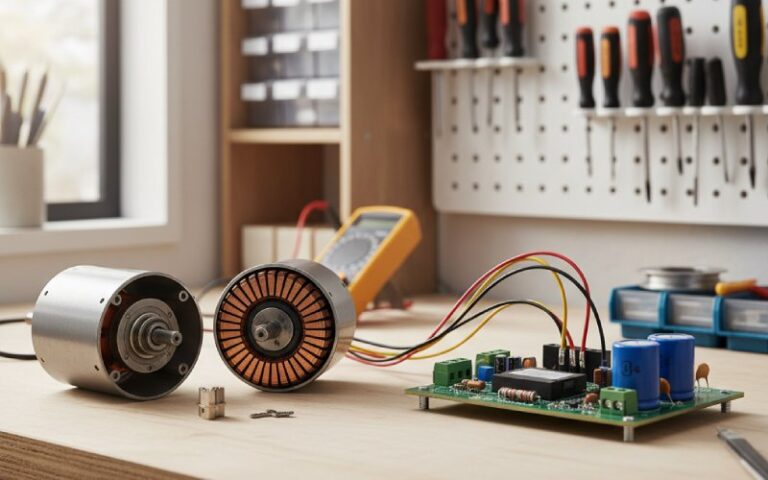
In many OEM projects, the architecture is already half decided by cost target, control simplicity, low-voltage design limits, existing tooling, or field service habits. At that point, the real question is narrower and more useful: if the platform stays brushed, how much does commutator quality change the result?
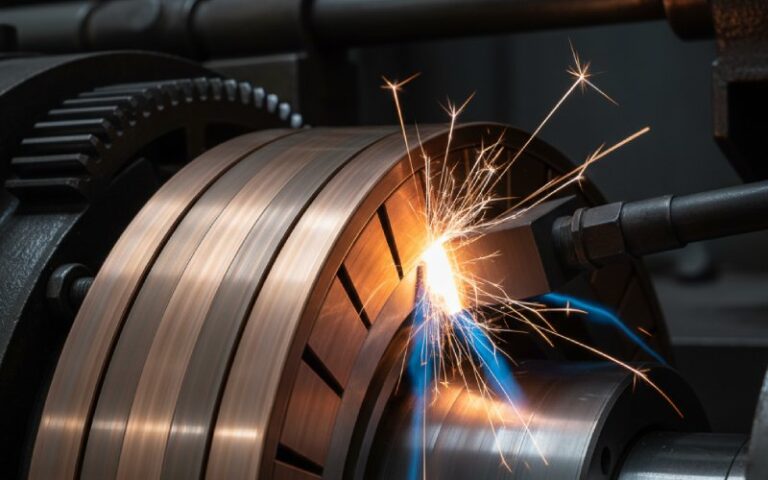
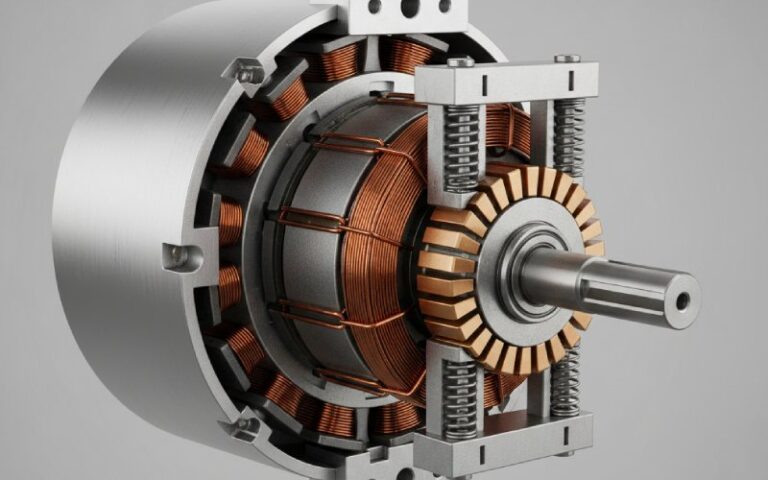
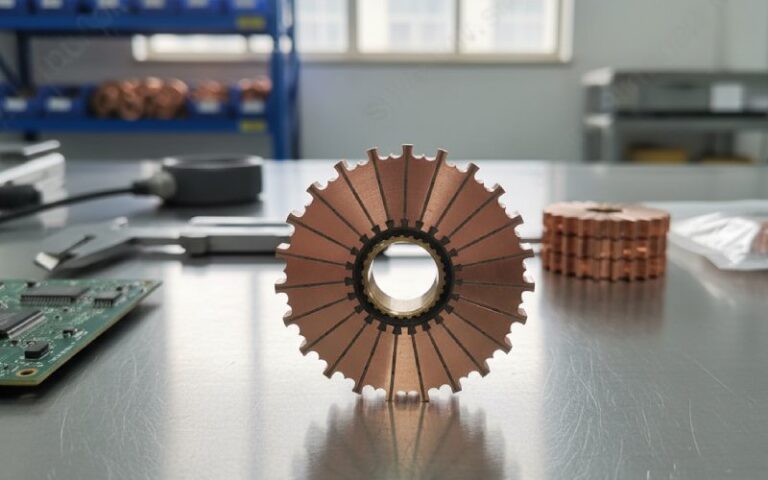
That is where we work. As a custom commutator manufacturer for DC motor applications, we see the same pattern again and again. Buyers know brushless motors usually bring higher efficiency, lower wear, and better long-run economics. No surprise there. But brushed motor platforms still remain in power tools, automotive auxiliary systems, household appliances, actuators, pumps, and compact motion assemblies where cost, startup behavior, packaging, and control simplicity still matter. And in those systems, the commutator is not a small detail. It is often the part that decides whether the motor runs clean, runs hot, sparks early, or survives production scale.
So this article is not another generic brushed-versus-brushless summary. It is a factory-side view of where the cost goes, where the performance really breaks, and why commutator design and manufacturing quality still carry weight in modern brushed motor programs.
Table of Contents
The real trade-off is not old technology vs. new technology
Brushless motors usually win on system efficiency, maintenance interval, and high-speed capability. That part is settled in most engineering teams.
But brushed motors keep winning specific projects for simpler reasons:
- lower initial system cost
- easier drive architecture
- strong low-speed startup behavior
- compatibility with existing motor platforms
- easier replacement in cost-sensitive products
That is why the market never became as clean as theory. Some buyers do not need the longest life possible. They need a stable motor at the right cost, with a predictable supply chain, and no expensive control redesign. In that kind of project, the decision is not “Why not brushless?” It is usually “How far can we push brushed performance without losing cost discipline?”
That answer sits partly in the commutator.
Where commutator motors still make sense
A brushed design still makes commercial sense when the application has one or more of these conditions:
- the product is highly cost-sensitive
- the motor runs intermittently, not around the clock
- low-speed torque and startup response matter more than peak efficiency
- the electronics budget is tight
- the platform already uses a proven brushed layout
- field replacement must stay simple
This is common in portable tools, compact home appliances, small pumps, seat and window motors, door systems, locking mechanisms, and many auxiliary automotive functions. Not glamorous. Still large volume.
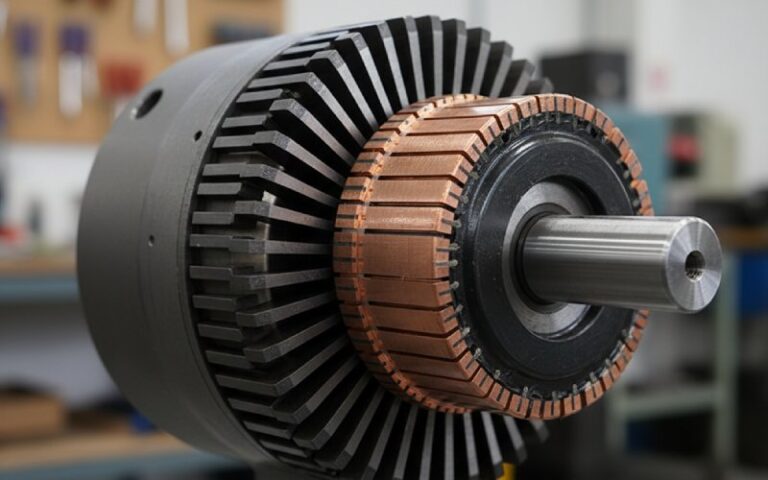
And here is the part many articles skip: once a brushed platform is selected, the performance ceiling is no longer decided by motor type alone. It is decided by how well the commutator transfers current, controls wear, manages contact stability, and stays dimensionally consistent under load.
Why the commutator matters more than many buyers expect
In a brushed DC motor, the commutator sits inside every important compromise.
Not all at once. But eventually.
A weak commutator build tends to show up in familiar ways:
- unstable brush contact
- early sparking at segment transition
- higher EMI risk
- uneven heat generation
- faster brush wear
- variable current transfer across production batches
A stronger commutator build does not turn a brushed motor into a brushless motor. It does something more practical. It makes the brushed platform behave closer to its design intent, with fewer surprises in life testing, fewer assembly inconsistencies, and less drift between first samples and mass production.
That difference matters in OEM work.
Cost comparison: the motor system story vs. the commutator quality story
The usual headline is simple: brushless costs more upfront, brushed costs more later.
True enough. But for buyers sourcing brushed motor parts, that summary is too broad to help with purchasing decisions. The more useful question is this:
Within a brushed motor system, what is the cost of a low-grade commutator?
Usually it does not appear as a line item called “low-grade commutator penalty.” It appears somewhere else:
- more brush dust
- more spark suppression work
- more noise in validation
- more rework during assembly
- tighter warranty margin
- shorter service life in high-start-stop duty
- more variation from lot to lot
That is why the lowest unit price is often not the lowest program cost.
DC Commutator Motor System vs. Brushless Motor System
| Comparison Factor | DC Commutator Motor System | Brushless Motor System | What OEM Buyers Should Watch |
|---|---|---|---|
| Initial system cost | Usually lower | Usually higher due to controller and commutation electronics | BOM target, market price sensitivity |
| Low-speed startup behavior | Strong and direct in many designs | Good, but more control-dependent | Startup load, low-voltage response |
| Controller complexity | Lower | Higher | Firmware time, electronics budget |
| Maintenance profile | Brush and commutator wear must be managed | Lower wear in the motor itself | Service interval, access difficulty |
| High-speed capability | More limited by mechanical commutation | Better suited for higher speed operation | RPM target, thermal margin |
| EMI behavior | More sensitive to sparking and contact quality | Cleaner at the motor interface | EMC validation, nearby electronics |
| Supplier influence on motor life | Very high at the commutator and brush interface | More distributed across controller, rotor, bearings, and magnets | Whether component quality can shift system outcome |
| Best fit | Cost-sensitive, intermittent-duty, legacy or simple-control platforms | Long-duty, high-efficiency, lower-maintenance platforms | Total ownership model |
The table explains the architecture-level trade-off. But within the DC commutator motor system, supplier quality still changes the result more than many sourcing teams expect.
What separates a high-quality commutator from a standard one
This is the section buyers usually need. Not theory. Not slogans. The actual variables.
1. Copper material and segment stability
The copper system affects conductivity, wear behavior, heat tolerance, and surface response under repeated brush contact. In real production, poor material consistency often shows up as unstable wear patterns before it shows up as a dramatic failure.
For higher-load or higher-cycle brushed motors, the question is not only conductivity. It is whether the segment material stays stable under repeated thermal and mechanical stress. Cheap copper can look acceptable in early samples. Then drift begins. Contact surface changes, wear accelerates, spark behavior worsens. Slowly at first.
2. Roundness, concentricity, and segment uniformity
This is one of the most underestimated factors in brushed motor performance.
If roundness and concentricity are not tightly controlled, brush contact becomes uneven. That means local heating, contact bounce, unstable current transfer, and higher sparking risk. In high-speed or frequent-start applications, the effect grows fast.
Buyers often ask for life improvement. Sometimes the first answer is not a new material. It is better geometry control.
3. Mica undercut consistency
Mica undercutting is not glamorous. It matters anyway.
If the undercut is inconsistent, brush tracking becomes less stable and segment transition gets rougher. That can push up noise, wear, and commutation instability. In lower-cost motors, this issue is often tolerated longer than it should be because the motor still “works.” Until validation gets stricter. Or the duty cycle goes up. Then it stops being a minor detail.
4. Surface finish and burr control
Segment edges, slot cleanliness, burr condition, and working surface finish all affect brush seating and early-life wear. A commutator can pass dimensional checks and still create trouble if surface finishing is not controlled properly.
This is one reason why some motors show acceptable first-run performance but poor repeatability across lots. The drawing may be similar. The surface behavior is not.
5. Hook design and winding connection reliability
For many OEM programs, hook geometry is part electrical, part mechanical, part assembly problem. Hook design influences winding security, manufacturability, and consistency during motor assembly. Weak hook accuracy can lead to unstable winding attachment, slower assembly, or greater process variation during high-volume production.
A commutator supplier should understand the motor line, not just the part print.
How commutator quality changes motor life in practice
Motor life is never decided by one part alone. Bearings, brushes, loading profile, duty cycle, temperature rise, contamination, and armature balance all matter.
Still, in brushed motor programs, commutator quality often decides how soon the weak points show up.
A better commutator usually improves life indirectly by improving contact stability:
- less aggressive brush wear
- cleaner commutation
- lower local overheating
- better current transfer consistency
- lower spark tendency during repeated start-stop cycles
That is why two brushed motors with very similar nameplate values can behave very differently in service. One issue is design. Another is manufacturing discipline.
The EMI problem is often a commutator quality problem in disguise
When a brushed motor fails EMI targets, teams often start from suppression components. Fair enough. But the root issue is not always outside the motor.
Poor contact transition, unstable segment geometry, rough surfaces, and inconsistent insulation interfaces can all make EMI control harder. Not impossible. Harder. Which means more filtering, more iterations, more compromise elsewhere.
A better commutator does not remove the need for system-level EMI design. It reduces how much the commutator itself contributes to the problem.
That can save a lot of time in validation.
When brushless is the better choice
There is no reason to pretend otherwise.
Brushless motors are usually the better choice when the application needs:
- long continuous-duty operation
- minimal maintenance
- higher system efficiency
- higher speed range
- cleaner commutation behavior
- tighter long-term operating economics
If the project can absorb the controller cost and design complexity, brushless often gives a stronger long-run result.
But that is not the whole market. Many OEM products are not designed around the longest possible life. They are designed around a cost window, a target duty cycle, a control budget, and a manufacturing schedule. In those products, brushed motor architecture still stays on the table. And once it stays on the table, commutator quality becomes a purchasing decision with performance consequences.
How to choose the right commutator manufacturer for OEM projects
This is where buyers should get selective.
Do not choose only by drawing compliance and unit price. Those are entry conditions, not proof of process capability.
A serious commutator supplier should be able to discuss:
- copper material options by application type
- commutator structure for speed, current, and duty cycle
- dimensional tolerance control, especially roundness and concentricity
- insulation system consistency
- hook design for winding process compatibility
- surface finishing standards
- lot consistency and inspection discipline
- support for custom samples and validation feedback loops
Better yet, the supplier should talk about motor behavior, not just commutator dimensions. If they only discuss the part in isolation, support usually weakens when the project moves into real testing.
What OEM buyers should ask before approving a custom commutator
Use this list early. It saves time later.
- What copper or alloy options are recommended for our duty cycle and current load?
- What roundness and concentricity tolerances are controlled in mass production, not only in samples?
- How is mica undercut consistency checked?
- What surface finishing steps are used before shipment?
- How is hook geometry controlled for winding stability?
- Can the supplier adjust design based on spark, wear, or life-test feedback?
- What changes when the application moves from appliance duty to tool duty or automotive auxiliary duty?
These questions usually separate catalog sellers from actual manufacturing partners.
FAQ
Is a commutator motor always cheaper than a brushless motor?
Usually at the initial system level, yes. Not always over the full service life. For cost-sensitive and intermittent-duty products, a brushed motor can still be the better commercial choice. For longer-duty platforms, the economics often shift.
What makes a high-quality commutator last longer?
Stable copper performance, tighter roundness and concentricity control, clean segment edges, consistent mica undercutting, and reliable hook geometry all help reduce unstable brush contact and premature wear.
How does commutator precision affect sparking and EMI?
A more precise commutator supports smoother brush transition from segment to segment. That usually means lower contact bounce, cleaner current transfer, and less tendency toward unstable sparking and EMI issues.
Can a custom commutator improve brushed motor service life?
Yes, often significantly. Not by changing the motor architecture, but by improving current transfer stability, brush wear behavior, and dimensional consistency under the actual duty cycle.
How do I choose a reliable commutator manufacturer for DC motors?
Look beyond price and drawing match. Check whether the supplier can discuss materials, geometry control, undercut quality, surface finish, winding compatibility, and application-based design changes for your motor platform.
Which applications still use brushed motors and commutators at scale?
Power tools, automotive auxiliary motors, household appliances, pumps, actuators, locking systems, and many compact low-voltage products still use brushed designs where cost and control simplicity remain more important than maximum efficiency.
Final take
Brushless motors are often the better answer for long-duty, high-efficiency systems. That part is not controversial.
But many commercial motor platforms still stay brushed for sound reasons: cost target, control simplicity, startup behavior, packaging, legacy design, production reality. In those platforms, the weak point is not “brushed technology” by itself. The weak point is usually poor execution at the commutator interface.
That is why commutator quality matters so much. It shapes wear, spark behavior, EMI stability, current transfer, and production consistency. It shapes whether a brushed motor remains commercially viable in the first place.
If your next motor program still uses a brushed architecture, do not treat the commutator as a commodity part. It is one of the few components that can quietly decide the life and stability of the whole motor.
Need custom commutators for your OEM project?
We manufacture custom commutators for DC motor applications with application-based support for material selection, geometry optimization, and production consistency. If you are developing a new brushed motor platform, or trying to improve service life in an existing one, contact our engineering team for custom samples, technical review, and quotation.