How to Choose Between Commutator Generators and Brushless Alternators
If you’re trying to decide between a traditional commutator (brushed) generator and a modern brushless alternator, you’re really asking a basic question:
“Do I want something cheap and simple right now, or something easier, cleaner, and better for me in the future?”
Let’s go through this in normal words, not just formulas and fancy terms.
If you…
- Run your generator many hours a year
- Hate surprise breakdowns and downtime
- Power sensitive electronics, PLCs, or IT loads
- Have limited access to skilled maintenance
→ You will almost always be happier with a brushless alternator.
If you…
- Use the machine only once in a while
- Have a tight budget at the start
- Don’t mind changing brushes from time to time
- Power mostly “rough” loads like tools, heaters, or motors
→ A commutator (brushed) generator can still be a good choice.
Table of Contents
1. First, let’s get the terms clear
In a lot of marketing text, “brushed vs brushless” or “commutator vs alternator” gets mixed together. Inside the machine, here’s what is really happening:
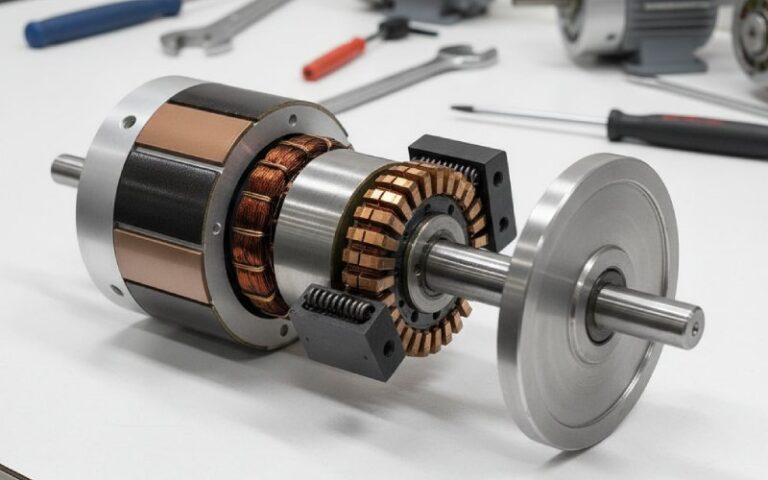
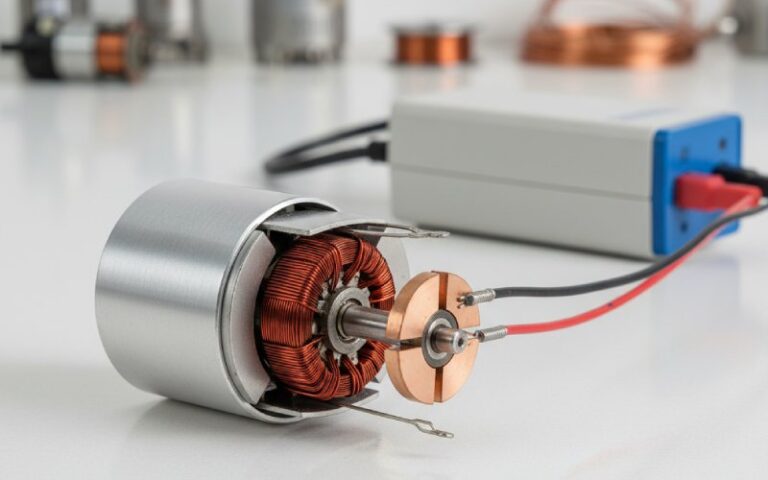
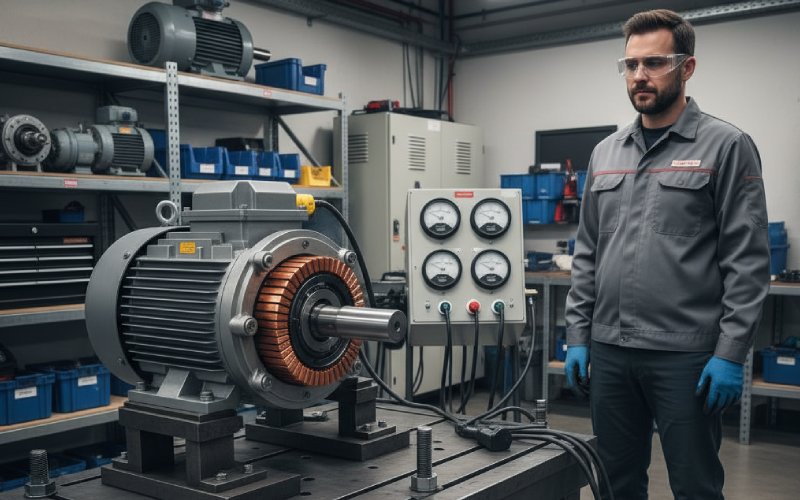
A commutator generator is usually a DC generator: it uses a mechanical commutator and carbon brushes to turn the AC made inside into DC at the output terminals. This design has been used for a very long time and is simple, but the commutator and brushes wear out and need maintenance.
A brushless alternator is an AC synchronous generator with a special excitation system. Instead of brushes, it uses a small AC exciter and a rotating rectifier to feed the main rotor field, so there are no moving electrical contacts needed in normal operation.
Alternators in general are AC generators that change mechanical energy into electrical energy as alternating current. That’s why your car and your genset almost always use an alternator instead of a classic DC generator.
In many modern gensets, that AC is then rectified and controlled to feed DC loads or inverters—so both types can in the end handle DC or AC applications. The big difference is how they are built and how they are maintained.
Plain-English definitions (keep these in mind)
Commutator (brushed) generator
- Uses brushes + commutator to switch current by mechanical contact
- Has more moving and wearing electrical parts
- Usually lower cost at the start, but higher maintenance over time
Brushless alternator
- Uses a small exciter alternator and a diode bridge on the rotor
- No brushes touching anything in normal operation
- Usually higher cost at the start, but lower maintenance and better reliability over many years
2. How they work — and what you really feel as an owner
In theory, commutator generators and brushless alternators are just different ways of moving magnetic fields and currents. In real life, they feel very different to own and run.
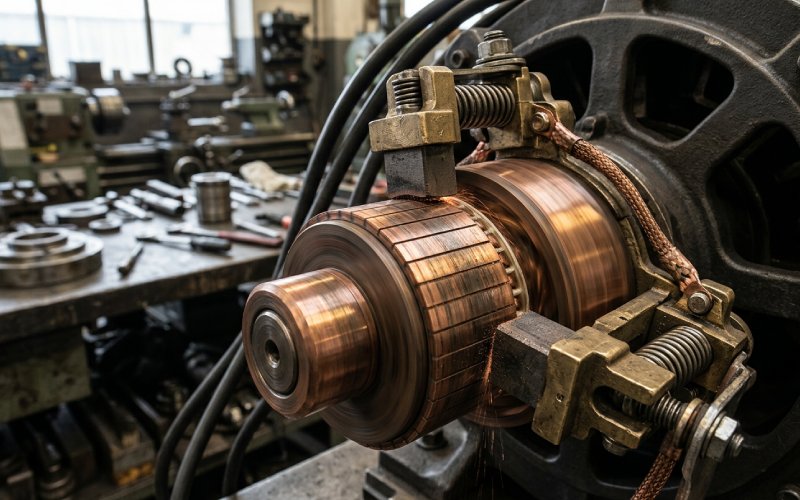
In a commutator generator, current goes through carbon brushes that rub on a segmented copper commutator. These parts make and break contact to turn the AC made inside into DC at the output. This switching causes friction, heat, sparking, brush dust, and wear. It’s simple and tough, but it really needs regular maintenance—checking, cleaning, and brush replacement.
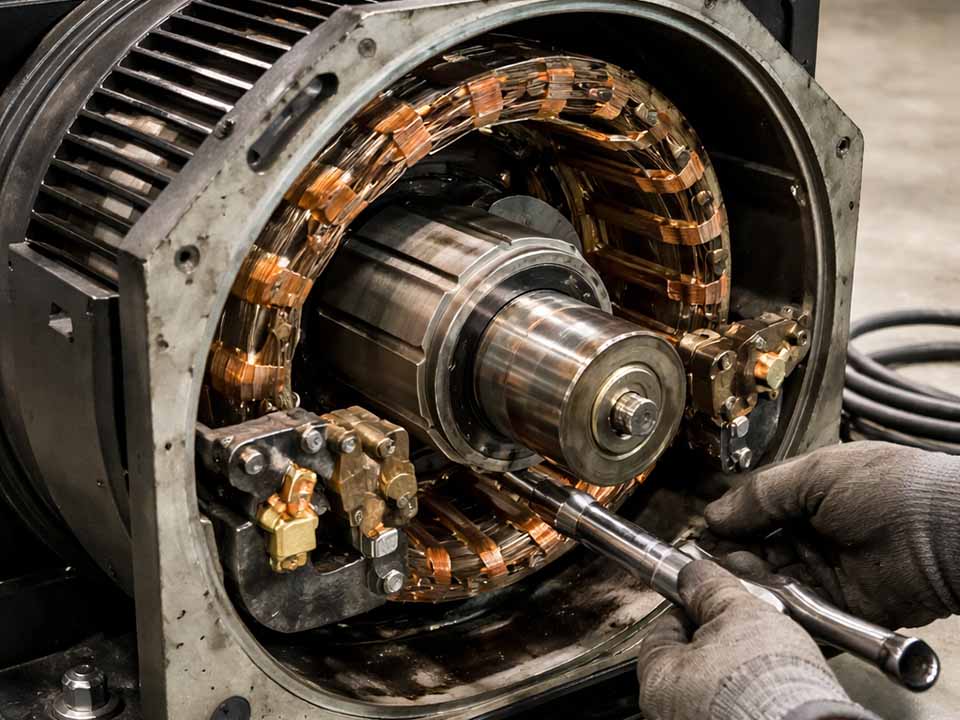
In a brushless alternator, there is still a rotor and stator, but the rotor field is powered without brushes. A small AC exciter on the same shaft makes power, which is rectified by a rotating diode pack and fed into the main rotor winding. No brushes rubbing, no commutator segments wearing away. That means less friction, fewer wearing parts, better reliability, and often better voltage control over time. This is why brushless alternators have become the common choice in modern industrial and standby power systems.
What you notice day-to-day
Noise & “feel”
- Brushed/commutator machines often sound rougher and can create more electrical noise and radio problems from brush sparking.
- Brushless alternators usually run smoother and “quieter” in electrical terms, which is important near sensitive electronics.
Maintenance routine
- Brushed generators: expect regular brush checks, cleaning, and replacement every 1–2 years (depending on how hard you use them).
- Brushless alternators: no brushes to replace; maintenance is mostly mechanical (bearings, cooling system, basic insulation checks).
Long-term risk
- Brushed: more risk of unexpected stoppages from worn brushes, commutator damage, or dirt and dust.
- Brushless: fewer electrical wear parts; things can still fail, but usually less often because there are fewer parts that wear out.
3. Side-by-side comparison table
Here’s a practical, owner-focused comparison you don’t often see in spec sheets:
| Point | Commutator (Brushed) Generator | Brushless Alternator |
|---|---|---|
| Initial purchase cost | Usually lower | Usually higher (more complicated design, more materials) |
| Maintenance needs | Regular brush checks and replacement; commutator cleaning; more labor and downtime | No brushes; mainly mechanical checks and regular electrical tests |
| Reliability over years | Easily affected by dust, vibration, and poor maintenance; brushes fail often | Fewer wear parts; widely used in modern industrial/utility gensets for high reliability |
| Voltage quality & regulation | Can be good, but changes more as brushes and commutator wear | Usually better and more stable, especially with modern AVR systems |
| Electrical noise / EMI | Brush sparking can create electrical noise and radio problems | Much cleaner output; preferred near telecom and sensitive electronics |
| Efficiency & fuel use | Slightly lower efficiency due to brush friction and extra losses | Higher efficiency from less friction and better excitation; can save fuel |
| Continuous heavy-duty use | Possible, but speeds up wear on brushes and commutator | Better for long continuous runs and high yearly running hours |
| Environment sensitivity | Dust, oil, and humidity make commutator/brush problems worse | More tolerant of harsh environments if cooling and seals are good |
| Common modern uses | Older systems, low-budget or light work, some special DC systems | Almost all modern industrial, commercial, and standby gensets, especially for sensitive or mixed loads |
Reading this table “like a human,” not a spec sheet
- Think of commutator generators as the old pickup truck you can fix with hand tools—but you will be fixing it more often.
- Think of brushless alternators as the newer diesel SUV—more expensive at the start, but it just keeps working with less trouble.
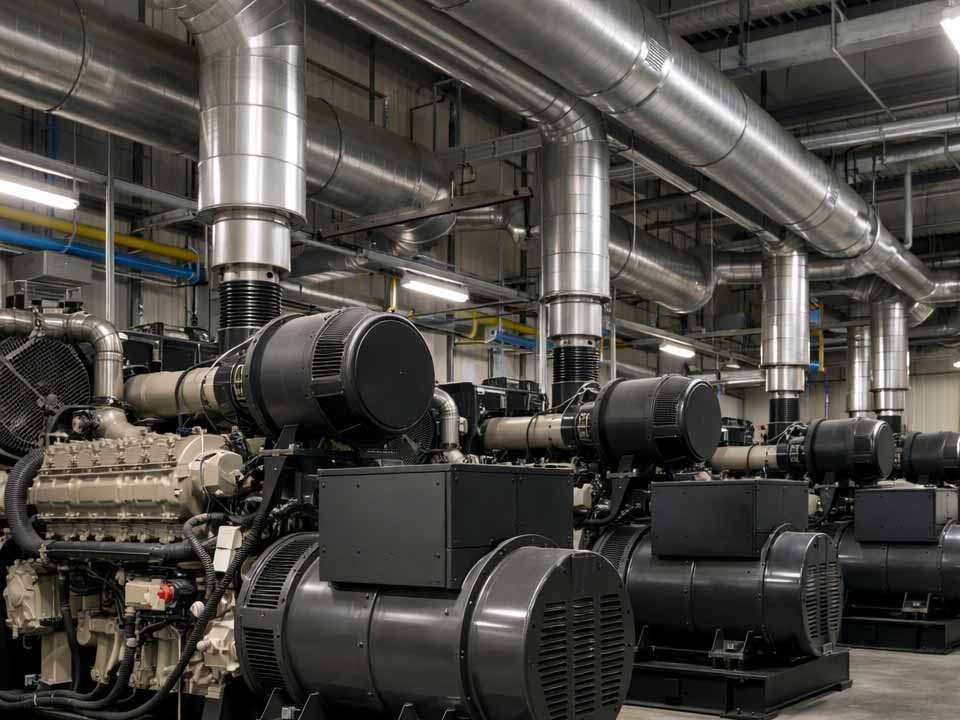
- If the generator is “mission-critical” (hospital, data center, telecom tower, cold storage), the risk of downtime is usually worth paying more for brushless.
- If it’s a backup for rare use with power tools and you are okay with maintenance, a brushed/commutator machine can still be a reasonable choice.
4. A simple decision guide (that you can really use)
Let’s turn this into a step-by-step way to choose.
Step 1 – How many hours per year will it really run? If your set runs just a few hours per month for simple loads, the extra work of brush maintenance might be OK. But for hundreds or thousands of hours per year, repeated wear and replacement quickly turns into real money and real downtime.
Step 2 – How important is uptime? Ask yourself: “If this generator stops without warning at 3 a.m., what happens?”
- Only a small inconvenience? A brushed machine is still possible.
- Serious safety, legal, or money problems? Brushless is the safer choice.
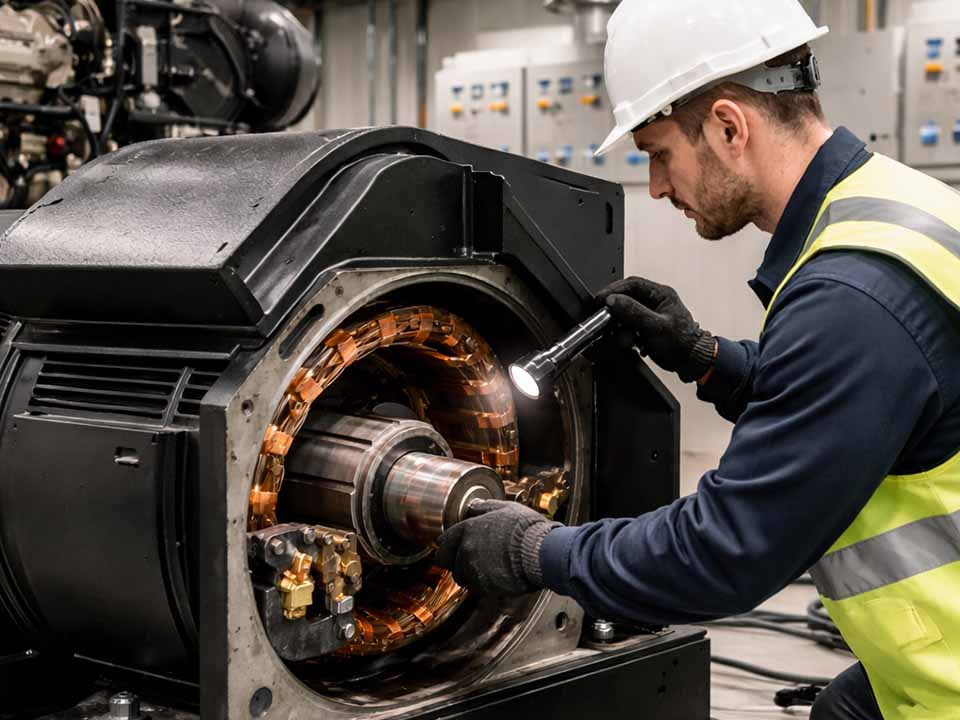
Step 3 – Who will maintain it, honestly? If you have in-house electrical staff or a trusted service company, brushes and commutators are manageable. If maintenance is rare, outsourced, or hard to plan, reducing wear parts with a brushless alternator is smarter.
Step 4 – What are you powering? Sensitive electronics, data, telecom, medical devices, or modern variable-speed drives care a lot about voltage quality and electrical noise. Brushless alternators with AVR usually keep them happier and safer over time.
Step 5 – How long will you use this machine? If you will use this generator for 8–15 years, think in terms of total cost of ownership (TCO), not just the purchase price. A brushless alternator that costs a bit more often saves enough money over time through:
- Better fuel use
- Fewer emergency service calls
- Less unexpected downtime
Quick decision checklist
- High yearly running hours (hundreds+), important loads → brushless alternator.
- Short running time, non-critical loads, tight budget → commutator generator can be OK.
- Many electronics/IT/telecom devices → strongly choose brushless.
- Remote sites with limited service access → brushless to reduce wear parts.
- You enjoy DIY maintenance and know how to handle brushes/commutators → either type, but brushed may save money at the start.
- You’re not an electrical person and don’t want to be → buy brushless and sleep better.
5. Scenarios that feel like you
Instead of more theory, let’s look at real situations.
Scenario A – Small workshop or farm backup You mainly run power tools, small motors, and lighting during grid outages or for occasional field work. Running hours are low to medium, and a day without power is annoying but not a disaster. A commutator generator can do the job if you’re okay with regular maintenance and know where to get parts.
Scenario B – Telecom tower or remote monitoring station You’re powering radios, routers, and DC equipment. Getting to the site is hard, and every truck visit costs a lot. Here, a brushless alternator is almost a must: lower maintenance, cleaner power, and higher reliability.
Scenario C – Rental fleet provider Generators see many different users, environments, and rough use. Cutting failure points is critical because a broken set costs you rental income and reputation. This is why most pro rental fleets use brushless alternators as their main choice—they simply last better in real-life use.
Scenario D – Building standby for critical operations Hospitals, data centers, cold storage, or any site where downtime gets in the news or destroys your stored goods should not take a chance on a commutator design, even if it is a bit cheaper. The cost of one big outage is much higher than the small savings at the start. Brushless alternators with good AVR and proper maintenance are the right tool here.
Match yourself to a scenario
- See yourself in A and you’re good with tools? → A well-chosen commutator generator is reasonable.
- See yourself in B, C, or D? → You are clearly in brushless territory; the risk level says so.
- Don’t fit neatly into any group? → Default to brushless; it’s what most modern industrial and commercial users choose.
6. Don’t forget lifetime cost (a simple way to think)
When you compare quotes, it’s easy to look only at the price tag. A better way:
TCO ≈ Purchase Price + (Fuel Cost × Hours) + (Maintenance Cost + Downtime Cost)
Brushless alternators tend to improve two of these:
- Fuel cost – by reducing losses from friction and improving overall efficiency, especially at higher power levels.
- Maintenance/downtime cost – by removing brushes and commutators from the list of parts that wear out and fail.
Even if a commutator generator is, for example, 10–20% cheaper at the start, it can easily lose that advantage after a few years of fuel, labor, and unexpected repairs—especially in high-use or important applications.
Questions to ask any supplier before you sign
- Is this machine brushed/commutator or brushless?
- What is the recommended brush inspection/replacement time (if brushed)?
- What are the expected maintenance costs over 5–10 years at my estimated hours per year?
- How does the voltage regulation and total harmonic distortion (THD) compare between your brushed and brushless options?
- Can you share real failure numbers or warranty data for both designs?
Suppliers who can’t answer these clearly are basically asking you to take the risk instead of them.
7. So… which should you choose?
If we remove the technical talk and look at your real experience as an owner:
Choose a commutator (brushed) generator if you:
- Want the lowest cost at the start
- Have light, non-critical use
- Are okay with (or plan for) regular brush and commutator maintenance
- Treat the generator more like a backup tool than the “heart” of your operation
Choose a brushless alternator if you:
- Care about long-term reliability and lower maintenance
- Run your generator many hours each year
- Power sensitive or expensive equipment
- Want quieter, cleaner power with fewer surprises over a 10-year life
If you’re really not sure, the safest simple rule is:
When in doubt, go brushless.
The world has slowly moved away from commutator-based power generation for a reason: it’s easier to own and run, not just because of smart technical design.
If you tell me a bit about what you’re powering, how often, and where, I can turn this into a very specific recommendation for you, including size suggestions and what to write in your specification so suppliers don’t cut corners.