Electric Motor Commutator Manufacturer
XDC manufactures custom electric motor commutators for brushed DC motors, universal motors, starter motors, and other armature-based applications. We build to your drawing and support prototype-to-production projects with engineering feedback, sampling, and stable manufacturing.
Critical Commutator Characteristics for High-Performance Motors
In high-performance motors, commutation problems are often caused by precision and consistency issues, not just design.
Poor control of runout, concentricity, segment geometry, and surface finish can lead to:
Sparking
Noise
Short service life
XDC focuses on the characteristics that directly affect performance:
Critical-dimension control
Consistent machining and surface finish
Application-matched material/insulation selection
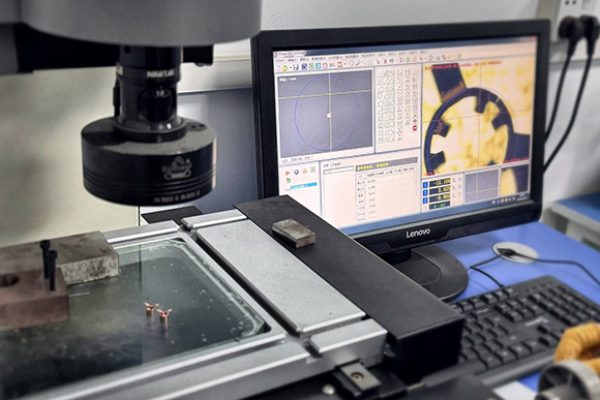
Functional inspection before shipment
We do not only make parts to drawing — we help improve stable commutation across batches.
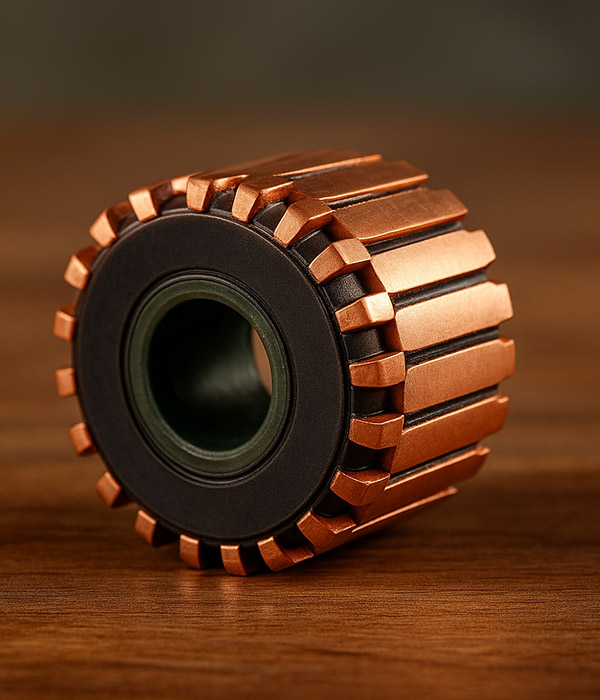
Example Commutator Types Manufactured by XDC
Experience the versatility of XDC’s Electric Motor Commutators. We excel at producing components strictly according to your provided diagrams. Our process ensures confidence by starting with test units before scaling up to bulk manufacturing. Check out the diversity of our past work here, and directly send us your drawings to get a quote.
Note: The examples below show structural styles and manufacturing capability. Final design suitability depends on your motor winding, brush system, and operating conditions.
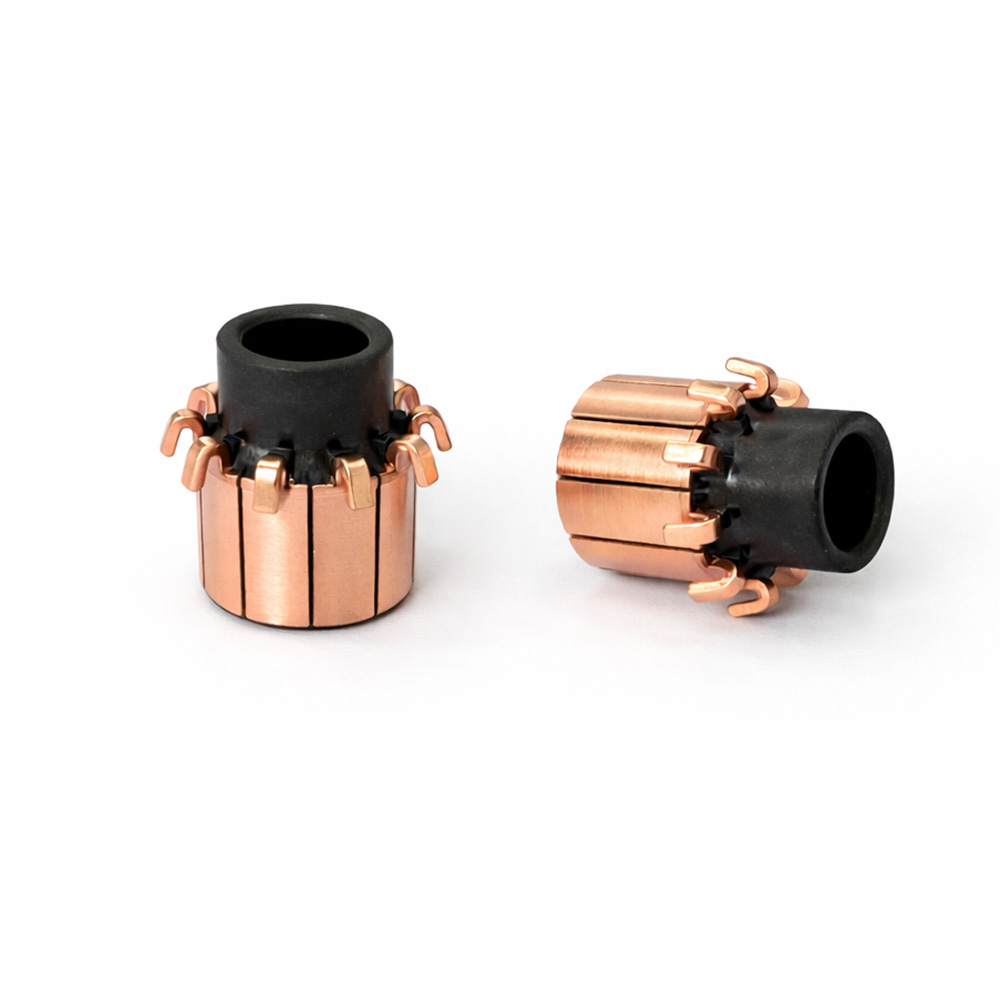
Reinforced 10-Segment Commutator
Molded with high-stability thermoset resin, this 15mm unit ensures superior dielectric strength between its 10 bars. Engineered to maintain structural integrity under thermal stress and heavy loads.
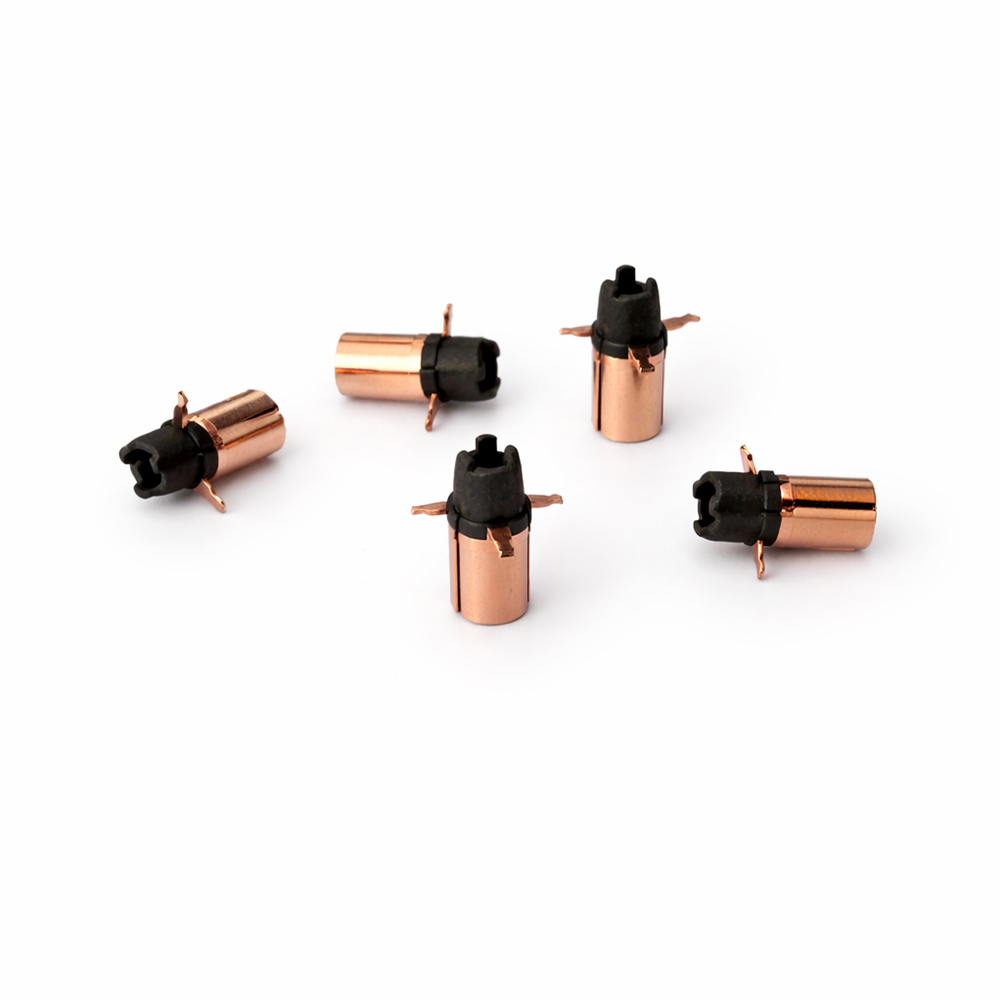
3-Bar Fusing-Optimized Commutator
The right-angle tang geometry creates an ideal surface for electrode contact during the fusing process. This ensures consistent, low-resistance electrical joints, critical for maximizing motor efficiency.
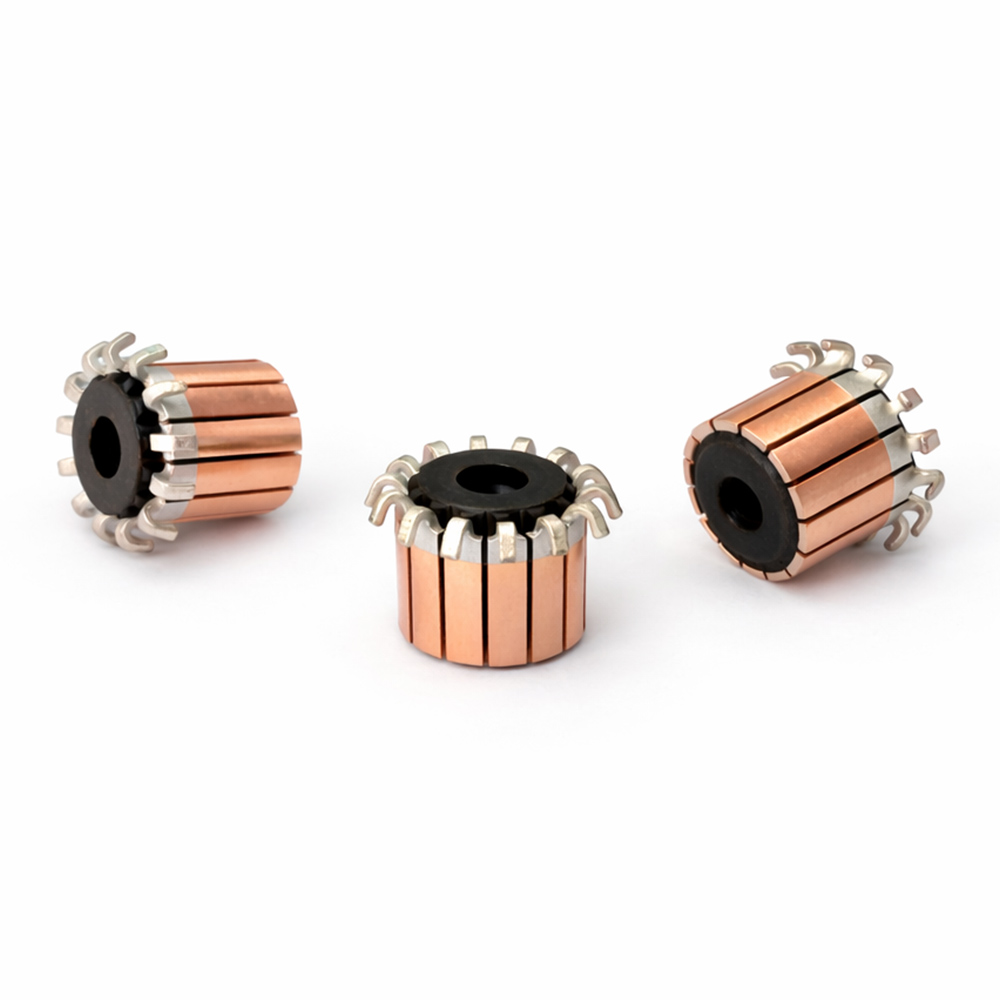
14-Bar Stable-Contact Commutator
The 14-segment geometry significantly reduces the mechanical “polygonal effect” relative to the brushes. This ensures continuous, bounce-free contact and prevents physical wear caused by brush vibration.
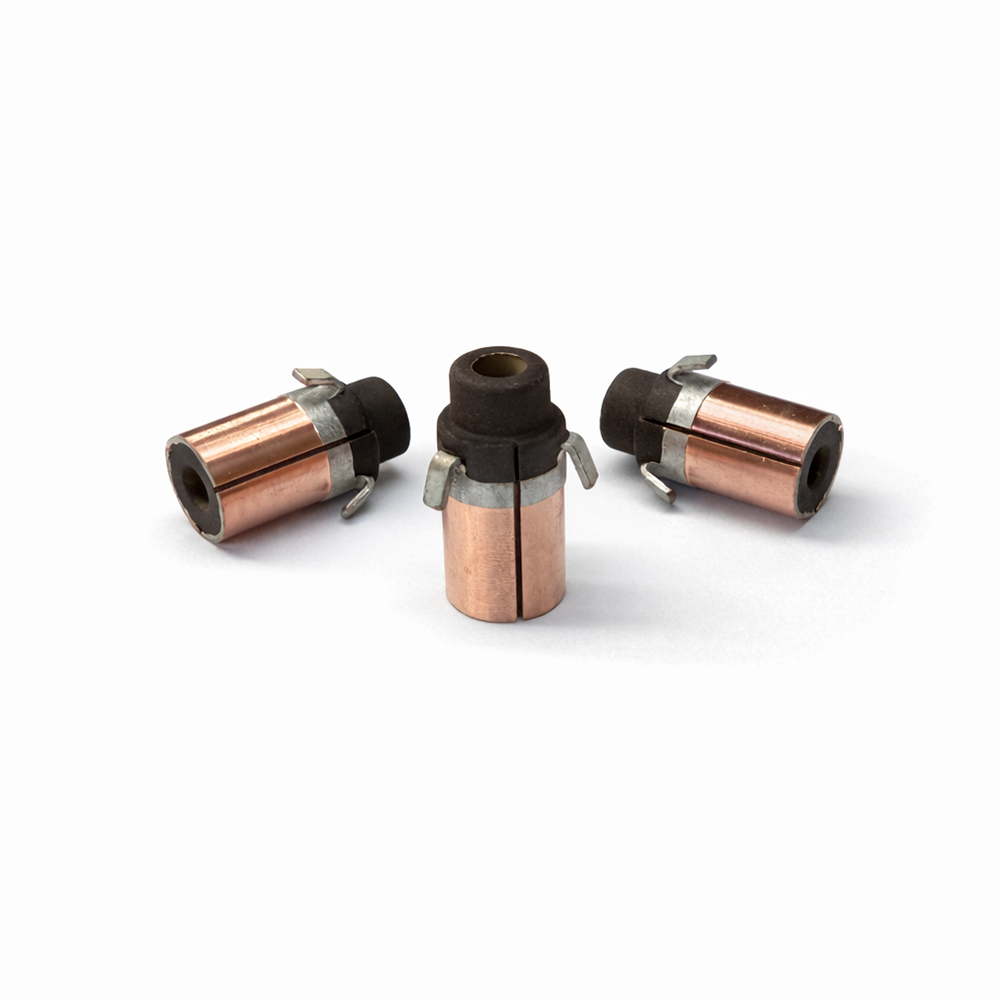
High-Capacity 3-Bar Commutator
The 3-segment configuration on this 7.6mm unit maximizes the copper surface area per bar. This physical design supports higher current densities and robust thermal endurance for heavy-load motor applications.
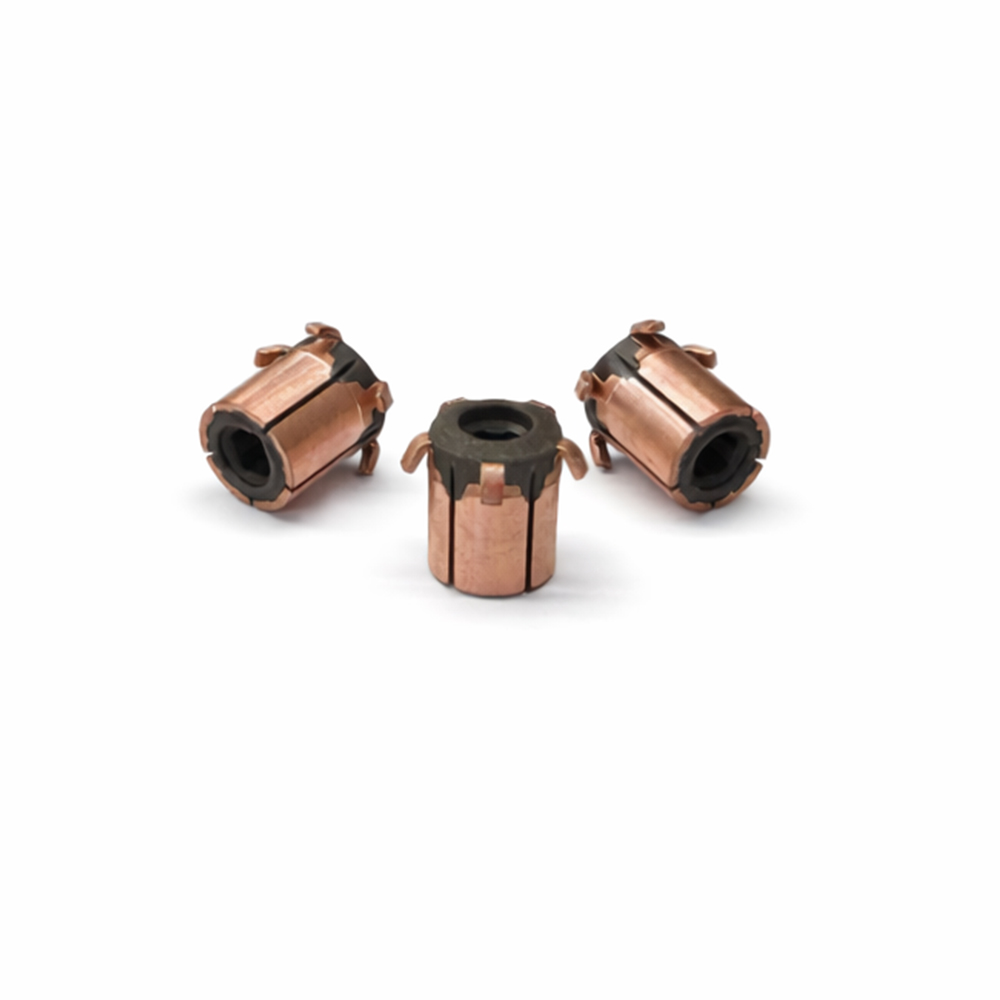
Bi-Directional 5-Bar Commutator
The 5-segment geometry provides symmetrical switching properties, making it superior for reversible motor applications. This 7mm unit ensures consistent torque and speed control in both clockwise and counter-clockwise rotations.
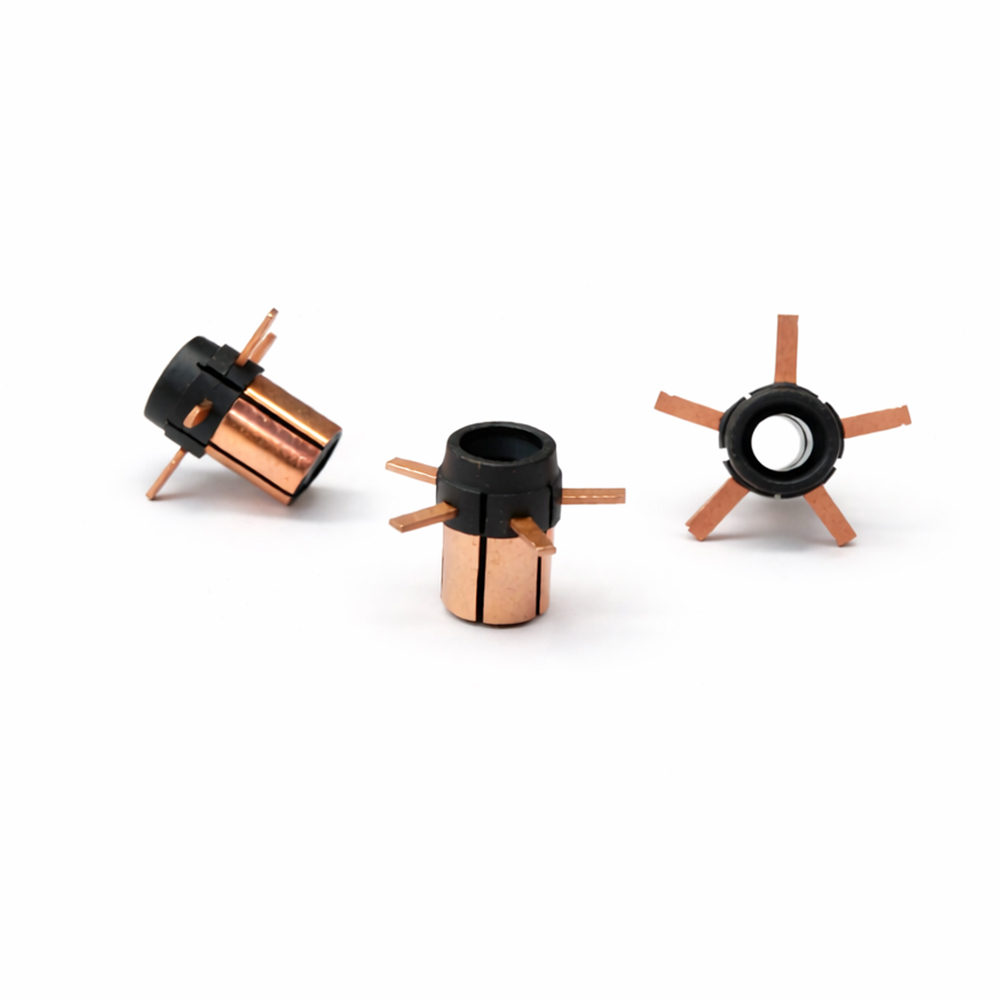
High-Precision 5-Segment Micro Commutator
Engineered with exacting molding tolerances, this 5.6mm unit maintains consistent insulation width between the 5 bars. This precision prevents inter-segment shorting, ensuring long-term reliability in miniature motor applications.
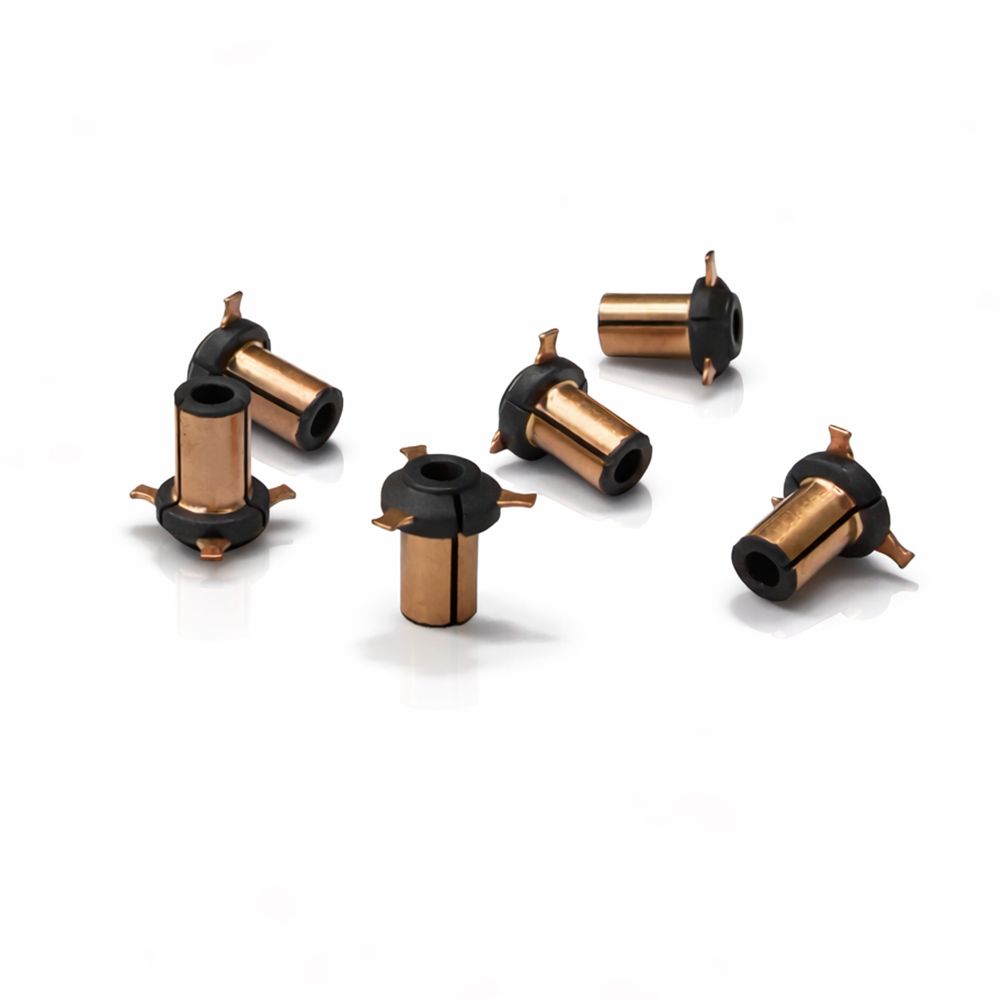
Metal-Brush Optimized Micro Commutator
Designed specifically for micro motors utilizing metal-finger brushes. The ultra-smooth surface finish minimizes mechanical friction and contact noise, preserving the integrity of delicate brush systems.
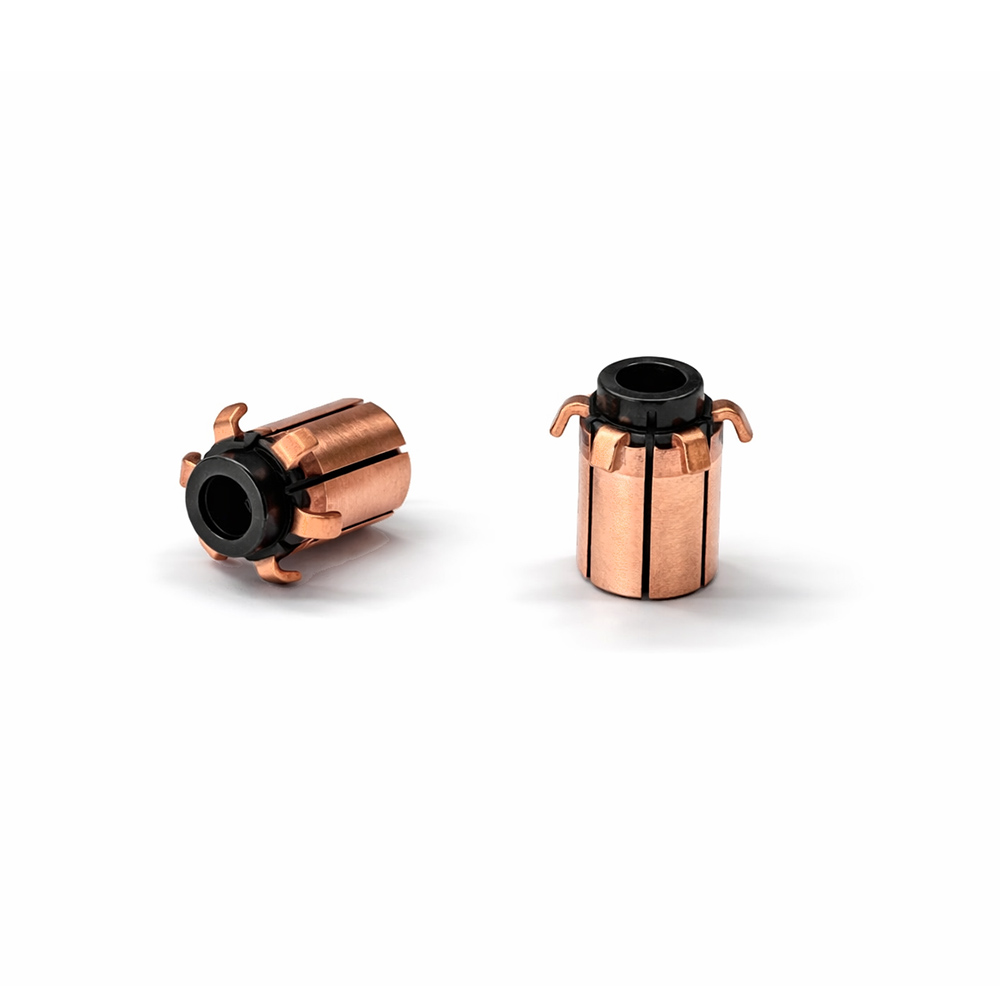
EMI-Optimized 6-Slot Commutator
The 6-segment architecture inherently generates lower voltage spikes during switching compared to 3-slot designs. This physical characteristic aids significantly in reducing Electromagnetic Interference (EMI), facilitating easier EMC compliance for your motors.
Custom Electric Motor Commutators Built to Your Drawing
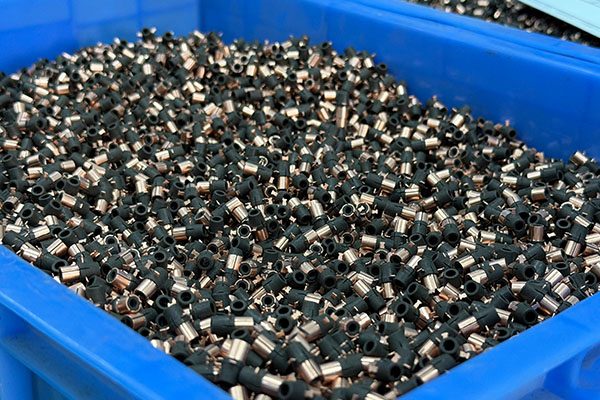
We manufacture commutators based on customer drawings, samples, and performance requirements. Our support is suited for both new motor development and second-source qualification.
Typical motor types we support
Small traction / industrial DC motor applications
Appliance and power tool motors
What you can send us
2D/3D drawings (PDF/CAD)
Existing sample parts
Motor operating data (voltage, current, speed, duty cycle)
Annual volume forecast
Application environment (temperature, dust, vibration, etc.)
Engineering Focus for Reliable Commutation
XDC focuses on manufacturability and consistency — the two things that matter most when a motor moves from samples to production.
1) Material Selection Matched to Application
We support commutator designs using appropriate conductor and insulation systems based on current load, speed, thermal conditions, and cost targets.
2) Dimensional Consistency
Stable ID/OD/height control helps reduce assembly variation and improves repeatability across batches.
3) Surface & Machining Control
Proper machining and finishing support stable brush contact and help reduce abnormal wear and sparking risk.
4) Prototype-to-Production Support
We can start from your drawing or sample, review manufacturability, and support sample validation before mass production.
5) Application-Oriented Communication
Our team works with purchasing and engineering teams to align on drawing details, lead time, and change control.
Customization Range
We customize electric motor commutators according to drawing and application requirements.
Typical customization items
Outer diameter (OD)
Inner diameter (ID)
Height
Segment count
Segment geometry / connection style
Insulation material system
Copper / alloy selection
Balancing and machining requirements
Published capability
OD range: 2.5 mm to 150 mm
Segment count: 3 to 96 segments
Supported materials: pure copper / silver-copper alloy / insulation options
Application categories: power tools, appliances, automotive auxiliary motors, industrial, etc.
Information needed for fast quotation
To speed up quoting and technical review, please provide:
Drawing or sample
Motor voltage / current / speed
Duty cycle (continuous / intermittent)
Brush type (carbon / metal brush, if known)
Annual demand
Target sample and production timeline
Custom Sizes and Segment Ranges
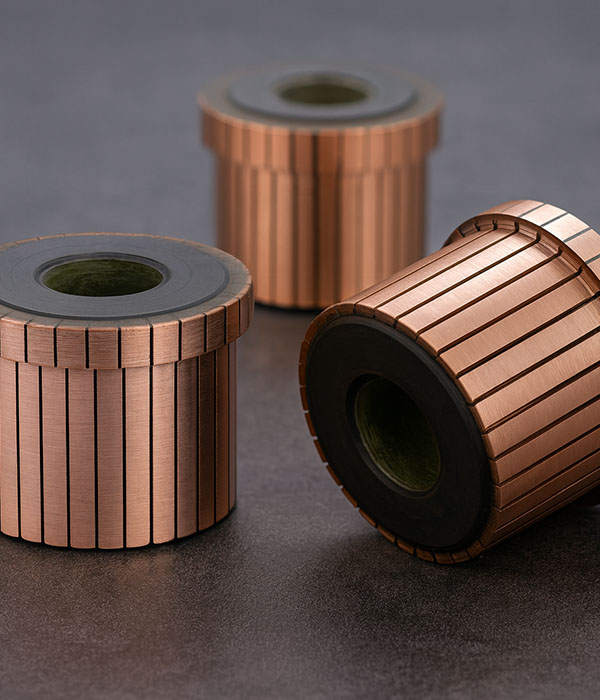
Across all families, XDC can tailor motor commutator designs to your drawing:
- OD range: approx. 2.5 mm to 150 mm
- Segment count: from about 8 bars to 96
- Materials: pure copper or silver-copper alloys, mica or engineered polymer insulation
- Motor types: brushed DC motor, universal motor, traction motor, starter motor, generator
If you need a specific commutator in an electric motor design for a new platform, our engineering team can co-develop a prototype based on your armature winding and performance requirements.
Why Buyers Choose XDC for Commutator Supply
As a dedicated Chinese manufacturer of motor commutator products, XDC offers a complete value package:
Specialized Product Focus
We focus on commutators and related manufacturing processes, which helps us respond more efficiently to drawing revisions, sampling, and production issues.
Custom Manufacturing Support
We support custom projects rather than only standard catalog items. This is especially useful for OEM/ODM motor programs and replacement sourcing.
Engineering + Purchasing Communication
We work with both technical and purchasing teams so drawing changes, lead times, and pricing decisions stay aligned.
Scalable Supply
We support sample development and volume production based on your project stage and demand forecast.
Factory-Direct Quotation
Direct communication shortens the quoting path and helps reduce delays caused by multiple intermediaries.
Typical Applications
Our electric motor commutators are used in a wide range of brushed motor applications, including:
Household appliances
vacuum cleaners, mixers / blenders, fans, small kitchen appliances
Power tools
drills, grinders, saws, sanders
Industrial equipment
DC drives, small traction motors, pumps and blowers
Consumer products
toys, personal care devices, compact motorized products
Contact XDC
Looking for a new commutator design, a replacement supplier, or support for an ongoing motor program? Send us your drawing or sample and we’ll help you review the next step.
Send your drawing or sample and we will review:
manufacturability
key dimensions / tolerances
sample tooling needs
sample and production lead times
quotation and commercial terms
WhatApps
+86 17820674273
Address
Taixing Science and Technology Park, No. 3 Taixing Road, Dongguan City, Guangdong Province
FAQ — Electric Motor Commutators
A commutator switches current between armature coils as the rotor turns. Working together with the brushes, it keeps torque acting in the correct direction so the motor continues rotating smoothly.
In real applications, commutator performance affects startup behavior, sparking, brush wear, noise, and temperature rise. That is why material choice and machining consistency matter, not just the basic shape.
A commutator has multiple insulated segments and is used to switch current in brushed motor designs. A slip ring is typically a continuous ring (or ring set) used to transfer power or signals while rotating, without performing commutation.
If your application requires changing current direction in the armature coils, you are usually looking at a commutator. If you only need continuous electrical transfer to a rotating part, a slip ring may be the correct component.
The fastest quote usually comes from a 2D/3D drawing or a physical sample. If you do not have a final drawing, send as much of the following as possible:
motor type (DC / universal / starter / other)
voltage, current, speed
duty cycle (continuous or intermittent)
application environment (temperature, dust, vibration)
annual volume estimate
target sample and production timing
The more complete the data, the fewer back-and-forth questions are needed before pricing and sample planning.
Yes. A sample can be used for initial evaluation and quotation. For a smoother process, it helps to also provide photos, basic dimensions, and motor operating conditions.
If the sample is worn or damaged, we may still be able to review it, but final dimensions and tolerances should be confirmed before mass production.
Selection should be based on the motor’s electrical load, speed range, brush type, thermal conditions, and expected life. The “right” part is not only about fitting the shaft or armature—it must also support stable commutation under your actual duty cycle.
For new projects, the usual process is:
review design data,
confirm critical dimensions/material system,
build samples,
test in the actual motor,
finalize production specs.
Excessive sparking is usually a system issue, not just a single-part issue. Common causes include:
poor brush grade matching
unstable contact surface condition
dimensional/runout problems
incorrect spring pressure
winding or assembly issues
overload or abnormal operating conditions
A stable commutator helps reduce sparking risk, but it must be matched correctly with the brush system and motor design.
The biggest factors are material quality, dimensional consistency, surface condition, brush compatibility, operating load, speed, and cooling. Dust, vibration, and frequent start-stop cycles can also shorten service life.
In practice, brush wear and commutator wear should be evaluated together. If one wears abnormally, the root cause may be in the other component—or in the motor assembly and operating conditions.
Yes. We support build-to-print manufacturing for custom projects. We can also provide manufacturability feedback if a drawing includes features that may affect yield, cost, or consistency.
If you need strict control for a qualified design, please specify the critical dimensions, tolerances, and any customer-specific inspection requirements in the RFQ.
Related Resource
At XDC, we share our deep insights into commutators, manufacturing processes, and industry experience on our blog. We invite you to explore these articles to learn more about our expertise.
Commutator Sparking and Wear: Why Brushes Must Align With the Motor Neutral Plane
The motor neutral plane is the running position where the coil under the brush can reverse current with the…
DC Motor Squealing Noise: Is It the Carbon Brush or the Commutator?
When a DC motor starts squealing, most people replace the brushes first. Sometimes that works. Sometimes the noise goes…
How to Check a Commutator for Roundness or Runout
Most bad readings start before the indicator touches copper. That is usually the whole job, really. Not the gauge.…