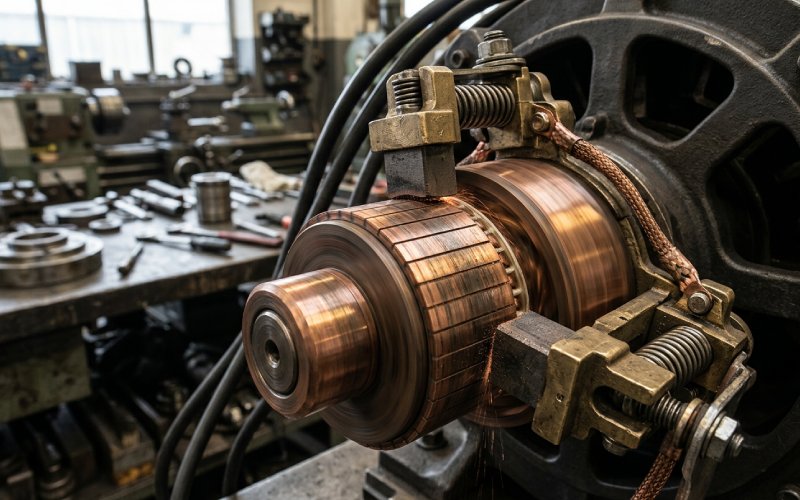
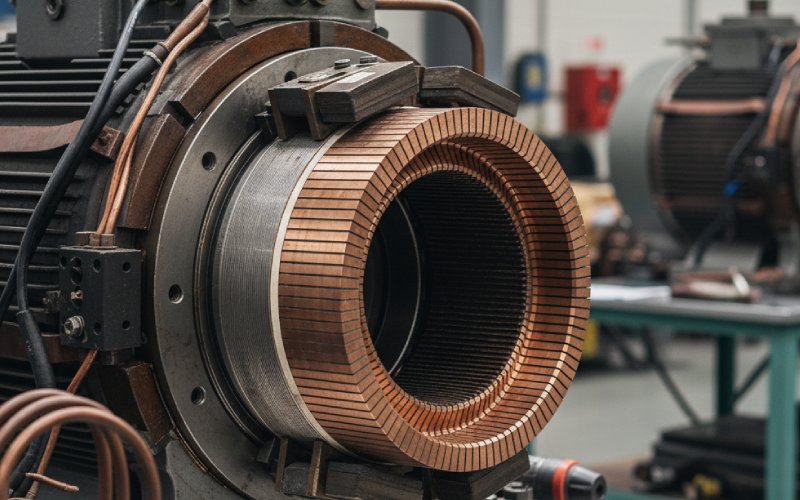
Commutator Flashover: What It Is, What Causes It, and What to Check First
If a DC machine report says flashover, the problem is already past the “watch it and see” stage.
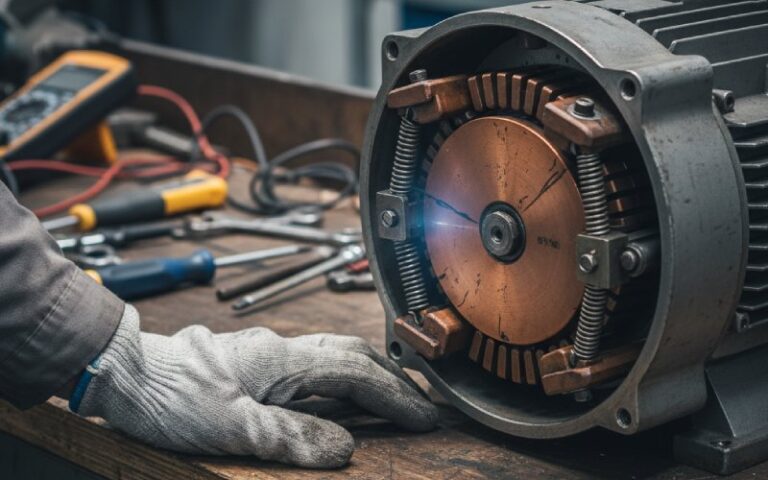
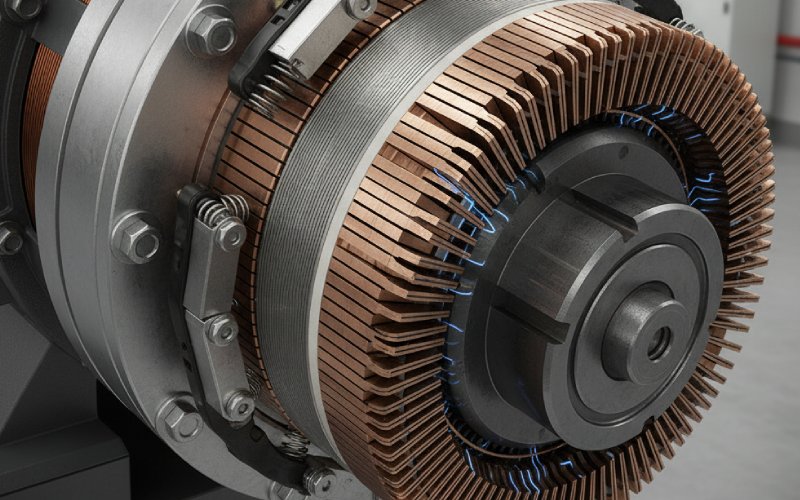
This is not ordinary brush sparking. It is not a small local burn mark at one bar edge. A commutator flashover is a high-energy arc event across the brush-commutator zone, sometimes across multiple segments, and it usually leaves visible damage behind: burned bar edges, damaged brushholders, carbonized debris, insulation stress, sometimes a machine trip that comes at the worst possible time.
From our side as a commutator manufacturer, repeat flashover cases usually do not come from one clean, isolated cause. They build up. Unstable brush contact. Contaminated slots. Wrong neutral setting. Poor spring pressure. A rough or damaged commutator surface. Sometimes an incorrect repair decision made months earlier. The final event looks sudden. The condition behind it usually is not.
If you are dealing with recurring flashover, the question is not only “What happened?”
It is also “What allowed the arc to grow?”
Table of Contents
What a flashover on a commutator actually means
In practical terms, a flashover is an arc that no longer stays confined to the normal brush contact zone.
That matters because normal light sparking and flashover are not the same failure mode. Light sparking may still point to a correction issue. Flashover means the machine has lost margin. The arc path has become easier to establish and easier to sustain.
On site, that usually happens in one of two ways:
- Commutation becomes unstable enough that brush arcing grows into a larger arc event
- Conductive contamination bridges the insulation path between segments and helps the arc travel
Sometimes only one mechanism is present. Often both are present at the same time.
The two most common flashover paths
| Flashover path | What is happening underneath | What we usually see on the machine | First checks |
|---|---|---|---|
| Commutation-driven flashover | The brush arc becomes heavier and no longer stays local | Heavy sparking under load, trailing arc, bar-edge burning, unstable brush behavior | Neutral setting, interpole condition, spring pressure, holder alignment, runout |
| Contamination-driven flashover | Conductive material lowers insulation between bars or across the air path | Carbon dust, copper particles, oil, dirty holder cavities, packed mica slots, tracking marks | Slot cleanliness, undercut condition, contamination source, film condition |
| Mixed condition | Poor commutation creates debris, debris then makes the next arc easier | Repeat flashover after “cleaning only,” uneven wear, copper drag, recurring burn marks | Full electrical plus mechanical inspection, not surface cleaning alone |
That last row is the one we see too often. The machine gets cleaned, put back into service, and the same failure returns because the trigger was removed for a day, not for a season.
What usually causes commutator flashover
1. Conductive debris between commutator segments
This is the familiar one. Carbon dust, copper particles, oil mist, shop dirt, moisture. Once enough conductive material collects in or across the mica gaps, the insulation path weakens. The arc does not need much encouragement after that.
In returned components and field photos, this usually shows up as packed slot contamination, dark tracking, or uneven deposits near the bar edges. Not subtle. But often ignored until the event is already large.
2. Poor commutation that was already arcing before the flashover
A machine rarely goes from “perfect” to flashover in one step. More often there was already a commutation problem:
- heavy sparking under load
- shifting neutral
- weak or incorrect interpole effect
- poor brush seating
- unstable brush contact
- rough commutator surface
If the machine was already arcing, then contamination, bar-edge damage, or vibration can turn a bad condition into a flashover condition.
3. Weak spring pressure or unequal spring pressure
This gets underestimated because it looks too simple.
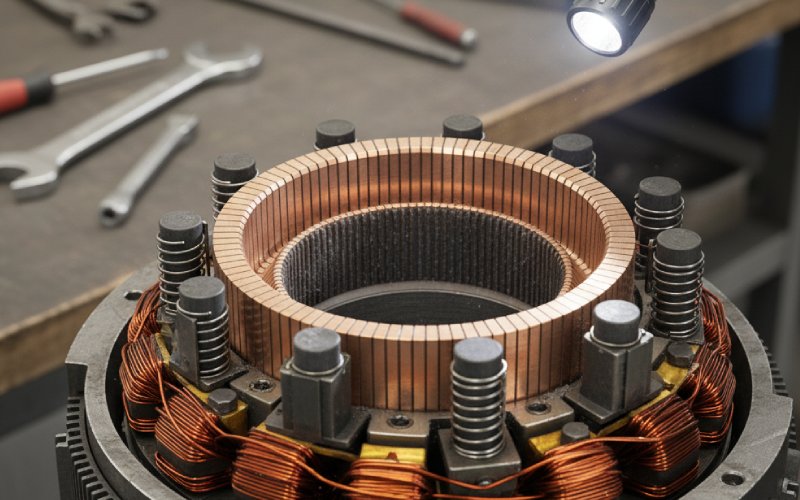
But low brush pressure reduces contact stability. Unequal pressure makes current distribution less predictable. Both conditions increase local heating and arcing. They also accelerate the generation of debris, which then becomes part of the next problem.
If the machine has many brush arms, do not spot-check one or two and assume the set is fine. Check the full set.
4. Vibration, brush bounce, or poor holder condition
An electrical failure can start with a mechanical defect.
Loose holders, poor alignment, brush chatter, shaft vibration, out-of-round commutators, excessive runout, high mica, damaged bar edges. These conditions interrupt the brush contact pattern and make the arc unstable. Once the contact is unstable, the rest moves quickly.
5. Wrong brush grade, poor seating, or contaminated film
Brush grade matters, but it is not the first thing to blame every time.
In practice, abnormal brush face appearance often points to a larger operating condition: current density, humidity, surface finish, pressure, contamination, machine duty. A correct brush running on a damaged or contaminated commutator can still behave badly. A new brush that is not seated correctly can still shift the effective contact condition enough to create trouble.
6. Operating duty that pushes the machine outside its stable range
This is common in severe duty applications:
- frequent start-stop cycles
- aggressive acceleration or deceleration
- overload events
- reversing duty
- regenerative operation
- incorrect reconnection after repair
In these cases, flashover is not just a maintenance issue. It may also be a machine-duty issue. If the application has changed, the commutator and brush system may be operating with less margin than the original design allowed.
The early signs most teams see before the event
Flashover is usually preceded by clues. The machine often tells the story early, just not politely.
Watch for:
- heavier sparking as load rises
- a trailing arc leaving the brush contact zone
- copper drag
- burned bar edges
- grooving or threading
- unusual brush noise
- brush movement that looks unstable in the holders
- dark tracking near slots
- packed carbon dust inside the holder area
- non-uniform commutator film
- one area of the commutator repeatedly running hotter or darker than the rest
This is where inspection discipline matters. A commutator surface is not just a surface. It is a record.
Why the commutator itself matters in repeat flashover cases
A lot of pages talk about brushes, settings, and cleaning. Fair enough. But on repeated failures, the commutator itself has to move to the center of the discussion.
From a manufacturing perspective, several details affect how much abuse the machine can tolerate before arcing gets out of control.
Bar-edge condition and geometry
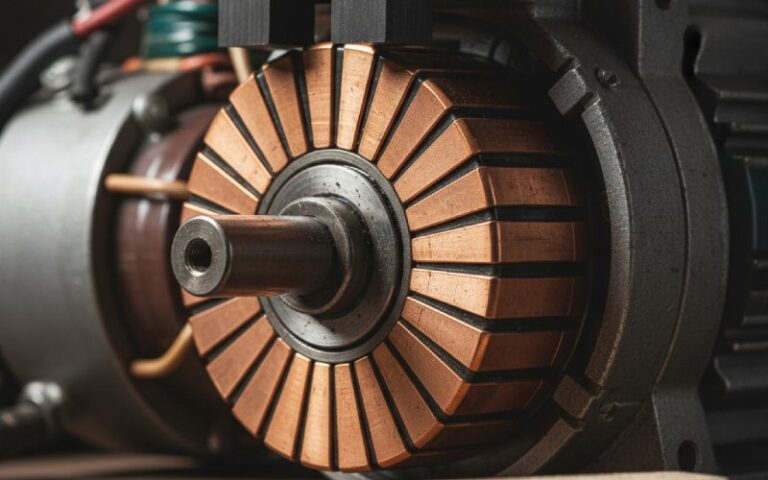
Sharp, damaged, or overheated bar edges make arc concentration worse. In severe service, bar-end geometry is not a cosmetic detail. If the edge condition is poor, voltage stress and local burning become easier to build.
Mica undercut consistency
If the undercut is inconsistent, packed with contamination, or effectively lost due to deposits, the insulation path between segments becomes less reliable. On a machine with existing sparking, that is a bad combination.
Surface finish and roundness
A commutator that is rough, eccentric, or out of round does not give the brush a stable contact surface. That affects current transfer. Then heat. Then wear. Then debris. Then the next outage.
Copper integrity and segment condition
Loose segments, transferred copper, local overheating, and repeated bar-edge burning change the surface behavior. At that point, the problem is not only maintenance. It is component condition.
Balance and concentricity
On higher-speed units, even moderate geometry errors show up fast at the brush track. Mechanical instability becomes electrical instability.
This is one reason why some flashover cases keep coming back after cleaning and brush replacement. The visible damage was removed. The underlying commutator condition was not.
If you need a closer look at how we control these points during production, see our commutator manufacturing process or custom commutator solutions.
What to inspect immediately after a flashover
Do not stop at the black marks.
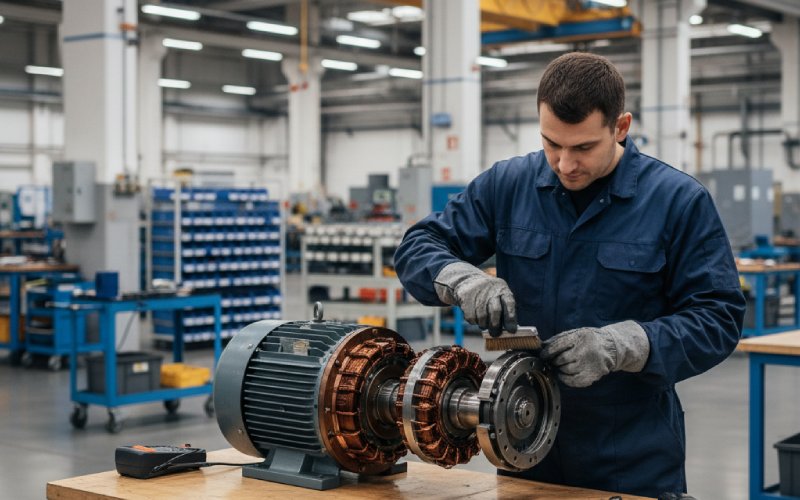
Start with a full inspection:
- check for burned or lifted bar edges
- inspect mica slots for packed debris
- check for copper drag and tracking
- inspect holder alignment and rigidity
- measure spring pressure across the full set
- make sure brushes move freely and do not bind
- inspect surface finish, roundness, and runout
- confirm brush seating
- review neutral setting and interpole condition
- review recent load changes, repair history, and wiring changes
If the machine was recently rebuilt, this matters even more. A repair-related polarity error, poor seating job, or geometry issue can stay hidden until the machine is brought back to real load.
How to reduce repeat flashovers
This is the part many articles rush. We would not.
Because repeat flashover is expensive, and because “clean it and restart” is usually not a complete answer.
Keep the slot area clean, but do not stop there
Yes, remove conductive contamination. Clean the holder cavities. Clean the mica gaps. Remove carbon and copper debris properly.
But if you only clean the surface and do not correct the cause of the sparking, you are resetting the clock, not fixing the problem.
Maintain correct brush pressure
Weak springs and uneven spring force create unstable contact. Replace worn springs as a set where needed. Check actual values, not assumptions.
Restore proper commutator condition
Check surface finish, runout, bar-edge condition, mica undercut, and damage pattern. A commutator that has already suffered repeated arc damage may need more than dressing.
Verify the full commutation setup
Look at neutral setting. Look at interpoles. Look at load profile. Look at recent electrical changes. Flashover prevention is not just a cleaning routine. It is an electrical and mechanical stability routine.
Review whether the existing commutator design still fits the duty
This is where manufacturers should be useful, not silent.
For severe or recurring flashover cases, it may be worth reviewing:
- bar-edge geometry
- segment design
- insulation path condition
- material selection
- balancing and concentricity control
- suitability for current density and duty cycle
If the operating duty has become harsher than the original design case, the right answer may be a replacement commutator or a custom redesign, not another round of emergency maintenance.
When flashover points to a commutator replacement problem
Not every flashover means the commutator must be replaced. Some do.
You should seriously review replacement or redesign when you see:
- repeat flashover in the same area
- recurring copper drag
- severe bar-edge loss
- unstable running even after cleaning and brush correction
- geometry damage that cannot be restored within tolerance
- aging commutator construction no longer matching current duty
If you are dealing with that kind of failure pattern, our team can review the damaged part, drawing, or application details and advise whether a standard replacement or a custom commutator makes more sense.
FAQ
Is normal brush sparking the same as commutator flashover?
No. Light sparking may still fall within a manageable commutation issue. Flashover is a larger arc event that escapes the normal contact zone and usually causes visible damage.
Can contamination alone cause flashover?
Yes. Conductive debris in the mica gaps or across the brush zone can lower insulation enough to support a flashover event. But in many repeated cases, contamination is only one part of the chain.
Can a bad commutator surface cause flashover even with the correct brush grade?
Yes. A rough, damaged, eccentric, or contaminated commutator surface can destabilize brush contact even when the brush grade itself is not the main problem.
Why does flashover return after cleaning?
Because cleaning removes the conductive path for the moment, but it does not correct the condition that created heavy sparking, debris generation, or unstable contact in the first place.
When should I replace the commutator instead of repairing it?
If the machine shows repeated flashover, severe bar-edge damage, recurring copper drag, loss of geometry, or condition beyond practical restoration, replacement should be considered.
Can commutator design reduce flashover risk?
In severe duty applications, yes. Geometry control, undercut consistency, surface condition, concentricity, and overall suitability for the operating duty all affect how much margin the system has before arcing becomes a major event.
Final word
A flashover is not just “an arc caused by dirt.”
Sometimes dirt is the reason. Sometimes it is the result. Often it is both.
If you are treating every flashover as a cleaning problem, you will miss the cases where the real issue is commutator condition, unstable commutation, or a design that no longer matches the duty.
That is usually where the repeat failures live.