What Is Commutator Film and Why Is It Important?
Commutator film is not dirt. Not a cosmetic stain either.
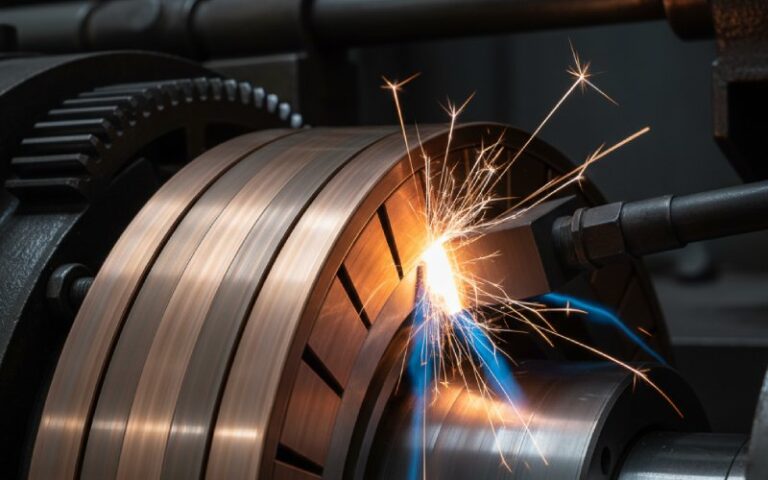
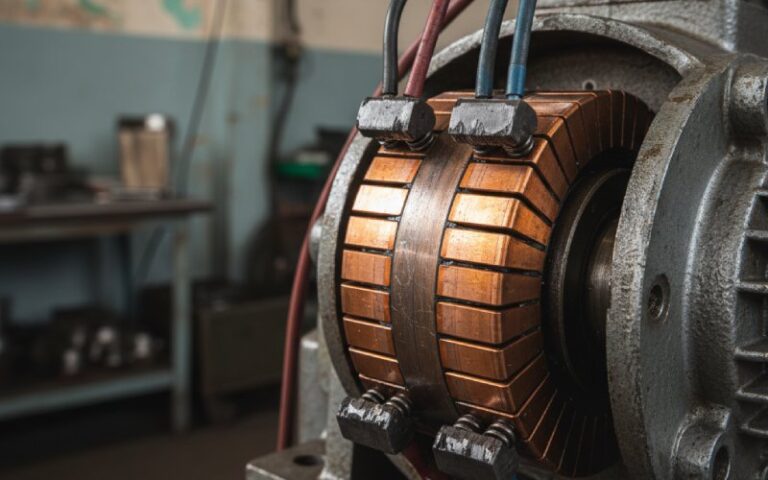
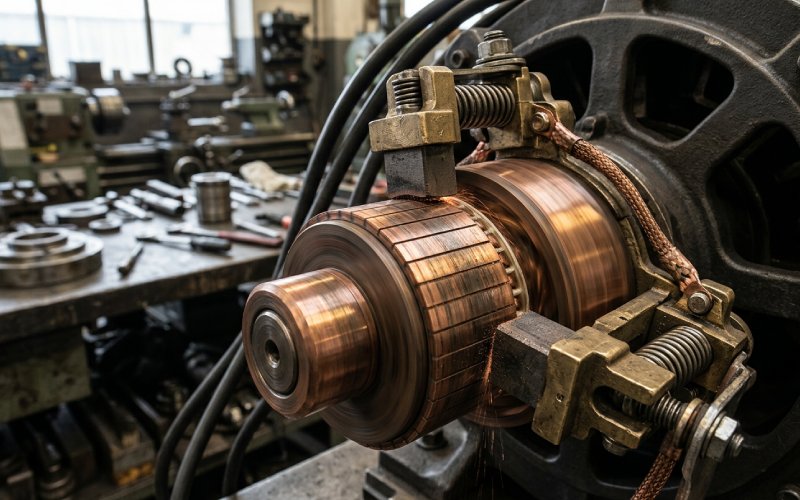
It is the working layer that forms between the brush face and the copper surface during operation. When that layer stays stable, current transfer stays more predictable, friction stays lower, and both brush wear and commutator wear usually stay under control. When the layer breaks up, the machine tends to show it fast: sparking, dusting, streaking, grooving, hot spots, bar-edge damage.
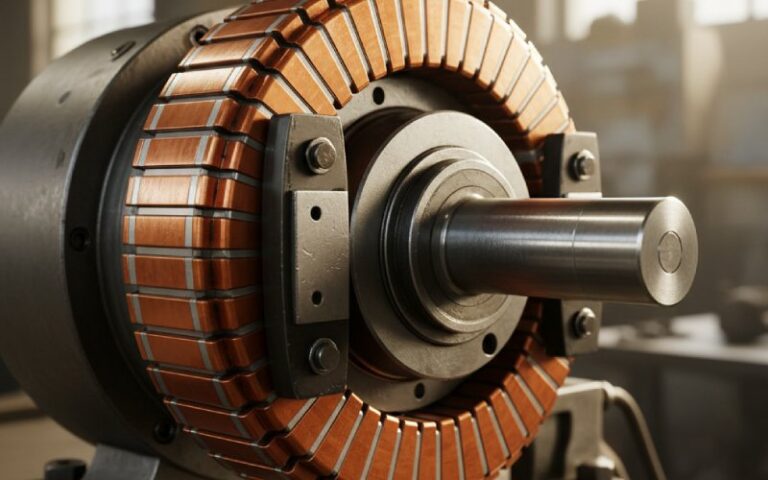
For buyers evaluating replacement parts or new builds, this matters for a simple reason. Film quality is never only about the brush. It is also about the commutator itself—bar geometry, mica condition, surface finish, concentricity, runout, and how consistently the copper track was made in the first place.
See our custom commutator manufacturing solutions if you are comparing replacement options for unstable brush wear, repeated resurfacing, or chronic film failure.
Table of Contents
What Does a Healthy Commutator Film Look Like?
A healthy film is usually even. Brown to dark brown, sometimes lighter, sometimes slightly charcoal. Color matters less than consistency.
What we look for first is not shade. It is pattern.
A stable commutator film normally shows:
- an even track across the full brush path
- no raw copper bands
- no localized black patches with heat marks
- no dragging copper across the mica slots
- no repeating bar pattern that points to an electrical imbalance
- no rough threaded appearance that the brush face starts copying
Light film is not automatically bad. Dark film is not automatically good. A thin, even film may run well. A darker film may also run well. The problem starts when the surface becomes selective—one path dark, one path light, one area rough, one area wiped clean.
That is usually where maintenance teams lose time. They try to correct color. The real job is to correct the contact system.
Why Commutator Film Matters More Than It Seems
A bad film does not stay a “film issue” for long.
First, brush wear rises. The contact becomes less stable, more abrasive, or more intermittent.
Second, the copper starts paying for it. Once the surface moves from uneven film into raw grooving, threading, or copper drag, the machine is no longer just showing a harmless pattern. It is losing material.
Third, the film often exposes deeper faults earlier than electrical tests do. Uneven current sharing, weak spring pressure, poor seating, contamination, off-neutral running, out-of-round commutators, high mica, and bad bar edges all leave readable marks on the track. Different marks. That part matters.
Common Commutator Film Problems and What They Usually Mean
| Surface condition | What it usually indicates | When we start suspecting the commutator itself | Practical first action |
|---|---|---|---|
| Even light-brown or dark-brown film | Stable contact, acceptable friction, normal wear trend | Not immediately | Record wear trend, temperature, and current sharing |
| Very light film | Low load, low temperature, low humidity, weak filming tendency, or low contact pressure | If film stays thin after seating and duty is normal | Check brush seating, spring pressure, duty cycle |
| Streaky film without copper wear | Underload, oil vapor, chemical contamination, unstable contact | If streaking repeats on the same track after cleaning and pressure check | Inspect atmosphere, holders, pressure balance, brush freedom |
| Raw grooved bands | Film breakdown has progressed into metal attack | Early, especially if grooves follow one brush path | Stop chasing color; inspect runout, bar condition, pressure, contamination |
| Patchy dark and light areas | Dirty or deformed running surface, inconsistent contact | Yes, if pattern follows surface geometry | Check concentricity, flat spots, holder alignment, high/low bars |
| Copper drag | Overheated or softened copper being pulled across slot edges; often followed by rapid wear | Immediately | Inspect bar edges, mica slot condition, vibration, brush face copper pickup |
| Alternate light and dark bars, trailing-edge burning | Poor commutation, winding imbalance, neutral setting issues, localized overload | If the bar pattern repeats with electrical position | Inspect electrical balance and the commutator at the same time |
| Threading or screw-thread effect | Mechanical instability, chatter, out-of-round running, or persistent abrasive contact | Very early | Check roundness, vibration, holder fit, and surface finish |
When Film Trouble Is a Brushgear Problem, and When It Is a Commutator Problem
Film trouble is rarely caused by one thing.
Usually brushgear or operating-condition driven
We start on the brush side when we see:
- low or unequal spring pressure
- brushes sticking in the holders
- poor initial seating
- heavy contamination in the air path
- long periods of idle or low-load running
- obvious off-neutral sparking
- chatter that changes with load, speed, or direction
For many industrial DC applications, brush pressure in the 4.0 to 6.0 psi range is a practical field check starting point. Not a universal rule. Just a useful baseline before people start changing everything else.
Usually commutator-driven
We start on the commutator side much earlier when we see:
- the same defect repeating on the same track after brush replacement
- one path grooving while neighboring paths stay normal
- high or low bars
- poor mica relationship to the copper
- sharp or damaged bar edges
- measurable runout or visible out-of-round behavior
- a fresh resurfaced unit that still refuses to build stable film
That last one matters. If a commutator cannot settle into a stable track after proper seating, normal pressure, and clean operating conditions, the surface finish or geometry often deserves more scrutiny than the brush grade.
How Commutator Manufacturing Affects Film Stability
This is the part buyers actually need when they are choosing a supplier.
A commutator does not become “good” because the drawing dimensions were nominally met. Film stability depends on how the sliding surface was built and finished.
1. Bar edge condition
Bad bar edges break film early.
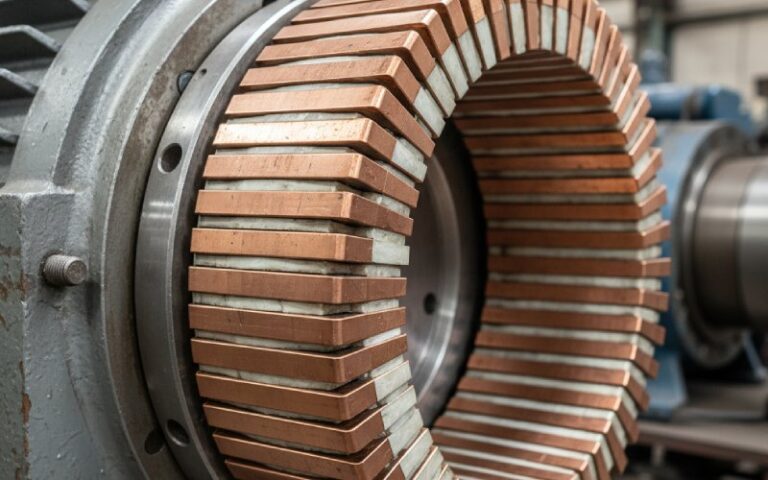
If the copper edges are smeared, burred, chipped, or inconsistent from bar to bar, the brush does not see one continuous track. It sees repeated interruptions. That tends to show up as streaking first, then local heating, then copper transfer or edge burning.
A clean edge is not a detail. It is part of the electrical contact system.
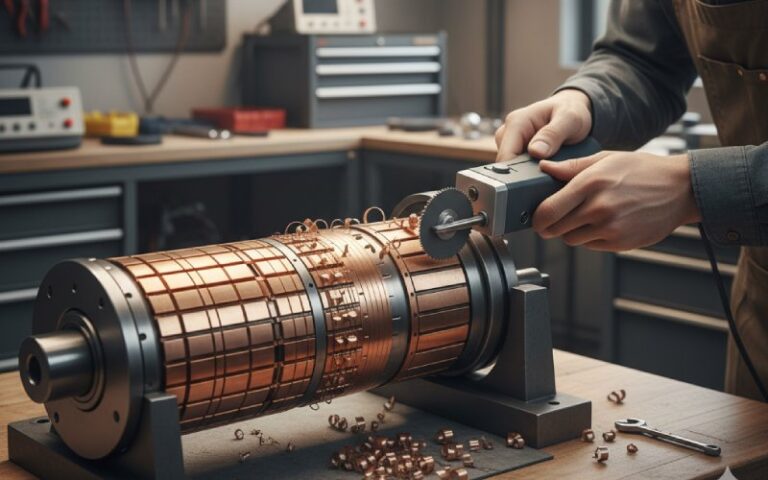
2. Mica undercut and mica consistency
Flush mica forces a harder interface. High mica does the same in practice, just more destructively.
On new or rebuilt commutators, mica geometry decides how the brush crosses from bar to bar. If the mica is too high, uneven, or poorly undercut, the film never gets a fair chance to settle. You start seeing chatter, sparking, brush face damage, or selective bar wear.
This is why we treat mica work as a performance issue, not a finishing step.
3. Surface finish on the copper track
Mirror-bright is not the target.
A new commutator surface needs a controlled finish that lets the brush seat correctly and build film quickly. Too rough, and wear rises before the track settles. Too polished, and seating takes longer than it should. On many new or rebuilt units, a fresh-machined surface around the Rz 4–8 μm range is a workable starting point, then adjusted to the machine duty and brush system.
That is one reason “repolishing” a troubled surface often does less than expected. Appearance improves first. Behavior does not always follow.
4. Runout, concentricity, and track uniformity
Even a small out-of-round condition can upset the film if it lets the brush unload and reload once per revolution. The pattern often shows up as chatter, intermittent sparking, patchy film, or threaded wear.
This is not a brush-grade discussion. It is a geometry discussion.
For higher-duty applications, we pay close attention to concentricity and track uniformity because unstable contact pressure at speed will destroy a good film faster than most contamination problems do.
5. Consistency between bars, not just average dimension
Average dimension is not enough.
If one bar sits right and the next one does not, or if slot geometry varies around the circumference, the brush will report it. Usually before the test bench paperwork does. Stable film needs repeatability around the full path, not one good measurement in one position.
What We Check Before We Recommend Resurfacing or Replacement
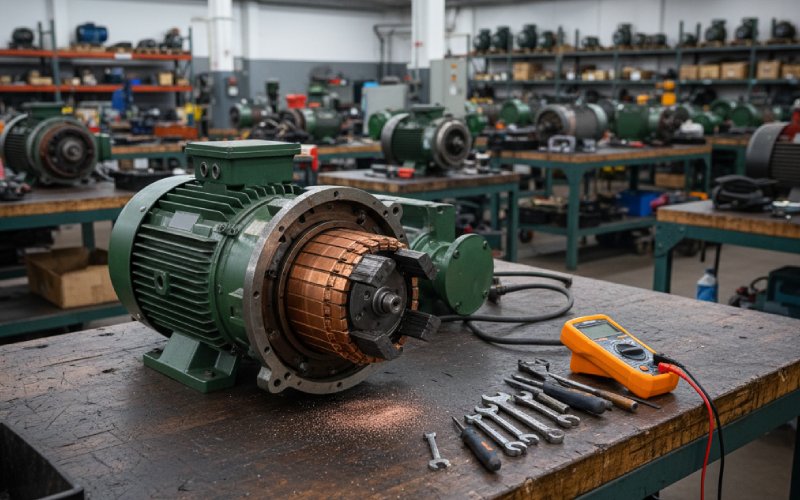
Before we tell a customer to re-cut a commutator or replace it, we work through the fault in order.
We check the operating side first
- load profile
- humidity and contamination
- brush seating quality
- spring pressure balance
- holder freedom and alignment
- visible sparking pattern
- recent changes in duty or direction of rotation
Then we check the commutator side
- bar edge condition
- mica height and undercut
- track finish
- runout and roundness
- localized hot spots
- repeated wear on the same path
- evidence of copper pickup in the brush face
That sequence matters. A rough surface can imitate an electrical problem. An electrical problem can burn a mechanically correct surface. A contaminated atmosphere can make both look worse than they are.
Still, repeated film failure on the same track usually means the commutator deserves direct inspection, not just another brush change.
Why Stable Film Helps Procurement, Not Just Maintenance
This point gets missed.
Stable commutator film reduces more than brush wear. It reduces service interruption, cleaning frequency, re-machining frequency, unplanned inspection, and uncertainty during root-cause analysis. That has direct purchasing value.
A precision-made commutator does not eliminate every film problem. No honest supplier should claim that. But it does remove a major source of instability: inconsistent geometry at the contact surface.
If your current units keep showing the same streaking, bar-edge damage, or copper drag after brush and spring corrections, the supply question is no longer separate from the maintenance question.
Review our commutator product range or send our engineers your drawing and wear photos for application review.
FAQ: Commutator Film, Brush Wear, and Surface Failure
Is light commutator film always a problem?
No. A light film can be completely acceptable if it is even and stable across the full track. We worry more about raw bands, selective streaking, or repeated wipe-clean areas than about a film simply being light.
What color should a healthy commutator film be?
Usually light brown to dark brown, sometimes slightly charcoal. Uniformity matters more than exact color.
What causes streaky commutator film?
Most often underload, contamination, poor contact stability, or a surface condition that keeps the film from building evenly. If the streaking stays on the same path after cleaning and pressure correction, inspect the commutator geometry.
What is copper drag on a commutator?
Copper drag is transferred copper pulled across the slot area instead of staying as a stable oxide layer on the track. It often appears with overheating, unstable contact, bad bar edges, vibration, or copper pickup on the brush face.
Can poor commutator machining cause brush sparking?
Yes. Out-of-round running, high or low bars, poor mica condition, and damaged bar edges can all disturb contact and lead to sparking, chatter, and unstable film.
Does resurfacing fix commutator film failure?
Sometimes. Not always. If the root cause is geometry, high mica, bad edge condition, or surface damage, resurfacing may help. If the root cause is pressure imbalance, contamination, electrical fault, or poor operating duty, the pattern usually comes back.
What brush pressure should we check first?
For many industrial DC machines, 4.0 to 6.0 psi is a useful starting check. Then adjust for brush grade, speed, machine type, and duty.
When should we replace the commutator instead of trying another brush grade?
When the same fault pattern repeats after proper seating, clean operating conditions, and pressure correction—especially if you see raw grooving, copper drag, bar-edge burning, or measurable surface instability.
Final Word
Commutator film is one of the fastest ways to read the health of the brush-to-copper interface. Not perfectly. Still, faster than waiting for heavy wear or a shutdown.
If the film is even, the system is usually close to stable. If the film is selective, patchy, grooved, or dragging copper, do not treat it as a color problem. Read it as a contact problem. Then decide whether the correction belongs in the brushgear, the operating conditions, or the commutator itself.
Frequent film failure often starts with details that are easy to miss during sourcing—bar edge quality, mica work, track finish, runout, repeatability around the circumference. If you are reviewing replacement parts for repeated brush wear, sparking, or unstable film formation, contact our engineering team for a commutator-level review.