Commutator Drops: Tiny Bottles, Big Consequences for Your Brushed Motor
If you’ve spent any time around slot cars, Mini 4WD, RC, or Mini-Z pits, you’ve probably seen that one mysterious little bottle everyone passes around like it’s liquid lap time: commutator drops (or comm drops). Some racers swear they’re magic. Others call them snake oil. Meanwhile, your poor brushed motor is stuck in the middle of the argument.
This guide is written to feel like the honest, slightly nerdy friend at the track: no hype, no fear-mongering—just what actually happens inside your motor when you use comm drops, and how to get performance without secretly cooking your armature.
Table of Contents
Refresher: commutators, brushes, and voltage drop
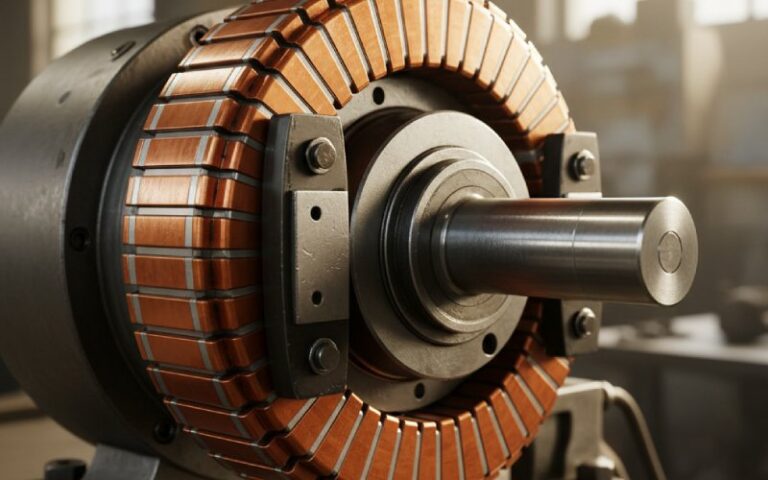
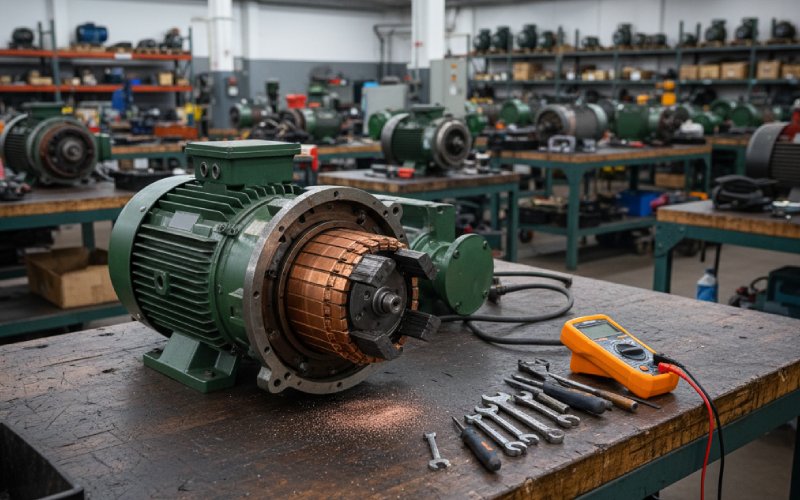
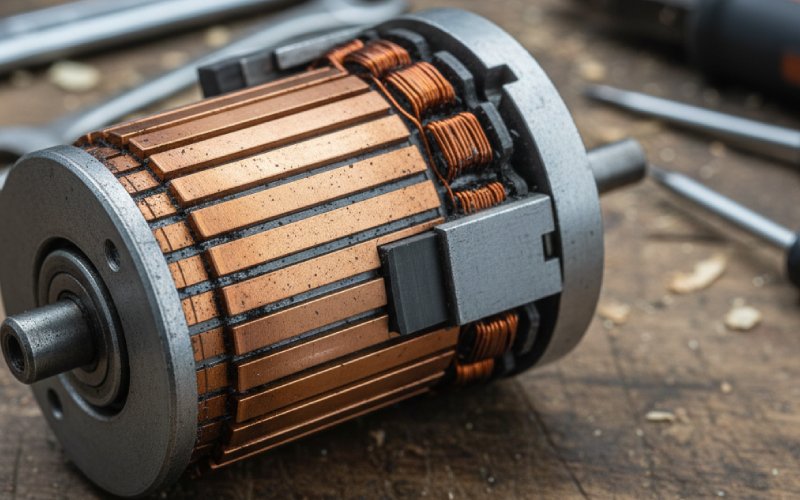
Inside your brushed motor, the commutator is the copper cylinder on the rotor that the brushes rub against. It acts as a rotary switch, keeping torque pointing in one direction as the armature spins. Every time a brush crosses from one comm segment to the next, current gets switched between coils.
Because the brushes are spring-loaded chunks of carbon/metal against spinning copper, the contact is never perfect. There’s resistance at that interface, and that resistance causes a voltage drop (often called brush contact drop or brush–commutator voltage drop). In DC machines, this drop is typically treated as roughly constant: around 0.5 V for metal-graphite and ~2 V for carbon brushes, per pair, in classic design texts.
That tiny region where brush meets comm is basically where everything important happens: power transfer, heating, wear, and noise—both electrical and mechanical.
- At the brush–commutator contact patch, three things are always happening:
- Electrical conduction: Current squeezes through microscopic contact spots between the brush and the copper. These spots heat up and cool down constantly.
- Film formation: A thin layer of oxides, carbon, and additives forms on the copper and brush. Get this film “just right” and the motor runs smoother and more efficiently.
- Mechanical wear + debris: The brushes slowly wear down, shedding fine dust. That dust can either help form a healthy film… or collect in comm slots and cause trouble later.
- Electrical conduction: Current squeezes through microscopic contact spots between the brush and the copper. These spots heat up and cool down constantly.
So… what are commutator drops, really?
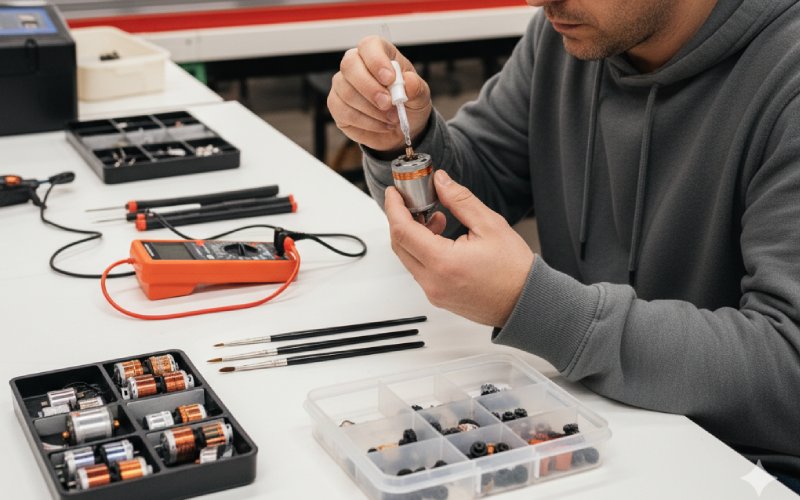
Commutator drops are specialized liquids you put on the commutator/brush area of a brushed motor. Depending on formulation, they usually mix some combination of:
- light solvents or cleaners
- conductive or semi-conductive additives
- friction modifiers / lubricants
Commercial products describe themselves as performance enhancers, break-in aids, or dual-purpose fluids that can also lube ball bearings. They claim to improve brush contact, increase power, and help shape or “bed in” the brushes—especially on sealed “spec” motors that you can’t open to true the comm or change brushes.
In plain language: comm drops are an aggressive way of tuning that tiny contact patch between brush and commutator—chemically and mechanically—without opening the motor.
- Typical marketing claims vs what’s actually going on:
- “More power / more RPM” → By lowering contact resistance and tweaking the surface film, you reduce brush voltage drop and friction losses—so yes, you can see more RPM and punch.
- “Better brush break-in” → The fluid can soften high spots, carry away debris, and help form a more even contact area on new brushes.
- “Cooler, smoother running” → Sometimes true short-term; lowering resistance can reduce some heating, but more current can also increase total heat if you push the motor harder.
- “Safe to use all the time” → This is where reality slaps back. Long-term heavy use often means more residue, more carbon sludge, and higher risk of comm slot shorting and premature wear.
- “More power / more RPM” → By lowering contact resistance and tweaking the surface film, you reduce brush voltage drop and friction losses—so yes, you can see more RPM and punch.
The upside: when comm drops genuinely help
Used carefully, commutator drops can absolutely give you measurable gains—especially in racing formats where:
- Motors are sealed.
- You’re chasing that extra sliver of performance on big race days.
- You can’t or don’t want to constantly skim the comm and replace brushes.
Guides from RC and slot-racing communities often recommend comm drops as a break-in aid (a few drops on the brushes while running at low voltage) or as a pre-race boost, with explicit warnings to use them sparingly.
Think of comm drops as a kind of energy drink for your motor. Used occasionally, at the right time, performance bumps up. Used every day, all day… the “organ” that suffers is your comm and brushes.
- Where comm drops really shine:
- Initial break-in of a new brushed motor
- Helping the brushes conform to the comm radius faster and more evenly.
- Helping the brushes conform to the comm radius faster and more evenly.
- Spec / sealed motors where you can’t rebuild
- Mini 4WD, silver-can Tamiya motors, certain slot-car classes.
- Mini 4WD, silver-can Tamiya motors, certain slot-car classes.
- Short, critical events
- Championship finals, dyno qualifying, or hero runs where motor lifespan is a secondary concern.
- Championship finals, dyno qualifying, or hero runs where motor lifespan is a secondary concern.
- Reviving a “lazy” motor temporarily
- A tired motor that’s lost edge might feel sharper with comm drops—though this is more “last sprint” than “new life”.
- A tired motor that’s lost edge might feel sharper with comm drops—though this is more “last sprint” than “new life”.
- Initial break-in of a new brushed motor
The downside: how comm drops quietly destroy motors
Now the part many product blurbs gloss over.
Those same fluids that lower contact resistance and help break-in can also:
- dissolve or soften the protective film too aggressively
- leave residue that traps carbon dust
- accelerate brush wear
Slot and RC forums repeatedly report that comm drops can cause brush dust to build up between comm segments, eventually shorting them, spiking current draw, and overheating or burning the armature.
So if “more power” is one side of the curve, dead short is on the other.
- Red flags you’re overdoing comm drops:
- Your commutator starts looking dark, gummy, or streaky instead of a clean, golden-brown.
- You see heavy carbon sludge packed into commutator slots when you eventually open the motor.
- Brushes wear unusually fast, with chipped edges or uneven faces.
- The motor pulls more current than usual at the same voltage, and runs hotter, not just faster.
- Performance feels great for a few runs—then suddenly falls off a cliff and doesn’t come back after simple cleaning.
- Your commutator starts looking dark, gummy, or streaky instead of a clean, golden-brown.
How to use comm drops without sacrificing motor life
The safe mindset is: minimum effective dose, at meaningful moments only.
You don’t want comm drops to become “part of the motor”; you want them to be a temporary treatment that helps the surfaces reach a good state—and then you let the motor run on its own merits.
Here’s the general philosophy:
- Use comm drops during controlled break-in or key race events, not every battery pack.
- Always pair comm drops with proper cleaning and lubrication (motor spray, bushing/bearing oil).
- Keep a mental “budget” of how many heavy comm-drop cycles a motor has before you expect to rebuild or retire it.
- A practical race-day routine (example):
- New or freshly rebuilt motor (break-in phase):
- Run at low voltage (2–3 V) on a bench supply or low-cell pack.
- Add one small drop to each brush while it’s spinning slowly.
- Halfway through your break-in period, add another drop if recommended by your chosen product.
- After break-in, flush with electrical motor cleaner, let dry, and re-oil bushings or bearings.
- Run at low voltage (2–3 V) on a bench supply or low-cell pack.
- Before an important race:
- Ensure the motor is clean and dry first.
- Put one small drop per brush just before warm-up.
- Run the motor for a short burst to stabilize before actual racing.
- Ensure the motor is clean and dry first.
- Between heats (only if really needed):
- If performance dropped noticeably and you can’t clean thoroughly, you might add one tiny drop again—but understand you’re spending some of the motor’s lifespan to get that edge.
- If performance dropped noticeably and you can’t clean thoroughly, you might add one tiny drop again—but understand you’re spending some of the motor’s lifespan to get that edge.
- After the event:
- Clean the motor with proper spray (not just more drops).
- Re-oil mechanical bearings/bushings with suitable oil—not comm drops.
- If rebuildable, inspect comm slots for sludge and clean or skim as needed.
- Clean the motor with proper spray (not just more drops).
- New or freshly rebuilt motor (break-in phase):
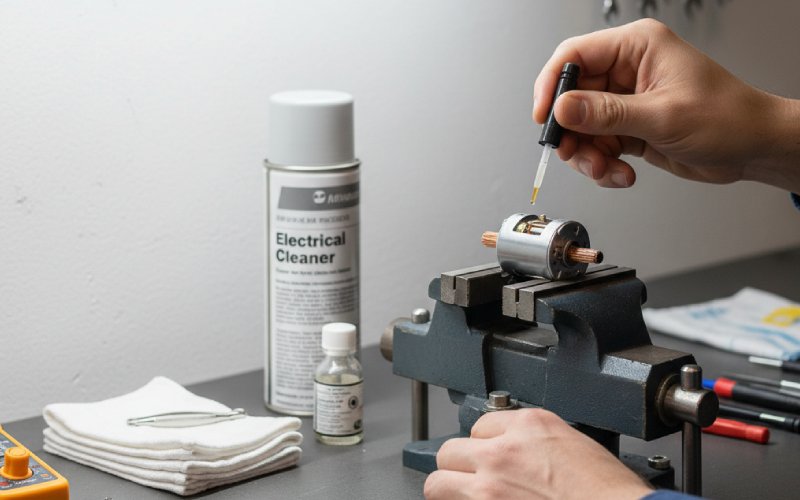
Comm drops vs oil vs cleaner vs braid juice (and why it matters)
A lot of horror stories come from using the wrong fluid in the wrong place. For example, some racers have tried general-purpose oils (like INOX or sewing machine oil) as comm drops, only to find out later that they weren’t designed for that and caused issues—sometimes explicitly warned against by other hobbyists.
Let’s put the common fluids side by side so your motor doesn’t become a chemistry experiment.
Quick comparison of common fluids around your motor
| Fluid type | Main job | Where it goes | When it’s a good idea | When it’s a bad idea |
| Commutator drops | Tune brush–comm contact, break-in aid | Onto brushes/comm while running | Break-in, big races, short-term power boosts | Constant everyday use, dirty motors, or as a replacement for proper cleaning |
| Bushing / bearing oil | Reduce mechanical friction | Bushings and ball bearings | Routine maintenance for longevity and smoothness | On commutator or brushes—can insulate, attract dirt, and cause arcing |
| Electrical contact cleaner / motor spray | Remove dirt, old film, residue | Inside motor, on comm & windings | After heavy racing, before rebuilding, after oily contamination | As a lubricant—most cleaners leave little or no lubrication behind |
| Braid juice / braid conditioner | Improve track braid–pickup contact | Guide braid / pickup shoes | For slot cars and similar setups | Inside the motor or on comm/brushes (unless product clearly says it’s dual-purpose) |
| General-purpose oils (INOX etc.) | General lubrication / rust prevention | Hinges, external metal parts, some bushings | Light external use where manufacturer recommends | As comm drops; several communities warn explicitly against this usage |
Once you see this table, it’s easier to remember: each fluid has a primary job. Comm drops are very specifically about that one microscopic interface between brush and comm.
- How to choose a comm drop without overthinking it:
- Look for products explicitly marketed for brushed motors and commutators—not generic “magic lubes”.
- Prefer brands with clear instructions (drops per brush, use per run, break-in guidance).
- Avoid mixing brands on the same motor without a thorough cleaning in between; different chemistries can interact in weird ways.
- Be suspicious of any product that encourages heavy, constant use and never mentions cleaning or brush wear.
- Pay attention to bottle design: needle tips or precision applicators reduce the chance of “oops, that was half the bottle” moments.
- Look for products explicitly marketed for brushed motors and commutators—not generic “magic lubes”.
The quiet physics behind the “magic”
Let’s zoom in one last time on the science, because understanding it makes you less dependent on superstition.
In a brushed DC motor, the brush contact drop is basically the voltage you “lose” across the brush–comm interface because it isn’t a perfect conductor. Textbooks often treat this as a fixed number—around 0.5–2 V per brush pair depending on brush material and design.
On a low-voltage motor (say, a 7.2 V pack), losing 1.5–2 V across the brushes is a big percentage of your total. If comm drops can temporarily reduce that drop and slightly smooth mechanical friction, it’s no surprise you see more RPM and punch.
But physics doesn’t stop there:
- Lower resistance at the contact can mean more current flows at the same voltage.
- More current = more I²R heating in the windings and brushes.
- More heating can accelerate wear and break down films and binders that keep everything healthy.
So you really are trading short-term performance for long-term robustness. That trade might be absolutely worth it in a final where one tenth of a second matters—just don’t pretend the cost isn’t there.
- Simple checklist to keep your comm-care smart, not superstitious:
- Use comm drops intentionally, not automatically.
- Pair every heavy comm-drop session with proper cleaning afterward.
- Watch your commutator color and cleanliness like you watch tire wear.
- Track how many “hard” events a motor has seen with drops; retire or rebuild instead of squeezing the last spark out of a dying armature.
- If in doubt, back off a little: consistency over an entire race day usually beats one monster heat followed by a cooked motor.
- Use comm drops intentionally, not automatically.