Carbon Commutator Solutions for Fuel Pump and DC Motors
XDC manufactures carbon commutator systems for modern fuel, automotive, and industrial environments. Our solutions are designed for in-tank fuel pump motors and compact DC motors where conventional copper commutators may face corrosion, accelerated wear, and increased electrical noise—especially in ethanol-blended fuels.
Carbon Commutators Manufactured by XDC
We convert your specifications into production-ready components, supporting trial pieces for approval before ramping to volume orders. Share your existing copper commutator drawing and key operating details to receive a recommended carbon commutator configuration.
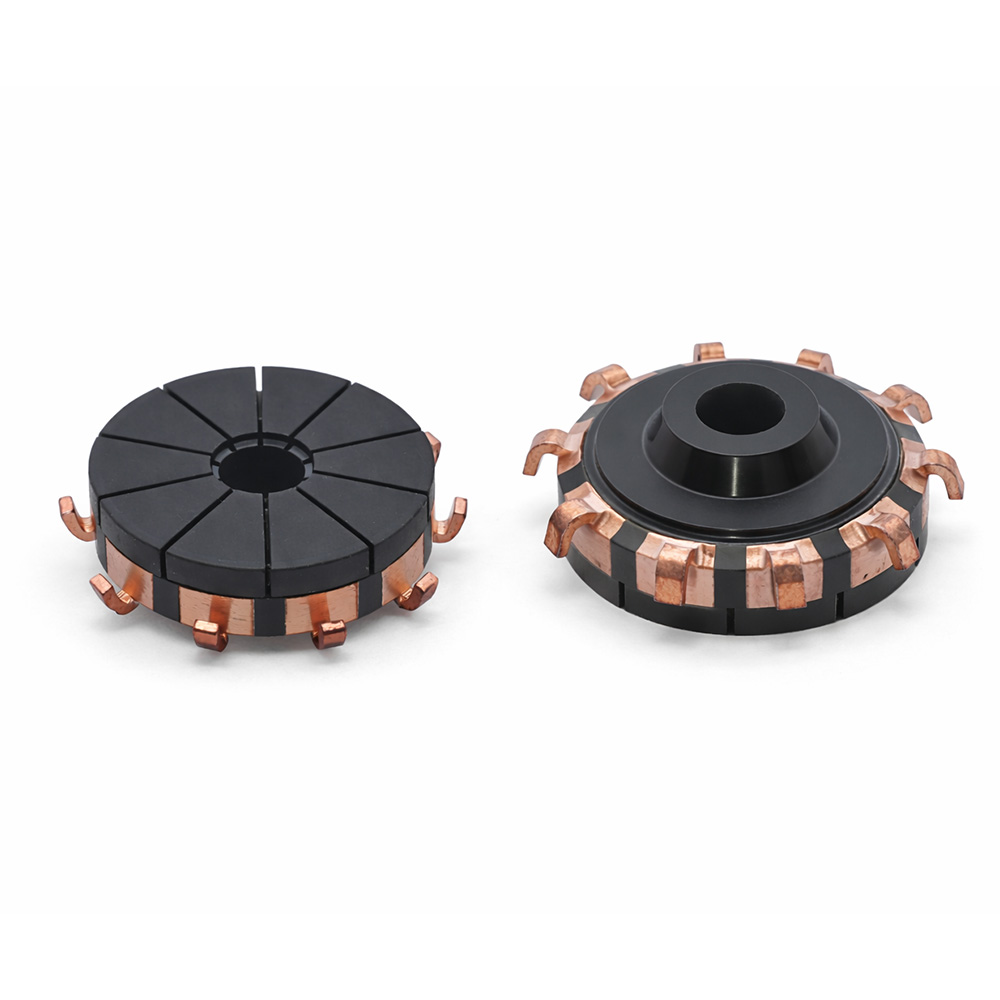
Precision 10-Bar Carbon Commutator
Designed to support stable commutation and arc control in fuel-pump duty cycles.
- OD: 23.2 mm
- Segments: 10
- Typical Use: In-tank fuel pump / compact DC motor
Customization: ID, stack height, insulation options, undercut geometry, and run-out targets per drawing
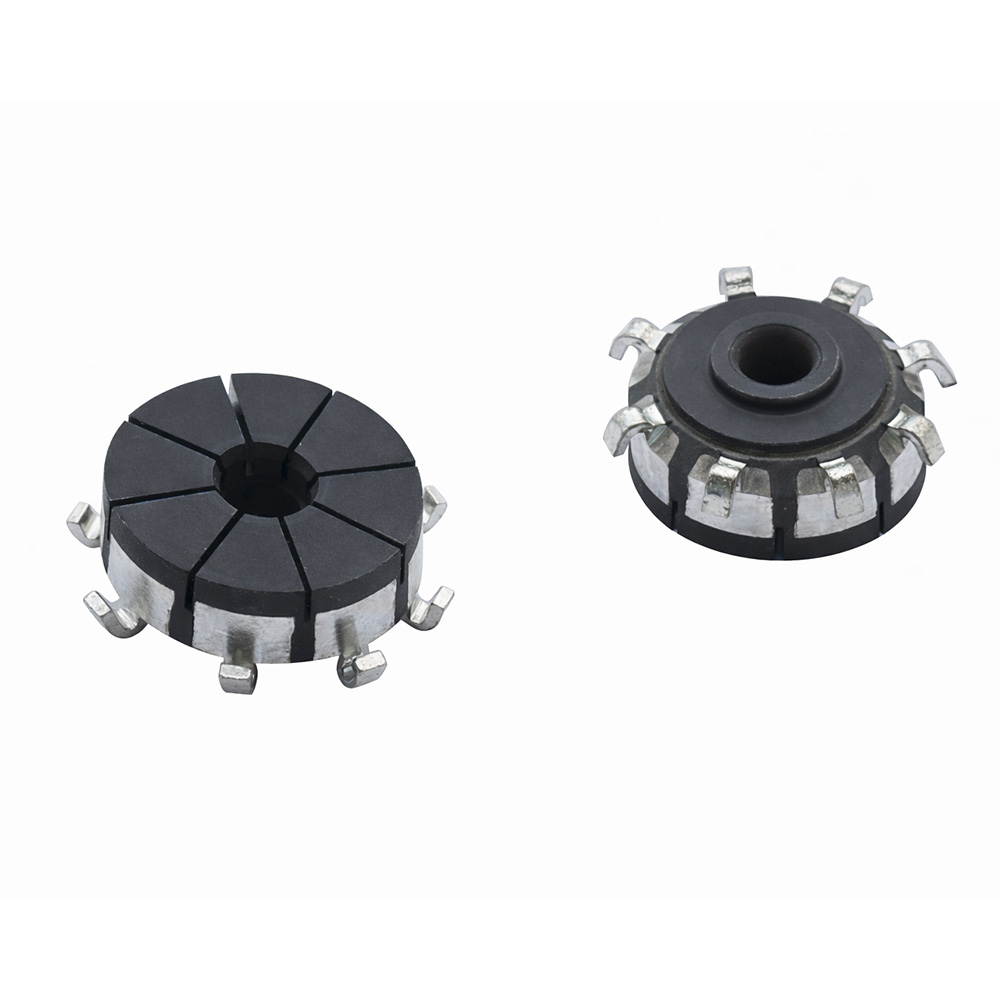
16.2mm 8-Segment Carbon Commutator
Optimized for wear resistance and reduced electrical noise in aggressive fuel environments.
- OD: 16.2 mm
- Segments: 8
- Typical Use: Fuel pump / small DC motor
Customization: Brush grade pairing, spring-force window, and geometry tuned to load and noise targets
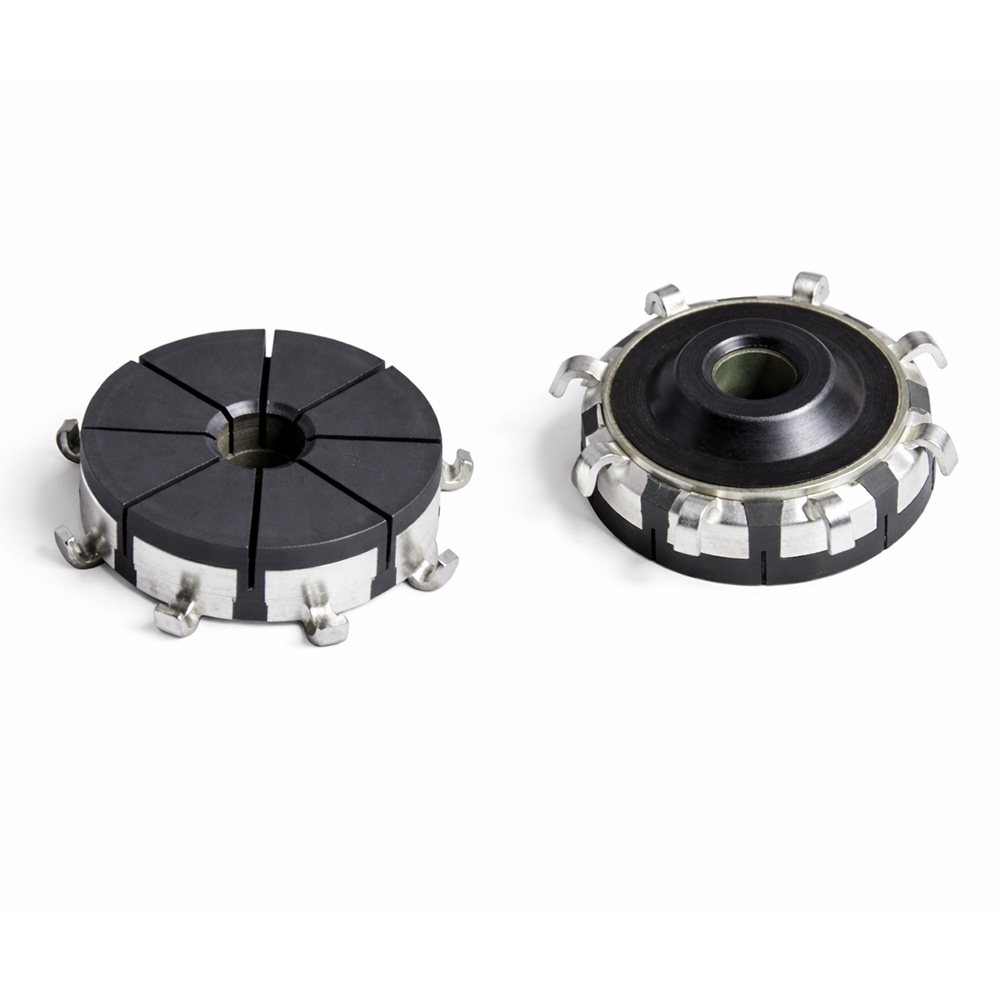
8-Bar Carbon Commutator
Engineered to help resist electrical pitting under switching loads and support durable commutation.
- OD: 23.2 mm
- Segments: 8
- Typical Use: Fuel pump motor platforms
Customization: Material grade, segment geometry, and insulation scheme selected by duty cycle and environment
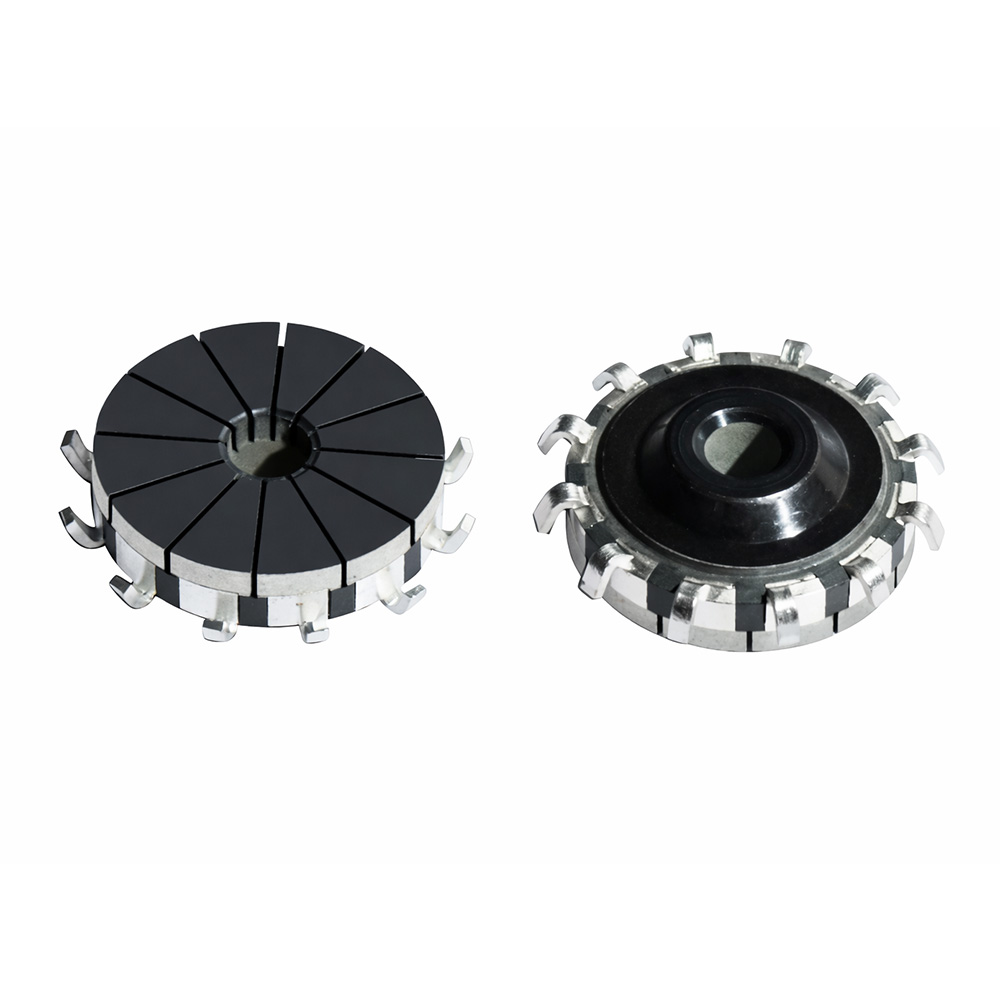
12-Segment Carbon Commutator
Designed to support smooth current transition and more even thermal distribution for consistent commutation.
- OD: 23.2 mm
- Segments: 12
- Typical Use: High-performance compact DC motors
Customization: Segment geometry optimization, insulation choice, and run-out targets per application
Key Features & Benefits
Each XDC carbon commutator is engineered as an integrated system with the armature winding and carbon brush set:
Corrosion-resistant design
Carbon or carbon-surfaced segments help resist aggressive gasoline and ethanol fuels that can rapidly attack copper commutators.
Optimized for fuel environments
Geometry, segment count, and undercut dimensions are tuned to stabilize commutation and reduce surface damage under fuel-pump loads.
Lower wear, longer service life
By pairing carbon grade, commutator geometry, and brush specification, the commutation system can be tuned toward a lower-wear operating window. Actual wear depends on current, inductance, fuel chemistry, temperature, and duty cycle.
High-speed stability
XDC designs support demanding spin-test RPM and temperature requirements for automotive in-tank fuel pump modules.
Reduced electrical noise
Carbon contacting surfaces and commutation optimization can improve EMI/RFI behavior compared with many copper commutator solutions.
Cost-effective upgrade
Component-level cost is a fraction of total pump value, enabling E10/E85-compatible, long-life products with a manageable BOM impact.
Quality & Compliance
ISO 9001 Quality Management
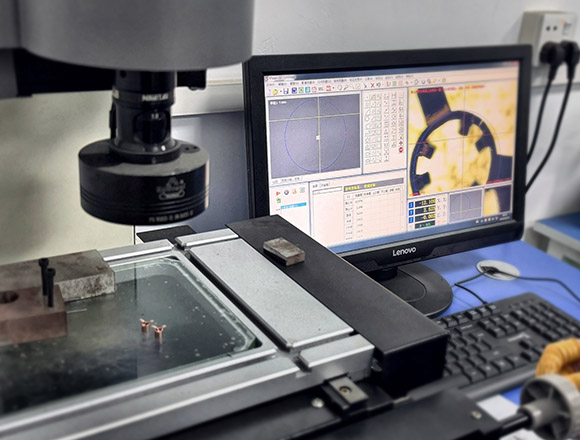
XDC operates under an ISO 9001-certified quality management system with defined controls for incoming materials, in-process checks, final inspection, and shipment release.
Verification and Documentation (per specification)
Depending on your requirement, we can apply and document controls such as:
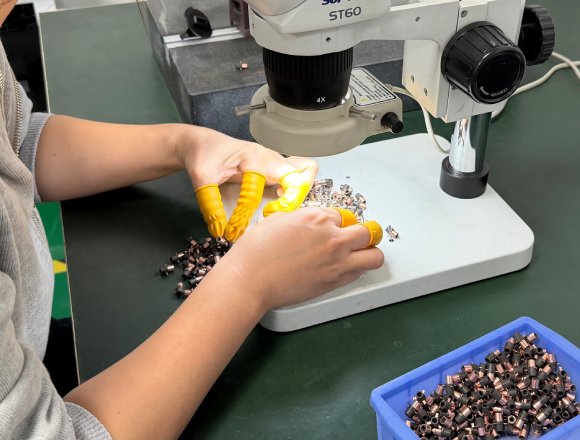
- 100% visual inspection for appearance, burrs, and segment integrity
- Run-out and surface condition checks
- Bar-to-bar electrical consistency checks (as required)
- Dielectric withstand / insulation verification (as required)
- Spin testing at specified RPM and temperature (as required)
Capability Snapshot
Parameter | Typical Range / Options | Typical Specification Targets (Examples) | How It’s Defined |
Outside Diameter (OD) | ~20–30 mm (fuel pump class); custom sizes on request | Per drawing | Confirmed by your motor envelope and drawing |
Segment Count | Typically 6–12 segments for small DC motors and fuel pumps | Per commutation/noise target | Optimized based on current, speed, and noise requirements |
Run-out (TIR) / Concentricity | Set per application and drawing | Commonly specified around ≤ 0.05 mm TIR; tighter targets may be requested for low-noise designs | Final target is defined by your drawing and verified per inspection plan |
Adjacent Bar Step (High Bars) | Controlled per specification | Often controlled in the micron-level range to reduce arcing risk | Defined by customer requirement and verified during inspection |
Surface Roughness (Ra) | Controlled per specification | Common targets for small commutators are around Ra 0.5–1.0 μm | Defined by your brush system and verified per process/inspection requirement |
Mica Undercut Depth | Per design and insulation scheme | Commonly specified around 0.5–1.0 mm (application dependent) | Defined by drawing and commutation stability requirements |
Brush Compatibility | Carbon, metal-graphite, or hybrid brush grades | Matched by current density and environment | Grade and spring force window tuned for stable commutation |
Key Dimensions & Tolerances | OD/ID, stack height, undercut geometry, insulation options | Per drawing | Defined from your drawing and performance requirements |
Manufacturing Scale & Capacity
- 100 employees dedicated to commutator manufacturing and quality control
- 150 machines supporting molding, machining, and inspection workflows
- Daily output up to 500,000 pcs (depending on product mix and specification)
Why Choose XDC
As China’s premier commutator manufacturer, XDC combines advanced materials engineering with large-scale production capability:
Customized engineering support
Our team works with your engineers on bar count, OD/ID, insulation class, run-out tolerance, and brush specification to ensure that the carbon commutator and carbon brush set achieve the required life and efficiency targets.
Strict quality control
100% visual inspection, spin testing at specified RPM and temperature, and bar-to-bar dielectric tests help ensure consistent performance in every batch.
Cost-optimized manufacturing
Using high-volume, automated molding and machining for molded commutator segments, we offer competitive pricing while maintaining tight dimensional tolerance and stable electrical properties.
Global supply capability
With robust export experience, XDC supports automotive, industrial, and aftermarket customers worldwide with reliable lead times and comprehensive documentation.
Typical Applications
XDC supplies carbon motor commutator solutions and assemblies to OEMs and Tier-1 suppliers worldwide in applications such as:
Automotive in-tank fuel pump motor
Motorcycle and ATV pumps
Compact DC motors for small appliances
Specialty pumps for corrosive
Custom DC motor projects
Contact Us
To evaluate a carbon commutator upgrade for your fuel pump motor or DC motor platform, send your drawing and key operating details.
XDC – China’s Premier Commutator Manufacturer
- Share your drawings
- Please let us know any other requirements you have for this product.
- Arrange a technical meeting between your engineering team and our commutation specialists.
Get in touch today and let XDC design and manufacture the next generation of reliable, ethanol-compatible commutators for your global applications.
We can sign NDA for all custom projects to protect your IP.
XDC Commutator - FAQ
In many cases, yes—but a design review is recommended. Carbon commutators differ from copper in contact resistance, film formation, and wear behavior. Brush grade, spring force, and sometimes segment geometry or count may be adjusted to support stable commutation and long service life in fuel.
Service life improvement depends on the commutation system design and operating conditions. In many fuel-pump applications, carbon-surfaced segments are selected to reduce corrosion risk and stabilize commutation in ethanol-blended fuels. Final lifetime outcome depends on current, inductance, temperature, fuel chemistry, and duty cycle.
High-alcohol fuels such as E10 and especially E85 are more conductive and corrosive than pure gasoline. Many platforms adopt carbon-surfaced commutator segments to improve robustness and reduce corrosion-related commutation instability.
Yes. To fully leverage carbon commutator benefits, we support brush selection and commutator geometry alignment and can work with your team to match testing requirements so the commutation system meets life and performance targets.
Related Resource
At XDC, we share our deep insights into commutators, manufacturing processes, and industry experience on our blog. We invite you to explore these articles to learn more about our expertise.
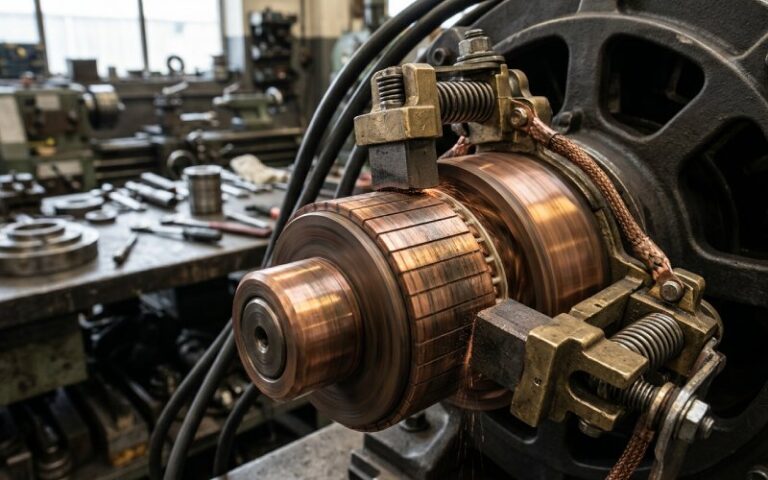
Commutator Sparking and Wear: Why Brushes Must Align With the Motor Neutral Plane
The motor neutral plane is the running position where the coil under the brush can reverse current with the…
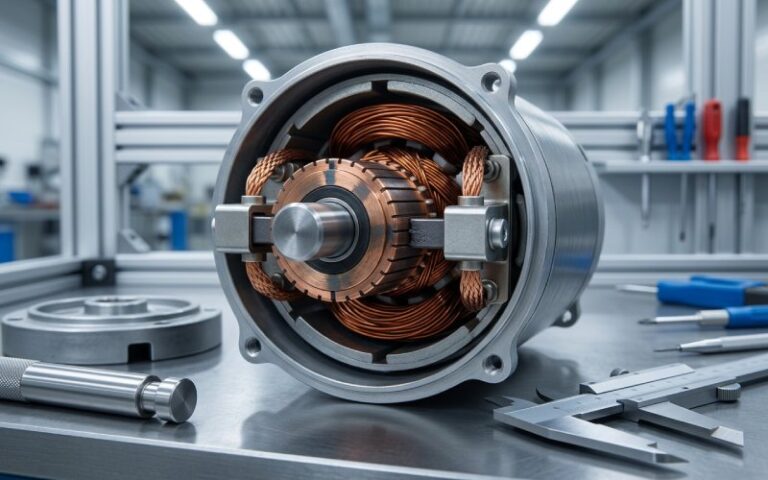
DC Motor Squealing Noise: Is It the Carbon Brush or the Commutator?
When a DC motor starts squealing, most people replace the brushes first. Sometimes that works. Sometimes the noise goes…
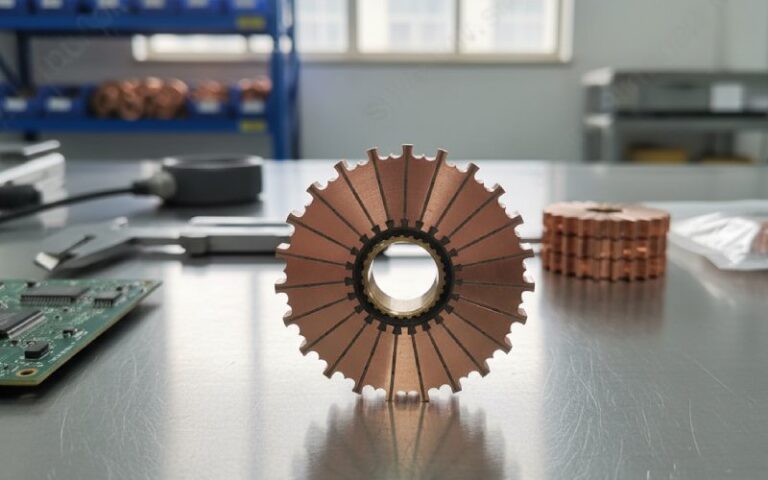
How to Check a Commutator for Roundness or Runout
Most bad readings start before the indicator touches copper. That is usually the whole job, really. Not the gauge.…