Performing a Bar-to-Bar Test to Detect Armature Faults
Most failed armatures do not show up as one dramatic number. Usually it is smaller than that. One bar drifts off pattern. One riser goes resistive. Two bars start carrying the visual evidence before the rest of the commutator admits anything. That is why, in our shop, the bar-to-bar test is not treated as a formality. It is one of the fastest ways to expose coil faults and connection faults at the commutator end, provided the reading sequence is clean and the interpretation is disciplined.
Table of Contents
What this test is really for
We use the bar-to-bar test to answer a narrow question: does each commutator section behave like the others, or does one section refuse to match the circuit around it? For medium and large armatures, the readings are often down in the micro-ohm range, so the absolute number is not the main story. The spread is the story. A smooth, repeating pattern can be healthy. One isolated jump or dip usually is not.
It also matters what kind of fault you are hunting. A bar-to-bar sweep is good at showing open coils, shorted coils, and poor riser connections. It is not the whole armature test plan. Ground faults need a separate insulation-to-ground check. Slight turn shorts may need impedance, AC drop, or growler follow-up when plain resistance does not move enough to make itself obvious.
Before we trust a single reading
We do not start with the meter. We start with conditions.
A dirty commutator, unstable brush contact, poor probe pressure, mixed contact area, all of that can fake a bad pattern. On assembled testing through the brushes, the contact path has to be stable. On disassembled testing, probe spacing has to stay constant from bar to bar. And if you are trending resistance over time, temperature has to be controlled or corrected, because low-ohm values move enough with temperature to create noise that looks electrical when it is not.
One more thing that gets missed too often: know the winding before you judge the graph. Lap and wave armatures do not always want to be read the same way, and equalizing connections can create a regular repeating pattern that is completely normal. On many equalized armatures, every second, third, or fourth bar may follow its own repeat. That is not a fault. Random deviation inside that repeat is where the trouble starts.
Our bar-to-bar test sequence
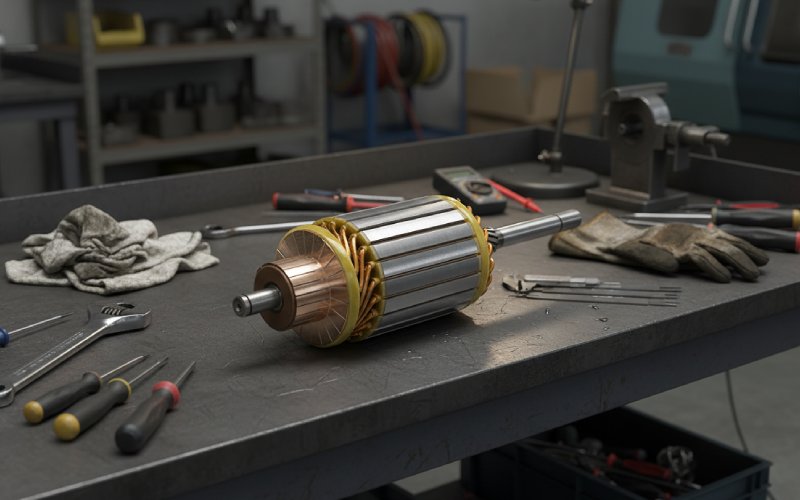
1. Mark a starting bar
We always mark one bar and keep the sweep directional. That avoids losing position halfway around the commutator. Not complicated. Still worth saying.
2. Keep the electrical path consistent
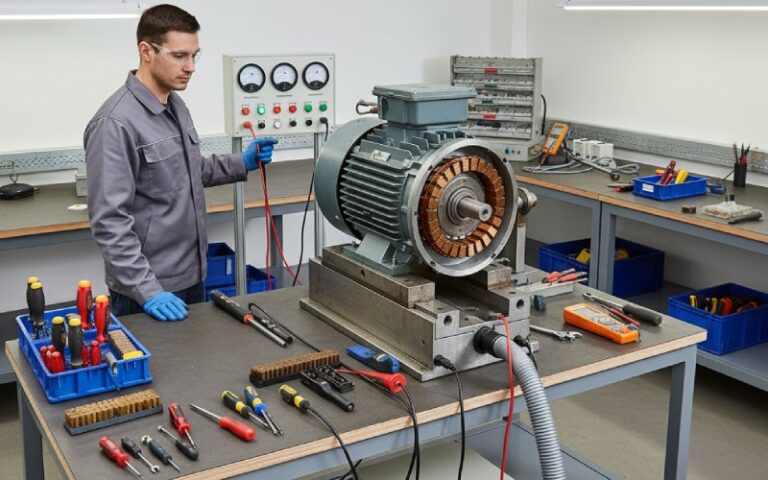
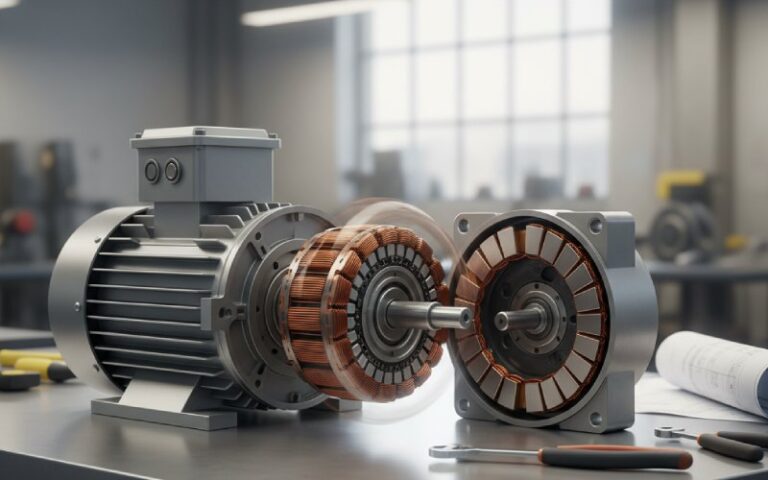
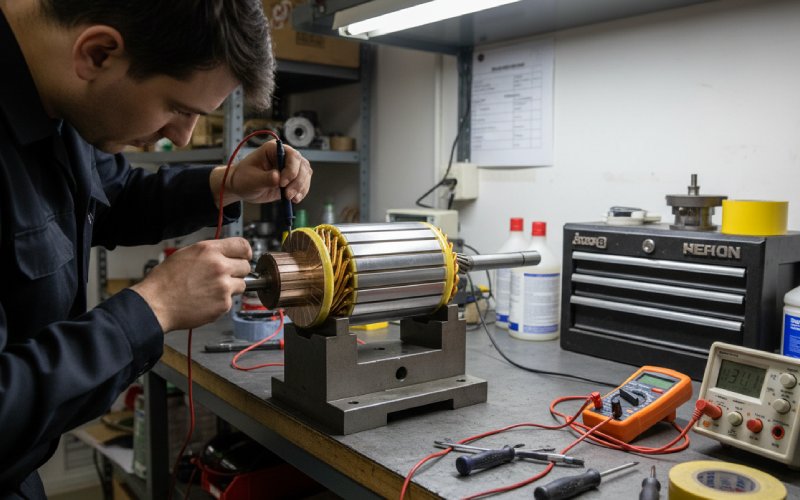
For a disassembled armature, we keep probe spacing fixed through the full sweep. For an assembled machine, we isolate the intended brush path and keep the contact condition unchanged from reading to reading. Changing the path mid-test ruins the comparison.
3. Record every bar, not just the suspicious ones
Skipping ahead is how people talk themselves into a clean armature. Full circumference data gives the pattern. The pattern gives the diagnosis.
4. Read the shape before the number
If the commutator produces a smooth repeat, we ask whether the repeat matches the winding and equalizer layout. If one point breaks away from that shape, we stop treating it as normal process variation.
What the readings usually mean
In our factory work, interpretation follows a simple rule: high points suggest resistance faults; low points suggest shorting faults. That sounds neat, but the real bench version is a little rougher.
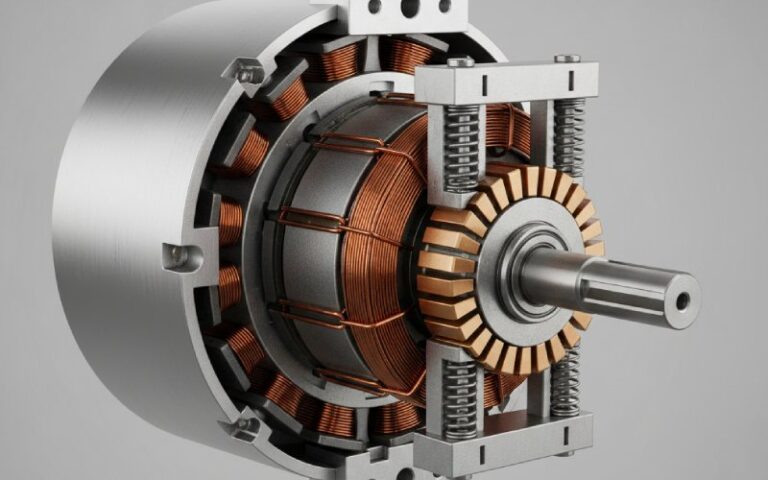
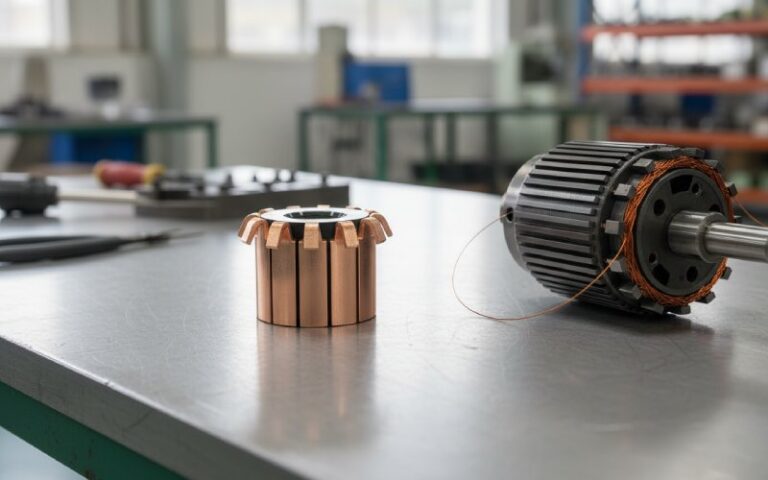
A reading that rises above the pattern usually sends us first to the riser joint, soldered connection, or any local high-resistance path at that bar. A reading that falls below the pattern pushes us toward a shorted coil or partial short in that section. When two adjacent bars also show burning or the machine has been flashing at the commutator, an open coil moves much higher on the suspect list.
Here is the screening table we use before teardown:
| Reading pattern | First suspicion | What we inspect next |
|---|---|---|
| One isolated high reading | High-resistance riser joint, cracked connection, poor solder bond | Riser security, solder condition, local heating marks |
| One isolated low reading | Shorted coil or partial turn short | Coil section, comparison test, impedance follow-up |
| Two adjacent bars show burn marks and the reading breaks hard from pattern | Open coil or open connection | Riser lead, broken conductor, thrown solder, flash evidence |
| Alternating values that repeat every 2nd, 3rd, or 4th bar | Equalizer or compensation pattern, often normal | Confirm winding layout before calling it a fault |
| Whole sweep is noisy with no stable repeat | Test setup problem before armature problem | Commutator cleanliness, contact pressure, brush seating, temperature |
The table is not guesswork. It comes from how low-resistance deviation maps to shorts versus poor connections, how equalizer links create repeat patterns, and how open coils show up at the commutator as flashing and local bar damage.
The mistake that wastes the most time
Treating every uneven graph as a winding failure.
We see this when the commutator surface is oxidized, the probes skid, the brush face is not seated, or the operator changes pressure from bar to bar. Another version of the same mistake: ignoring known equalizer patterns and calling every alternating value a defect. The armature may be fine. The test discipline is not.
When bar-to-bar is enough, and when it is not
A clean sweep with consistent readings is useful, but we do not clear an armature on that test alone when the field evidence says otherwise. If the machine arrived with flash marks, localized heating, or abnormal brush behavior, we pair the bar-to-bar result with at least a ground check and one shorted-turn-sensitive method. Resistance is strong on connection faults. It is not always strong on small turn shorts. That distinction matters.
The reverse is also true. A bad bar-to-bar pattern does not automatically mean full rewind. Sometimes the fault stays at the riser. Sometimes it is a loose equalizer connection. Sometimes the commutator condition is corrupting the reading path and the armature itself is still serviceable. We confirm before we cut. Always.
What we want to see before release
For us, a releasable armature has three things:
- A stable bar-to-bar pattern around the full circumference
- No outlier that breaks the known winding repeat
- No conflict between electrical data and commutator evidence
That last point is underrated. If the readings look clean but two bars are burned, the job is not finished. If the graph looks ugly but the contact conditions were poor, the job has not started. Bench judgment sits in that gap.
FAQ
Is the absolute resistance value the main acceptance criterion?
Usually no. On many armatures, especially larger ones, the measured value is very small, and the useful signal is the deviation from the armature’s normal pattern rather than one universal ohm target.
Can a bar-to-bar test detect every armature fault?
No. It is strong for open coils, shorted coils, and poor riser connections, but it should be paired with insulation-to-ground testing, and suspicious shorted-turn cases often need impedance, AC drop, or growler confirmation.
Why do some good armatures show two or more repeating values?
Because equalizing or compensating connections can create a regular repeat pattern across the commutator. Every other bar, every third bar, or every fourth bar may group together on a healthy armature. Random breakaway from that repeat is the real warning sign.
Can this test be done with the armature still in the machine?
Yes. An assembled machine can be tested through the brush path if contact conditions are controlled. A disassembled armature is easier to access and usually easier to read cleanly, but both methods are used in practice.
What usually causes a high reading at one bar?
Our first check is the commutator-side connection: riser looseness, poor solder bond, cracked joint, or another local high-resistance path. That kind of defect often shows as an isolated high point rather than a broad shift across the whole sweep.
What commutator evidence lines up with an open coil?
Flashing, severe burn on two adjacent bars, and local overheating are classic signs. When that visual evidence lines up with a broken bar-to-bar pattern, we stop debating whether the fault is real.
Final shop note
A bar-to-bar test works best when the operator is not looking for a textbook number. Look for order. Then look for the place where the order breaks. That is usually where the armature starts telling the truth.